Key Takeaways
- EU fabric chemistry rules reach pet plush through buyer practice: the toy is chewed and slobbered on, so buyers extend textile discipline to it voluntarily.
- The azo restriction is not a blanket dye ban — it targets azo colorants that can cleave into a commonly referenced list of 22 carcinogenic aromatic amines, benchmarked around 30 mg/kg.
- Formaldehyde is managed to tiered limits, never to zero; our plush baseline references GB 18401 Class A at 20 mg/kg as factory internal control.
- Dark shades concentrate the risk — and one test bundle per fabric family plus a mill declaration covers most SKUs at a fraction of per-SKU testing.
Two plush swatches can look identical on a quoting table — same pile, same weight, same hand. Chemically they can be entirely different products, and the difference surfaces exactly where buyers least want it: in a test report, in a market surveillance sample, or in a complaint about dye transfer onto a light carpet and a drooling dog's paws.
This article walks through the two chemistry topics that dominate plush fabric conversations for EU-bound pet toys — restricted azo dyes and formaldehyde — and shows how to cover both with a test bundle that costs a fraction of testing every SKU.
Why Fabric Chemistry Enters the Pet Toy Conversation
A plush pet toy lives in the least demanding legal category and the most demanding physical one. Legally, pet toys fall outside the EU Toy Directive; the general product safety framework (GPSR) and REACH are what actually bind. Physically, the toy is chewed, slobbered on and carried around by an animal whose whole face is in contact with the fabric for hours. EU buyers close the gap the same way they did for other unregulated but mouthed products: they borrow the textile discipline they already trust — azo and formaldehyde screening first — and ask suppliers to evidence it. The result is predictable. Fabric chemistry questions now appear in RFQs for pet plush exactly where they appear for baby textiles, just without the statute behind them.
Azo Dyes: The Aromatic Amine Logic
"Azo free" is one of the most misused phrases in the trade. Azo dyes are not a niche — they are among the largest dye families in textile production, and the overwhelming majority are perfectly ordinary chemistry. The restriction targets a specific mechanism: certain azo colorants can, under reductive conditions, cleave into aromatic amines, of which a defined list is classified as carcinogenic. The commonly referenced list runs to 22 amines, and the widely used benchmark for their release in processed textiles is 30 mg/kg.
So the correct buyer question is not whether azo dyes are used, but whether the dyes on this fabric can release any of the listed amines. A mill running modern commercial dyestuffs will pass comfortably; the risk sits with old stock dyes, unnamed dye houses and overdye batches. That is also why a one-line azo declaration from the mill, backed by an occasional verification test, is worth more than a wall of certificates from the toy assembler who bought the fabric secondhand.
Formaldehyde: Managed to Limits, Not Zero
Formaldehyde enters plush through finishing and print fixation — hand-building agents, wrinkle-resistance treatments, and the binders behind printed motifs. The concern is irritation: skin and mucous membranes respond to residual free formaldehyde, and a dog's mouth is precisely that exposure path. Textile schemes handle it with tiered limits — tighter classes for skin-contact and infant articles, looser for outerwear.
For our plush lines the working baseline is the Class A tier of GB 18401, the Chinese textile standard, at 20 mg/kg or below, applied as factory internal control. It is deliberately stricter than anything a pet toy market demands, cheap to hold, and easy to audit because the fabric intake log records every roll. Note what it is not: not an export certification, and not a route to the phrase "zero formaldehyde" — residuals are managed to a numeric limit, and the number is the honest claim.
Where the Risk Actually Concentrates
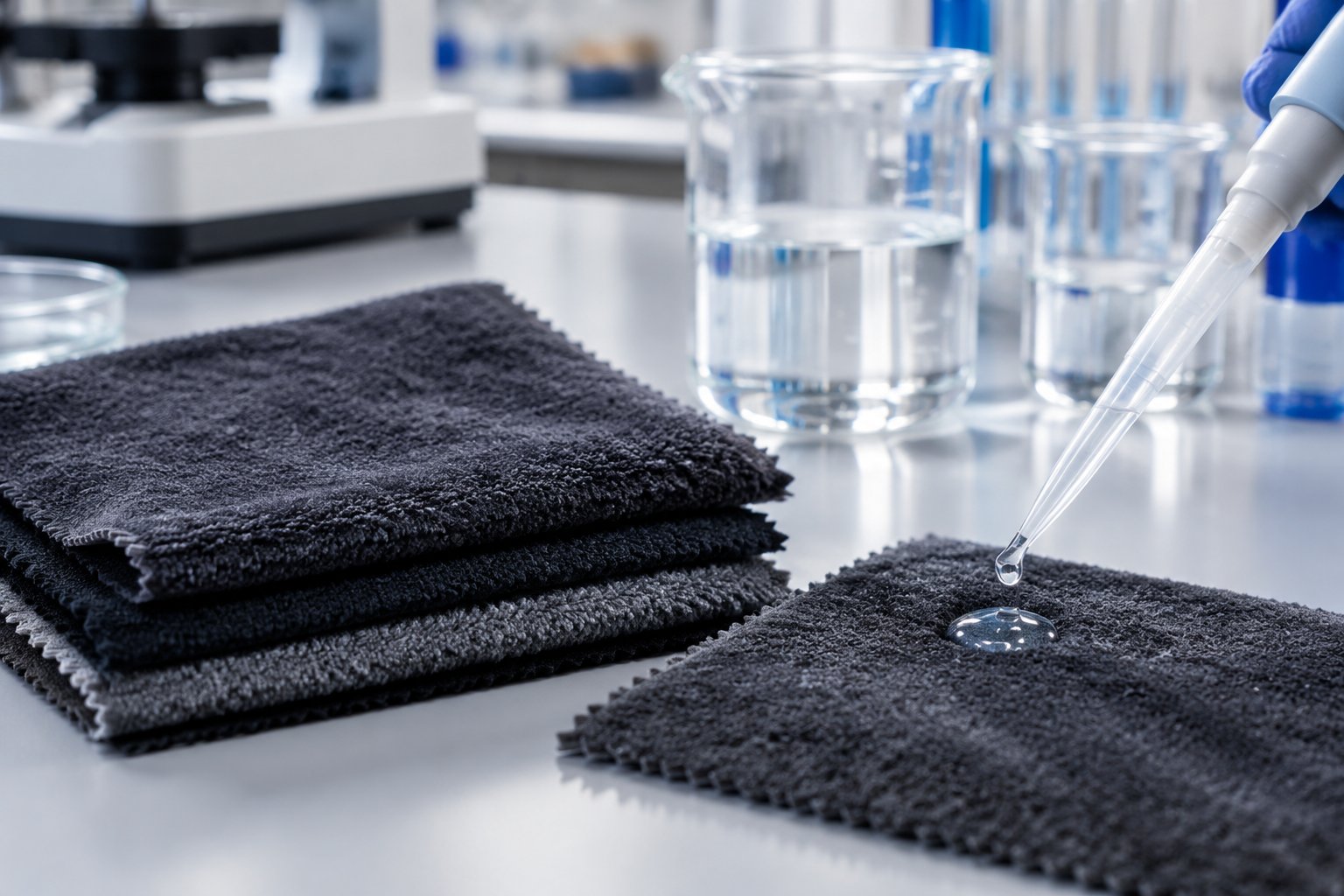
Years of batch records point at the same address: deep, cheap and reused. Deep shades — navy, black, dark red — demand the most dye and the tightest fixation control. Cheap constructions cut cost in the dye house before they cut it anywhere else. Reused material — overdyed batches, recycled yarn of unknown origin — carries forward whatever chemistry its previous life left behind. Printed motifs deserve their own line on the checklist, because the print binder rather than the ground fabric is sometimes the formaldehyde source. None of this means dark plush cannot pass; it means dark plush is where testing pays for itself first.
A Sensible Test Bundle, Backed by a Declaration
The efficient pattern is one bundle per fabric family, plus retesting when something changes:
| Item | What it screens | Commonly referenced benchmark | Sensible cadence |
|---|---|---|---|
| Azo / cleavable aromatic amines | Dye-related carcinogenic amine release | 22-amine list, around 30 mg/kg | Once per fabric family; every new mill |
| Formaldehyde | Residual free formaldehyde from finishing and prints | Tiered textile limits; Class A at 20 mg/kg as internal baseline | Per family; every new deep shade |
| pH value | Residual alkali or acid from dyeing | 4.0 to 8.5 for Class A under GB 18401 internal control | Alongside every formaldehyde test |
| Heavy metal migration | Contamination from colorants and pigments | EN 71-3 style migration limits | Colored families; new masterbatch |
Run the bundle at the fabric level, not the toy level — a dozen plush SKUs on one fabric family share one report, which is what keeps the program affordable. Heavy metal migration has its own methods and pitfalls, covered separately in our article on EN 71-3 migration testing.
The cheapest document in this system is the mill declaration: fiber composition, dye class and a dated compliance statement for azo and formaldehyde. A declaration is not proof by itself — statements get copied — but paired with verification testing on random lots it builds a chain that starts at the dye house instead of at the assembler. We hold declarations on file for every stocked fabric and describe the fabric families openly on our materials page; how verification slots into shipment inspection is laid out on our quality page.
Frequently Asked Questions
Are azo dyes banned in pet toys?
What formaldehyde limit should plush pet toys meet?
Why do dark-colored plush fabrics carry more risk?
Do I need to test formaldehyde and azo on every SKU?
Want the fabric chemistry settled before the fabric is cut?
Send your plush program and target market — we will share fabric options, their declaration files and the test bundle we run per family.