Key Takeaways
- Flammability reaches plush pet toy orders through buyer and platform requests, not through any pet-toy law — EN 71-2 is a children's toy standard applied voluntarily.
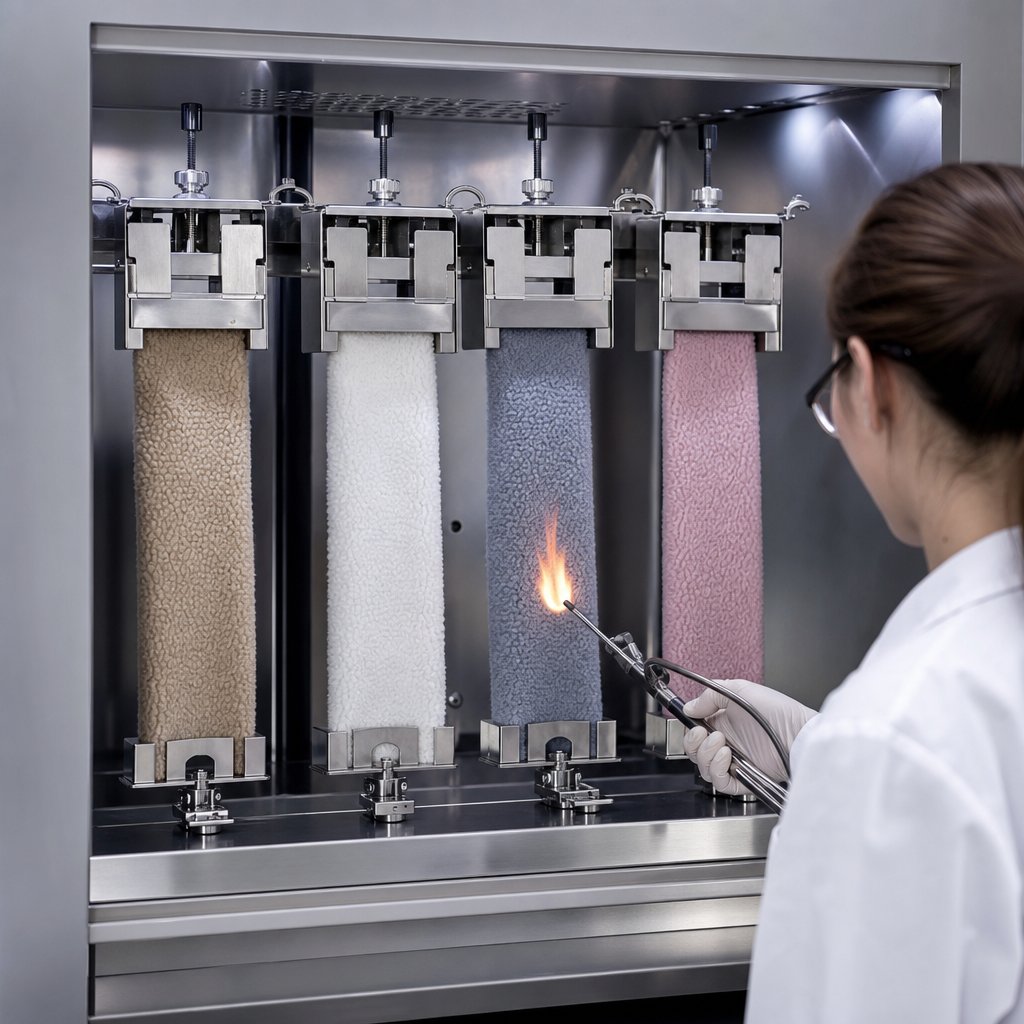
- The test measures how fast flame spreads across a surface; for napped plush, the commonly cited benchmark is a surface flash rate below 30 mm/s.
- Fabric selection decides the result long before testing: dense, low-nap faces pass comfortably; long brushed piles are the risk group.
- Flame-retardant treatment is usually the wrong fix — it adds chemistry to a mouthed product and can undermine other claims. Write the clause around fabric reference, golden samples and retest triggers instead.
Ask a plush pet toy factory which test makes its fabric suppliers most nervous, and the answer is rarely heavy metals. It is flammability. A fabric can be chemically clean, colorfast and inexpensive, and still flash across the surface like a fuse — purely because of how the pile was brushed and sheared.
This article explains what EN 71-2 actually measures, how the common plush fabrics behave against it, why flame-retardant treatment is usually the wrong first response, and how to write the requirement into a purchase order so the fabric you approved is the fabric that ships.
Why Flammability Ends Up on the Request List
Pet toys are not covered by the EU Toy Directive — it applies to products for children under 14. Yet flammability keeps appearing on buyer checklists anyway, for two practical reasons. First, plush pet toys resemble the plush toys families already own: a buyer applying toy-standard thinking to one plush SKU tends to apply it across the category. Second, the scenarios are believable — a toy left near a heater, dragged across a floor where candles burn, stored beside other textiles. The document buyers reach for is EN 71-2, the flammability part of the toy-standard package, requested voluntarily and driven by the buyer rather than by law. In EU-bound orders it travels alongside REACH obligations; the full voluntary package is unpacked in our article on EN 71 for pet toys.
What EN 71-2 Actually Measures
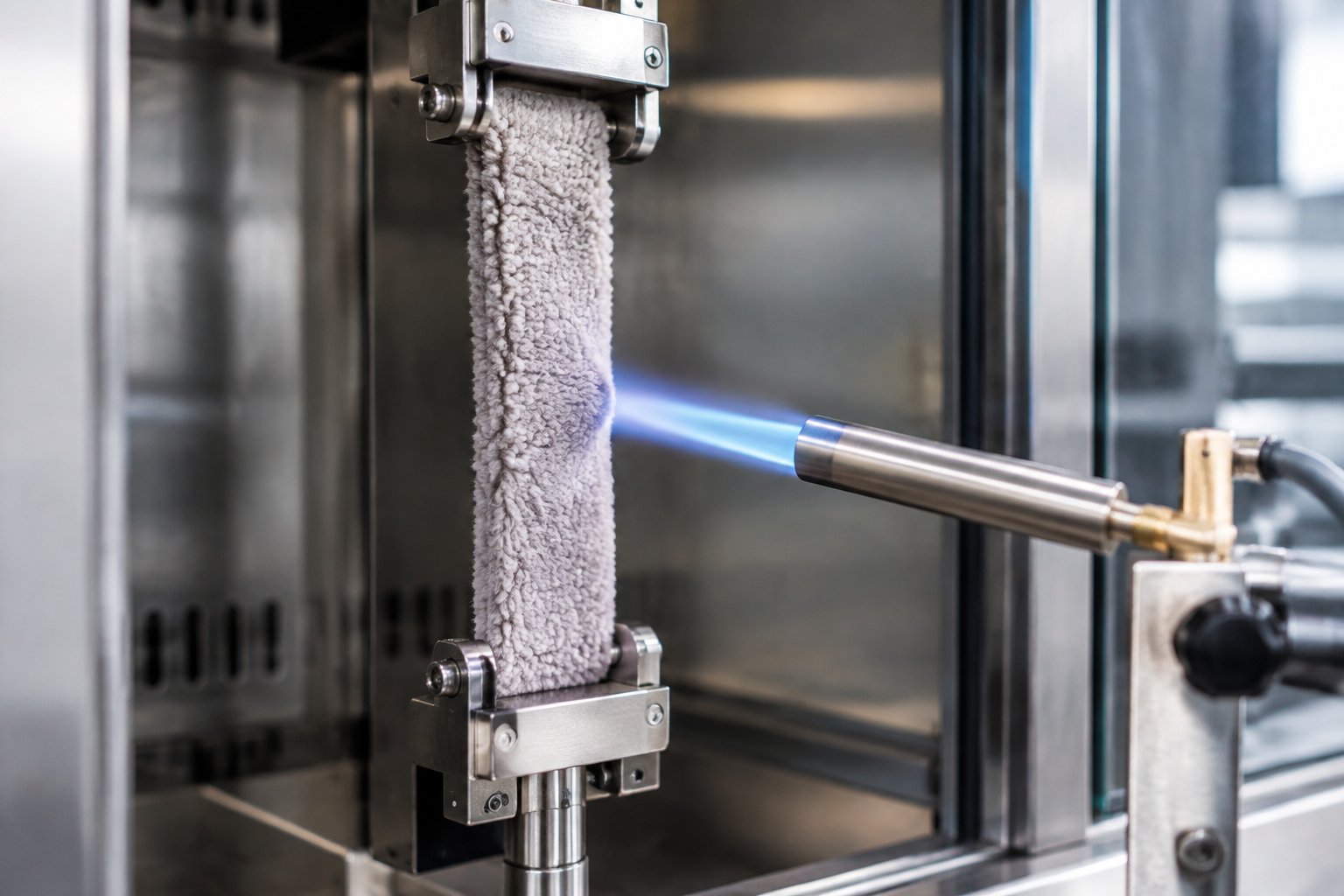
The test is about spread speed, not immunity. A fabric specimen is exposed to a flame under defined conditions, and the measurement is how quickly flame travels across the surface. For fabrics with a nap or pile — which is the definition of plush — the critical mode is surface flash: flame racing along the brushed face far faster than the base textile would ever burn. The toy-standard benchmark commonly cited for napped surfaces is a spread rate below 30 mm/s.
Two consequences follow for buyers. First, the result is a rate, so "passes EN 71-2" never means a fabric will not burn — listings should not imply otherwise. Second, because the failure mode lives in the pile, the same base fabric can pass or fail depending on brushing, shearing and finishing. That is why the golden sample, not the mill datasheet, is the reference that matters when a new lot arrives.
How Common Plush Fabrics Perform
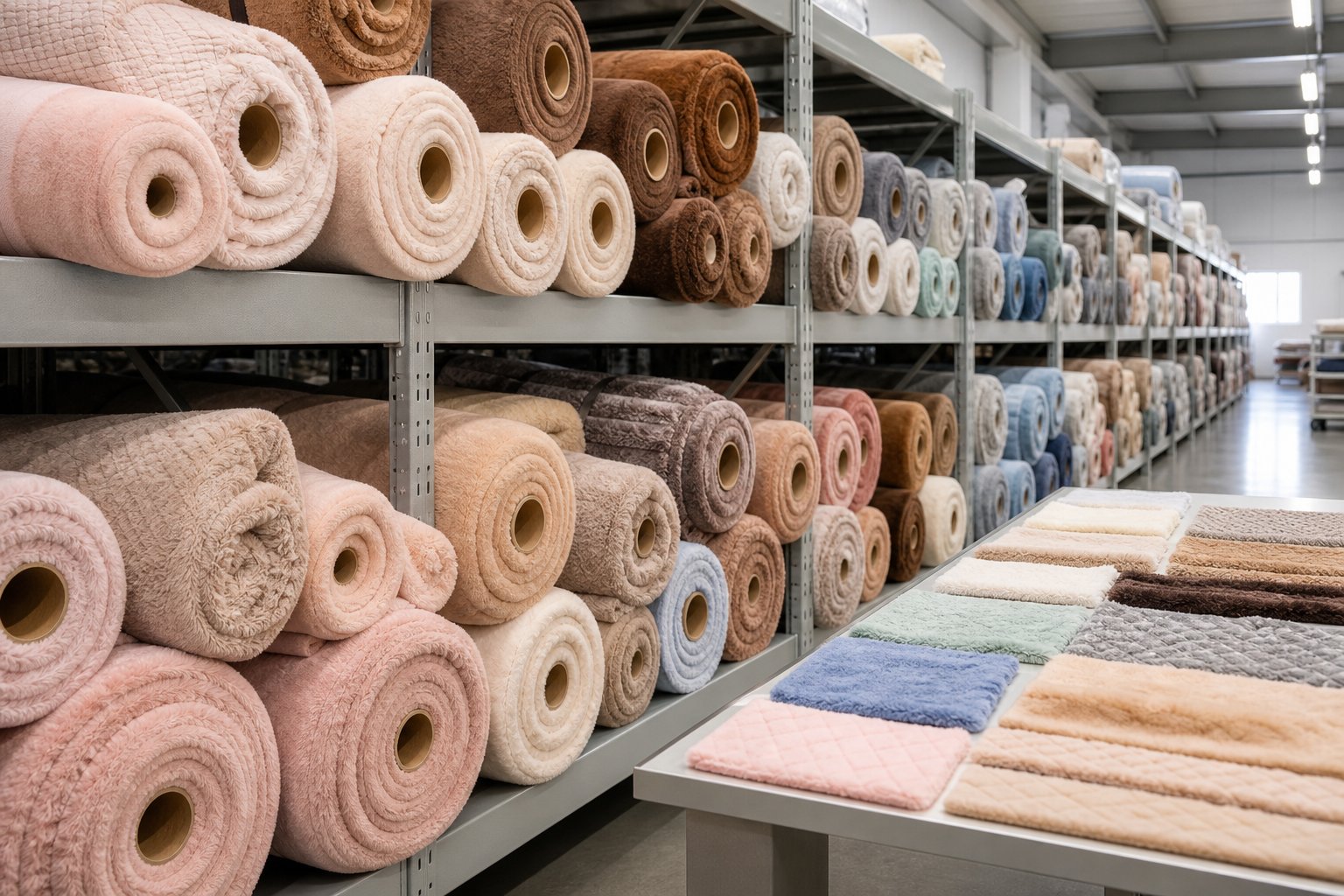
The three workhorse fabrics of the pet plush trade behave very differently against a flash front:
| Fabric | Surface character | Typical flash behavior | Watch point |
|---|---|---|---|
| Velour (short dense nap) | Low, uniform pile | Comfortable margin under the benchmark in most weights | Singeing finish must stay consistent between lots |
| PV fleece | Medium nap, brushed both sides | Acceptable at standard weights; lighter weights tighten the margin | Brushing depth is the variable; verify per lot |
| Imitation rabbit, long pile | Tall, open pile | The risk group; flame can run along the fiber tips | Face yarn blend and backing construction change results |
Weight and backing matter as much as the face: heavier grounds and constructions with a stabilizing back coating slow the front noticeably. When a long-pile look is non-negotiable for the design, budget attention for the testing stage instead of assuming the swatch tells the whole story.
Flame Retardants: The Fix That Often Backfires
When a fabric fails, the reflex is to ask the mill for a flame-retardant finish. Think twice before reflexing. FR treatment adds a chemical load to a product that dogs mouth, lick and carry for hours; some chemistries sit awkwardly next to the eco and safety story a buyer is building; and the durability of the effect through washing and rubbing is itself a test variable that must be verified, not assumed. A treated long-pile fabric can also change hand feel and shedding behavior — trading one complaint category for two.
The better sequence is fabric first: denser nap, heavier ground, a construction with a track record on the same test. Treat FR chemistry as the deliberate exception for channels that explicitly demand it — agreed in writing with the mill, declared on the specification sheet, and covered by its own migration screening rather than assumed safe because it solves a flammability number. And keep the marketing honest: a fabric that passes a spread-rate test is not "flame retardant" in the everyday sense of the phrase, and product pages should not say so.
Writing It Into the Purchase Order
A flammability clause holds up across reorders when it names five things:
- The reference: EN 71-2, tested voluntarily at buyer request as part of the toy-standard package.
- The scope: per fabric family and construction — not per toy design, which multiplies cost without adding information.
- The golden sample: a sealed swatch and finished toy retained by both sides as the behavior reference.
- The retest triggers: any change of fabric mill, face yarn, weight, brushing or colorway reopens the requirement.
- The disposition: a failing lot is not reworked into shipment; it is replaced or the design moves to a passing fabric — decided before production starts.
Our materials page lists the plush fabrics we stock with their construction details, and our quality page shows how clauses like these sit inside our standard inspection flow — including how sealed swatches are handled between orders.
Frequently Asked Questions
Are plush pet toys legally required to pass flammability testing?
What does the EN 71-2 test actually measure for plush fabrics?
Should I ask the factory to add flame-retardant treatment?
How often should flammability be retested in production?
Need plush fabrics that clear the checklist before the test?
Tell us your plush program and target channel — we will share fabric options with their test records and the clause wording we run in our own orders.