Key Takeaways
- Treat toys are not legally food-contact articles in the US or EU — but they hold food against a surface for hours, so serious buyers ask food-grade questions anyway.
- Three reference points matter: FDA 21 CFR 177.2600 for repeated-use rubber, LFGB testing schemes, and EU-style overall migration limits.
- Evidence quality varies more than polymer quality: check the applicant, the sample description, and whether the report tested the finished article or just raw resin.
- Most real contamination enters through production hygiene — regrind, mold release, packing dust — not through polymer choice.
- On listings, write tested to a framework; never approved by an agency.
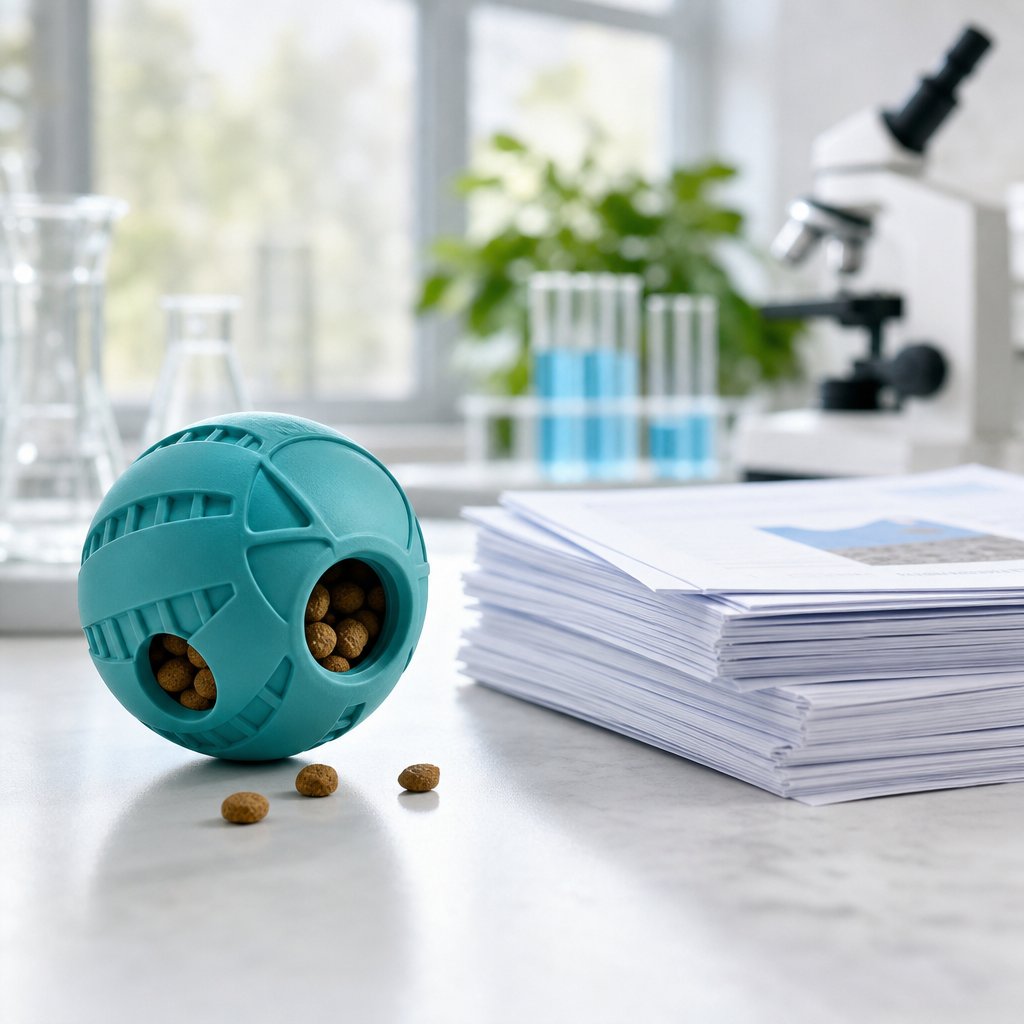
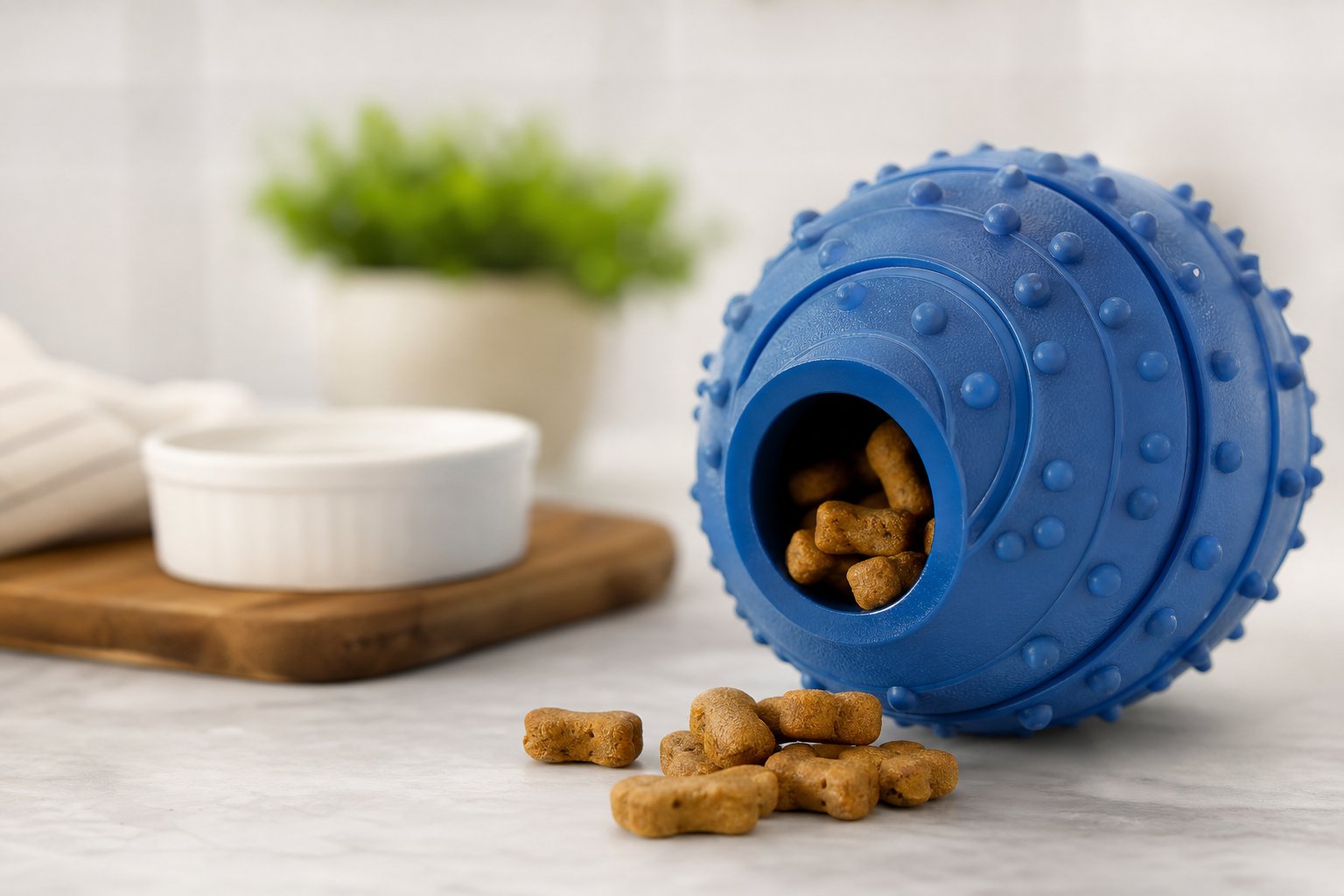
A treat ball is smeared with peanut butter in the morning and gnawed until dinner. Whatever the surface sheds under teeth, saliva and friction, the dog eats along with the treat. That is why food-contact questions arrive early in every serious treat-toy negotiation — and why they are so often answered badly.
This article maps the boundary — what food-contact law does and does not say about pet toys — then covers the frameworks worth referencing, how to read the evidence suppliers hand over, where contamination actually enters in production, and the wording that survives on a public listing.
The Boundary: Are Treat Toys Food-Contact Materials?
In both the US and the EU, food-contact rules attach to materials intended to touch food — meaning human food — by design. A chew toy shaped like a bacon strip is a toy. A dispenser deliberately built to hold kibble or smearable treats occupies gray territory: it is marketed as a toy, but it performs a food-holding function for hours at a time. Regulators have not drawn pet toys into the food-contact net, and pretending they have is a compliance error in itself. What happens in practice is that buyers import the logic voluntarily. The question they ask is simple and reasonable: if this surface holds food my dog eats, what can you tell me about what transfers from it? Suppliers who answer with documents win the order; suppliers who answer with adjectives do not.
Three Frameworks Worth Referencing
No single global standard governs the situation, so buyers lean on three recognizable reference points:
| Framework | What it covers | How it appears in a report | Watch-outs |
|---|---|---|---|
| FDA 21 CFR 177.2600 | US framework for rubber articles intended for repeated food contact | A compliance statement or formulation review against the regulation | It is a regulation, not a certificate; approval language does not apply |
| LFGB testing schemes | German food and feed law framework; labs run migration, organoleptic and volatile-fraction items | An LFGB-style report naming the tested items | Widely used shorthand in EU trade; ask which items were run |
| Overall migration | Substances transferring from the material into a food simulant | A migration value against a reference limit such as 10 mg/dm² | Designed for human-food plastics; used here as a voluntary benchmark |
Treat them as references, not trophies. A report naming one of these frameworks and run on the actual article answers the buyer's question; the framework name alone answers nothing.
Reading the Evidence Suppliers Hand Over
"It is food grade material" is a sentence, not a document. Five checks separate useful evidence from wallpaper:
- The applicant: the name on the report should match the supplier you are buying from, not an unrelated trading name.
- The sample description: it should describe a molded treat toy or the exact polymer part — a generic pellet description proves little about your SKU.
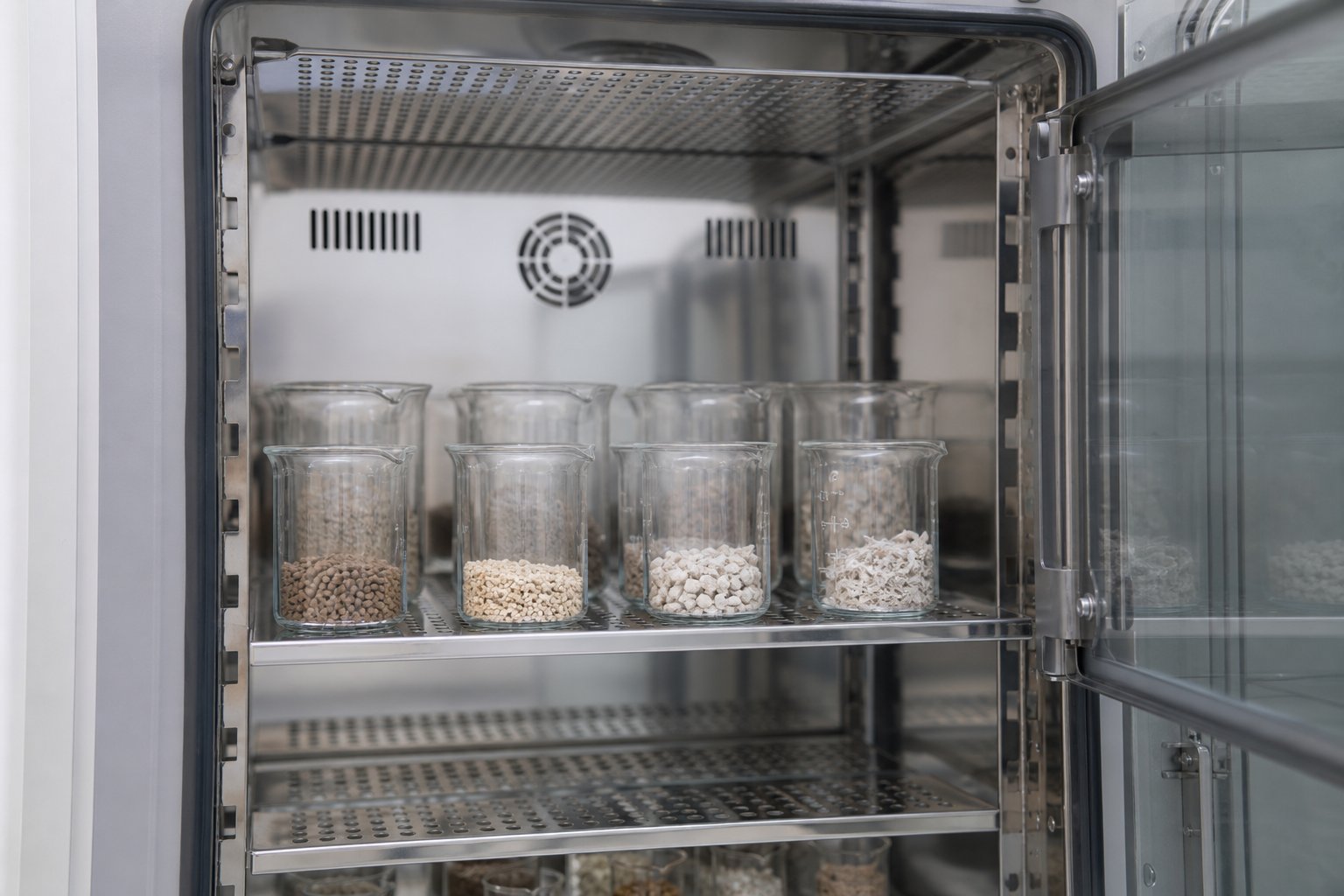
- The scope: finished-article testing beats a raw resin certificate, because masterbatch, regrind and molding all sit between the resin maker and your treat ball.
- The date: food-contact evidence loses value as formulations change; within 12 to 24 months is the working norm.
- The items: a one-parameter report is not a bundle — migration, organoleptic and volatile-fraction items each tell a different part of the story.
When reports are missing entirely, that is information too — about how the factory treats its own process, and about the price you will eventually pay in listing review questions.
Where Contamination Actually Enters
Polymer choice gets the attention; production hygiene does the damage. In molded and rubber treat toys, the usual entry points are:
- Regrind in mouth-contact parts — floor sweepings and sprue returns ground into virgin-looking material.
- Mold release agents — cheap sprays transfer a film to every part and a smell to every unboxing.
- Post-molding handling — parts racked on dirty pallets or shipped loose in returnable cartons.
- Masterbatch shortcuts — colorants never screened for heavy metals, a problem covered separately in our article on migration testing.
- Packing hygiene — polybags stored open in dusty aisles, boxes recut from unknown sources.
All five are controllable with written rules that cost little: virgin material only for mouth-contact parts, food-safe mold release, covered racks, sealed bags. Factories that supply treat toys seriously already run these rules; ask to see them during a video walk-through of the molding floor.
Marketing Wording That Survives Scrutiny
The compliant version of the story is also the more persuasive one. Instead of "FDA approved" — a phrase that misstates how frameworks work, since materials comply with regulations rather than win approval — write "formulated to FDA 21 CFR 177.2600" or "tested under LFGB schemes." Instead of "100% food safe," write "overall migration tested against a 10 mg/dm² reference limit." Instead of "edible grade," which invites absurdity, describe the function: holds treats against a tested surface. Keep one evidence line per claim in the SKU dossier so every listing sentence points to a document.
We keep polymer options and their test statuses visible on our materials page, and the inspection steps that protect hygiene in production are described on our quality page. Buyers comparing suppliers can thereby compare documents rather than vocabulary.
Frequently Asked Questions
Do treat-dispensing toys have to be food-contact certified?
What does LFGB tested actually mean?
Is a resin certificate enough to prove food-contact quality?
Can I market my treat toy as FDA approved?
Sourcing treat toys buyers will not interrogate?
Send your treat-toy program — we will share material options, framework test statuses and the hygiene rules our molding floors run.