Key Takeaways
- ISO 8124 is the international toy safety standard; its parts mirror the mechanical, flammability and migration trio buyers know from EN 71 and F963.
- For pet toys it is voluntary everywhere — which makes it the natural common core for multi-market ranges.
- One ISO report can serve several markets, but EU and US buyers often insist on their local letters; plan a core-plus-extras structure.
- Laboratory choice is a credibility decision: ISO/IEC 17025 accreditation, English reports, applicant matching the supplier.
- In contracts, cite part numbers, edition years and scope — vague "international toy standards" language protects nobody.
A growing pet toy brand rarely serves one market. The same chew toy ships to a distributor in Germany, a marketplace seller in California, a chain buyer in the Gulf and a subscription box in Australia — and each of them eventually asks for paperwork, using a different alphabet. Paying for EN 71, ASTM F963 and ISO 8124 reports on every SKU is how testing budgets die; shipping to all of them with a single generic certificate is how listings die. Between those poles sits a working question: which standard can serve as the common core, and when must each market's own letters be added?
This article answers it for ISO 8124 — the international toy safety standard — by placing it against EN 71 and ASTM F963, showing what one report can and cannot cover across markets, and writing the contract language that makes the whole structure enforceable.
What ISO 8124 Is, Beside EN 71 and F963
ISO 8124 is the toy safety standard published by the International Organization for Standardization, built in parts that will look instantly familiar: Part 1 for mechanical and physical properties — small parts, edges, attachment — Part 2 for flammability, and Part 3 for migration of certain elements. Further parts address specific product types and test methods. The hazard logic is shared with Europe's EN 71 and America's ASTM F963 because the physics of a swallowed part is not national; the numeric limits, test details and legal standing are not interchangeable, and no regional regulator enforces ISO 8124 as law.
| Framework | Origin and reach | Legal status for toys | Status for pet toys | Where buyers ask for it |
|---|---|---|---|---|
| EN 71 | European harmonized standard | Backing the Toy Safety Directive and CE for children's toys | Voluntary, most-requested in the EU | EU importers, retail chains, GPSR files |
| ASTM F963 | US national standard | Mandatory for children's toys under CPSIA | Voluntary, channel-driven in the US | US marketplaces, chain pet stores |
| ISO 8124 | International standard, global scope | Voluntary reference adopted into national systems at varying degrees | Voluntary everywhere; the natural common core | Multi-market ranges, Gulf/Asia-Pacific and non-EU buyers |
The strategic reading of that table: for a category where every toy-standard test is voluntary, the standard with the widest geographic recognition is the cheapest common denominator — provided the market-specific expectations are layered on top deliberately.
One Report, Many Markets: What Can Be Reused
Because pet toys carry no mandatory toy standard anywhere, the reuse question is commercial, not legal. An ISO 8124 report from an accredited laboratory is credible evidence in any market where the buyer has not named a preference: it answers the same three questions — breakage, burning, leaching — that every risk reviewer asks. Distributors across Asia-Pacific, the Middle East, Africa and Latin America routinely accept it as-is, and it gives marketplace case managers something standard-shaped to file.
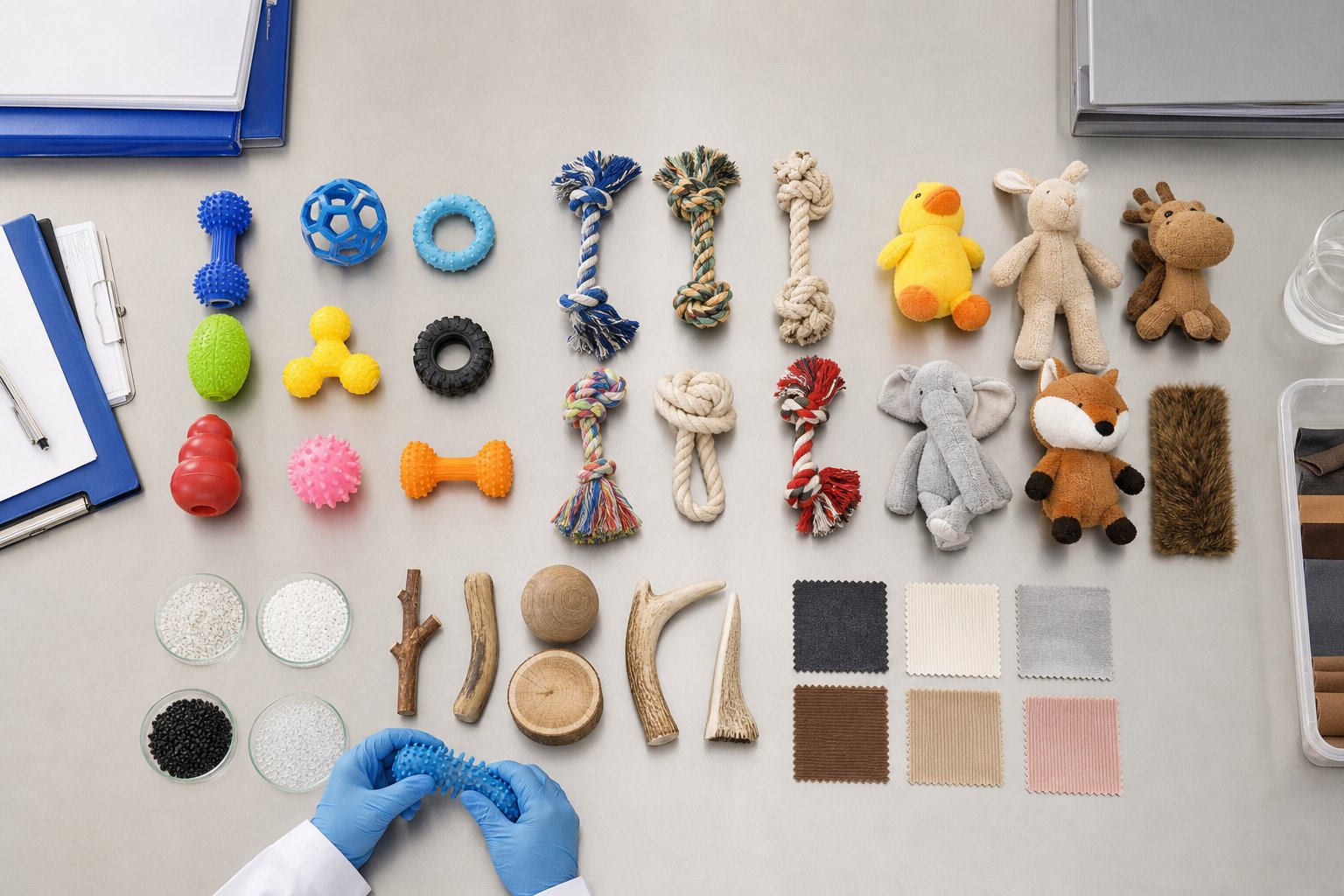
The reuse boundary appears where channel expectations are written down. EU buyers, as covered in our EN 71 article, overwhelmingly expect the EN 71 letters on the report itself, whatever the physics says; US channels expect F963-style documentation; and both are entitled to their preference because the testing is voluntary in the first place. The efficient structure is therefore core-plus-extras: one ISO 8124 mechanical and migration core per material and color family, chemical screens scoped globally — REACH for EU destinations, the buyer's stated limits for the US — and local-standard reports added only where a named customer requires them. A compliant file for each SKU is then a matter of assembly, and our article on the per-SKU compliance dossier shows the folder structure that keeps those assemblies fast.
Choosing the Laboratory and the Report Language
A multi-market core report is only as portable as its laboratory paperwork. Four properties make a report travel well: accreditation to ISO/IEC 17025, so any professional buyer can verify the lab itself; report language in English, which every cross-border file assumes; sample descriptions naming the actual parts and materials rather than "toy sample"; and the applicant matching the supplier entity a buyer can contract with. Add two quiet details that separate professional files from decorated ones — the exact edition years of the standards cited, and photos or retained samples traceable to the report number.
Cost control comes from the same scoping discipline as any testing: material systems and color families, not SKUs. A range built on plush, TPR, rubber and rope needs one mechanical core and one migration screen per family per color group, refreshed on a 12-month cycle and on any material change — a cadence that keeps every market conversation one attachment email long.

Citing ISO 8124 Correctly in Contracts
Standards only protect you when the citation is falsifiable. The contract language that works, in one sentence per layer: products shall comply with ISO 8124-1, -2 and -3 (stating the edition years) as tested by an ISO/IEC 17025-accredited laboratory per material and color group; reports shall be refreshed at an agreed interval and upon any change of material, colorant, supplier or mold; and buyer-requested additional standards shall be scoped and priced separately rather than absorbed silently. That last clause matters more than it looks — "we also need Prop 65 screening" arriving after shipment is a negotiation, not a specification.
- Name the parts and editions: "ISO 8124-1/-2/-3" with years, never "international toy standards."
- Tie scope to material and color groups so the obligation stays testable and affordable.
- Set the refresh cadence and the change triggers in the same clause as the obligation.
- Route extra standards through a scoping annex, so new letters are priced, not assumed.
Suppliers who already run multi-market programs — the ones whose documentation shows standard numbers and editions — will return countersigned terms the same week. Hesitation at this clause is a reasonable signal to ask which standards the factory actually holds.
Frequently Asked Questions
What is ISO 8124 and how does it relate to EN 71 and ASTM F963?
Can one ISO 8124 report cover pet toy sales in multiple markets?
How should a laboratory be chosen for pet toy testing?
How should ISO 8124 be cited in a purchase contract for pet toys?
Shipping one range to several markets?
Send your market list — we reply with the core-plus-extras test structure we run, which reports ship with each order and FOB ranges by configuration.