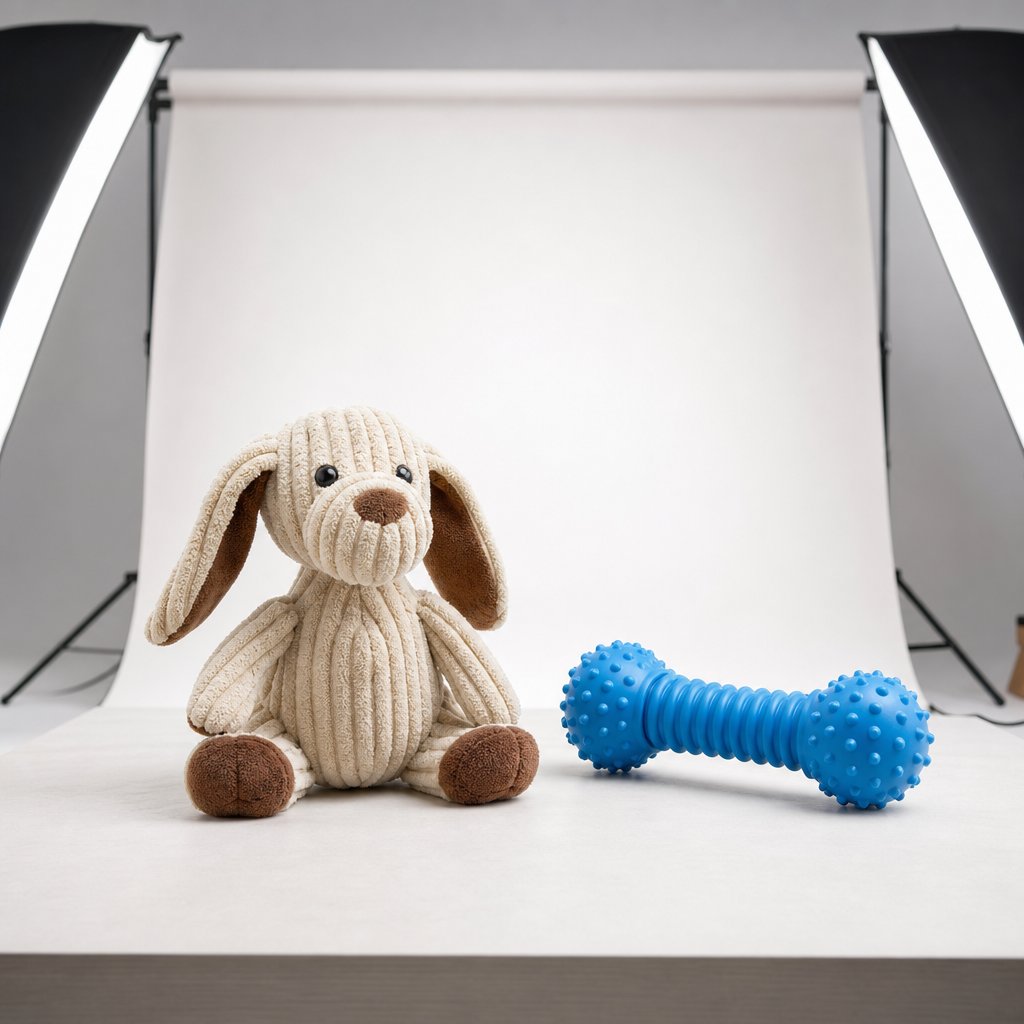
Key Takeaways
- A pet toy listing converts on five shot types: white-background hero, scale reference, detail macro, lifestyle scene and in-use play.
- Send suppliers a fixed asset spec per SKU — formats, angles, resolution — and you stop rebuilding listings at every reorder.
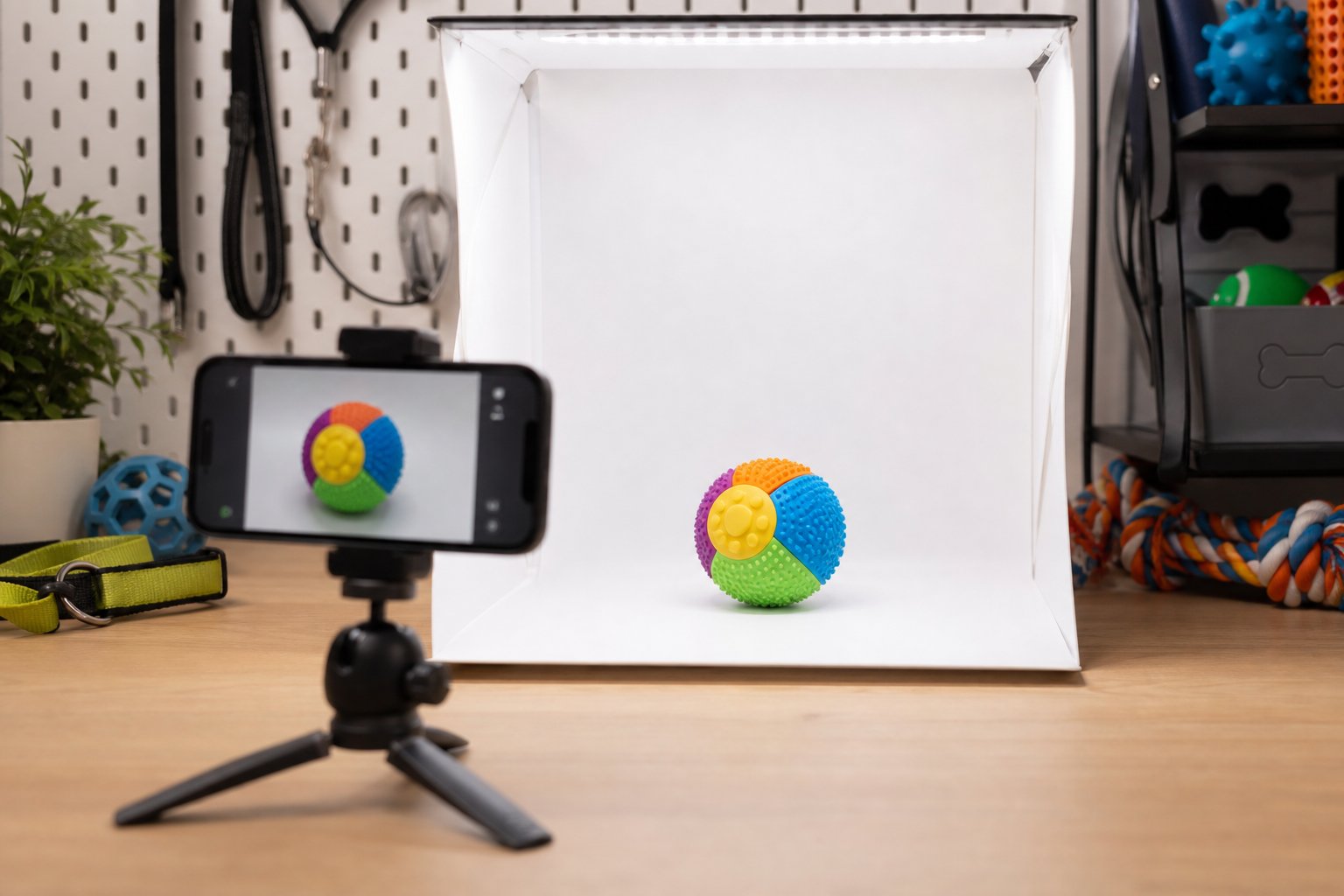
- A controlled phone setup with seamless paper, two lights and a tripod is enough for lifestyle and macro work.
- Image compliance is product compliance: no badges a pet toy cannot legally carry, no scale props that flatter.
- Put usage rights in writing before supplier or customer photos enter your listings or ads.
The cheapest place a pet toy ever fails is in the photograph. A chew toy that survives every lab test can still die on the listing page, killed by one dark, angled factory snapshot that makes it look flimsy, tiny or cheap. In this category the purchase is emotional and the product is physical: buyers cannot squeeze the rubber, weigh the plush or hear the squeaker through a screen. Photography has to do the work their hands would do in a shop.
This article is the shot list we hand to brand and marketplace clients: which images a pet toy SKU actually needs, what to demand from a supplier's asset pack, how to get usable results from a phone, and where image rights and listing compliance usually bite.
Why Photography Is a Conversion Problem, Not an Art Project
Marketplace shoppers decide from thumbnails, usually on a phone, in seconds. In pet toys, two questions decide most purchases — and most returns: how big is it really, and how tough is it really. Sizing confusion is one of the most common avoidable return reasons across soft-goods categories, and "not as durable as it looked" is the classic one-star review for chew toys. Both are image problems before they become product problems.
The practical consequence: treat the image set as part of the specification, the same way you treat Shore hardness or fabric weight. It is produced against a written standard, checked and versioned — not improvised the night before launch with a desk lamp and last season's props.
The Five Shots Every SKU Needs
Skip any of the five and the listing answers a buyer's question with silence. The jobs are distinct, so the failures are distinct too:
| Shot | The question it answers | How to produce it | Common failure |
|---|---|---|---|
| White-background hero | What exactly am I buying? | Product centered on pure white, even light, no props | Shadows, color cast, busy props that read as clutter |
| Scale reference | Will it suit my dog? | Toy beside a neutral everyday object, dimensions in the gallery | No reference at all, or a giant paw prop that flatters the size |
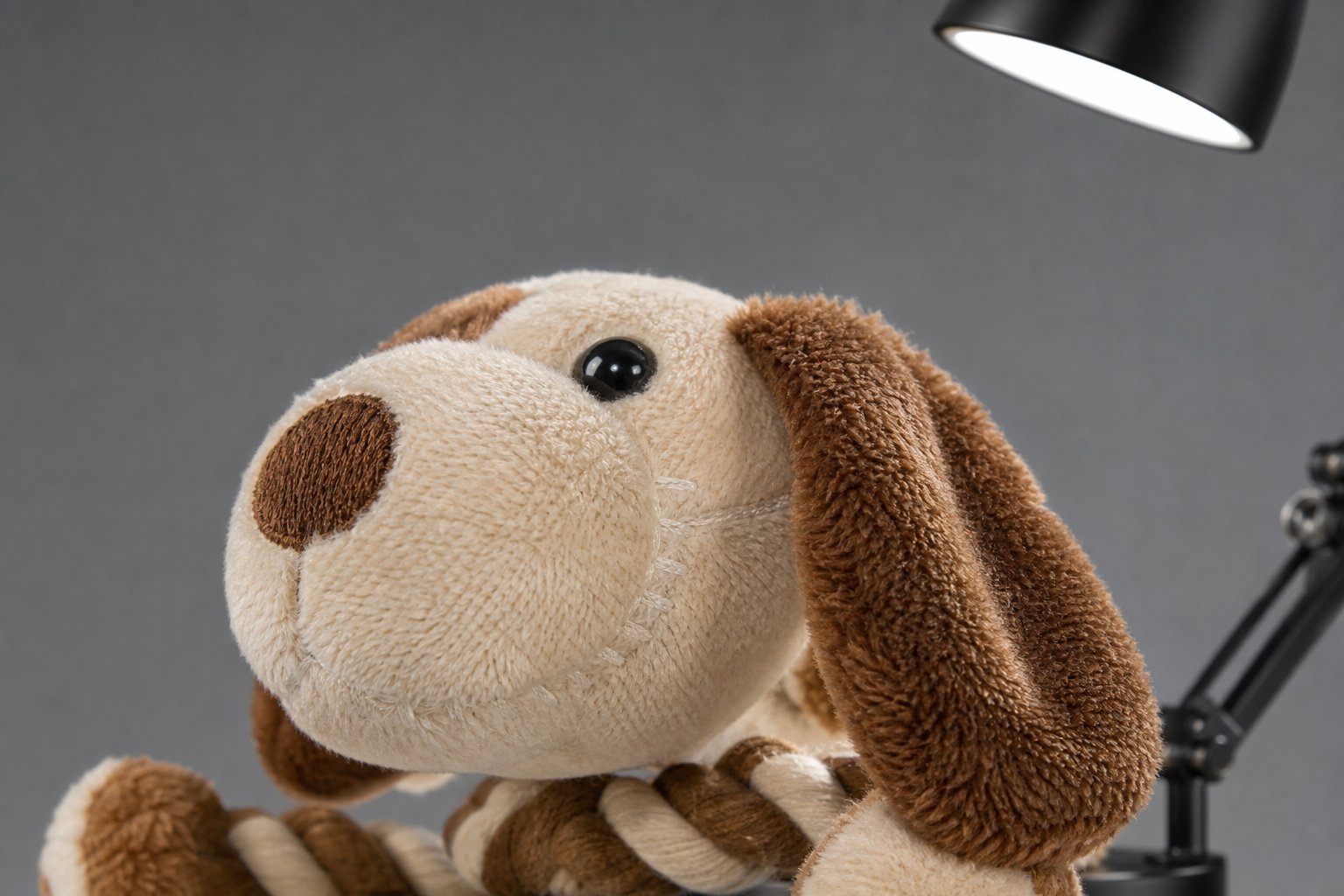
| Detail macro | Is it well made? | Close-ups of stitching, nose, squeaker port, rope ends, texture | Soft focus, blown highlights from bare flash |
| Lifestyle scene | Does it fit my home? | Two or three tidy natural-light scenes on believable surfaces | Cluttered sets with an obvious showroom look |
| In-use play | Does it actually work? | Short clips or frames of tug, toss, squeak, treat dispensing | Staged photos where nothing moves and nothing proves |
Notice that only one of the five is a "beauty" shot. The other four exist to remove doubt, and doubt is what carts abandoned.
The Asset List to Send Your Supplier
Most factories will happily shoot images — to their own standard, which usually means a dark workshop table and a corner watermark. Replace that with a written spec inside the RFQ. The version we use for clients covers:
- Hero set: 1:1 ratio, pure white background, product filling most of the frame, long edge of 1,600 px or more — the usual marketplace zoom threshold.
- Detail macros, three to five per SKU: stitching, embroidered features, squeaker port, knots and rope ends, nose and paw texture.
- One scale image per size variant, with a neutral reference object and a written dimension table in centimeters and inches.
- Lifestyle shots on two different backgrounds, styled for your market's homes rather than the factory showroom.
- A 10–20 second clip per SKU: squeak test, toss, tug or treat function — steady, well lit, no music baked in.
- Delivery: original files plus web-ready JPG, named by SKU code and angle, with usage rights stated in writing.
Two of those lines do most of the work. The zoom threshold matters because marketplace viewers pinch to inspect stitching and seams; anything under the threshold pixelates exactly where they are looking. And the dimension table matters because "about 20 cm" means nothing to a buyer holding a tape measure at home.
A Phone Setup That Does Not Look Cheap
Camera bodies stopped being the bottleneck years ago; light and discipline are the difference now. Sit the set near a large window or under two inexpensive softboxes, tape down a sweep of seamless paper, and fix the phone to a tripod with a timer so every frame is sharp and identically framed. Wipe every toy before it is shot — a lint roller on plush, a microfiber cloth on rubber and TPR. Shiny TPR in particular needs diffused light, or the highlights blow out and hide the surface texture buyers use to judge quality.
Shoot slightly wider than the final crop and straighten to square later. Edit with free apps, but limit yourself to exposure, white balance and straightening. Heavy filters shift color, and shifted color generates the "item differs from photo" complaints that no discount can buy back.
Rights, Claims and Image Compliance
Ownership comes first. Supplier-shot photos are rarely exclusive: the same asset pack often appears on several storefronts selling the identical toy, which flattens your brand into everyone else's. Negotiate exclusivity or at least first use for anything you position as your own line, and keep supplier shots for internal catalogs and B2B communication. Customer photos and review media need permission too — a screenshot lifted from a review is a rights problem wearing a conversion costume.
Claims come second. Everything printed over an image is a claim: badges, seals, "vet approved," "indestructible." Pet toys cannot lawfully carry some of the marks buyers are used to seeing — CE is the frequent example in this category, since it applies to children's products, not pet products — and absolute durability words read as warranties. Honest scale props, real textures and a video of the toy doing its job will outsell a badge every week of the quarter.
Frequently Asked Questions
How many images should a pet toy listing carry?
Can I just use my supplier's photos?
Do I need a professional studio for pet toy photos?
What image mistakes cause listing or legal problems?
Shooting a new range and need asset-ready samples?
Send your SKU list — we reply with FOB ranges, flag which products already have photo-ready stock, and coordinate sample photography from our side.