Key Takeaways
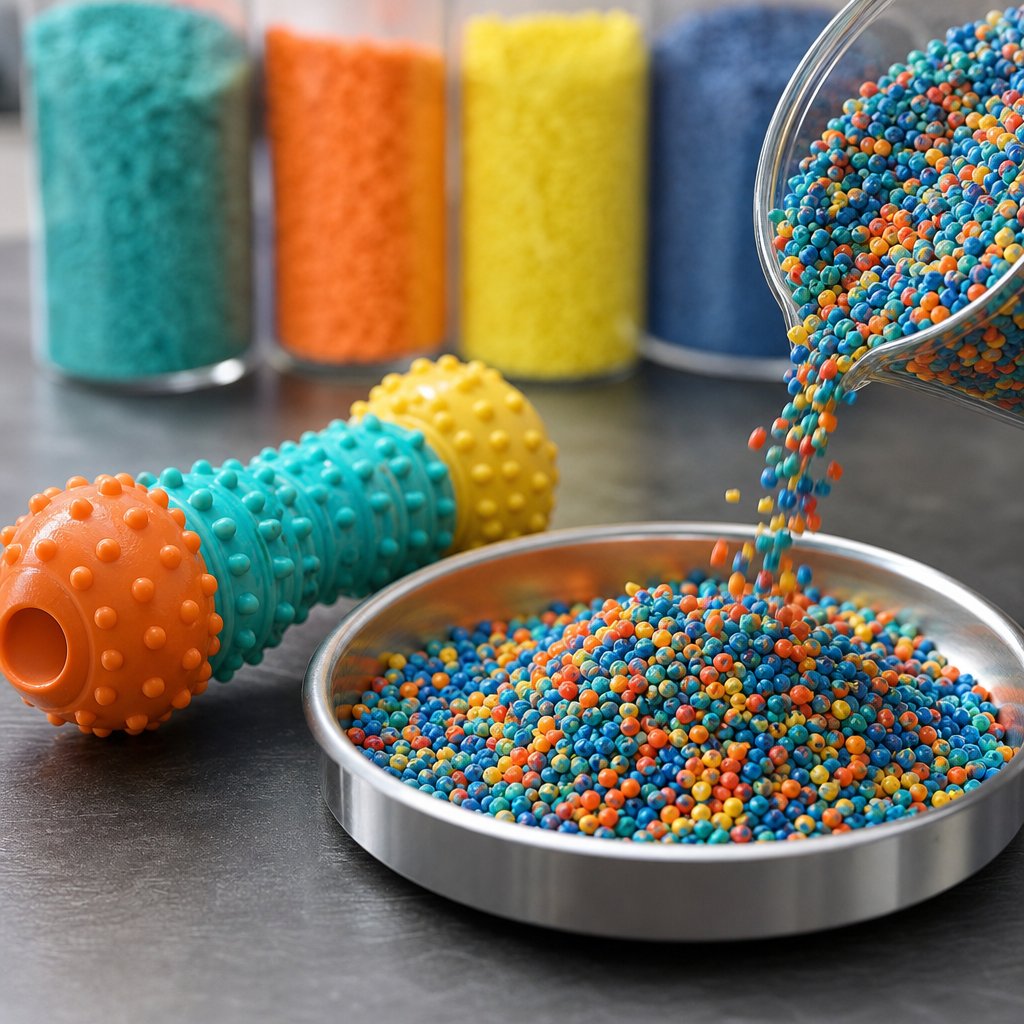
- TPR (thermoplastic rubber) is a family of elastomers that can be melted and remolded — which is why it dominates modern chew-toy production.
- Quality commercial TPE compounds are formulated without latex, PVC, phthalates and BPA — but "TPR" is a commodity word, and compound quality varies enormously.
- Hardness (Shore A) decides the chew experience; specify a range per SKU, not just "soft" or "hard."
- Odor complaints usually trace to recycled content or additives, not to TPR itself — control it in the order, not in reviews.
- Before ordering, ask for: compound grade, virgin-material ratio, durometer readings and a REACH phthalate screening report.
If you have sourced dog toys in the last five years, you have almost certainly handled TPR — even if the factory called it "rubber," "thermoplastic rubber" or just "elastic material." It is the squishy-yet-tough stuff behind fetch balls, tug sticks, treat-dispensing shapes and most of the pastel chew toys filling marketplace listings. And because it dominates the category, it is also where most quality disputes begin: one buyer's "durable TPR toy" is another's one-star review about a toy that split in a week.
This guide explains what TPR actually is, how it differs from the materials it gets confused with, and — more usefully — what to write into an RFQ so the material you approved is the material that ships.
What TPR Is, in Plain Terms
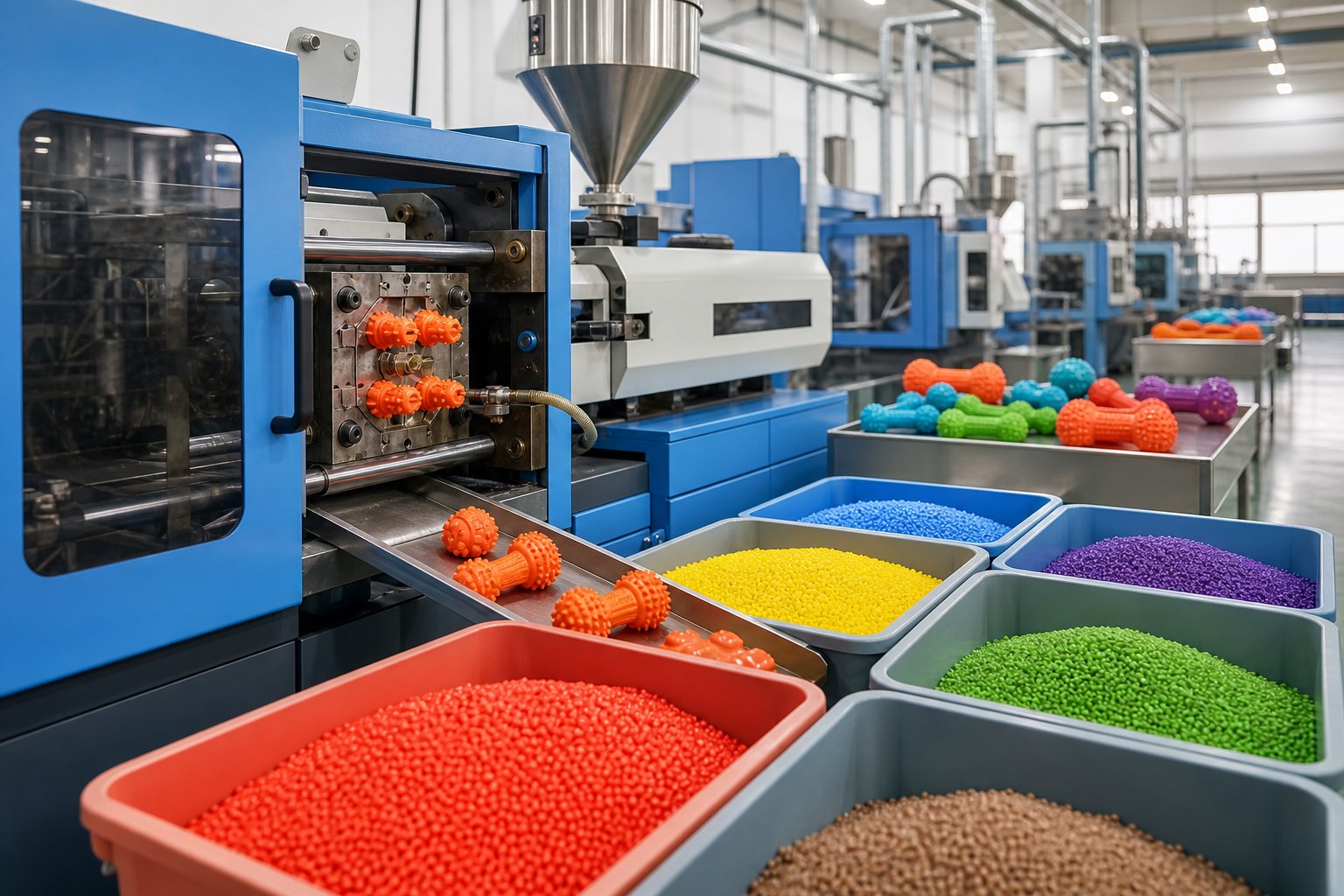
TPR stands for thermoplastic rubber; the broader family is TPE (thermoplastic elastomer). These are blends that behave like vulcanized rubber in use but melt and flow like plastic when processed. That single property explains the material's dominance in pet toys: it can be injection-molded into complex shapes, colored with masterbatch in any shade, over-molded onto harder cores, and — critically for a category with fast SKU turnover — re-melted, so sprues and rejects can be reground instead of binned.
The trade-off is that TPR is a blend, not a single chemical. Formulators adjust the ratio of rubber phase to plastic phase, add oils and fillers, and select stabilizers. Two compounds both sold as "TPR" can differ in tear strength, compression set, odor and regulatory profile more than they differ in price. When a supplier says "it's TPR," the correct follow-up is: which compound, from which resin maker, with what virgin-material ratio?
TPR vs Natural Rubber vs PVC vs Silicone
Buyers conflate four materials that behave very differently at the same price point. The quick map:
| Material | Processing | Chew feel | Typical use | Watch-outs |
|---|---|---|---|---|
| TPR / TPE | Injection, extrusion | Squishy to firm, resilient | Fetch balls, sticks, treat toys | Compound quality varies; recycled content raises odor and phthalate risk |
| Vulcanized natural rubber | Compression molding, vulcanizing | Firm, high rebound, tear-resistant | Power-chewer cones and bones | PAH limits under REACH; higher tooling and unit cost |
| PVC (vinyl) | Rotocast, injection | Squeaky thin-wall figures | Latex-style squeaky toys at lowest cost | Phthalate plasticizers; under regulatory and retail pressure in the EU |
| Silicone (platinum-cured) | Compression molding | Soft, inert, tasteless | Lick mats, slow feeders, treat pockets | Cost; food-contact compliance is the selling point (FDA 21 CFR 177.2600 / LFGB testing) |
Two practical conclusions follow. First, for a range that spans puppy toys to power-chewer bones, TPR and natural rubber complement rather than replace each other — rubber takes the heavy-chew SKUs, TPR takes everything where color, float or cost matter more than extreme tear strength. Second, if a quote looks dramatically cheaper than the field, the difference is usually recycled content or plasticizer choice — both of which show up later as odor complaints or failed screening tests.
Hardness Is the Spec Buyers Forget
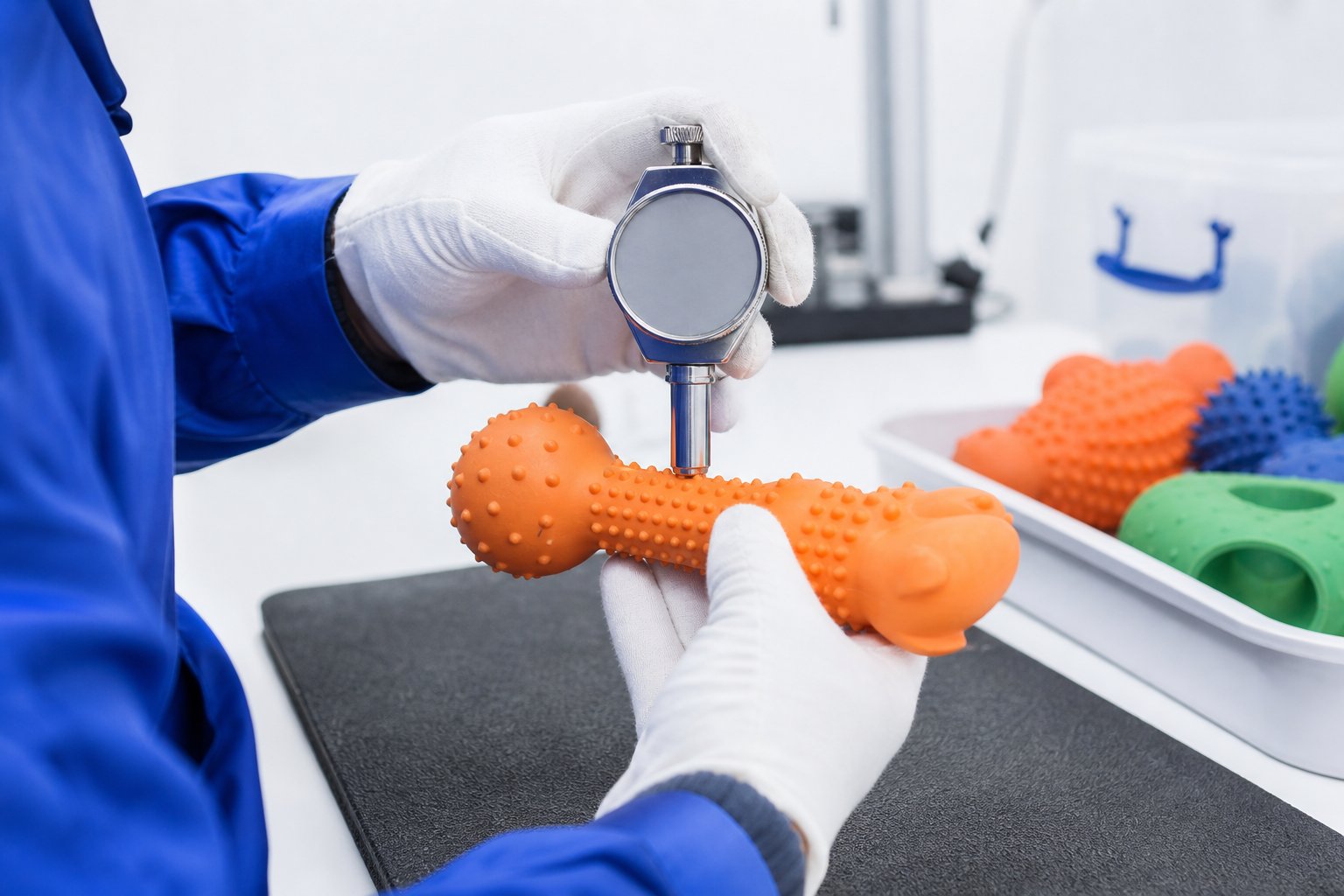
Ask three factories for a "medium-soft TPR" and you will get three different toys. The professional way to specify is Shore hardness (durometer A), measured on a finished part rather than quoted from a datasheet. A workable tiering for dog toys:
- Soft, roughly Shore 35–55 A — puppies, seniors, light chewers; squeezes easily, gentle on teeth.
- Medium, roughly 55–70 A — the default for average adult dogs; balances give and durability.
- Firm, roughly 70–80 A — interactive shapes, tug sticks and treat dispensers that must survive prying jaws.
Write the Shore range into the RFQ and require durometer readings per production batch. It costs the factory minutes per lot and buys you consistency across reorders — the difference between a reorder that matches launch samples and one that quietly ships harder, brittler parts.
Safety and Compliance: What Actually Applies
Pet toys are not legally "toys" in the European Union — the Toy Directive covers products for children under 14. What applies regardless of species is the EU chemicals framework: REACH, including the SVHC candidate list (250+ substances, updated continuously) and the PAH limits for rubber and plastic parts that can touch skin or mouth. In the US, there is no federal mandatory toy-style standard for pet toys; the practical floors are California Proposition 65 screening and, increasingly, marketplace requirements — Amazon commonly asks for ASTM F963-style toy-standard reports even though the law does not compel it.
For TPR specifically, the compliance conversation is mostly about plasticizers and heavy metals. Reputable commercial compounds are marketed as free of latex, PVC, phthalates and BPA — but the words on a resin brochure are not evidence. Ask for a recent third-party REACH phthalate screening (the common benchmark is the CPSIA 8-phthalate set at 0.1%) and, for colored parts, heavy-metal screening against EN 71-3 style migration limits. Pet-toy-specific verification against ASTM F2999 — the standard written for pet toys, covering material hazards, sharp edges and squeaker attachment — is the cleanest way to show diligence that matches the actual product category.
Odor: The Complaint That Starts in the Compound Room
"Smells like tires" is one of the most common negative reviews for rubber-ish toys, and it almost never comes from virgin TPR itself. The usual culprits: high recycled content, cheap process oils, or residual curing agents in reworked material. All three are purchasable decisions made before molding.
The control is contractual, not hopeful. Specify a virgin-material ratio for mouth-contact parts; require that sprue regrind, if used at all, stays within an agreed percentage and never in mouth-contact components; and add a batch-level sensory check to the inspection standard — unboxed, rubbed and bagged readings against an approved reference sample. Factories that already run low-odor programs will accept these clauses without blinking; the ones that push back are telling you where their margin comes from.
A Pre-Order Qualification Checklist
Before a first TPR order — or a first order with a new factory — five documents and one phone call settle most of the risk:
- Compound datasheet: resin maker, grade name, and confirmation it is formulated without PVC, latex, phthalates and BPA.
- Virgin-material ratio commitment for mouth-contact parts, in writing.
- Durometer readings on the golden sample — and agreement they will be measured per batch.
- Third-party REACH phthalate screening (8P at 0.1% benchmark) dated within the last 12 months, with the applicant matching the supplier.
- AQL agreement for the shipment (Critical 0 / Major 2.5 / Minor 4.0 is the consumer-products norm), with odor in the defect catalog.
- A video call with the molding floor: you are looking for material handling discipline — labeled bins, covered regrind, no mystery pellets.
Sources that treat pet-toy materials this way are rare — which is exactly why our materials matrix and quality page publish the criteria openly. If you are comparing suppliers, compare documents, not adjectives.
Frequently Asked Questions
Is TPR safe for dogs to chew every day?
Is TPR better than natural rubber for chew toys?
How should I specify hardness when ordering TPR toys?
Does TPR smell, and can the odor be controlled?
Sourcing TPR toys and want the spec right the first time?
Send your category and quantity — we reply with FOB ranges, compound options and the exact test plan we would run for your market.