Key Takeaways
- Audits fail quietly — not on the questions you asked, but on the ones you forgot. The standard checklist covers the floor; it rarely covers the arrangements around the floor.
- Six questions belong to the production floor: outsourcing, same-line competitors, operator turnover, rework material, substitution triggers and the needle-detection log.
- Six belong to the paper trail: test report applicants, mold ownership, odor failures, named-week capacity, past inspection findings and what has changed since last year.
- Every question needs a follow-up that tests the answer against records, not against the salesperson's fluency.
- Audit answers decay: re-verify annually, before every peak season, and after any ownership or capacity change.
Factory audits rarely fail loudly. Nobody hides the sewing machines. The audit walks a clean floor, drinks acceptable tea, photographs a sample room that photographs beautifully — and misses the two facts that will define the next year: that the stuffing happens in a workshop three streets away, and that the line running your exclusive design also runs a near-identical design for a competitor. Audits fail on the questions nobody asked, because the standard checklist was written for the floor and the real risks live in the arrangements around the floor. Twelve questions cover most of that blind zone. Each comes with the risk behind it and the follow-up that turns an answer into evidence.
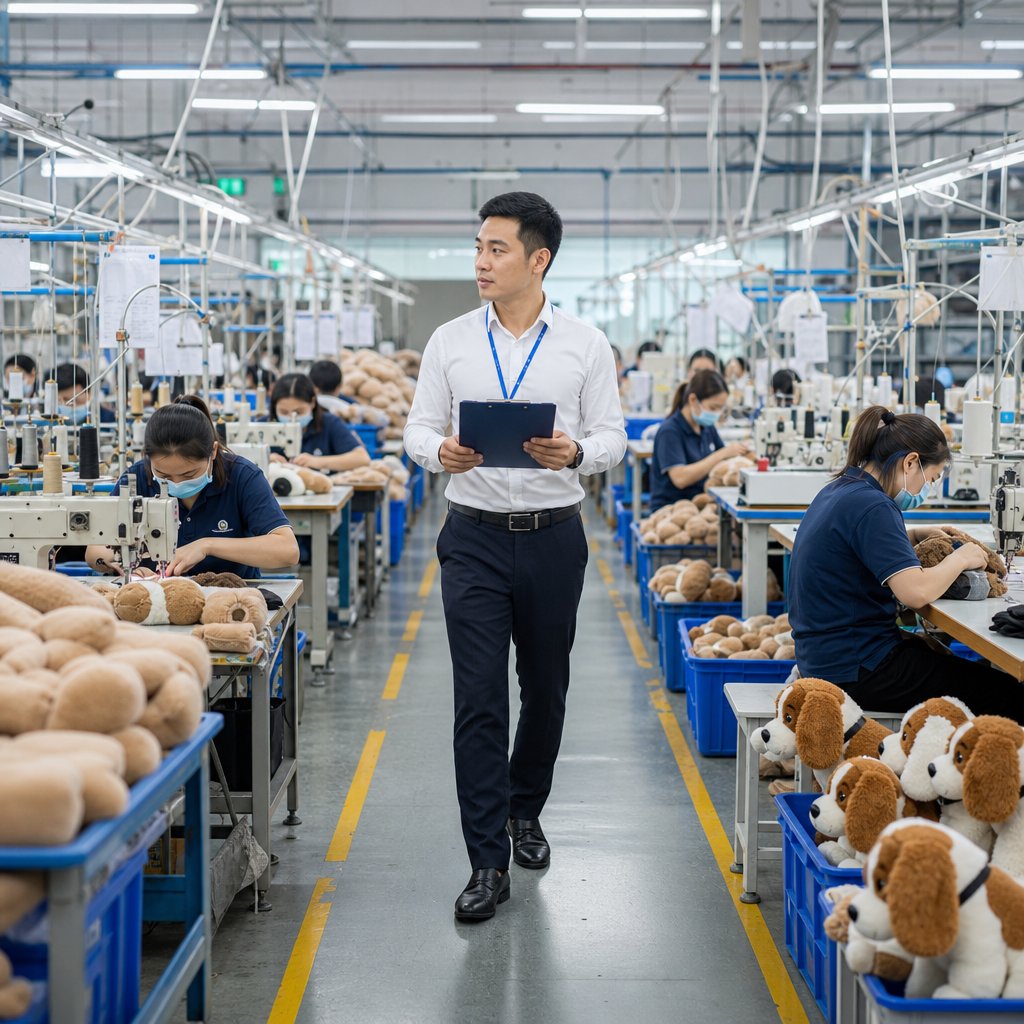
Six Questions on the Production Floor
These are asked standing up, preferably during production hours, and each answer should be checked against something you can see:
- "Which processes do you outsource — stuffing, embroidery, printing, packing?" The risk: your QC scope ends at the gate while your order sometimes does not. The follow-up: names and addresses of every subcontractor, and a clause giving you audit rights over any of them that touch your order.
- "Whose orders share my line this week?" The risk: same-line production of a competitor's near-identical SKU — cross-contamination of quality and, worse, of your exclusive design. The follow-up: the schedule board, photographed the same day.
- "How long has your average line operator been here, and which line is newest?" The risk: turnover waves that show up as defect waves a month later. The follow-up: tenure ranges per line, and a promise — in the PO — that new lines are not where your launch lands.
- "What is your written policy on rework and regrind material?" The risk: regrind quietly migrating into mouth-contact parts, bringing odor and worse. The follow-up: the policy on paper, with the percentage limits and the part categories it excludes.
- "What triggers a material substitution, and when did you last substitute without telling the buyer?" The risk: silent swaps of masterbatch or fabric when a lot runs short. The follow-up: a declaration clause — substitutions require written consent before use.
- "Show me the needle-detection log for a date I pick at random." The risk: a machine that exists for audits and is bypassed in production. The follow-up: the log itself, with batch numbers that trace to real shipments.
Six Questions on the Paper Trail
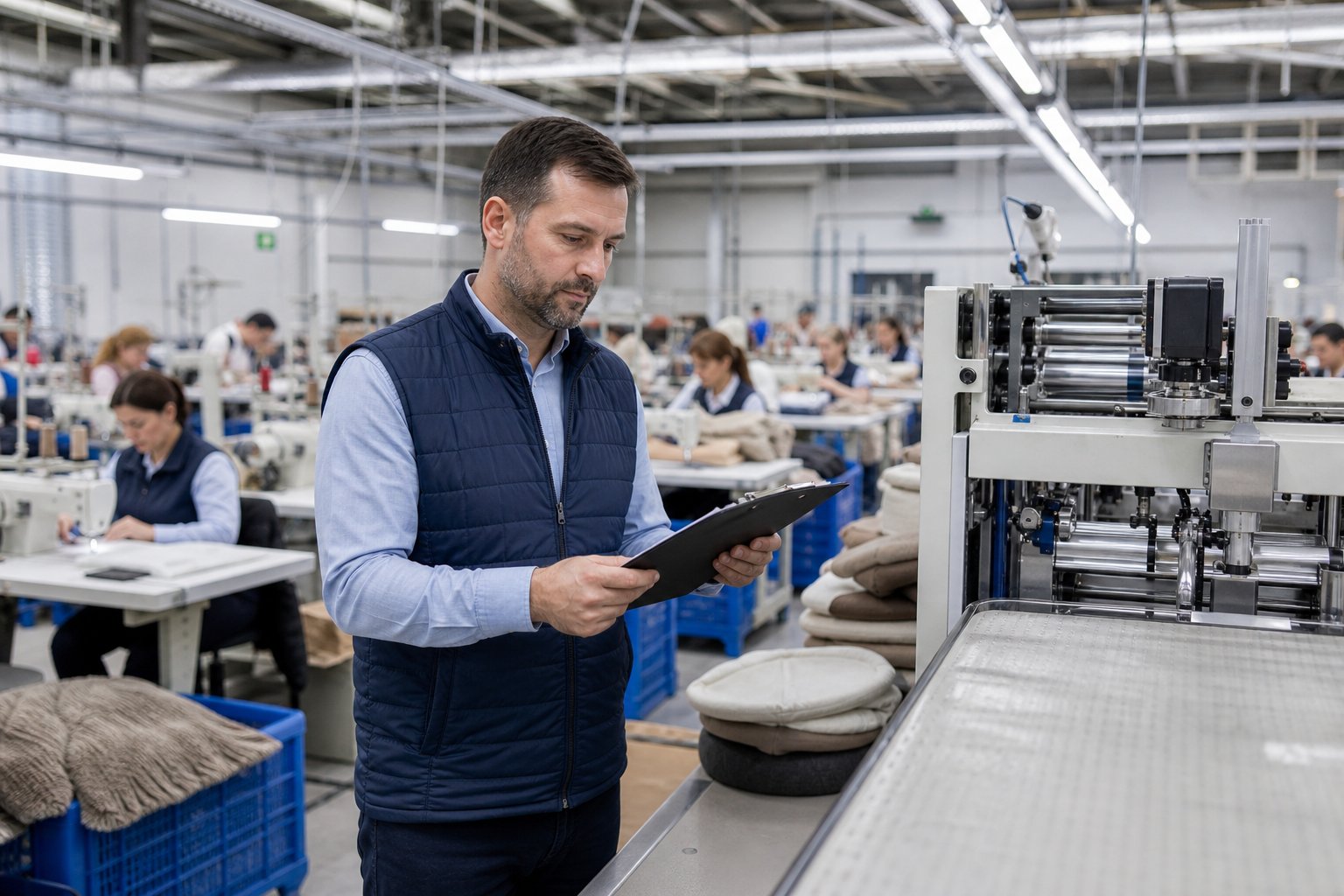
These are asked sitting down, with documents on the table, and they separate suppliers who own their process from suppliers who rent one:
- "Who is the applicant named on your test reports?" The risk: reports that belong to a trading company, a sister factory or a material vendor — legally real documents that describe somebody else's product. The follow-up: applicant name matching the entity signing your PO.
- "Who owns the molds for my designs, and what happens if we move?" The risk: discovering your exclusive tooling is a shared asset the moment the relationship sours. The follow-up: ownership written into the contract, with transfer and release terms.
- "What is your odor protocol, and when did a batch last fail it?" The risk: a supplier whose odor standard lives only on the website. The follow-up: the date, the grade and the disposition of the last failing batch — honest factories remember.
- "What capacity do you commit to for my order in a named September week?" The risk: annual capacity quoted today and resold four times before autumn. The follow-up: named lines and a named week, in writing — the method is unpacked in our capacity verification guide.
- "What did your most recent third-party inspection find?" The risk: a disclosure culture where nothing is ever found and nothing is ever inspected. The follow-up: the report itself, including the major findings and what changed after.
- "Which of these answers changed since the last audit?" The risk: everything — owners, floors, subcontractors and key staff all move. The follow-up: an annual refresh plus a fresh look before every peak season, because audit answers have a shelf life.

From Answers to Clauses
The twelve questions are worth one meeting; their answers are worth four clauses. Subcontractor disclosure with audit rights. Written consent before any material substitution. Mold ownership with transfer terms. Named lines and a named week for your capacity. These are not aggressive demands — they are the written form of what a good supplier already does, which is why good suppliers negotiate them in minutes. The full walk-through that pairs with these questions — route, stations, what to look at each stop — is laid out in our plush factory audit guide, and the fixed facts we publish about our own floors are on the factory page. Ask all twelve at your next audit; the silence after question two and question eight is the data.
Frequently Asked Questions
What questions do buyers most often forget on a pet toy factory audit?
Why does the outsourcing question matter so much?
How can I check whether audit answers are actually true?
How often should a pet toy factory be re-audited?
Bring the twelve questions — we will answer them on the record.
Send your audit scope — we reply with the walk-through we would host, our published QC criteria and FOB ranges per tier.