Key Takeaways
- Capacity is the one sourcing number that tends to grow when you ask twice. Treat every quoted figure as a hypothesis, not a fact.
- Rebuild the claim with arithmetic: machines times output per machine-shift times utilization. The composition by product family matters more than the total.
- Cross-check with five pieces of evidence: schedule board, piecework payroll, material inbound, a named machine list, shipping records.
- Peak season is where capacity claims break — ask "whose lines, which week," not just "how many per month."
- Bind what you verified into the PO: named lines, weekly output commitment, reorder priority, and the right to verify by unannounced video check.
Factory capacity is the one number in sourcing that grows when you ask twice. A first inquiry returns "one million pieces a month"; a polite follow-up before a large order returns "one and a half, and more in peak." Nothing physical changed in between — only the size of the order being courted. Buyers who accept the first figure usually discover the truth in the worst possible way: a confirmed order that slips in October, when every factory is triaging its customers and the newest names are triaged first. This article lays out a verification method that fits in an email thread: an arithmetic frame, five pieces of cross-evidence, the peak-season traps, and the contract language that keeps a verified number honest.
Start With the Arithmetic
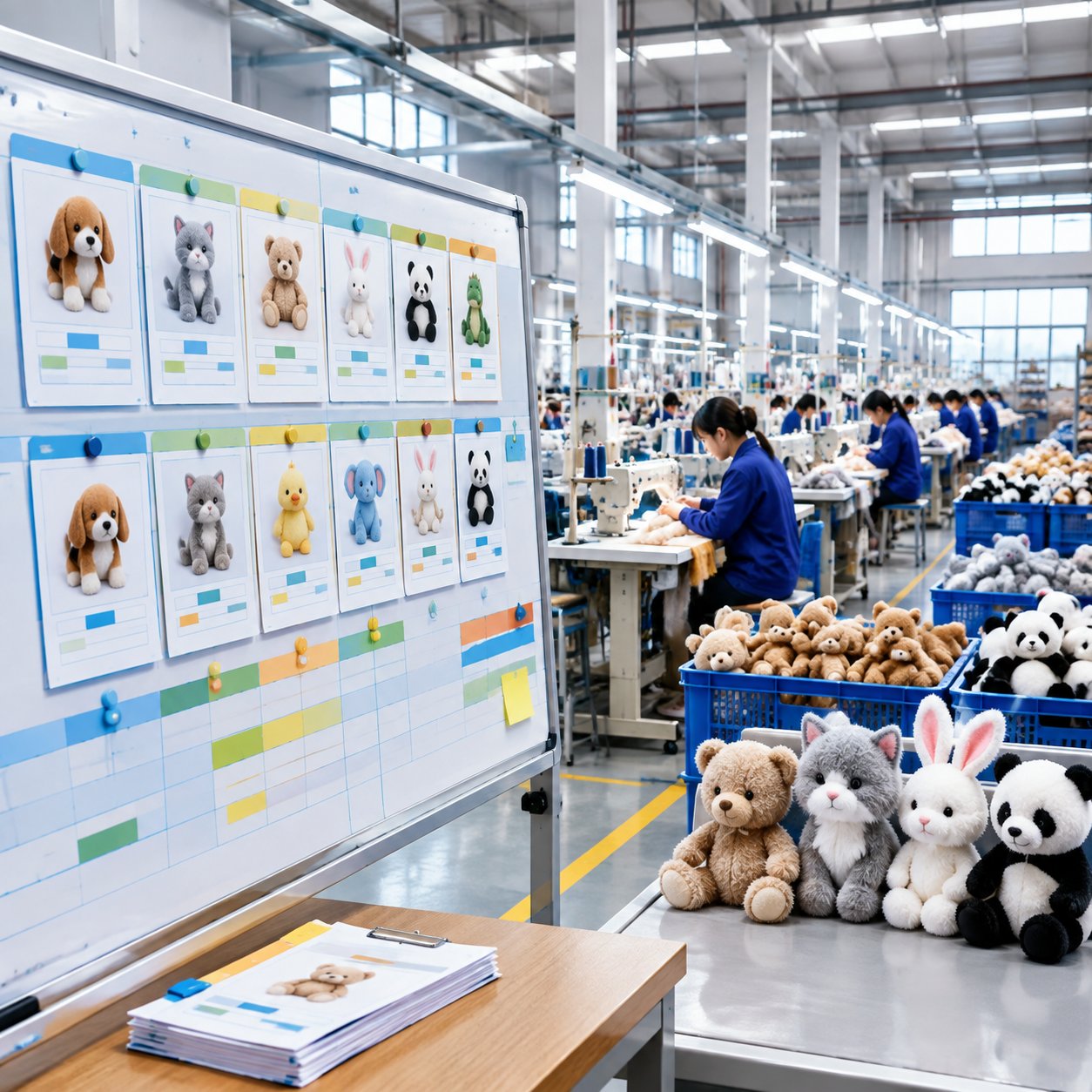
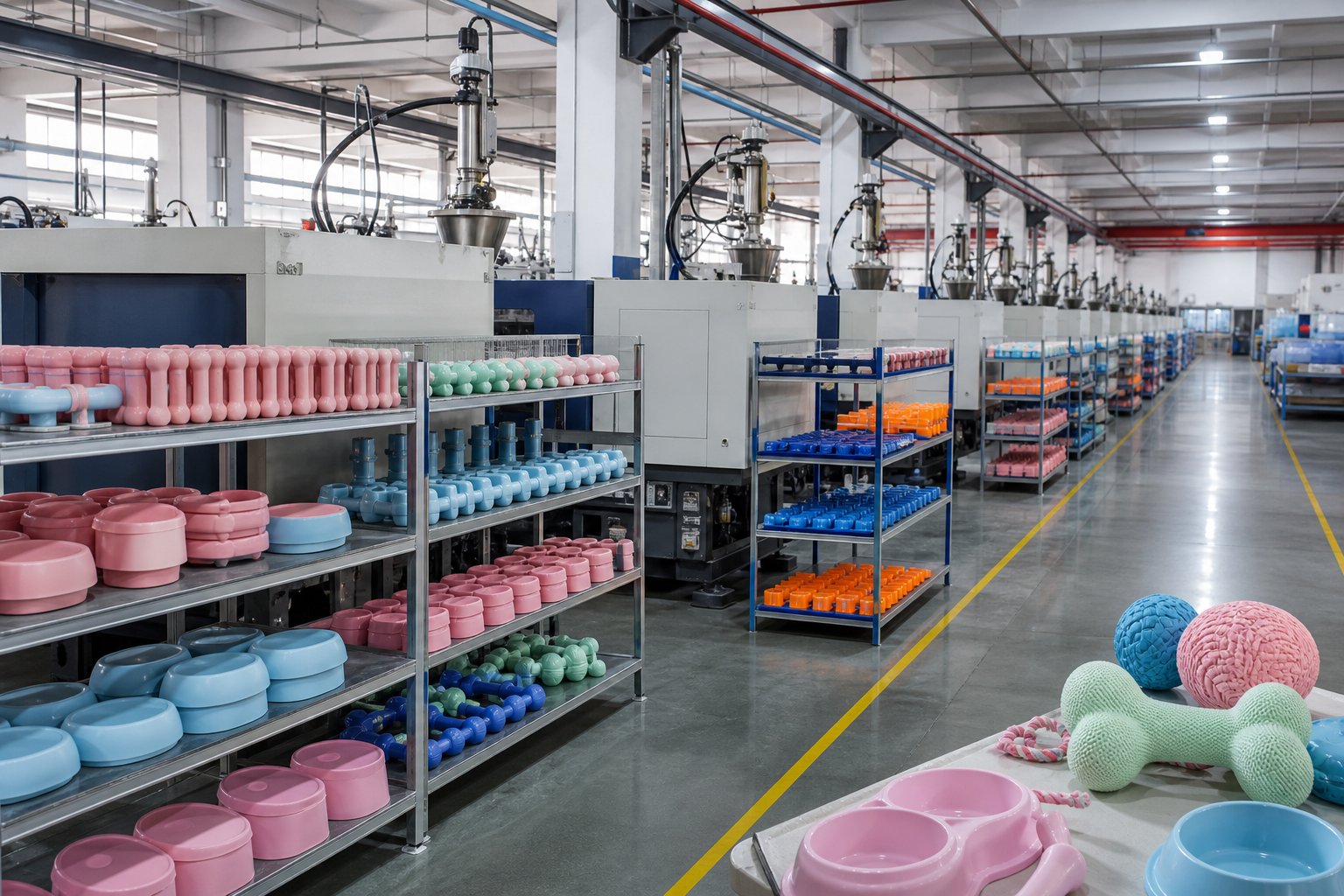
Real capacity decomposes. The frame is machines (or lines) times output per machine-shift times utilization, stated per product family — because a plush line and an injection line produce different things at different rates, and only the composition tells you whether your order fits. A worked example, using our own published configuration: eight partner lines — three plush sewing, three injection and vulcanizing, one rope braiding, one packing — supporting a stated monthly output of 1.5 million-plus pieces, of which roughly 600 thousand is plush, 500 thousand rubber and TPR, and 400 thousand rope and woven goods.
The composition is the part most quotes omit, and it is the part that matters. A factory claiming two million monthly units that owns no vulcanizing presses cannot make your rubber chew toys, no matter what the total says. So when a supplier quotes a number, ask the follow-up that matters: of that total, how much is plush, how much rubber or plastic, how much rope — and on how many named lines? A supplier who answers in product families is usually describing a real floor; a supplier who repeats the total is describing a brochure.
Five Pieces of Evidence to Cross-Check
Arithmetic gives you the shape of a plausible number; evidence gives you its weight. Five documents, none of them confidential once an order is under discussion, separate a working floor from a projected one:
| Evidence | What it shows | How to request it |
|---|---|---|
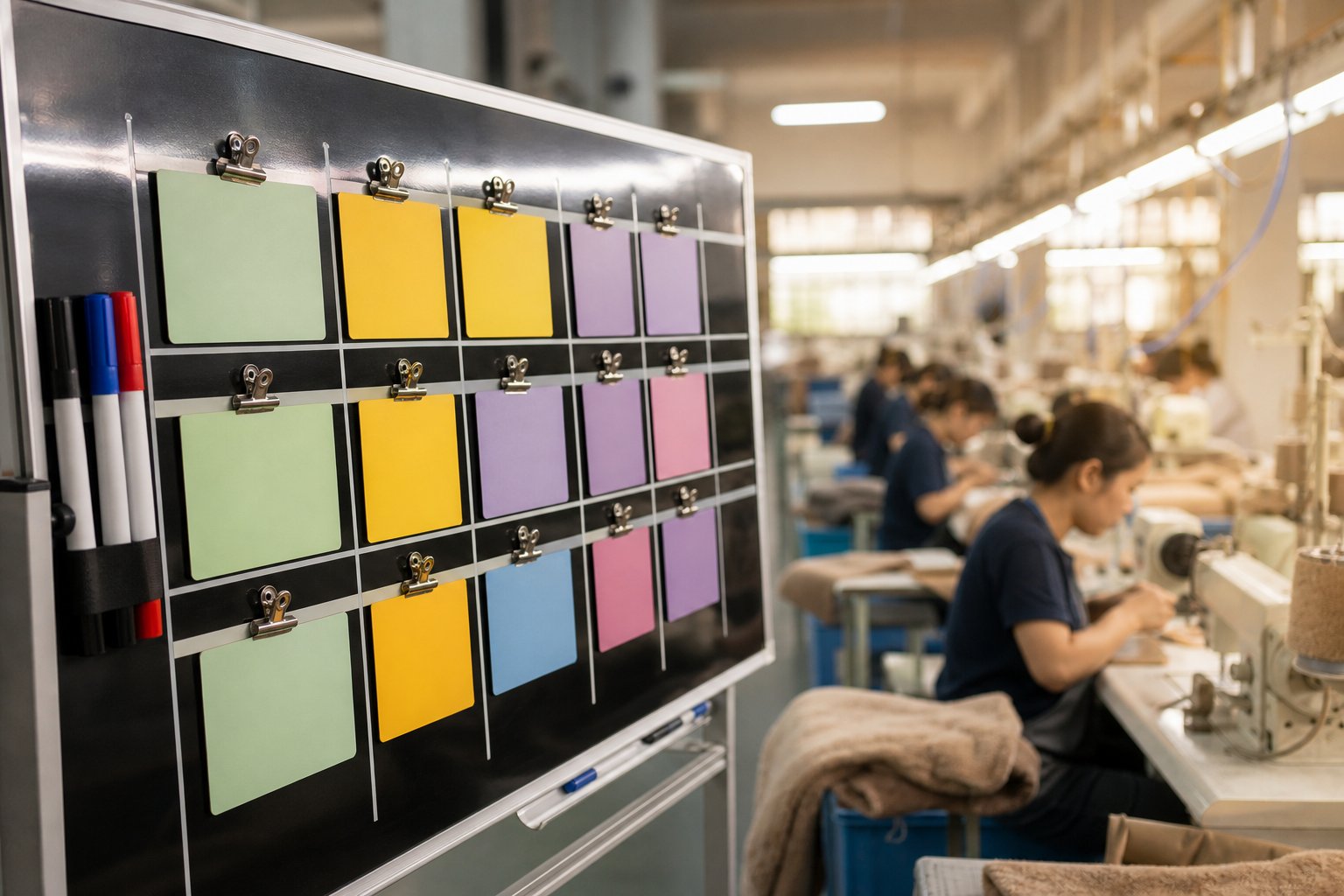
| Production schedule board | Which orders occupy which lines, this week and next | Same-day photo during a video call — a staged photo will not carry a date |
| Piecework payroll summaries | Actual labor hours and units by week | Summary totals only, no names; ask for a three-month trend |
| Material inbound ledger | Fabric, compound and component volumes arriving | Monthly totals against claimed output; inputs must precede outputs |
| Machine inventory | Machine counts by type, with names and approximate age | A list with line assignments — leased or idle machines disclosed |
| Shipping records | What actually left the gate recently | Bill-of-lading counts or forwarder booking summaries per month |
No single document is conclusive; payroll can be padded and boards can be dressed. But five independent streams are hard to fake coherently — an inflated board collapses against inbound materials and outbound bookings, and that collision is exactly what you are looking for.
The Peak-Season Shell Game
The most common failure is not a lie but a subtraction. The lines being quoted exist, and the monthly figure is even true — in February. By the time your Q4 order lands, the same lines are committed to the customers who ordered first, and capacity quietly becomes a queue. So the peak-season question is never "how many per month" but "whose lines, which week." Practical tells: ask which weeks in September to November are already committed and what share of them your order would hold; ask whether your reorder would wait behind new customers; and weigh quoted lead times against the claim — a factory promising 25–35 day production in a season when everyone else quotes longer is either better organized or better at adjectives. Stock programs are the honest exception: if 1,200-plus SKUs sit ready for private label and dispatch in 5–10 days, the capacity question shifts from the line to the warehouse — and the warehouse is far easier to verify.
Red Flags in the First Call
Between the first email and the first video call, capacity fiction announces itself in patterns worth memorizing:
- The number arrives before your specification does. Real capacity questions start with what you are making.
- The unit is a group: "our group has twelve factories." You are booking one floor, not a federation.
- Live video during production hours is deflected toward the sample room. Sample rooms are showrooms; the floor is the fact.
- The machine list includes idle or leased equipment without saying so.
- No named line is offered for your order — your production is a someday concept, not a slot.
Any one of these has an innocent explanation. Three of them together describe a supplier who is selling you someone else's capacity, which is the subject our piece on factory versus trading company tells picks apart in detail.
Put the Verified Number in the Contract
Verification only pays once it is written down. Four clauses convert a checked claim into an enforceable one, and mature factories accept them without drama: your order runs on named lines; the supplier commits a weekly output against those lines; reorders from you carry a priority window ahead of new customers; and late delivery carries a remedy that scales with the delay. Add the quiet one that keeps everyone honest — the right to verify by unannounced video check during production hours. Factories that run real floors do not fear the camera; the ones that negotiate hardest against these clauses are telling you, in advance, which number was never real. For the walk-through method that pairs with this, see our plush factory audit guide, and for the fixed numbers we publish about our own floor, see the factory page.
Frequently Asked Questions
How can I sanity-check a factory's capacity claim?
Why do pet toy factories inflate capacity figures?
Can I verify capacity without visiting the factory?
What capacity clauses belong in the purchase order?
Need a floor you can verify, not a number you must hope for?
Send your volume by product family — we reply with the named lines, the monthly output behind them and FOB ranges per tier.