Key Takeaways
- A belt's cost advantage is not cheaper labor — it is shared tooling shops, materials markets, packaging printers and a labor pool within a short drive.
- A single large factory wins on consistency, accountability and IP control — still the right home for high-volume anchor SKUs.
- Flexibility is a cluster property: low MOQ floors, fast changeovers and peak-season overflow all depend on how close the suppliers are.
- Match the route to the order profile: test runs and mixed containers lean on the belt; stable volume production leans on a named line.
- The professional answer is a hybrid — anchor SKUs to fixed lines, flex the edges across the belt, and control both with samples and AQL terms.
A buyer we work with used to describe her supply base as one factory and a lot of hope. The factory was excellent — until the October she needed 2,000 extra units in a second colorway, a new hangtag and a mixed carton assortment across three SKUs. Every request crawled, because the answers lived outside the factory: fabric came from a mill two provinces away, cartons from a printer nobody had visited, and the cutting die sat with a tooling shop that only squeezed urgent jobs for its regulars. Eleven days to price a change order that a cluster quotes in an afternoon.
Industrial belt and single factory are not rival ideologies; they are two supply geometries with different economics. Knowing where each advantage comes from tells you which one your next order should lean on — and how to combine them without losing control.
Where a Belt's Cost Advantage Actually Comes From
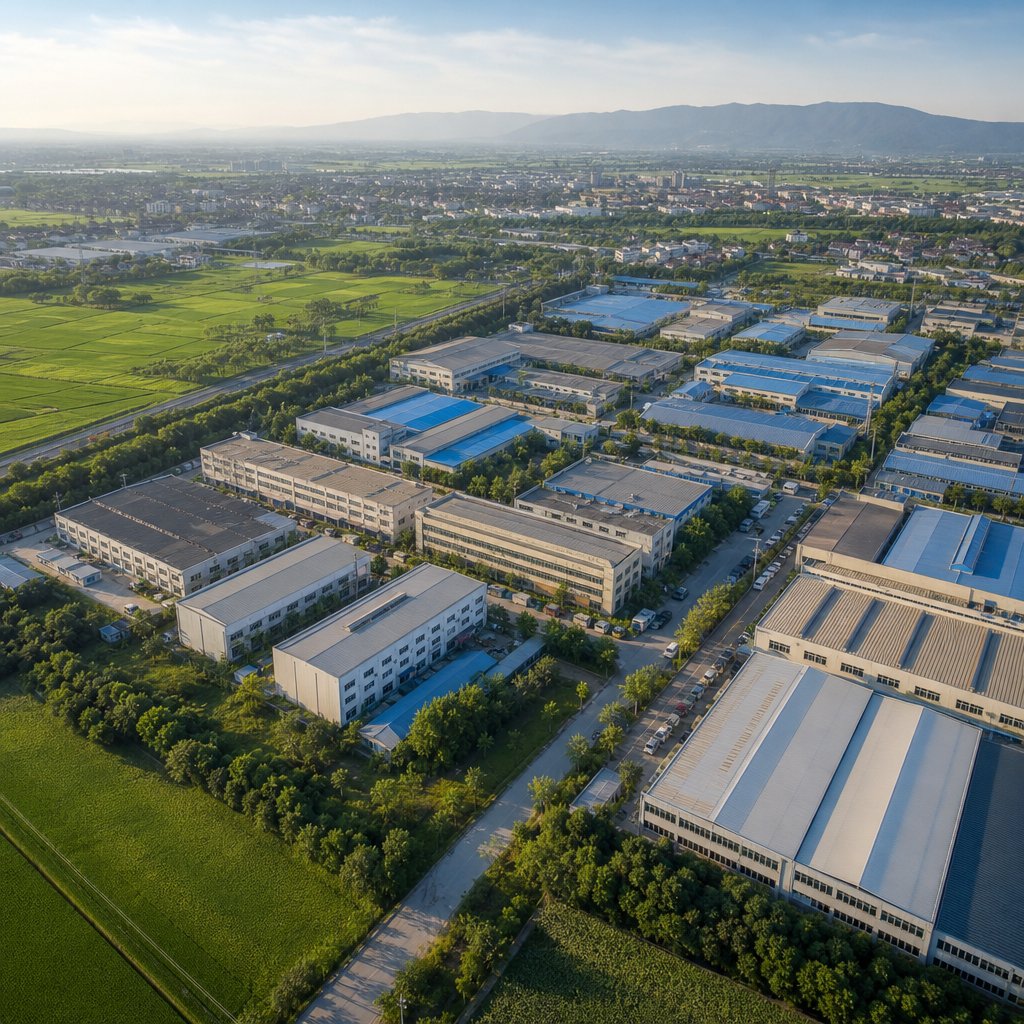
Strip away the "China is cheap" framing and the cluster premium breaks into five mechanisms. Tooling sits close by: in Chenghai's toy ecosystem — an industry base that, per China News Service reporting in 2026, counts more than 60,000 toy companies and turns out roughly a third of the world's plastic toys — a mold revision is a same-day conversation, not a courier loop. Materials sit close by: Yangzhou's plush district around Wutinglong toy city concentrates, per provincial media reporting in January 2026, over 80% of the city's toy e-commerce firms and more than 60% of its manufacturers within about three kilometers, which is why fabric, PP fill, squeakers and embroidery thread are counter purchases rather than freight events.
The same logic covers packaging printers, color masterbatch suppliers and the shared labor pool that lets a line add twenty trained operators for a peak month. None of this lowers the hourly wage; it lowers the time and inventory cost of every production decision. The difference shows up line by line:
| Cost line | How a belt delivers it | What a single distant factory does |
|---|---|---|
| Tooling and revisions | Mold and die shops minutes away; T0/T1 loops in days | Courier parts and CAD files; revision cycles measured in weeks |
| Trims, fill, squeakers | Bought over the counter at small MOQs | Bulk-ordered ahead; overstock or shortage risk sits in your lead time |
| Packaging | Local printers handle hangtags and cartons in small runs | One large print run; changes mean a second freight cycle |
| Surge capacity | Neighboring lines absorb overflow in peak season | Fixed capacity; your Q4 rush queues behind other buyers |
| Sampling speed | Sample room plus nearby materials equals fast iteration | Each sample waits on inbound materials |
| Mixed-SKU consolidation | Trading hubs like Yiwu build multi-SKU containers daily | One factory ships one factory's goods |
What a Single Large Factory Genuinely Does Better
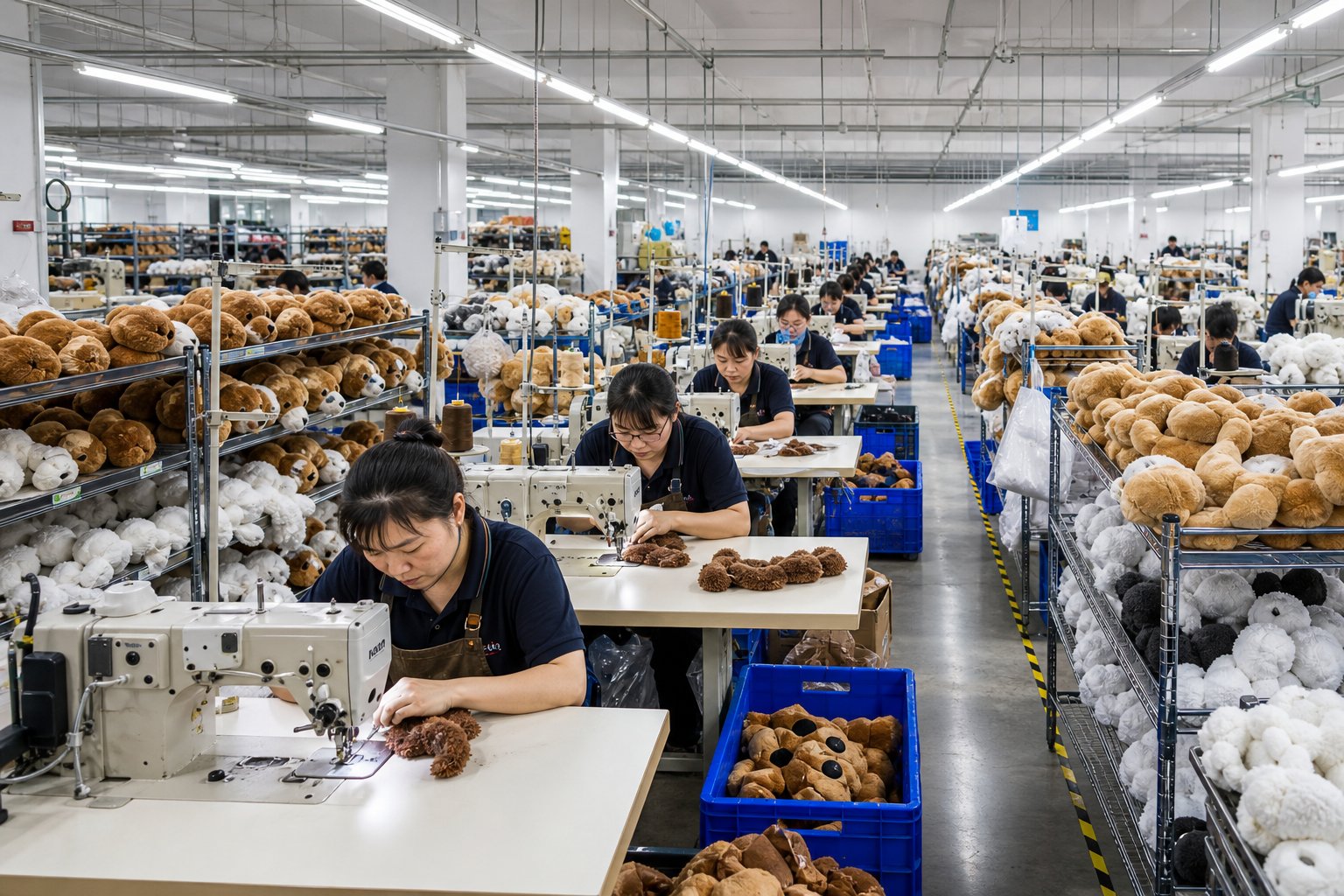
Now the other side of the ledger, because it is real. A single well-run factory concentrates process ownership: the same operators run the same product week after week, so defect patterns get diagnosed and engineered out instead of being absorbed in a subcontractor chain. Accountability is unambiguous — one legal entity owns the outcome — and audits, golden samples and corrective actions all have a single address.
- Batch consistency. Same line, same material lots, same fixtures: color and hardness drift far less across reorders.
- IP containment. A new mold or cutting die disclosed to one plant leaks far less easily than one shared across a cluster's vendor grapevine.
- Audit simplicity. Social compliance, traceability and line-level QC are verifiable in one visit, not reconstructed from three.
- Engineering depth. A factory that owns its process can sign up to first-pass yield commitments; a coordinator of vendors usually cannot.
Mature programs rarely abandon a good factory; they change what they ask of it.
Flexibility Is a Cluster Property
MOQ floors are usually explained as factory greed, but they are mostly distance math. A factory deep in the belt can quote 200-piece private label runs because fabric, fill and hangtags are off the shelf within a few kilometers, so no minimum buy hides behind the unit price. Our own first tier works this way: 200 pieces per style on in-stock bodies (600 mixed across styles), dispatched in five to ten days. The same order placed with a lone factory that must order fabric in mill minimums will be refused or quoted with the unused fabric buried in the price.
Changeovers tell the same story. When the material for the next SKU is a truck ride away, switching lines costs a day; when it is next door, it costs an hour. Peak season behaves like a shared reservoir — a belt operator with relationships across neighboring workshops can absorb an October surge that a fixed-capacity plant simply queues. And mixed containers are native to belt logistics: Yiwu's pet ecosystem — commonly cited at more than 10,000 related businesses with annual exports above RMB 3 billion — exists because consolidation is a daily activity there, not a special project.
Matching the Order Profile to the Model
Neither geometry wins in the abstract; they win on specific order shapes:
| Your order | Lean toward | Why |
|---|---|---|
| 200–600 pc private label test on existing bodies | Belt operator with stock program | No new materials to buy; speed and cash exposure both stay small |
| 10,000+ units of a stable, proven SKU | Single named production line | Consistency and yield commitments are worth more than flexibility |
| Mixed container, many SKUs, tight date | Belt + consolidation hub | Multi-vendor loading is routine infrastructure, not improvisation |
| ODM with a new mold | Belt for iteration, then anchor a line | Fast T0/T1 loops where tooling is close; volume production anchored once proven |
| Q4 replenishment of last year's sellers | Whichever holds your tooling and data | Reorder risk is consistency risk; keep it where the golden sample lives |
The Hybrid Playbook We Run
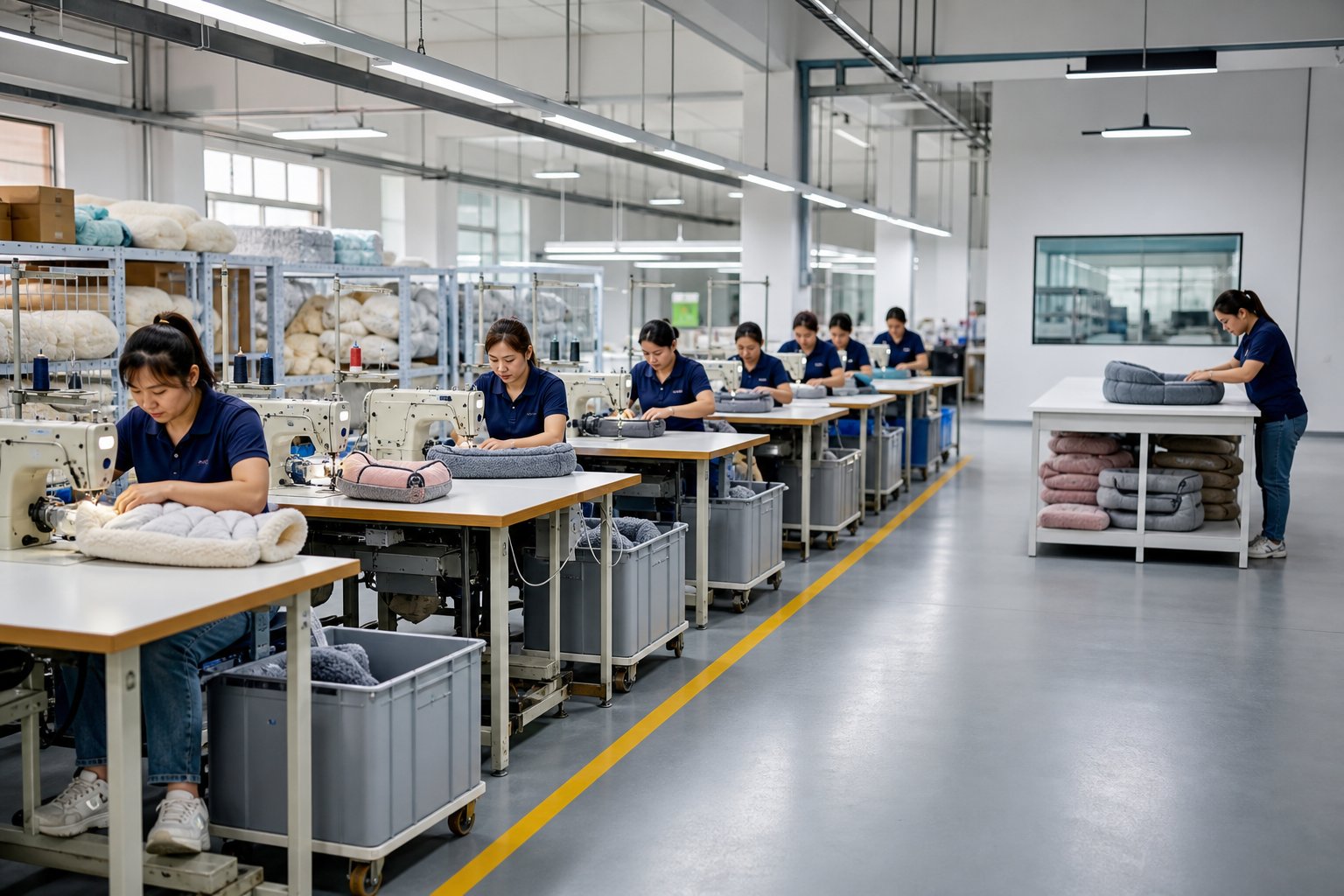
Our own structure makes the argument concrete. Production sits in Yangzhou's plush belt — eight cooperating lines with monthly capacity above 1.5 million units — where sampling, tooling and materials are minutes apart and first-article iterations take days. Fulfillment sits in Yiwu, where multi-SKU consolidation, private-label relabeling and single-parcel dropshipping happen inside the same logistics ecosystem that serves the market's trading rows. Custom programs run through a three-tier ladder: 200 pieces per style for private label over stock, 1,000 for OEM color-and-brand work, 3,000 for ODM tooling.
The discipline that makes the hybrid safe is unchanged by geometry: approved golden samples retained for 24 months, named production lines in the purchase order, subcontracting disclosed and consented, and AQL 0 / 2.5 / 4.0 on every shipment. Buyers who want the deeper mechanics of each belt can start with our write-ups on Yangzhou's plush industry and sourcing through Yiwu, and our factory and belt page documents how the two bases divide the work.
Frequently Asked Questions
Is a manufacturing cluster automatically cheaper per unit?
When does a single factory beat a cluster?
How small an order can a belt absorb?
How do I keep control when production steps are spread across vendors?
Not sure whether your next order belongs on a belt or a line?
Send the SKU list and quantities — we will map each item to the right route, with FOB ranges and a production calendar for both bases.