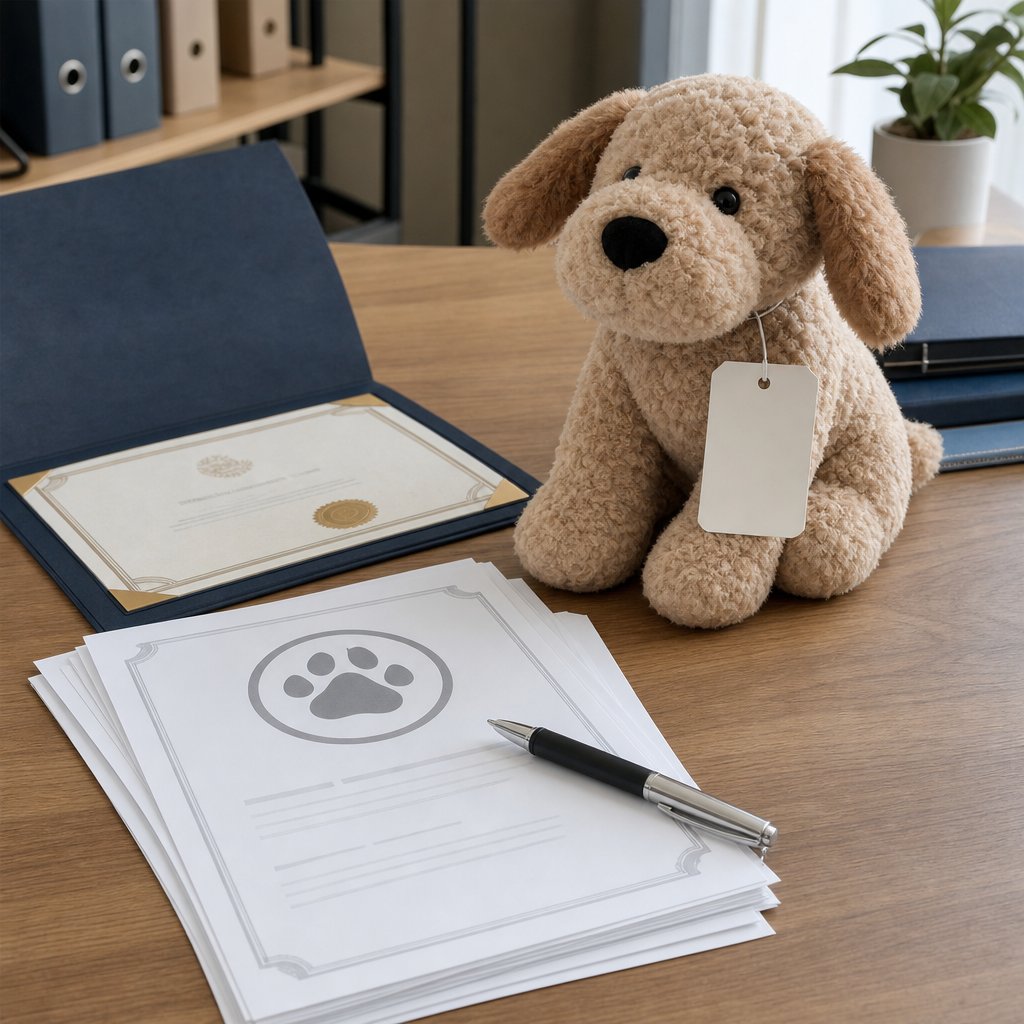
Key Takeaways
- Brand registry hinges on a live trademark plus visible proof the brand is on the product, the packaging and the invoices.
- The document chain — authorization, invoices, photos, test reports — must tell one story with matching legal names.
- Ask suppliers for documents before the first purchase order, when goodwill is at its cheapest.
- File trademarks before scaling ad spend; register distinctive toy shapes as designs where the system allows.
- A clean file chain is dispute ammunition: hijackers and takedown appeals are won with paperwork, not anger.
A very common brand-registry rejection reads the same way every time: the trademark is fine, but the invoice from the factory does not show the brand, and the packaging images submitted were mockups that never went to print. The platform is not being difficult. It is checking whether the brand exists as a commercial fact — and your paper trail is the only evidence it will accept.
The encouraging part is that this file costs almost nothing when you collect it early and grows expensive every month you delay. This article walks the four checks platforms actually run, the five documents that answer them, the wording to use with suppliers, and the timing that keeps trademarks and design rights ahead of your growth. For the platform side after registration, our piece on Amazon pet toy compliance covers what case managers ask once your brand is on file.
What Platforms Actually Check
Strip away the help pages and four checks remain. First, a trademark: registered in the marketplace country, or filed, depending on the program's rules — the brand name as an IP fact. Second, physical application: the brand must appear on the actual product, its packaging and the listing photos. Third, a trade chain: invoices connecting your legal entity to the goods, ideally with the brand and SKUs named. Fourth, authority: if you are not the trademark owner, a document showing you may sell the branded goods.
Most rejections come from the second and third checks. Production mockups fail because they prove intent, not commerce; a generic one-line invoice fails because it proves a payment, not a product. Platforms are matching a brand to a supply chain, and the match must be legible to a reviewer who has thirty seconds and no context.
The Document Chain
Five documents answer the four checks. Their job is less about volume than about consistency — every legal name, every date, every SKU has to agree with the others:
| Document | Who issues it | What it proves | Where it breaks |
|---|---|---|---|
| Trademark certificate or filing receipt | Your IP counsel / national office | You own the brand in this class and country | Wrong class; pending status where registration is required |
| Authorization letter | The trademark owner | You may sell goods under the mark | Mismatched legal names; missing signature or date; expired |
| Commercial invoices | Your supplier | Real trade in the branded goods | Generic one-line invoices with no brand or SKU detail |
| Product and packaging photos | You, at production time | The brand is physically applied | Rendered mockups instead of real print |
| Test reports and compliance file | Labs and the factory | The product behind the brand is real | Testing applicant does not match the supplier entity |
Build the file per brand, per market, and refresh it annually — authorization letters expire quietly, and an expired letter discovered during a dispute is the same as none.

Asking Your Supplier Without the Awkwardness
Suppliers say yes to documents easily — before the first purchase order. Afterward, every request competes with production. The sequence we recommend to buyers:
- Confirm the exact legal entity name on invoices matches the authorization letter — spelling, suffix, punctuation, everything.
- Request invoices that show brand name and SKU per line item, not a single aggregated line.
- Provide your own bilingual authorization-letter template with blank dates, so renewal is a signature rather than a negotiation.
- Keep the factory's entity name identical across compliance documents, test reports and trade paperwork.
- Write the document obligations into the supply contract: what they issue, how fast, and that reorders trigger the same paperwork.
Factories that resist basic paperwork before the first deposit are telling you how the dispute — if one ever comes — will go. The ones that comply are also, not coincidentally, the ones with cleaner operations; the same suppliers who keep documents straight tend to keep golden samples straight too.
Trademarks and Design Rights: Sequence and Timing
File the word mark early, in the markets where you actually sell, and in the classes that cover your goods and, where the system separates them, retail services. Registration takes months, so the filing date should precede the growth that will depend on it — scaling ad spend on an unfiled brand is building on land you do not yet own. For distinctive shapes — a toy with a silhouette buyers can recognize at shelf distance — add design registrations where available. Generic shapes earn no protection; specific ones do.
Watch the factory side of the ledger. The partner best placed to reproduce your design is also best placed to register it: many jurisdictions reward the first filer, not the first creator. If a shape matters to your line, register it yourself and mirror that priority in the supply contract. Where you sit between white label and full custom, our comparison of private label versus white label explains how brand ownership differs across the two models.
When the Chain Pays
The file earns its keep quietly. Hijacker listings come down faster when the takedown request arrives with matching invoices and an authorization letter attached. Authenticity complaints get answered in hours instead of weeks. Retail chain onboarding asks for the same evidence, so the file you built for a marketplace doubles as your trade kit. And when you expand licensing or wholesale, the chain is the version of your brand a stranger can verify without trusting you — which is the only version that scales.
Frequently Asked Questions
What documents does marketplace brand registry usually need?
My supplier manufactures the products — who issues the authorization letter?
Do I need a registered trademark before I can sell?
How do I protect a custom toy shape?
Private labeling pet toys and building a brand?
Send your brand plan — we reply with the document package our orders carry, FOB ranges per tier and how custom tooling ownership is contracted.