
Key Takeaways
- Under FOB terms, risk passes at the ship's rail — which makes loading day the last day anything can be fixed for free. Treat it as an inspection event, not a logistics formality.
- The inspection starts with the empty container: clean, dry, odor-free, no daylight through the walls.
- Plush cubes out long before it weighs out, so container choice, compression bales and the recovery check do more for landed cost than any load plan.
- Mixed-SKU containers are won or lost on the loading plan: SKU sequence, shipping marks and the unloading order at destination.
- Loading supervision catches count errors, damp boxes and bad stacking — but nothing after the doors close. The seal number on the document is what travels with your claim rights.
Under FOB terms, the seller's responsibility ends when the goods cross the ship's rail — which means the hour your cartons go into a container is the hour your leverage quietly gets packed in with them. Anything found wrong after that costs money and weeks; anything found at the dock costs a correction. Buyers who treat loading day as a logistics formality learn this the expensive way. Buyers who treat it as the final inspection event it actually is — empty box checked, sequence planned, photographed, sealed — start their transit with a file of evidence instead of a feeling of hope. This article walks through what happens between the empty container's arrival and the seal's click, and where that day is won or lost for pet toys.
The Day, Hour by Hour
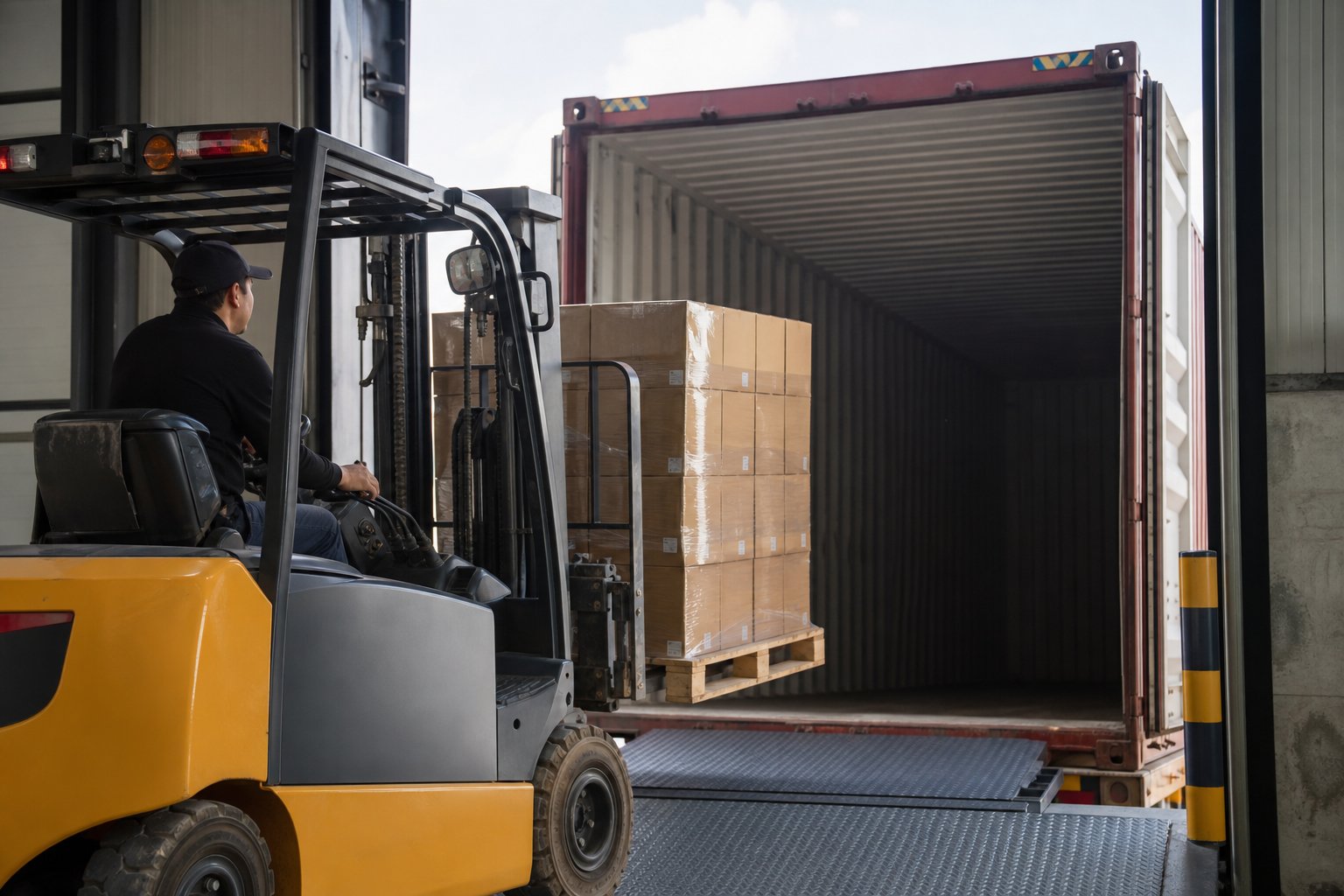
A disciplined load follows the same sequence whether the factory is in Yangzhou or the Yiwu consolidation warehouse. Each stage produces evidence, and the evidence is the point:
| Stage | What happens | Evidence you should receive |
|---|---|---|
| Container arrives | Empty-box check: interior clean, dry, odor-free, no damage; doors closed for a daylight test of holes and gaps | Photos of interior walls, floor, door seals |
| First rows | Heaviest, strongest cartons floor-loaded first; dunnage or kraft lining against condensation | Photo of first rows against the loading plan |
| Mid-load | SKU sequence per the plan; marks checked against the packing list; fragile or soft cartons kept off the bottom | Count photos per SKU block; any substitution flagged immediately |
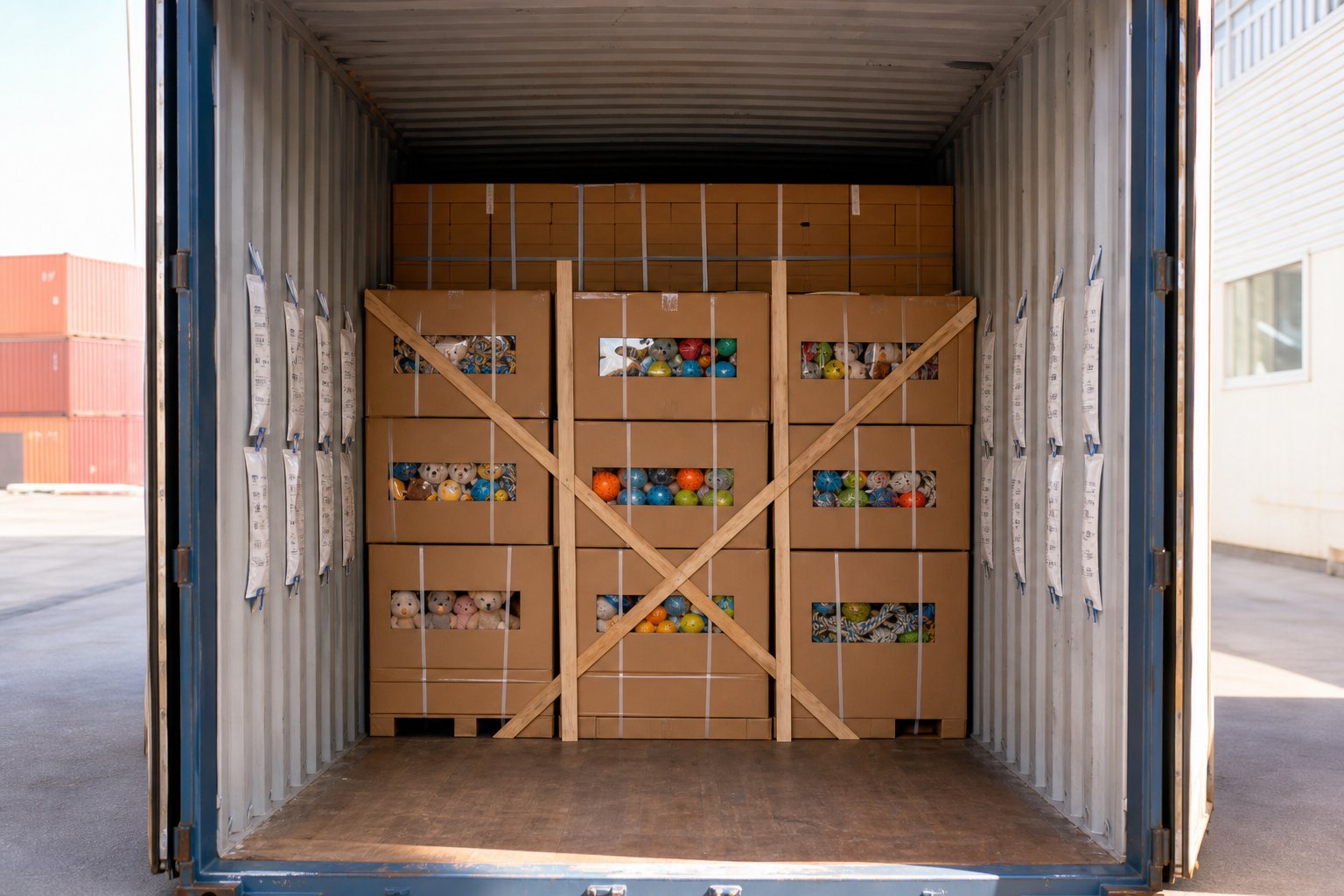
| Doors | Final rows braced so nothing shifts; desiccant strips hung; doors photographed open | Photo of full interior before closing |
| Seal | High-security seal applied; number recorded and shared same day | Seal number as it will read on the bill of lading |
Two details in that sequence carry most of the value. The daylight test — standing inside the closed box and looking for pinpoints of light — is the only reliable way to find the holes that let in sea spray and thieves alike. And the seal number discipline matters more than the seal itself: what protects your goods is not the metal band but the fact that the number on the door matches the number on the document at every handover, so any break in the chain announces itself.
Light Cargo: Why Plush Toys Cube Out
Pet toys divide cleanly at the container door. Rubber, TPR and rope goods weigh enough to make the load plan a weight conversation. Plush does not: it is the classic low-density cargo that fills a container by volume while barely denting the scale — it "cubes out" long before it "weighs out." Three consequences follow, and they matter more to a plush-heavy order than anything on a spread sheet. First, container selection: a high-cube box buys volume where plush needs it. Second, compression: baled or vacuum-packed plush multiplies the effective cube, which is exactly why the compression-recovery check belongs in your packaging QC before, not after, the freight saving is booked. Third, loading pattern: compressed bales are often floor-loaded rather than palletized to use every centimeter, and the stacking order — heavier cartons below, crush-sensitive printed boxes above — is decided at the dock, not in the office.
Mixed Loads and the Loading Plan
Consolidated containers — fifty SKUs, several suppliers, one box — are the norm for growing pet toy sellers, and they convert loading from a labor task into a planning task. The plan answers three questions in advance: in what SKU order do cartons enter (so that what unloads first sits nearest the doors), which cartons carry which shipping marks (so a mixed pallet in Hamburg can be sorted without opening everything), and where the boundaries between suppliers' lots fall (so a claim lands on the right party). At our own consolidation operation in Yiwu, the loading plan is drafted when the last pre-shipment report clears, and the dock crew works from a printed sequence — the difference between a two-hour load and a six-hour argument. For the freight-mode side of that decision, sea versus air versus express, see our freight comparison; for how consolidation changes your landed cost, the Incoterms walkthrough covers who pays for what up to the rail.
Loading Supervision: What It Catches, What It Cannot
A loading supervisor is a stranger with your packing list, and their value is easiest to state as a pair of lists. They catch: the wrong SKU in the fourth row, a count that quietly became five cartons short, the damp or odorous container nobody refused, cartons stacked print-side down, and the seal number that never got written down. They cannot: verify the contents of every carton (they sample), control anything after the doors close, or detect goods swapped at a transshipment point — which is why the seal record, not the supervisor, is your chain-of-custody instrument. The supervision decision mirrors the inspection decision: full value on first orders, mixed-SKU consolidations and peak-season containers; less value on a single-SKU restock from a proven floor. It pairs naturally with final inspection — same week, same warehouse — as our own programs run it.
The File That Leaves With the Box
Everything above is only as good as the file it produces. By the time the truck leaves the gate, a well-run loading day has generated a short, complete record:
- Per-SKU packing list with carton counts, matching the marks actually painted on the boxes.
- The photo set: empty interior, first rows, each SKU block, full interior before closing, seal applied.
- Container and seal numbers exactly as they will appear on the bill of lading.
- The verified gross mass declaration, signed off before the truck rolls.
- One named person at the factory or consolidation warehouse who answers the phone when the container does something interesting at sea.
None of this is exotic. It is the ordinary discipline of a day that rewards it — and it is the same discipline our teams apply on every consolidated load out of the Yiwu fulfillment warehouse and the Yangzhou floor described on the factory page.
Frequently Asked Questions
What should the factory check before loading a container?
Why do plush toys cube out before they weigh out?
Is loading supervision worth booking?
Which documents and records should leave with the container?
Loading days run better when someone owns the checklist.
Send your SKU mix and destination — we reply with the consolidation plan, container options and FOB ranges per tier.