
Key Takeaways
- Plush and bulky pet toys are classic light cargo: they fill space faster than they fill weight, so freight is bought in volume, not kilograms.
- Express, air and sea trade speed against cost per unit in that order; the right answer follows your replenishment cadence, not your habit.
- Chargeable weight rules decide the invoice before the truck arrives — compute volumetric weight before choosing a mode.
- Mixing modes beats loyalty: a sea base load with an air or express top-up usually beats all-sea or all-air programs.
- Peak season reshuffles everything; book Q4 and pre-CNY space earlier than feels necessary.
A carton of plush squeaky toys steps onto the scale at 9 kilograms. The freight invoice charges for 40. Nothing is wrong: the carton bills by volume, and plush buys space the way foam buys space — generously. This single fact shapes every logistics decision in the pet toy category, from which ocean container you book to whether air freight is ever rational.
This article compares the three main modes for bulky, light cargo, matches each to a replenishment stage, and shows the hybrid pattern most mature programs converge on.
Why Pet Toys Freight Like Foam
Freight pricing has a simple obsession: density. Carriers sell space and weight together and bill whichever runs out first. A rubber chew toy is dense and cubes cheap. A plush toy is the opposite — a carton of stuffed animals is mostly air with decoration on it. Rope toys and fabric cat kickers sit in between. The consequence: for plush-heavy orders, the freight conversation is really a conversation about cubic meters, and the unit of account is the container's cube, not the bathroom scale.
That is why two orders with identical product value can carry wildly different freight economics. A pallet of TPR bones and a pallet of plush hedgehogs can quote the same FOB and still sit five times apart on freight. Mode selection has to run per product family, not per purchase order.
The arithmetic is easy to keep in your head. Chargeable weight divides the carton's cubic centimeters by a fixed divisor — 6,000 on most air lanes — so a 60 by 40 by 40 centimeter carton bills as 16 kilograms whether it holds nine kilograms of rubber or four of plush. Sea simplifies further: you are billed for cubic meters, full stop. Once buyers internalize that the invoice is driven by the tape measure rather than the scale, most of the category's freight surprises stop being surprises.
The Three Modes, Compared
| Mode | Typical door-to-door* | Cost logic | Best suited for |
|---|---|---|---|
| Express courier | 3–7 days | Highest per kg; simple paperwork, doorstep delivery | Samples, urgent top-ups, small parcels |
| Air freight | 6–12 days | Mid per kg; airport-to-airport plus handling | Launches, seasonal peaks, dense high-value SKUs |
| Sea LCL | 30–45 days | Priced per cubic meter; consolidation waits | Small mixed lots, regular replenishment |
| Sea FCL | 25–40 days | Lowest per unit at volume; pay the box, fill the box | Program volumes, stable selling SKUs |
*Typical China to US/EU lanes; actual transit swings with season, routing and customs. Two patterns worth internalizing: the express-to-air gap is mostly paperwork and network convenience, while the air-to-sea gap is mostly physics. And within sea freight, LCL buyers pay consolidation waiting time and destination split charges that FCL buyers never see. Which is a long way of saying: for plush, the freight decision is made at the packing bench before it is made at the forwarder.
Matching Mode to Replenishment Cadence
The question "sea or air" is really a question about time. Map your SKU to its stage and the mode usually picks itself:
- Discovery. Sample carts and first market tests travel express — small, urgent, and priced as information, not as goods.
- Validation. A design with early traction justifies air for the first commercial batch: the premium buys selling season, which is worth more than the freight it costs.
- Scale. Proven sellers move by sea as a base load, planned backwards from your stock-out date: production 25–35 days plus ocean transit plus clearance sets the order point.
- Rescue. Forecast misses travel air or express, once, and then feed the forecast model — a rescue repeated twice is a planning failure with a surcharge.

The Hybrid Playbook
Mature programs refuse to pick one mode. The standard pattern: a sea base load carries 70 to 90 percent of the volume at the lowest per-unit cost, while a small air or express top-up protects the bestsellers through the sailing gap. The split follows SKU velocity — data decides which designs deserve the premium, and the answer changes every quarter.
Two disciplines make the hybrid cheap instead of expensive. First, book both channels through forwarders who know plush is volumetric, and demand the chargeable-weight math in writing — the arithmetic lives in our companion piece on volumetric weight. Second, consolidate before you ship: mixed-SKU containers need a loading plan, a labeling scheme and eyes on the stuffing, as covered in what actually happens on loading day.
One more habit separates clean hybrids from chaotic ones: a single decision log. Record which SKUs sailed, which flew, and what the premium bought — dates kept, stockouts avoided — and review it quarterly. Six months of entries will tell you things no freight salesperson will: which designs genuinely justify air, which lanes consistently run late, and whether your top-up lane is a safety valve or a slow leak.
Booking in Peak Season
Freight is a market, and the market has two recurring stampedes: Q4, when every importer races the holidays, and the weeks before Chinese New Year, when factories pull shipments forward before closing. Space tightens, surcharges stack, and quotes written in October describe a November that no longer exists.
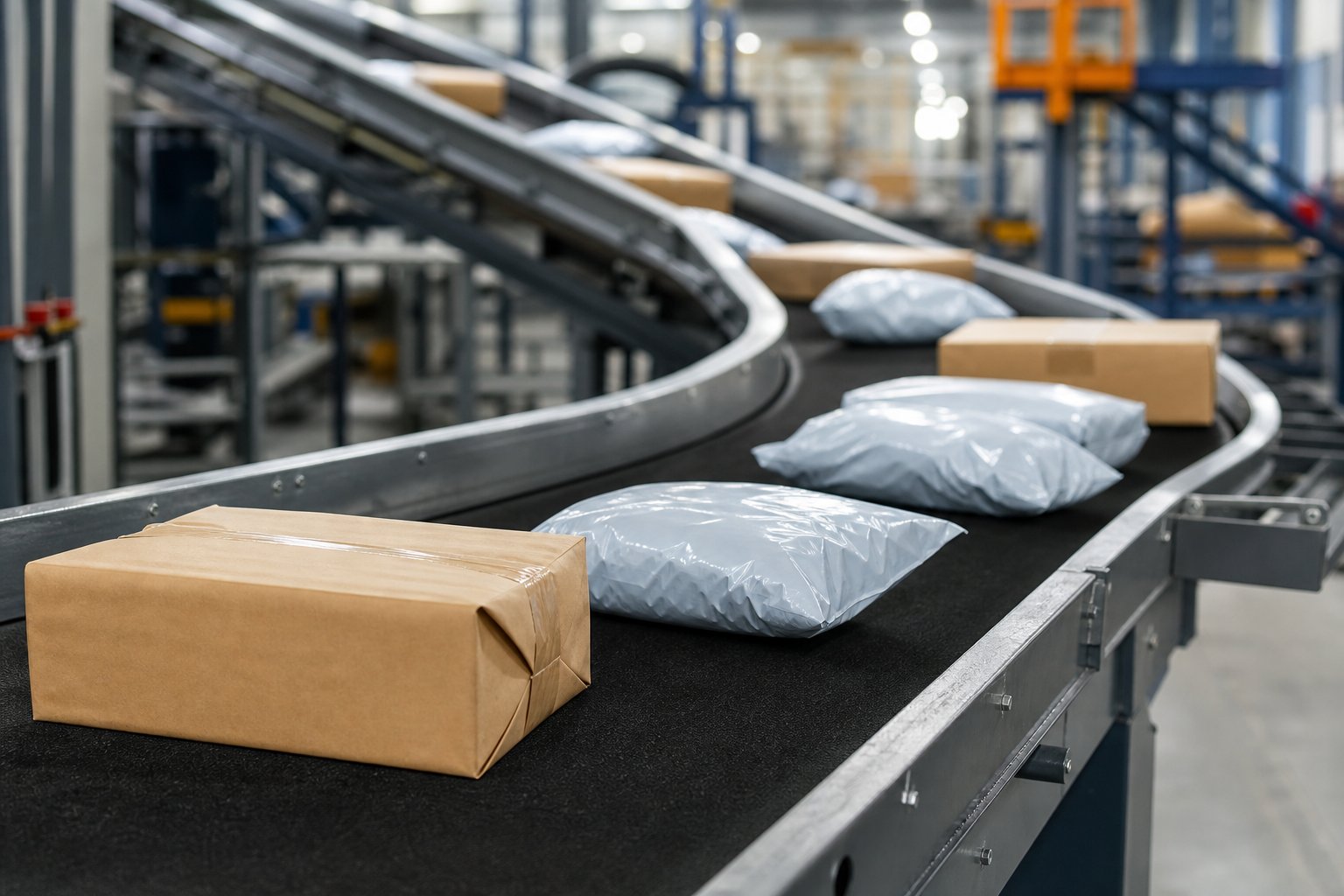
The countermeasures are unglamorous and effective: book peak-season space weeks earlier than feels necessary, keep a secondary routing option warm, and treat peak quotes as valid for days. Programs that manufacture earlier — our stock tiers ship in 5–10 days precisely for this — sidestep the worst of the stampede entirely.
For buyers running dropship and wholesale side by side, mode choice also draws the line between the two models. Our own consolidation model runs from the Yiwu fulfillment center, where parcel and container lanes sit in the same warehouse.
Frequently Asked Questions
When is air freight actually worth it for pet toys?
How do I choose between LCL and FCL?
Can I mix modes within one program?
Why did freight quotes jump before the holidays?
Not sure which lane your program belongs on?
Send your SKU mix and selling rhythm — we will lay out sea, air and express options with FOB and freight logic side by side.