Key Takeaways
- Rope quality hides in construction words buyers rarely ask about: staple length, twist density, ply count — not the word "cotton."
- Shedding traces mostly to fiber source and twist: recycled, short-staple cotton in a loosely twisted rope fuzzes within days.
- Diameter is a function of mouth size and game — tug needs girth, solo chew can step down one class.
- Dyed rope must prove rubbing and saliva fastness; bleeding color is an instant one-star review and an EU azo-dye compliance question.
- Knot craft is structure: tight, well-set knots keep strands from unwinding after the first serious tug session.
Under the sofa, three days after delivery, sits the evidence that decides whether a rope toy program survives: a gray ball of fuzz. Some cotton ropes shed like a snow globe from the first tug session; others keep their twist and color for months of the same abuse. The difference is invisible in product photos and obvious in a factory — it lives in the fiber, the twist and the knots. Buyers who learn to specify those three things stop paying "rope lottery" prices.
This guide reads a cotton rope toy the way a rope workshop does: from yarn to strand to rope to knot, then adds the two questions that decide reviews — how much it sheds, and whether the dye stays put.
From Yarn to Toy: The Anatomy of a Rope
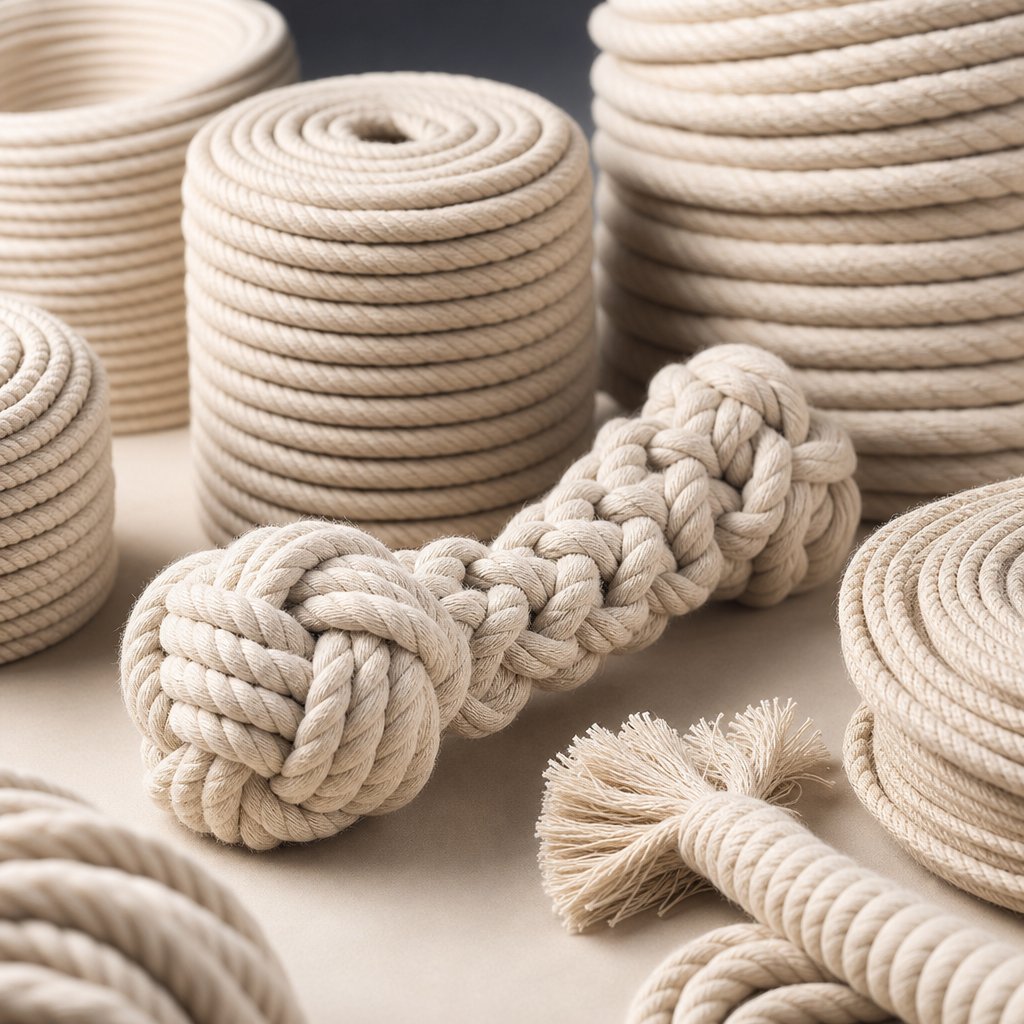
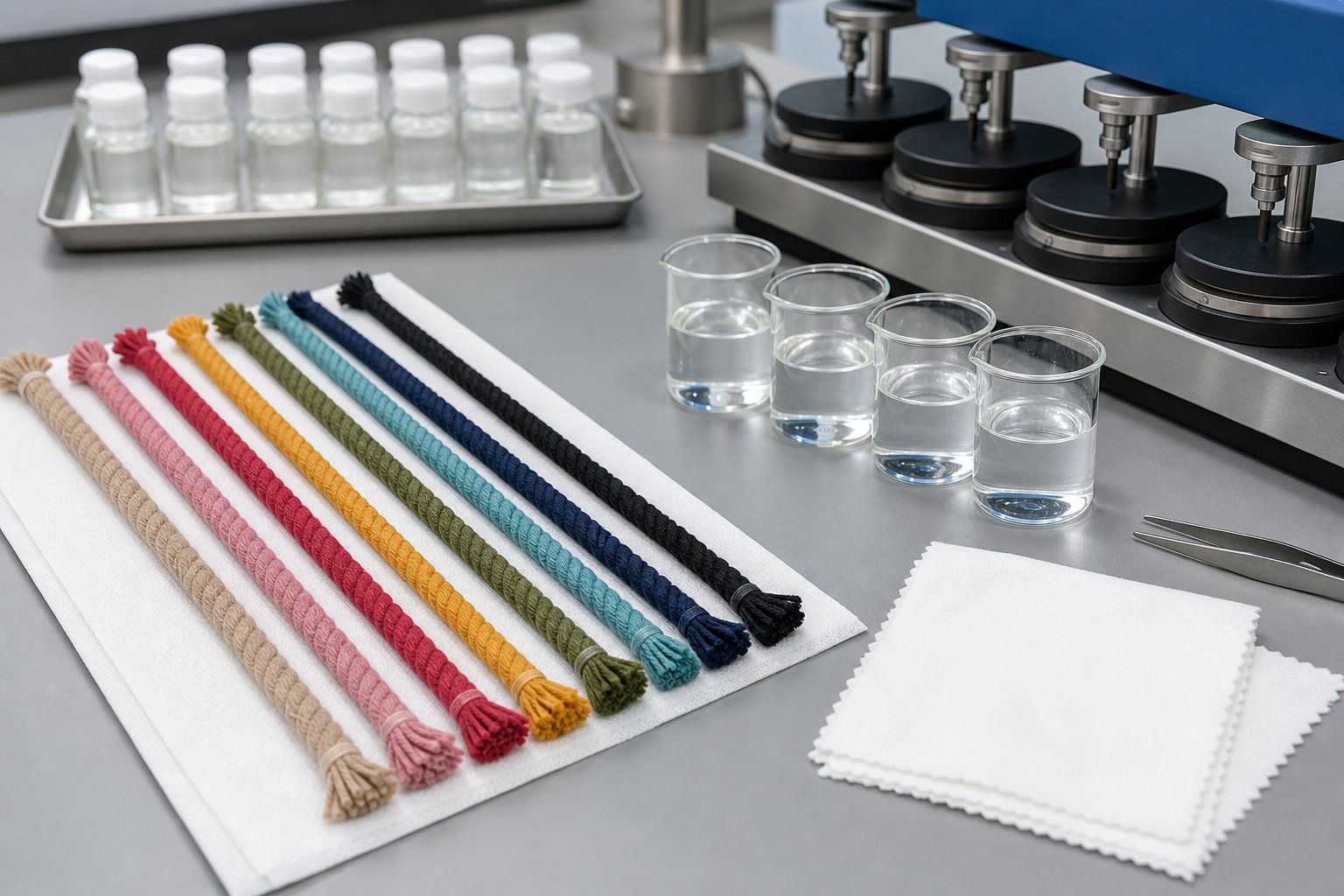
Cotton rope is built in layers. Fibers are spun into yarn; yarns are twisted together into strands (the "plies" a quotation refers to); strands are twisted around each other into rope. Each layer adds a variable. Staple length — how long the individual cotton fibers are — decides how well yarn grips itself. Twist density decides how tightly yarns and strands lock. Ply count and strand diameter set the girth a dog can bite. Change any layer and the finished toy changes personality: same diameter, entirely different durability.
The practical takeaway is that "cotton rope" is not a specification. Two quotes can name the same diameter and ply count while one twists virgin long-staple cotton tight and the other twists recycled short fiber loose — and only one of them will still look like a toy after a month.
Virgin vs Recycled Cotton: Where the Fuzz Comes From
Shedding is a physics story with a short plot. Virgin cotton is spun from fiber of consistent, relatively long staple; the yarn holds together well and presents few loose ends. Recycled cotton is reclaimed from textile waste, chopped back into shorter fiber, then respun; the resulting yarn carries more fiber ends, and fiber ends are exactly what a dog's teeth harvest. Under chewing, a recycled-cotton rope fuzzes faster and feels less dense in hand — not because the material is "bad," but because its fibers are shorter.
Twist compounds the story. A loosely twisted rope is cheaper to produce and fluffier on the shelf, but under load it opens, exposing more fiber to pull. A tight, high-density twist costs slightly more per meter and reads denser and harder in hand; it is the single most cost-effective upgrade in the category. Neither cotton source forbids a good product: recycled content suits entry-tier tugs honestly labeled as such, while virgin long-staple cotton earns its premium in durable, low-shed SKUs. What breaks programs is paying virgin prices for recycled construction.
Choosing Diameter: A Chart by Dog and Game
Diameter selection has two inputs — the mouth and the game. Tug-of-war loads the rope in tension while teeth shear across strands, so it wants girth. Solo chewing and fetch load it more gently. A working matrix:
| Dog size | Tug formats | Solo chew / fetch | Notes |
|---|---|---|---|
| Small breeds | Thin double-knot cords the whole muzzle can grip | Thin cords and rope bones, short lengths | Watch fraying — small dogs nibble strands apart |
| Medium breeds | Mid-diameter multi-strand tugs, center-knot builds | Mid-diameter bones and balls | The sweet spot for standard rope constructions |
| Large breeds | Thick rope, double or triple knots, long grip zones | Thick bones; check strand shear after each session | Teeth can cut strands on thin rope during hard tugging |
| Giant breeds | Maximum girth, dense knots, no thin necks in the design | Thick forms only; supervise strand damage | Any thin section becomes the failure point |
One design rule saves more returns than any other: no thin necks. The waist between two knots concentrates both the dog's bite and the rope's tension; on a large dog, an under-specified waist shears in a session. Either keep the waist close to body diameter or reinforce it with an extra knot.
Dyed Rope: Color Fastness Is a Review Category
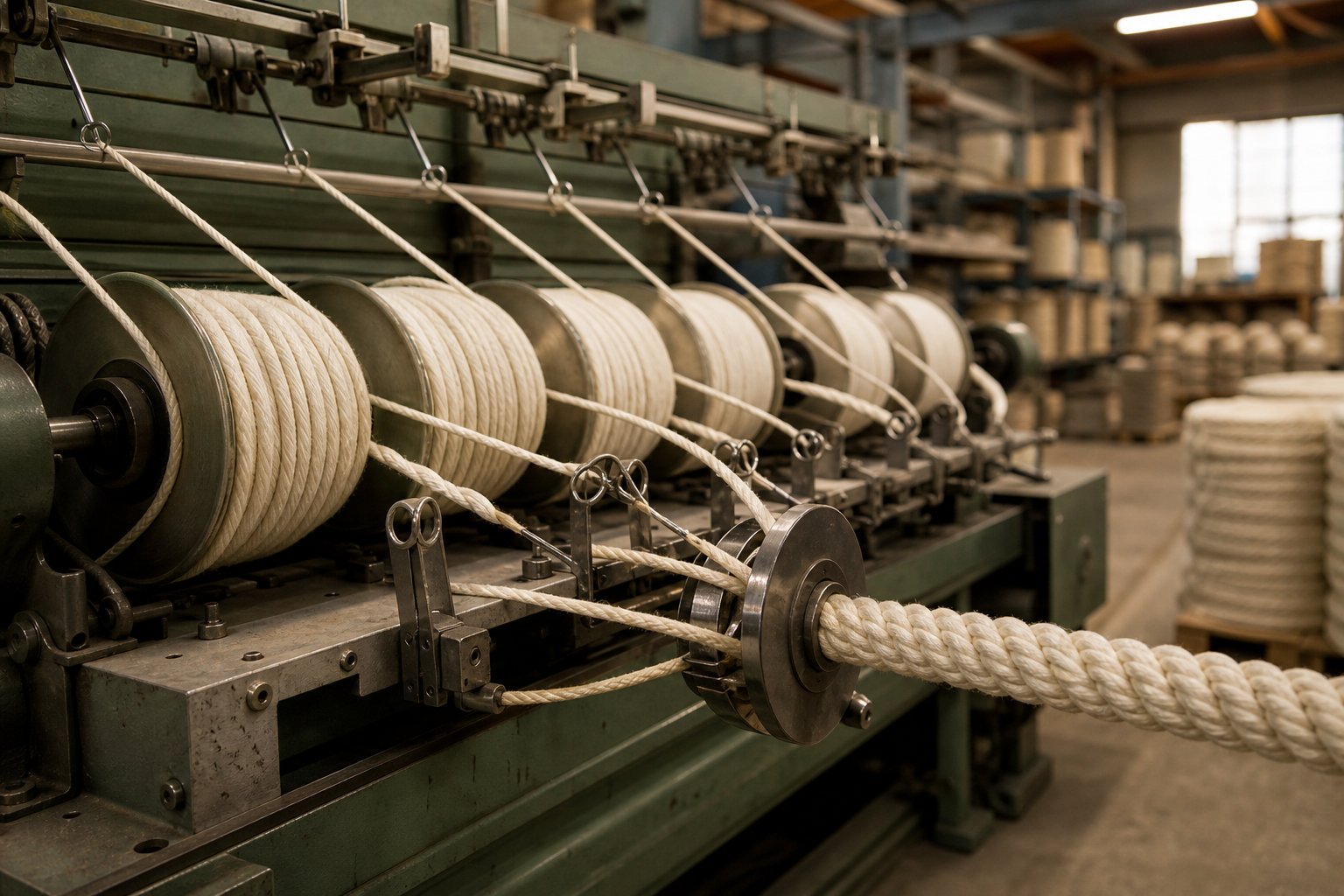
Colored rope sells — patterned tugs and ombré fetch ropes photograph beautifully — and dye is where cheap rope goes wrong in public. Two failure modes matter. Rubbing fastness: dye transferring to saliva, paws and carpets; buyers test it with water and artificial saliva rubs against white cloth. Light fastness: color fading in shop windows and sunrooms. Both are standard textile tests, cheap to run, and worth writing into the order for any dyed SKU.
For EU-bound programs there is also a compliance layer: azo dye restrictions that apply to textiles in practice cover pet toys sold through the same retail channels, and dark reds, oranges and blues deserve specific attention. Reputable dyers work with compliant reactive dyestuffs and can say so on paper; a supplier who cannot name the dye class is answering the wrong question. Our materials matrix lists cotton rope and sisal alongside the tests we run on each, and the factory page shows where braiding capacity sits in our production lines.
Writing Rope Specs into an Order
Rope forgives vague RFQs less than buyers expect. Four fields turn "cotton rope toy" into a spec:
- Fiber declaration — virgin, recycled, or a stated blend; recycled content is acceptable when it is declared and priced honestly.
- Construction — ply count, strand count and twist density class; ask to feel a dense-twist reference alongside the quote.
- Knot and end work — knots set tight with whip-stitched or wrapped ends; a photograph of the approved golden sample settles arguments later.
- Fastness tests — rubbing (water and saliva) and light fastness for dyed rope, results against the sealed sample per lot.
Buyers assembling multi-material ranges will find rope slots into the wider selection logic in our material selection matrix — rope owns the tug shelf and contributes the fetch-and-chew middle, while rubber and plush own the rest.
Frequently Asked Questions
Why does my cotton rope dog toy shed and fuzz?
Is recycled cotton rope bad for dog toys?
How do I choose rope diameter for a dog toy?
What should buyers check about dyed cotton rope?
Building a rope line that survives the first month of tugging?
Send your dog-size mix — we quote construction options by diameter, fastness test plans and FOB ranges for the first run.