Key Takeaways
- Every SKU decision is three questions: species and life stage, bite style, price tier. Answer them in that order and the material picks itself.
- Bite style — light, average, power, destructo — is the axis buyers most often skip, and the one that drives most returns.
- Each matrix cell carries an accepted failure mode; the professional move is to write it into the listing before the customer discovers it.
- Cats break the matrix honestly: play style and attractant potency replace chew durability as the deciding columns.
- Use the matrix as a living tool: pilot cells with existing tooling, then let return reasons move SKUs between cells each quarter.
Most material arguments inside buying teams are really three questions wearing one argument's clothes: Who is this for? How hard do they play? What does the price point forgive? The matrix below exists to end those arguments quickly. It is the same grid our quoting team fills in when a buyer sends a category brief — species down one axis, bite style down the other, price tier in the cells — and it turns material selection from taste into lookup.
What follows is the grid itself, the failure mode each combination accepts, the honest differences cats introduce, and the five-step process for putting the matrix to work in a real range.
The Three Axes, Defined
Species and life stage come first because they set the physics: a teething puppy and an eight-year shepherd do not negotiate with materials on equal terms. Bite style is behavioral, not size-based — a forty-kilo senior gentile nibbler belongs with light chewers, while a ten-kilo terrier with a shredding habit belongs with the destructo row regardless of weight. Four classes suffice: light, average, power and destructo (the ones who extract squeakers in minutes and consider it a job). Price tier decides which material grades are affordable in the cell — the matrix never lets a tier claim a material its cost structure cannot carry.
The Dog Matrix
Read cells as "dominant material family, with its accepted failure mode," not as guarantees:
| Bite style | Entry tier | Mid tier | Premium tier |
|---|---|---|---|
| Light chewers (puppies, seniors, gentle mouths) | Short-pile plush, velour faces, thin cotton cords | Soft TPR fetch shapes, PV fleece bodies, catnip-free plush builds | Natural latex figures, soft natural rubber, refillable herb pockets |
| Average adults (daily chewers) | TPR sticks and balls, standard rope tugs | Medium TPR + one rubber hero SKU, tight-twist rope, squeaky plush with liners | Natural rubber cones, nylon sticks, dense plush with safety liners |
| Power chewers | Firm TPR solids (no plush at this cell) | Natural rubber bones, firm TPR dispensers, thick rope with double knots | Thick-wall natural rubber, nylon rods, reinforced rubber-rope hybrids |
| Destructo style (shredders, extractors) | Not served in plush — steer to rope and firm TPR | Natural rubber + nylon rotation; plush only as supervised-use SKU | Engineering-plastic puzzle shells, dense rubber with no embedded fabric |
Two reads worth internalizing. First, the bottom row is where ranges quietly bleed returns: selling plush into a destructo cell is not optimism, it is arithmetic with a bad sign. Second, the diagonal from light-entry to power-premium is where the money sits — each step up the bite axis funds exactly one material upgrade, and trying to skip a cell (entry-tier "power chewer" plush) is the single most common way a range manufactures its own one-star reviews.
The material fundamentals behind the cells — how TPR and natural rubber divide the chew shelf, what each elastomer costs and forgives — are compared in our TPR versus natural rubber guide, and every material named here appears with its full profile on the materials matrix page.
Accepted Failure Modes, by Cell
A matrix cell is only honest once you name what it will look like when it fails — and put that on the listing:
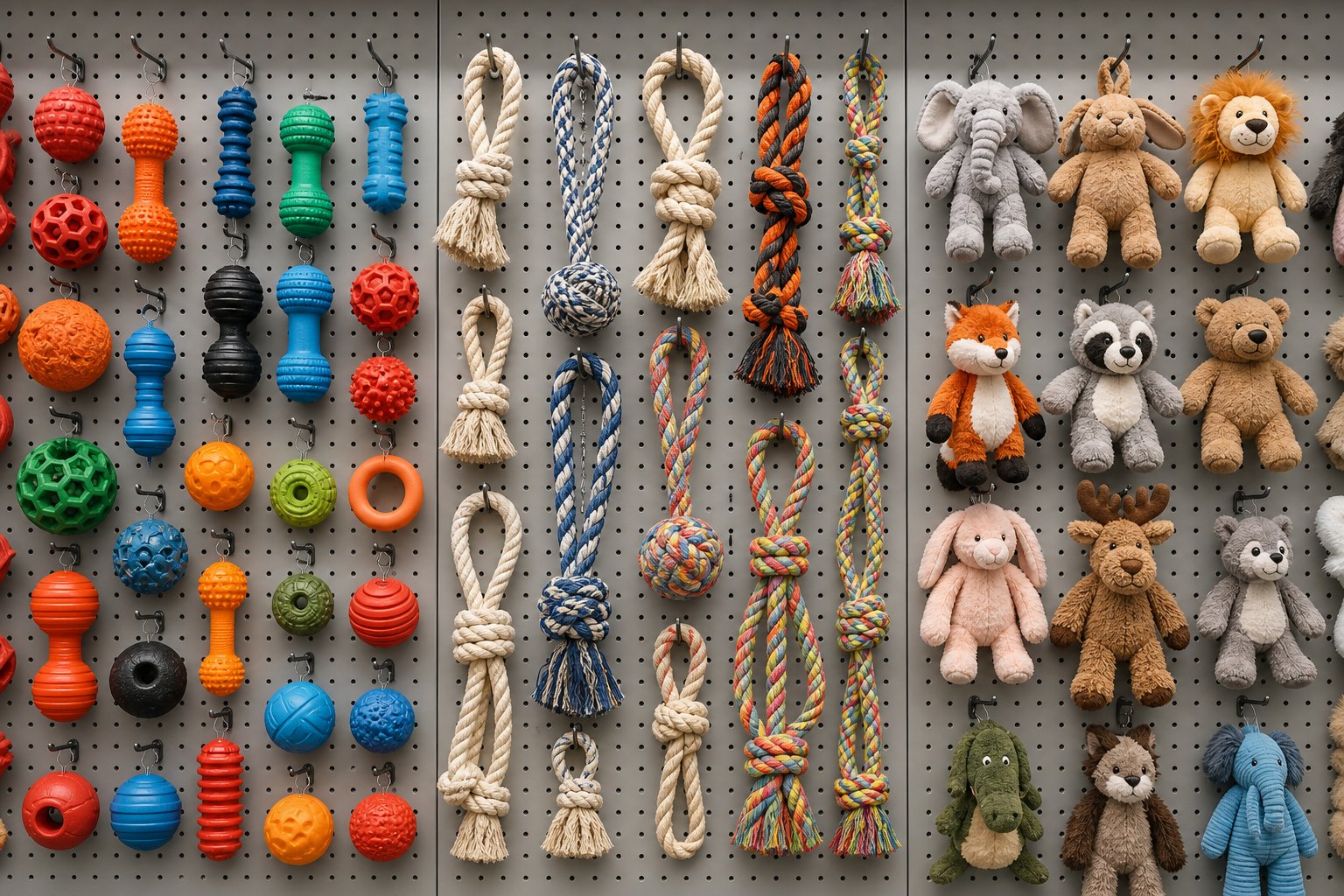
- Plush cells — the accepted failure is a de-stuffed toy after determined work; a safety liner and supervised-play copy convert it from complaint to expectation.
- TPR cells — accepted failure is surface abrasion and eventual tear at thin sections; wall thickness minimums in the spec delay it.
- Rubber cells — accepted failure is gradual loss of surface texture; the toy shrinks rather than dies, which is the durability story buyers pay for.
- Rope cells — accepted failure is fraying strands; trimming and knot density manage it, and supervision copy is non-negotiable.
When a return reason appears that is not the cell's accepted failure mode — a plush that split at the seam on day one, a rubber cone that tore in a week — the matrix treats it as a supplier problem, not a customer problem. That distinction is what makes the grid a QC instrument and not just a planning aid.
Cats Run a Different Matrix
Applying the dog grid to cats misleads, because cats rarely test materials to structural failure. The bite axis matters less; play style and stimulation matter more. The working cat matrix keeps species and tier and swaps the bite column for play style — kickers and wrestle toys (dense fabric, reinforced seams), chase toys (wands, lightweight balls), chew toys (silvervine sticks, soft rubber) and puzzle formats. Within those, the review-deciding variable is usually the attractant: herb freshness, fill weight and honesty about the share of cats that respond. An entry-tier catnip kicker with fresh, well-filled herb beats a premium-tier kicker with stale herb every single time — a inversion the dog matrix never produces.
Five Steps to Put the Matrix to Work
Teams that operationalize the grid tend to run the same sequence:
- Classify the audience first — from your review and return data, estimate the mix of light, average and power biters you actually sell to.
- Assign one dominant family per cell — and forbid shapes from dragging materials across cells (no entry-tier plush into the power row).
- Write the accepted failure mode into each listing — the sentence that manages expectations before the customer writes it for you.
- Pilot cells on existing tooling — validate the cell's material thesis with stock molds before committing new tooling budget.
- Review returns against the grid quarterly — move SKUs between cells as real data arrives; the matrix improves with mileage.
For buyers who want the eco-leaning variants of each cell — natural rubber, declared recycled fill, certified wood — the same grid extends cleanly; we map that overlay in the eco materials guide.
Frequently Asked Questions
How do I choose the right material for a pet toy?
What materials work for power chewers?
Is the same matrix valid for cat toys?
How should a buyer use a selection matrix in practice?
Want your current range mapped onto the matrix?
Send your SKU list — we classify each item by cell, flag mismatches, and return material and FOB options for the cells you are missing.