Key Takeaways
- A "simple" plush toy is a consortium of eight or more suppliers; the quote you received contains all of their distances.
- Inside a belt, fabric, fill, squeakers, masterbatch and cartons sit within a short drive — purchases become counter transactions, not freight events.
- Proximity changes four things: response time, small-lot access, color-matching speed and packaging iteration.
- Low MOQ floors are distance math: a 200-piece private label run is only quotable when trims are bought locally.
- Borrowing the belt beats building a material chain for most buyers; building only makes sense at stable volume or with proprietary materials.
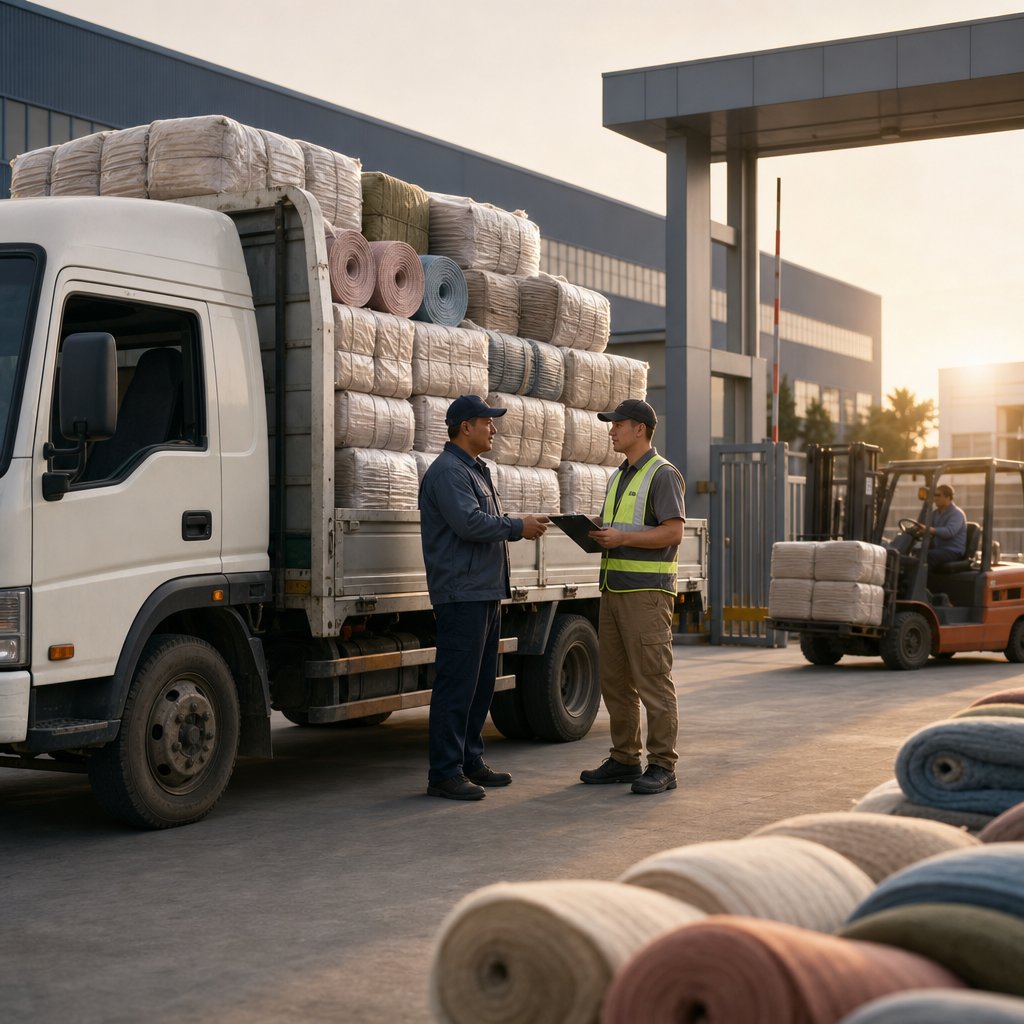
Pick up any plush dog toy and read its bill of materials aloud. A velour shell, PV fleece accents, PP fiber fill, a plastic squeaker, bonded thread, embroidered eyes, a woven label, a hangtag, a polybag, a carton. Eight to ten suppliers contributed to the object in your hand — and the factory price you were quoted quietly contains every one of their distances. Where those suppliers sit is not a logistics footnote. It is a structural cost line, and it explains much of what buyers experience as "supplier responsiveness."
The Bill of Materials Behind One Simple Toy
Here is the consortium behind a generic squeaky plush, and where a mature belt sources each part:
| Component | What it is | Where the belt sources it |
|---|---|---|
| Shell fabric | Velour, PV fleece, imitation rabbit fur | Fabric rows and mills within the belt; swatch approved per lot |
| Fill | PP fiber, virgin grade for pet lines | Local fiber suppliers; bought by weight per batch |
| Squeaker unit | Molded PVC or TPR reed valve | Components market in the belt; several vendors in a day's reach |
| Thread and embroidery | Bonded polyester, digitized eye and logo files | Thread distributors and digitizers nearby |
| Eyes and noses | Plastic safety parts or embroidered replacements | Trim market stock, or tooled by the neighboring mold shop |
| TPR or rubber chew part | Over-molded or attached chew element | Molded in-belt or traded from a partner belt like Chenghai |
| Hangtag and carton | Printed board, corrugated boxes | Local print shops; small runs viable |
| Polybag | OPP bag with warning print | Packaging wholesalers in the same district |
A buyer who has sourced from a lone factory will notice what this table implies: in a belt, almost nothing on the critical path has to be ordered "ahead" in bulk. It is bought when the batch needs it, in the size the batch needs.
Supply Radius: What Lives Inside a Belt
The densest example is Yangzhou, where provincial media reported in January 2026 that more than 80% of the city's toy e-commerce firms and over 60% of its manufacturers cluster within roughly three kilometers of the Wutinglong toy market — fabric stalls, fill dealers, trim counters and embroidery shops all inside the same walk. Chenghai runs the same logic in polymers: a mold-and-resin ecosystem serving some 60,000 toy firms. Pingyang's chew-and-rope belt reached further for feedstock — local reporting describes raw-material channels opened to Thailand, Brazil and Cambodia since 2022 — because chew materials, unlike fabric, have no local farm behind them.
That last example is worth dwelling on, because it shows the limit of proximity: belts compress the radius of everything that can be local, and organize the rest. Natural rubber is the classic case — Thailand has supplied more than half of China's rubber imports for years, which is why latex toy quotations move with Southeast Asian feedstock and why serious suppliers watch those prices the way bakers watch flour.
What Proximity Actually Changes
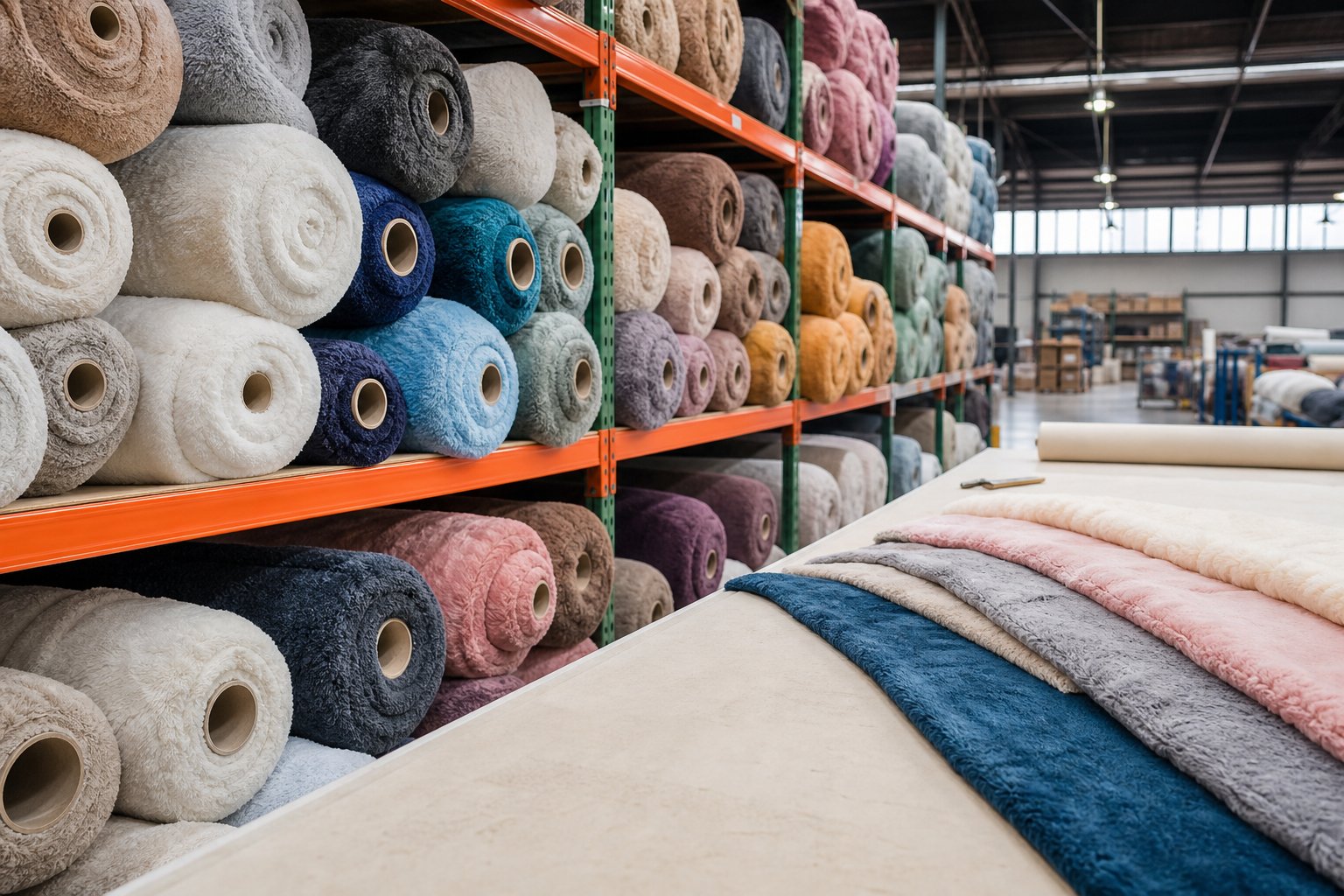
Four mechanisms, none of them mysterious. First, response time: a missing trim is a counter purchase today rather than a purchase order with a two-week lead. Second, small-lot access: local vendors sell fifty meters of fabric or one carton of squeakers because the belt guarantees them daily volume. Third, color matching: masterbatch and dye houses nearby mean a corrected colorway is a same-week event. Fourth, packaging iteration: a hangtag revision is a print shop visit, not a second freight cycle.
The compounded effect is what buyers actually feel. An illustrative case, labeled as such: a 10,000-unit order whose shell fabric lot fails inspection in week two. Inside the belt, replacement fabric is on the cutting table within days and the ship date moves little. At the end of a long material chain, the same failure replays as discovery, claim, remaking and freight — the kind of slip that turns a stable program into a crisis. Same toy, same defect, different radius.
Small Orders Are Made of Local Materials
This is also why MOQ floors vary so much between suppliers at the same quoted price. A factory that must buy fabric in mill minimums will refuse or inflate a 200-piece private label run, because the unused roll has to live somewhere — usually in your unit price. A factory with a fabric market down the road quotes the same run without ceremony, because the supplier's minimum is already small. Our own first tier — 200 pieces per style on in-stock bodies, dispatched in five to ten days — is only arithmetically possible because trims, labels and polybags are counter purchases here.
Buyers should read MOQ refusals accordingly: they are rarely stubbornness. They are a map of the supplier's own supply radius, quoted back to you.
Build or Borrow the Material Chain
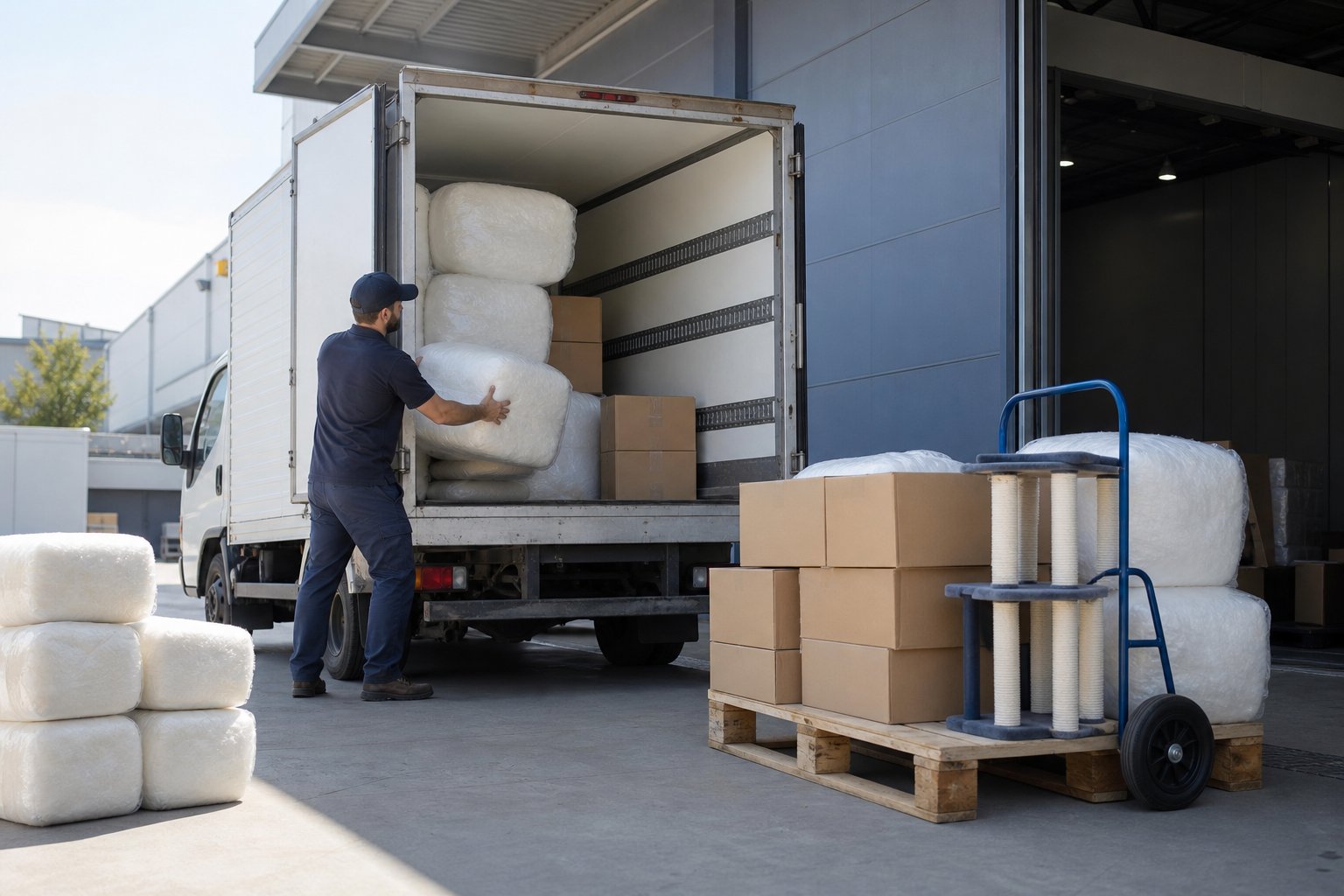
Some buyers, usually after a bad year, consider building their own material supply. The honest criteria:
- Volume stability. Dedicated supply pays for itself only when consumption is steady enough to keep it busy; seasonal programs inherit idle capacity.
- Proprietary materials. If a fabric compound or formula is your differentiation, owning it may be the point — and worth the overhead.
- Redundancy. A borrowed belt gives you many vendors per component by default; a built chain gives you one, and you become its maintenance crew.
- Management weight. Every self-run supplier is a relationship to audit, qualify and rescue. The belt does that collectively; alone, you do it personally.
For most buyers, borrowing wins — provided the borrowed chain is pinned down contractually. Specify fabric weight and pile height, fill grade, masterbatch maker and virgin ratio in the RFQ; freeze them in the golden sample; require batch-level checks against that sample. Our materials matrix lists the specs we write into orders by default, and the factory page shows how the Yangzhou and Yiwu bases divide material handling. For how belts divide product families, see the city map.
Frequently Asked Questions
How much of a toy's cost is raw material distance?
Does sourcing inside a belt mean better quality?
Can I require specific material brands and grades in my order?
When does building my own material chain make sense?
Want your BOM mapped against the belt?
Send a current toy or its specification — we will return the local sourcing route for every component, with FOB implications for each.