Key Takeaways
- Rubber toy odor has three addressable sources: curing residues, recycled content and cheap process oils or accelerators — all decided before molding.
- Virgin TPR and properly post-cured natural rubber are both mild out of the box; a strong smell is a compound-room decision, not a material inevitability.
- Low-odor compounds cost more, but as a step, not a cliff — and the cost is smaller than one season of "smells like tires" reviews.
- Airing works, but as a controlled process step with a minimum time and a sensory gate at packing — not as an open-ended hope.
- Buyers control odor with a sealed reference sample, a three-reading sensory protocol and odor listed in the AQL defect catalog.
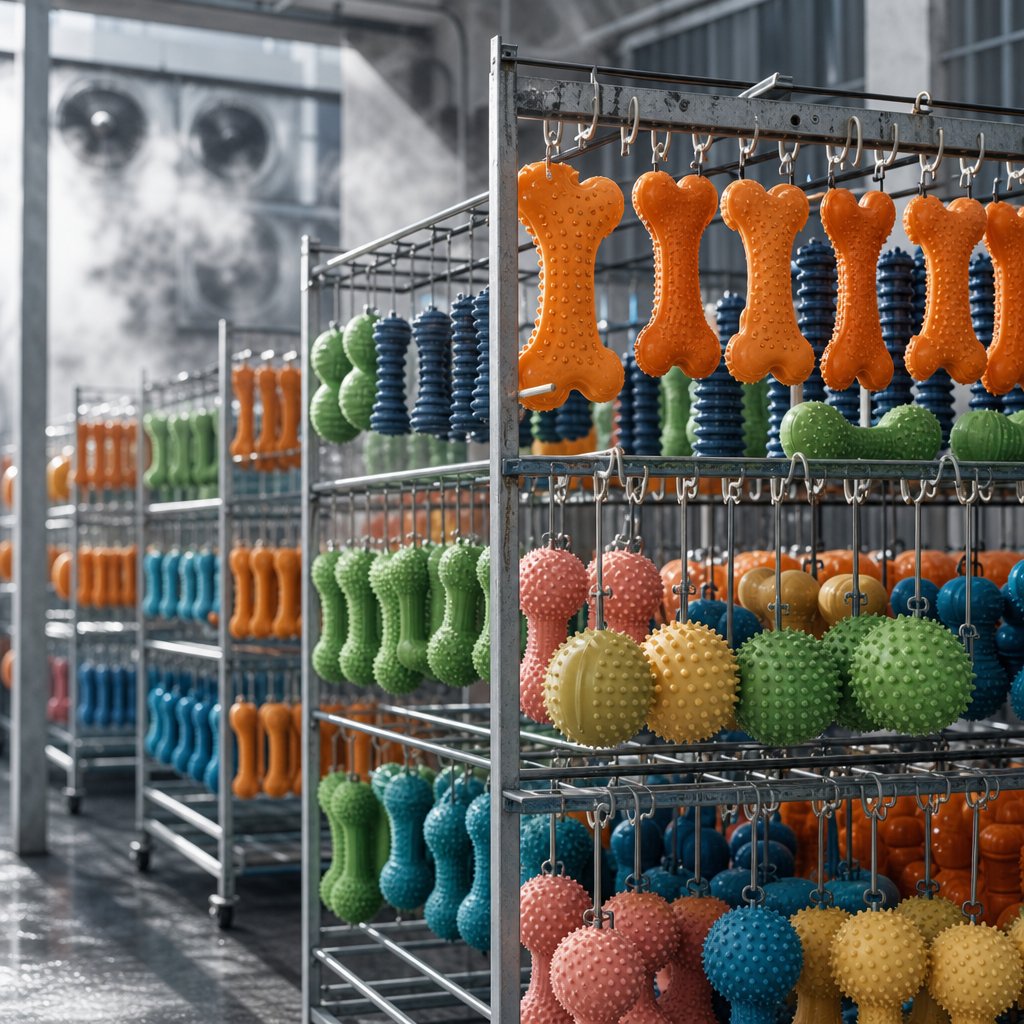
Open a returns box of rubber dog toys and you can diagnose the factory with your eyes closed — literally. The toys that came back for "smells too strong" carry their production history in the nose: a sharp chemical bite that points at curing chemistry, a sweet used-tire note that points at regrind, a waxy sourness that points at the oil bill. Odor is the one quality attribute a buyer can audit from another continent, and the one factories are least anxious to discuss, because it leads straight to their cost structure.
This guide takes the smell apart: where it actually comes from in rubber and TPR production, what a low-odor compound genuinely costs, how airing and pack-line checks are run properly, and the exact clauses that put odor under control in your order.
Where the Smell Actually Comes From
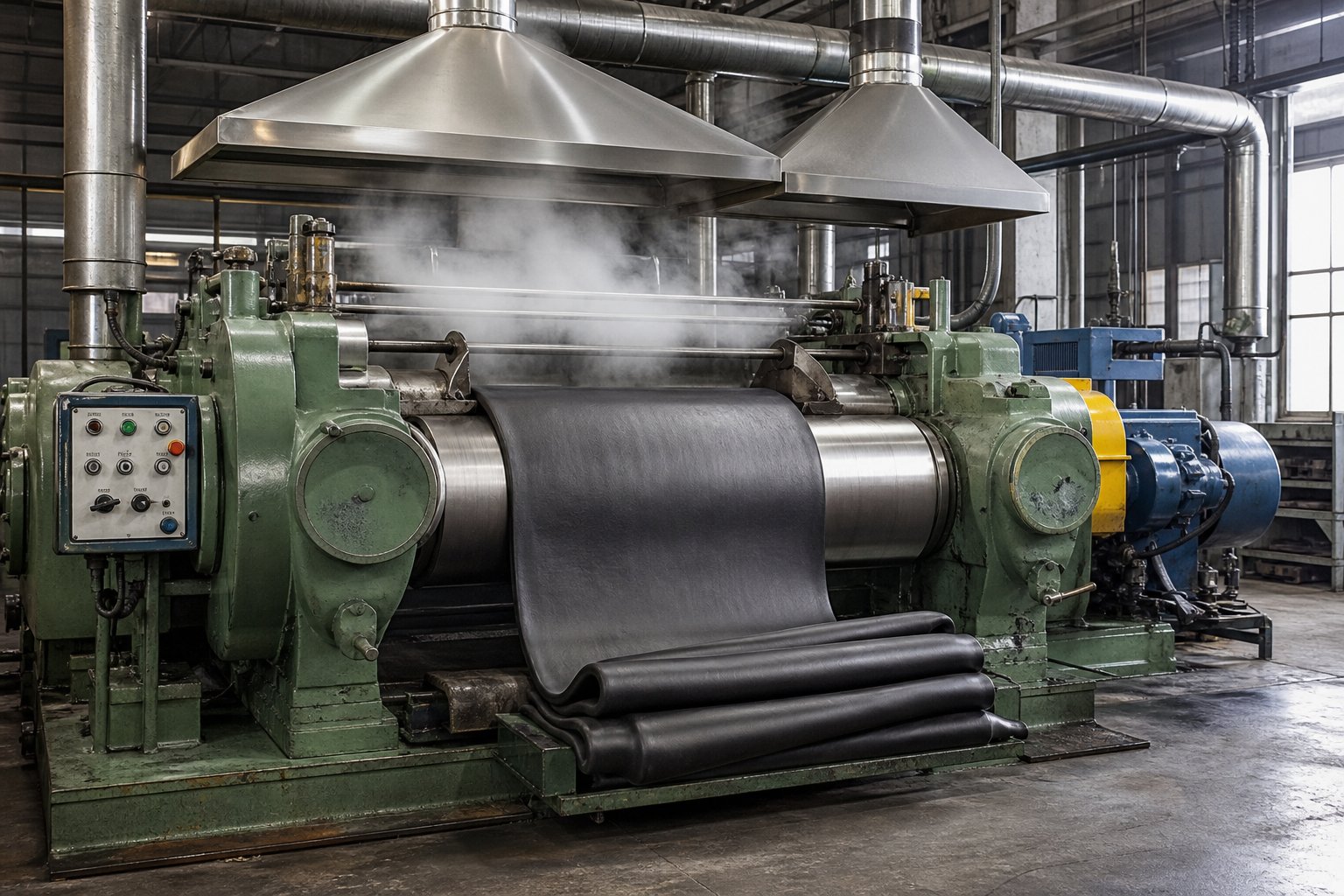
Vulcanized rubber is chemically active goods. When natural rubber cures in the press, residual curing agents and by-products keep evolving after demolding; if the cycle is rushed or the post-cure skipped, those volatiles ship inside the toy and release for weeks in a customer's living room. The fix is process discipline — full cure, controlled post-cure — not air freshener.
Recycled content is the second source and the loudest. Regrind and reclaimed rubber carry the volatile history of whatever they used to be — tires, mats, mixed industrial scrap — and that history re-emerges as the characteristic sweet, burnt note buyers describe as "tire smell." Regrind within a TPR program (sprues and rejects reground in-house) is manageable and normal; unknown-origin reclaimed rubber in natural rubber programs is where odor and safety risk arrive together, because unscreened recycled material is also the classic PAH exposure route under REACH.
The third source is the oil and accelerator bill. Process oils soften compounds and cut cost; aggressive accelerators speed curing. Both classes span a quality range, and the bottom of each range has a smell. A compound quote that undercuts the field usually skimped here first.
| Source | Smell signature | Process stage | Control | Cost signal |
|---|---|---|---|---|
| Curing residues | Sharp, chemical bite | Vulcanization cycle and post-cure | Full cure curves; controlled post-cure; oven finishing | Machine time — minutes per cycle |
| Recycled content | Sweet, burnt "tire" note | Compound purchasing | Virgin ratio for mouth-contact parts; capped, traceable regrind | Virgin resin premium |
| Process oils and accelerators | Waxy, sour, lingering | Formulation | Specified oil and accelerator grades, declared | Raw material grade selection |
| Pack-in trapping | Concentrated on unboxing | Packing | Airing before bagging; breathable or delayed seal packing | Warehouse dwell time |
The fourth row is the buyer-side insight most programs miss: even a decent compound smells stronger when sealed into a polybag two hours off the press. Packing discipline is part of odor control, and it is nearly free.
What a Low-Odor Compound Actually Costs
Low-odor is a purchasable grade, and its cost stack is legible. Virgin resin instead of high regrind raises the compound line item. Cleaner process oils and milder accelerator systems raise it further. Controlled post-cure buys machine time. None of these moves moves the FOB price by a cliff — in the quotes we issue, moving a standard chew SKU from trade-grade to low-odor grade is a step of a few percent, not a doubling. What the buyer is really purchasing is a different returns curve: smell complaints arrive in the first week after unboxing, which means they arrive as returns and one-star reviews at full retail visibility, unbuffered by the slow erosion that softens other defect types.
The honest caveat runs the other way too: no compound is odor-zero. Natural rubber has a character, TPR has a character, and the goal of a low-odor program is a clean, faint, fading smell — not nothing. Programs that promise "odorless" set up their own returns; programs that promise "mild scent that fades in days" keep them.
Air, Time and the Packing-Line Check
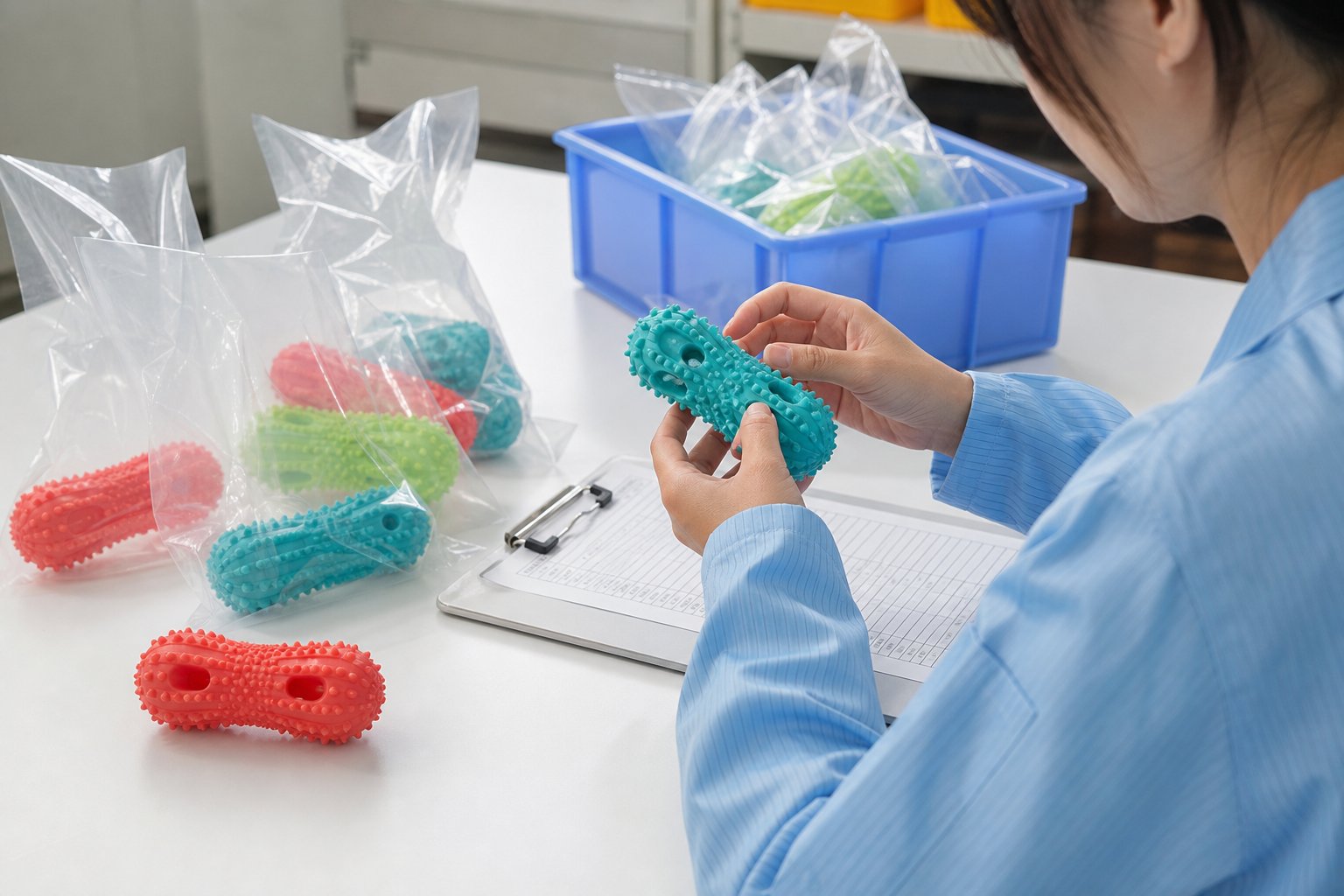
Airing works because the volatiles are real and finite. The professional version has three parts. First, a ventilated rack period after demolding — days, not hours, with airflow across the parts. Second, a sensory gate before packing: a trained checker grades the batch against the sealed golden sample under a fixed protocol — unboxed sniff, a rubbed sniff (hands warm the surface and release volatiles), and a bagged sniff after brief confinement (the customer's first ten seconds). Third, packing that respects the data: passing batches bagged promptly, failing batches returned to the rack or isolated rather than "packed anyway."
Instrument support exists — gas-sensing labs can fingerprint volatiles — but for this category the sensory protocol is the industry workhorse: cheap, fast and honest, provided both parties grade against the same sealed reference and record results per lot. Our quality page documents the three-reading protocol we run per batch, and the materials side of the equation — which compounds carry which odor risk — is mapped on our materials matrix.
Writing an Odor Standard into the Order
Odor becomes controllable the moment it becomes contractual. The clauses that do the work:
- Compound declaration — virgin ratio for mouth-contact parts, regrind capped and traceable, oil and accelerator grades named.
- Sealed reference sample — approved at pre-production, retained by both sides, the sole benchmark for grading.
- Three-reading sensory protocol — unboxed, rubbed, bagged — recorded per lot at the packing gate.
- Disposition rule — failing batches air, re-check, isolate or reject, with the path agreed before production, not during a dispute.
- Defect catalog entry — odor listed under the AQL standard (consumer-goods practice: Critical 0 / Major 2.5 / Minor 4.0) so a failing grade has inspection consequences, not just opinions.
Suppliers who already run low-odor programs accept these clauses in one pass; the negotiation you meet instead is itself information about the compound you were about to buy. The same logic — specify the material so the material cannot drift — runs through our TPR ordering guide and applies identically to rubber.
Frequently Asked Questions
Why do some rubber dog toys smell stronger than others?
Is a rubber smell on a dog toy dangerous?
Can factory airing remove rubber odor?
How do buyers specify odor limits in an order?
Tired of explaining tire smell to reviewers?
Send your chew formats — we quote low-odor compounds with FOB ranges, the airing protocol and the sensory clauses we ship under.