Key Takeaways
- TPR is melted and injection-molded; natural rubber is mixed and vulcanized. The process difference drives cost, smell and durability more than the material names do.
- Vulcanized natural rubber keeps the edge in tear strength and rebound, which is why it still anchors serious power-chewer lines.
- TPR wins on tooling cost, color freedom, float and lower unit cost, and its regrind economics suit fast-turnover catalogs.
- Testing focus differs: recycled rubber carries PAH obligations under REACH, while TPR compounds are screened for plasticizers and heavy metals.
- Assign materials by price band, not by habit: rubber for the heavy-chew hero SKUs, TPR for the color-led volume around them.
Ask two factories to quote the same bone-shaped chew toy and you will often receive two different answers: one in TPR, one in vulcanized natural rubber, with a unit-price gap wide enough to look like a typo. Both materials end up in the chew aisle, both can be made safe, and both get marketed to shoppers as "rubber." The difference is not cosmetic — it decides the tooling you pay for, the tests you run, the smell your customers notice on unboxing and, ultimately, which dogs your toy survives.
This comparison is written from the quoting table rather than the chemistry bench: what each material actually is, where it wins on performance, what changes at the border on compliance testing, and — most usefully — which material belongs in which price band of a dog-toy range.
Two Materials, Two Production Logics
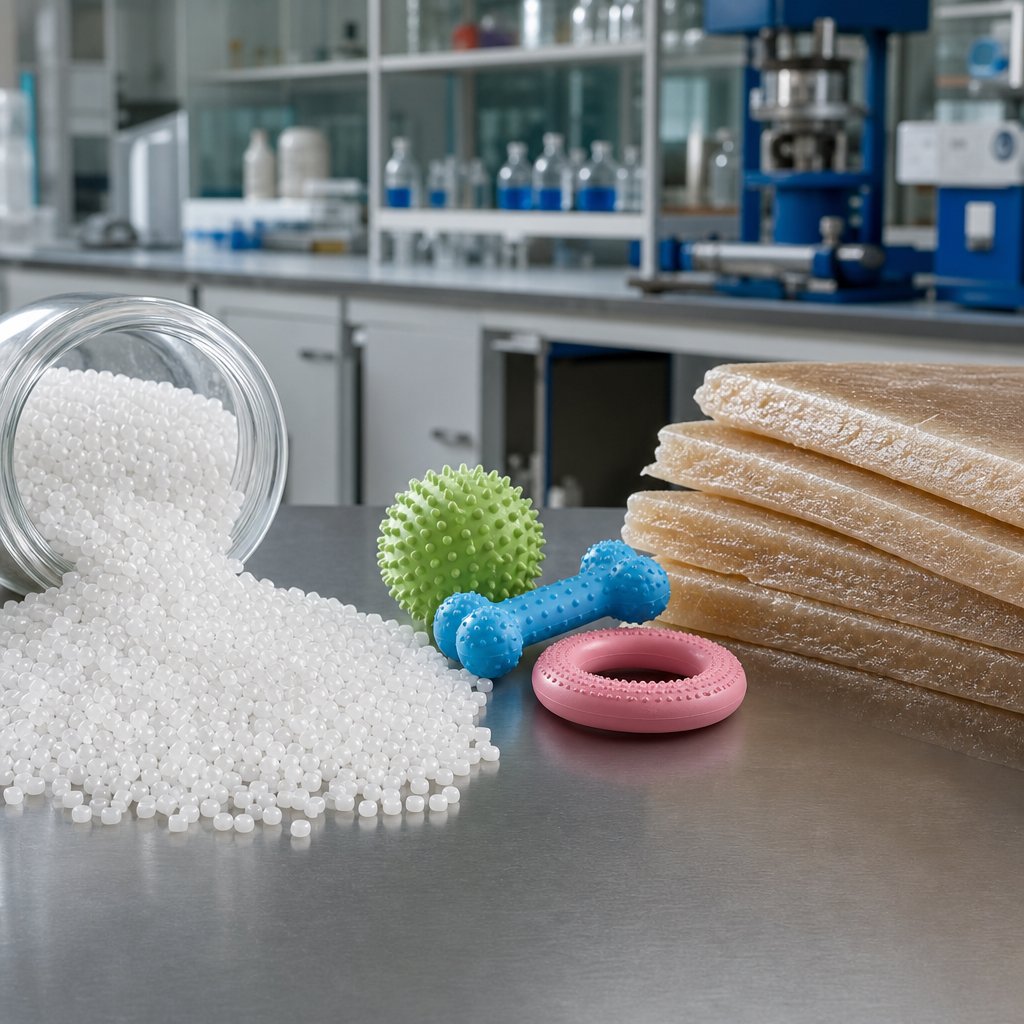
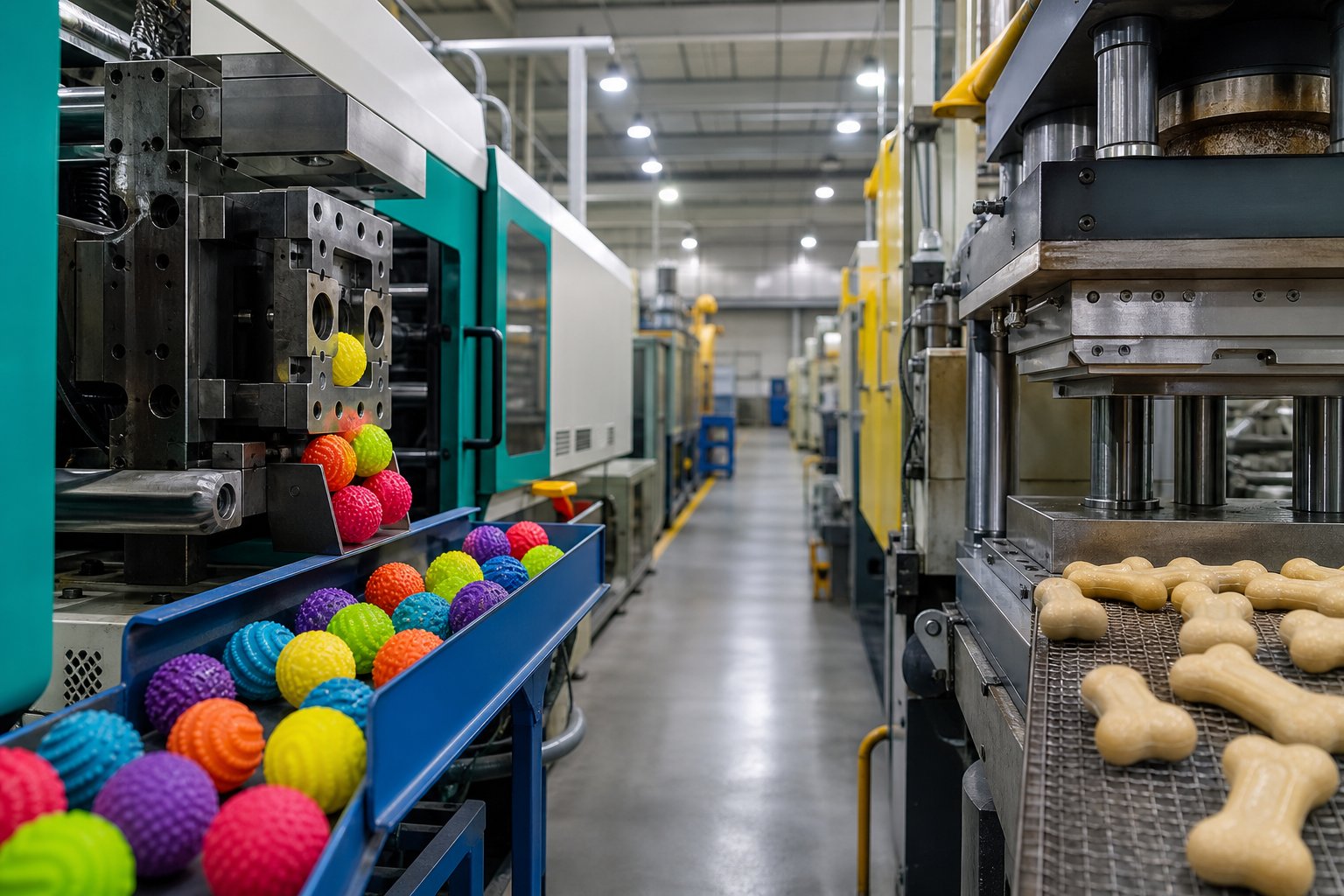
TPR — thermoplastic rubber — arrives at the factory as pellets. It is melted, colored with masterbatch and injection-molded the way ordinary plastics are, which is why TPR lines turn out shapes quickly, hold tight color consistency and can grind sprues and rejects back into future runs. The compound system behind it — phases, oils, fillers and what to ask about them — is covered in detail in our earlier TPR explainer.
Natural rubber follows a different discipline. Raw polymer is blended with curing agents and fillers on a mixing mill, sheeted, then compression-molded and heat-vulcanized in metal molds. The cycle is slower and the molds are heavier, but the cross-linked network that forms inside the material is what gives vulcanized rubber its signature rebound and resistance to tearing. Two production logics, then: one optimized for speed and SKU turnover, the other for toughness per shape.
Head-to-Head: Where Each Material Wins
Put the two side by side at the specification level and the trade-offs become concrete:
| Property | TPR (injection-molded) | Vulcanized natural rubber | What it means for buyers |
|---|---|---|---|
| Processing | Melted and molded; fast cycles, regrind possible | Mixed, sheeted, compression-vulcanized; slower cycles | TPR suits color variety; rubber suits fewer, tougher shapes |
| Chew feel | Squishy to firm, moderate rebound | Firm, high rebound, gripping texture | Rubber reads as "premium" to strong chewers |
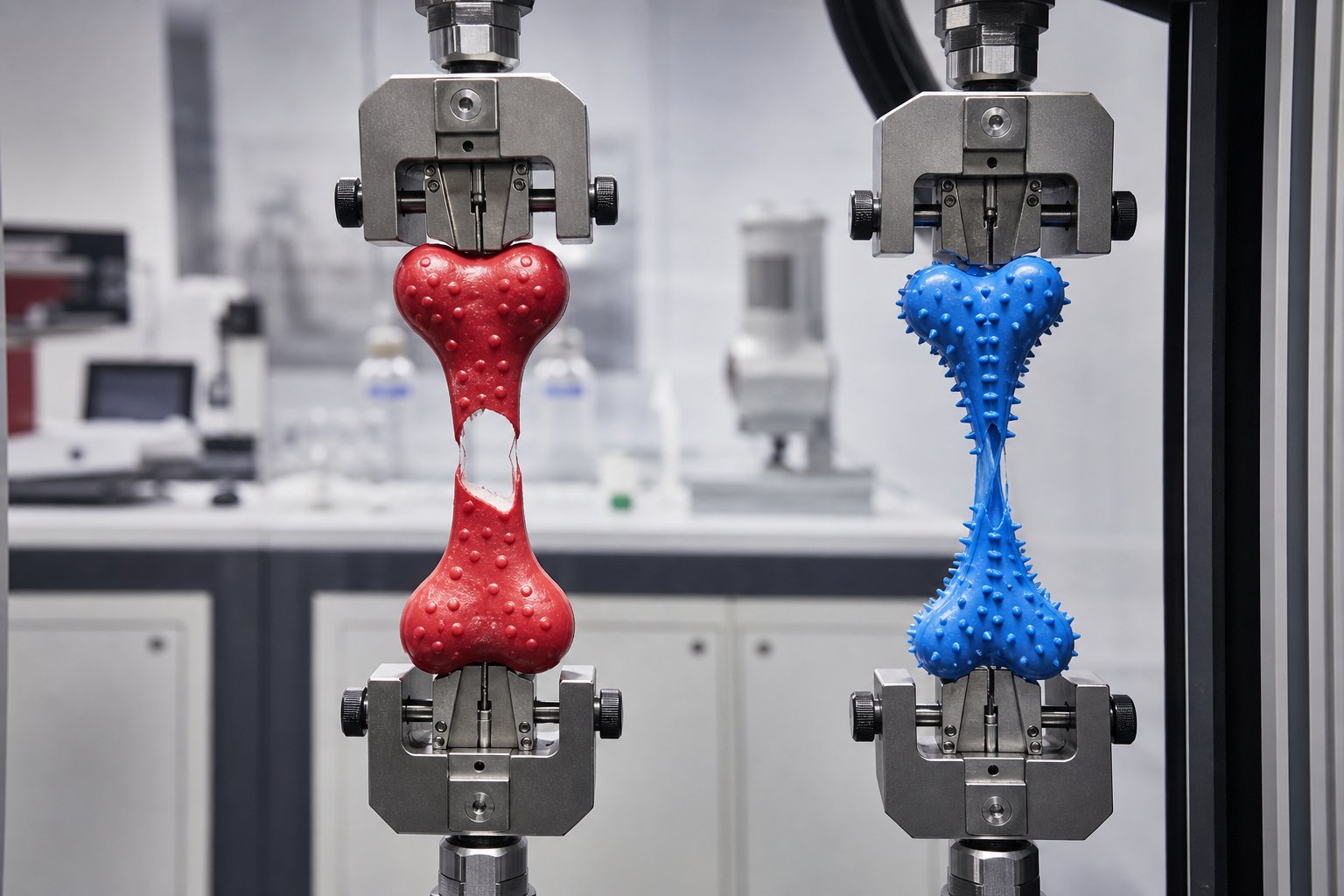
| Tear and puncture | Good; drops with high regrind content | Stronger of the two | Power-chewer SKUs favor rubber |
| Odor profile | Low with virgin compound; rises with regrind | Mild characteristic smell; worse if curing is rushed | Both are fixable in the order, not in reviews |
| Color and finish | Any shade, including translucent | Limited palette, matte tones | TPR carries pastel retail programs |
| Tooling | Lower-cost injection molds | Heavier steel molds, longer life | Pilot lines usually start in TPR |
| Price level | Lower band at the same size | Higher band; gap narrows on large parts | Quote both before locking a material |
Two conclusions follow. First, for a range that spans puppy toys to power-chewer bones, the materials complement rather than replace each other. Second, smell is a purchasable decision in both processes: it tracks recycled content in TPR and curing discipline in rubber, which means it belongs in your specification, not in your returns data.
Safety Testing: What Changes at the Border
For both materials, toy standards such as EN 71 and ASTM F963 remain voluntary, buyer-driven testing for pet products — no law compels them. What differs is where the risk sits. Recycled rubber is the classic audit focus: regrind of unknown origin can carry polycyclic aromatic hydrocarbons (PAH), which REACH caps for rubber and plastic parts that contact skin or mouth. A natural-rubber program built on reclaimed content therefore needs PAH screening backed by traceability, or a clean virgin-compound declaration.
TPR's conversation is mostly about plasticizers and heavy metals: a REACH phthalate screening (the common benchmark is the CPSIA 8-phthalate set at 0.1%) for the compound, plus EN 71-3 style migration screening for colored parts. The pet-toy-specific option — verification against ASTM F2999, the standard written for pet toys covering material hazards, sharp edges and squeaker attachment — applies to either material and is the cleanest way to evidence diligence for the actual category.
Cost Structure: Why the Quotes Differ
The gap between a TPR quote and a natural-rubber quote is rarely one number — it is four. Compound: rubber costs more per kilo than commodity TPR. Machine time: vulcanization occupies a press for minutes per cycle instead of seconds. Tooling: steel molds cost more and amortize over fewer shapes. Yield: regrind recovery gives TPR a waste advantage that rubber cannot fully match. Set against all this, TPR programs pay for speed — cheaper tooling makes colorway variants economical — provided the regrind ratio is controlled and kept out of mouth-contact parts.
For buyers, the working question is therefore not "which material is cheaper" but "which cost structure fits the SKU." A forty-shape pastel puppy line and a six-shape power-chewer line are different businesses, and they point at different materials.
Matching Material to Price Band
As a rule of thumb our team applies when quoting chew ranges:
- Entry multipacks and promotional packs — TPR at a medium hardness, simple solid shapes; the cost structure survives multipack pricing.
- Mid-market core range — TPR for color-led volume plus one or two rubber hero SKUs to give the range a durability story.
- Power-chewer premium tier — vulcanized natural rubber, thicker walls, darker palette; buyers here pay for toughness and expect the smell and feel that come with it.
- Puppy and senior lines — soft-grade TPR for gentle bites; comfort and quiet matter more than indestructibility here.
- Treat-dispensing shells — firm TPR where prying loads are moderate, rubber where dogs work a toy for months; quote both before deciding.
Whichever way you lean, make the two suppliers quote the same drawing. The materials matrix on our materials page lists both compounds in the same fields an RFQ uses, and our quality page shows how batch durometer and sensory checks are recorded. If you are still weighing the material itself, start with the TPR explainer, then bring both quotes back to one spec sheet.
Frequently Asked Questions
Is natural rubber safer than TPR for dogs?
Which material lasts longer with a power chewer?
Why is the natural rubber version more expensive?
Can one dog toy range use both materials?
Deciding between TPR and natural rubber for your next chew line?
Send the shapes and your target price band — we quote both materials side by side with FOB ranges and the test plan each one needs.