
Key Takeaways
- Neither the UK nor Japan asks a pet toy for CE — the UK has its own regime after Brexit, and Japan never asked for marks in the first place.
- The UK layer is general product safety: documented safe goods, accurate English labels, a reachable responsible entity, voluntary EN 71 as the accepted benchmark.
- Japan's gate is quality habit, not paperwork: odor on opening, stitch and seam detail, packaging precision, and needle-detection discipline on plush.
- Japanese buying runs on structured spec sheets, formal quotation formats and stable reorders — relationships are built for continuity.
- Both markets can be served from one production base with two document packs; neither requires changing the product, only proving it.
The same plush mouse sits on two buyers' tables in the same week. In London, the buyer opens a folder and asks to see the risk analysis, the EN 71 reports and who stands behind the product in the market. In Tokyo, the buyer opens the polybag, rubs the plush between both hands, smells it, turns a seam outward, and asks — before any paper appears — what the needle policy is. Two markets, two completely different audits of the same mouse. Sellers who only prepared for CE fail both.
This article maps what the UK and Japan actually expect from an imported pet toy once the marking question is set aside, and closes with the minimal document pack that opens each market.
The UK: General Product Safety, Not Marked Goods
Post-Brexit Britain runs its own version of the marking confusion. UKCA exists — the UK's replacement mark for goods under UK regulations — but like CE it attaches only to product categories that specific rules cover, and pet toys are outside the toy regimes on both sides of the Channel, because those regimes protect children. The honest answer to "should this carry UKCA or CE?" is neither, for the reasons laid out in our CE marking article.
What genuinely applies is the UK's general product safety law: goods must be safe, and safety must be demonstrable. In buyer practice this arrives as a file — a risk analysis, technical documentation, an accurate label in English naming a reachable operator, and the test evidence behind any claim. Voluntary EN 71 reports function as the shared quality benchmark, exactly as they do for EU buyers, and the label conventions follow the operator-identity pattern described in our labeling article. A seller who has built the EU file is, with a stamp and an address change, most of the way into the UK one.
Japan: No Marks to Chase, Habits to Learn
Japan is the opposite temperament. There is no marking culture to satisfy for pet products and no buyer who will ask; the market's gate is quality habit, inspected by hand. Buyers from established channels probe exactly what documents cannot show: how the toy smells when the bag opens, whether stuffing lumps under the fabric, whether the seam allowance is even at the curve, whether the hangtag string is tied at the same length on every unit, whether the packaging folds crisply. None of this appears in a regulation. All of it appears in the reorder decision.
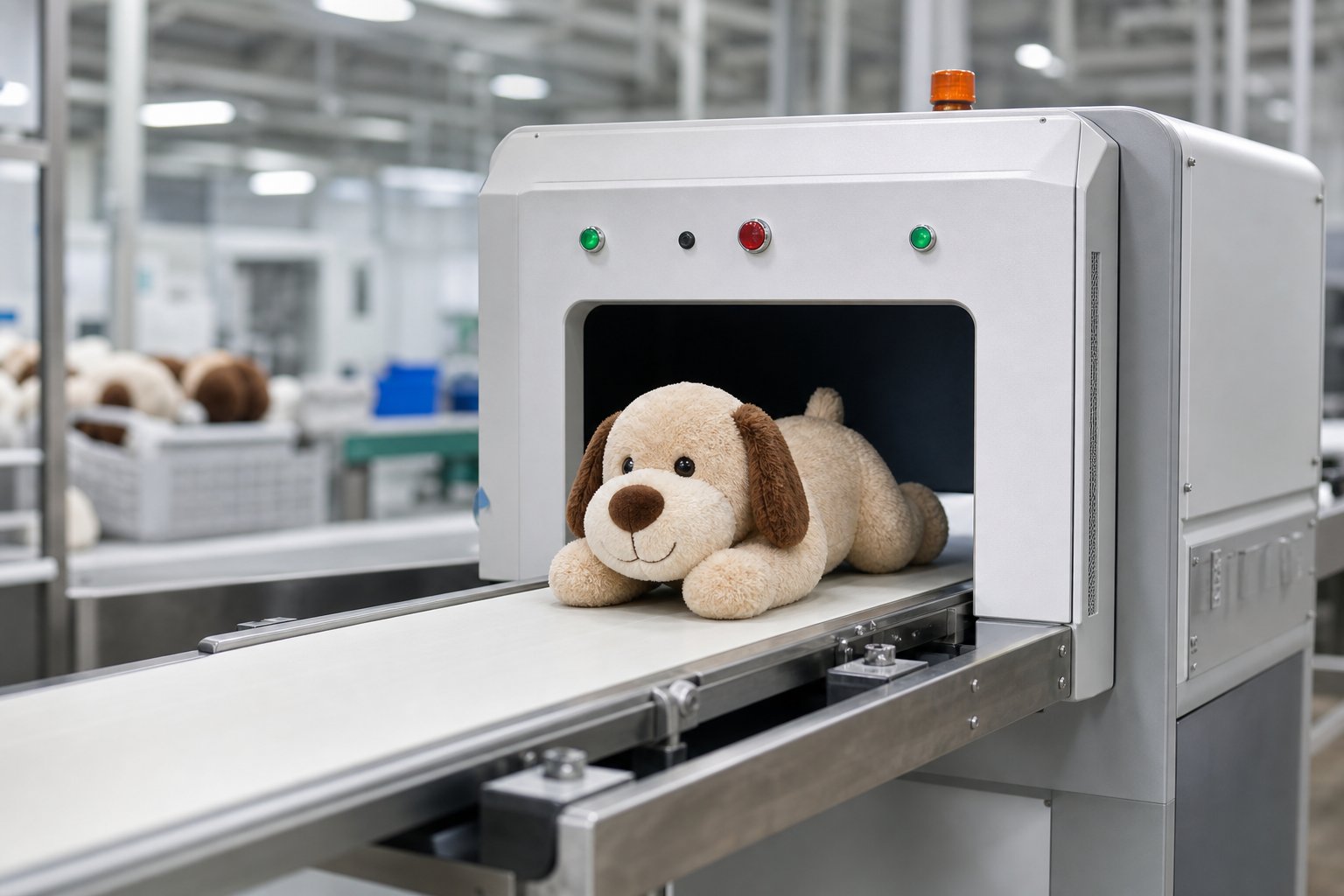
Two habits deserve special mention. Needle-detection discipline is a standing expectation for plush in Japan-bound trade: a written policy, metal-detection passes on production, and records a buyer can inspect — the fear of a broken needle reaching a consumer runs deep in Japanese sourcing culture. And documentation formality: structured spec sheets, formal quotation formats, and patient, stable communication. Japanese buyers often open with a small trial order precisely to test whether batch two matches batch one. The supplier who treats the trial as a one-off fails the actual test, which is continuity.
Two Markets, Side by Side
| Dimension | UK | Japan |
|---|---|---|
| Marks on the product | Neither CE nor UKCA applies to pet toys | No marking culture for pet products |
| Legal layer | General product safety: demonstrably safe, documented goods | General product liability plus channel standards |
| Label focus | English, accurate, operator identity, origin | Precision and consistency; Japanese-language materials via the channel |
| Quality audit | File-first: risk analysis, reports, traceability | Hand-first: odor, seams, stuffing, packaging, needle policy |
| Buying style | Category buyers, seasonal programs | Trading companies and specialty retail, trial-then-commit |
| What wins trust | A complete, current document pack | Batch-to-batch consistency over time |
Neither market asks you to change the product. Both ask you to prove it — one on paper first, the other in the hand first.
The Minimal Document Pack per Market
From one production base, two short packs cover the entry requirements of both markets:
- UK pack: general-product-safety file (risk analysis, technical documentation), voluntary EN 71-1/-2/-3 reports for the SKUs in scope, chemical screening evidence, English label artwork with operator identity and origin.
- Japan pack: structured spec sheet per SKU (materials, dimensions, weights, packaging), test reports from recognized labs, a written needle-detection and metal-contamination policy with batch records, and a signed specification agreement once the trial order passes.
- Shared: the golden-sample system with batch retention, so both audits — the folder in London and the hands in Tokyo — find the same product that shipped.
The shared pack is the quiet enabler. Both markets' trust mechanisms converge on the same question — will reorder 20 match order 1? — and only retained samples, batch records and stable processes answer it. Our factory and belt page shows how production discipline is organized to make that answer provable.
Channel Notes: How the Buying Actually Happens
In the UK, pet toys move through national pet chains, garden-center groups and grocers, with seasonal programs set months ahead — file readiness decides whether you are in the range review at all. In Japan, the trade runs substantially through wholesalers and trading companies, plus specialty retail that curates deeply; margins per unit are healthy and expectations are high, and the first order is a probe. In both, the seller who arrives with a current dossier, honest claims and a sample that survives the hands will find the conversation shorter than expected.
Frequently Asked Questions
Do pet toys sold in the UK need UKCA or CE marking?
What is different about selling pet toys to Japanese buyers?
Which documents open doors with UK buyers?
Is CE accepted as evidence in Japan?
Planning your first UK or Japan program?
Tell us the market — we reply with the document pack we would ship against it, sample policies included, and FOB ranges per SKU.