Key Takeaways
- "Factory direct" is a claim, not a fact — small behavioral tells in quoting, sampling and audits reveal who actually controls production.
- Factories quote in cost blocks and turn sample changes fast; intermediaries quote a single number and shuttle changes through a third plant.
- Trading companies still earn their fee: mixed-category consolidation, small multi-SKU orders and one point of accountability.
- Many suppliers are hybrids — a factory that trades, a trader with a captive line — so verify capability and documents, not the label.
- Whichever type you buy from, compliance documents must trace to the party that actually made the goods.
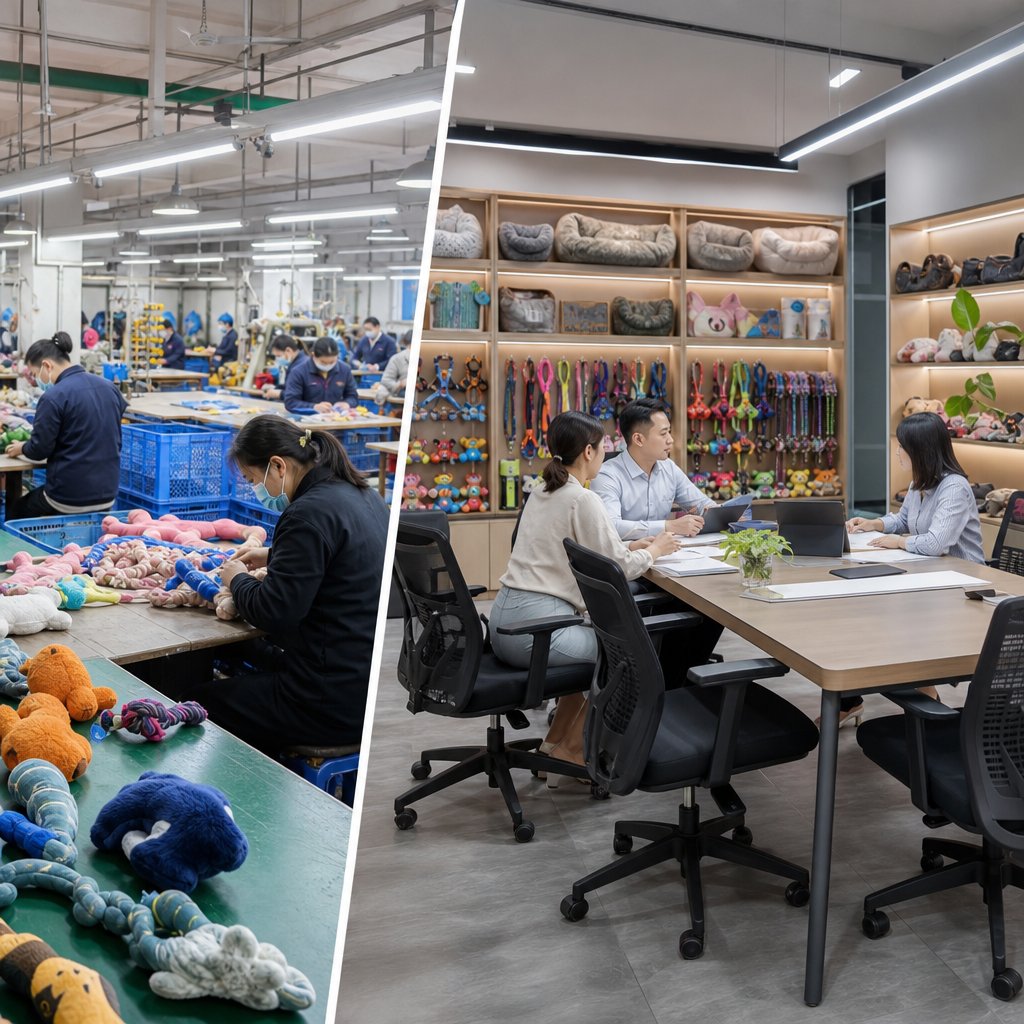
The first line of almost every reply from a Chinese supplier reads the same: we are a factory. Sometimes it is true. Sometimes the "factory" is a desk, a sample shelf and a fast quotation, with production two provinces away in a plant whose name appears on no document you will ever sign. The distinction matters — not because one is always better, but because the two types fail in different ways, negotiate differently, and hand you very different compliance chains.
You do not need a surprise audit to tell them apart. The truth leaks out in ordinary behavior: how a quote is structured, how fast a sample revision turns, who joins a video call and what they can show you. This article walks through ten tells, then does something rarer — it argues for when the trading company is genuinely the right answer.
The Ten Tells, and What Each One Is Worth
Read the table as a pattern, not a scorecard. One tell proves nothing; four or five pointing the same direction is a verdict.
| Tell | Reads as factory | Reads as intermediary |
|---|---|---|
| Quote structure | Cost blocks: material, process, labor, packaging | One number; breakdown arrives late and suspiciously round |
| Sample speed | Tweak turned around in days on their own floor | Every change follows a third plant's calendar |
| Product breadth | Deep in one process — plush, rope or rubber | Everything from chew sticks to cat trees at equal ease |
| Audit reception | Walk from meeting room straight onto the floor | Showroom first, "the plant is nearby," then a car ride |
| Video call | Live walk of your line, on request, today | Photos only, or a call taken in a car park |
| Spec change mid-run | Engineer joins the call within hours | "Let me check with production" — by tomorrow |
| License and history | Business scope matches the process; export record runs years | Scope reads "trading"; registered recently |
| Mold conversation | Discusses mold ownership and transfer comfortably | Vague; the mold "stays with the supplier" |
| VAT invoice | Issued by the same entity on the contract | Issued by an entity you never contracted with |
| Pre-production meeting | Foreman and QC sit in | Salesperson only; answers promised for later |
Two tells deserve extra weight for pet toys specifically. Product breadth matters because the category spans soft sewing, injection, vulcanized rubber, rope work and assembly — no single plant masters all five, so a supplier quoting every material at the same confident tone is almost certainly assembling. And the VAT invoice matters because whoever issues it is who you are legally doing business with; everything else is narration.
When a Trading Company Is the Right Answer
The industry conversation is biased against intermediaries, which is a mistake. A capable trading company earns its margin honestly in three situations. First, assortment building: a buyer who wants plush, rope and rubber toys in one program would otherwise manage three or four factories, three MOQs and three QC standards. Second, mixed consolidation: assembling a container from multiple producers, with the paperwork, labeling and loading discipline that mixed containers demand. Third, small and early orders: when your quantities are too small for a factory to prioritize, a trader's aggregation gets you produced at all — and one accountable counterparty absorbs the coordination failures that would otherwise land on you.
The discipline is to know that this is what you are buying. A trader who pretends to be the plant creates a compliance fiction; a trader who manages plants transparently creates leverage.
When Factory Direct Wins
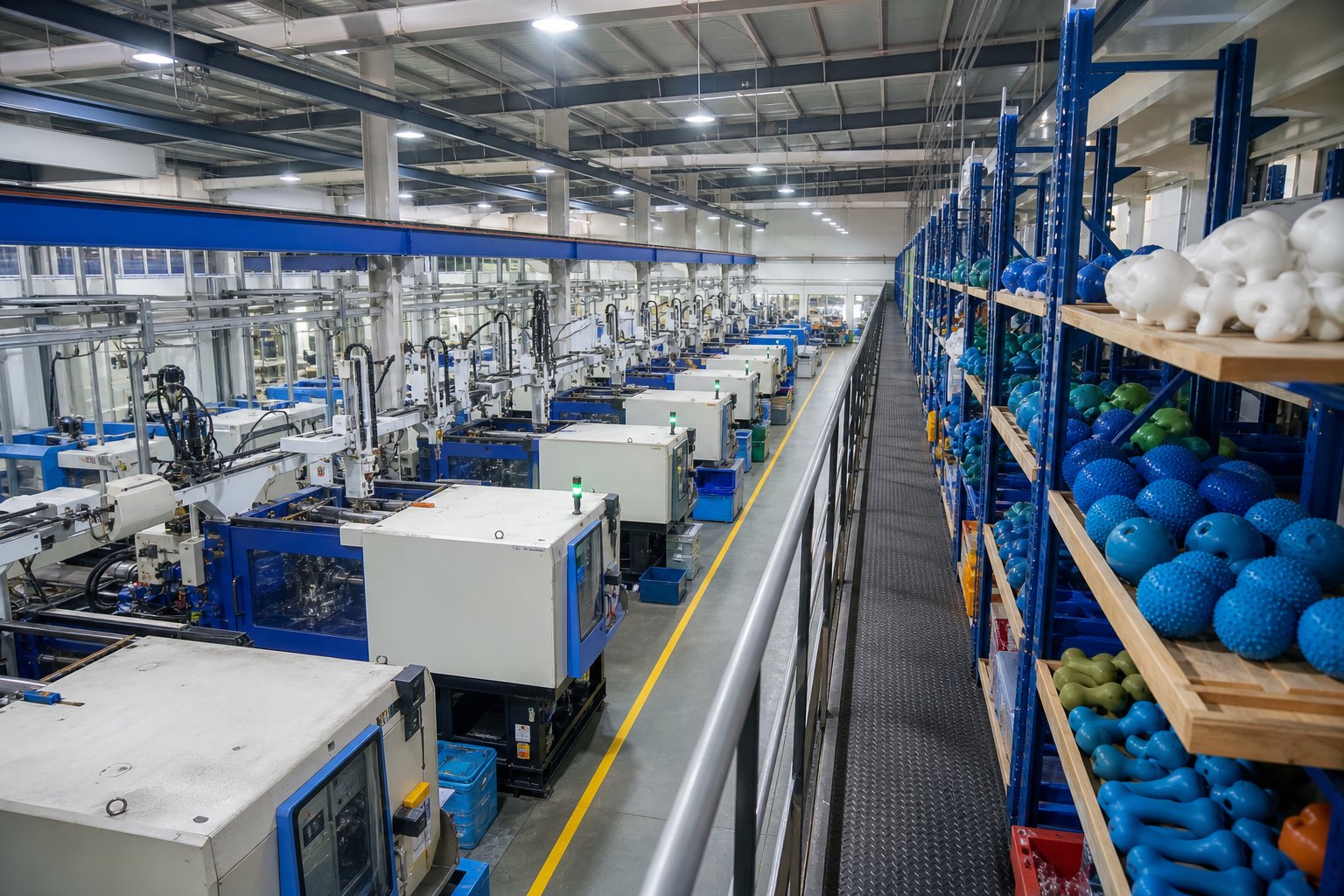
Depth beats breadth as soon as your requirements deepen. Custom development — new shapes, new tooling, proprietary constructions — needs engineers in the conversation, not a relay. Mold ownership only exists where the mold shop is in-house or next door and the contract names real parties. Cost has a structural floor too: every layer in the chain adds margin, and at volume the difference is real money. And QC leverage follows proximity — a factory whose line you can walk, whose foreman you can call, and whose first-article checks you can witness is a factory you can actually manage. The verification playbook for capacity claims is covered separately in verifying a pet toy factory's output claims.
The Hybrid Reality
Most suppliers are neither pure. A plush factory that trades rubber chews from a neighbor during slow months is a factory with a trading desk. A trading company that bought a small sewing line to keep its best customers in-house is an intermediary with a captive plant. The label on the invoice tells you the legal entity, not the capability — which is why the ten tells matter more than the business scope printed on a license.
The workable posture: classify suppliers by process, not by company type. For each material family in your program, know which plant physically produces it, who employs the QC inspector checking it, and whose name sits on the test report. Suppliers who make this easy are telling the truth about themselves.
Negotiating with Each Type
The two types respond to different levers. With a factory, negotiate the process: material substitutions, tolerances, packaging scope, mold amortization, capacity priority in peak season. Their costs are real and mostly visible, so spec changes move prices in legible steps. With a trading company, negotiate the service: consolidation scope, inspection arrangements, communication hours, penalty terms for missed shipments. Their margin is the product, so margin concessions come easier than spec concessions — and a trader who drops price instantly on first push has padded it twice.
Both conversations go better when you arrive with questions that presume verification. The ones buyers most often forget are collected in twelve questions to ask on a pet toy factory audit — most work just as well over video.

Our own model answers this question structurally rather than rhetorically: production runs on our cooperative lines in Yangzhou with our consolidation warehouse in Yiwu, and every document names the entity that did the work. If you are mapping suppliers for a program, compare documents and floor access, not adjectives.
Frequently Asked Questions
Is buying from a trading company always more expensive?
How can I verify that a supplier really owns a factory?
When does a trading company beat factory direct?
Who should issue test reports and compliance documents?
Want the factory answers without the factory theater?
Send your category list and quantities — we will tell you exactly which line makes what, and what documents travel with the goods.