Key Takeaways
- AQL sampling under ISO 2859-1 replaces inspector fatigue with statistics: accept and reject rules are agreed before production starts.
- The consumer-products norm is Critical 0 / Major 2.5 / Minor 4.0 — and for toys, Critical is always zero.
- The defect catalog is the real contract: every defect written down, photographed and classified per toy type.
- Lot definition and mixed-SKU lots are where sampling quietly breaks — define them before the first carton is packed.
- Annex the catalog to the order and reference it at audit, during production and at pre-shipment.
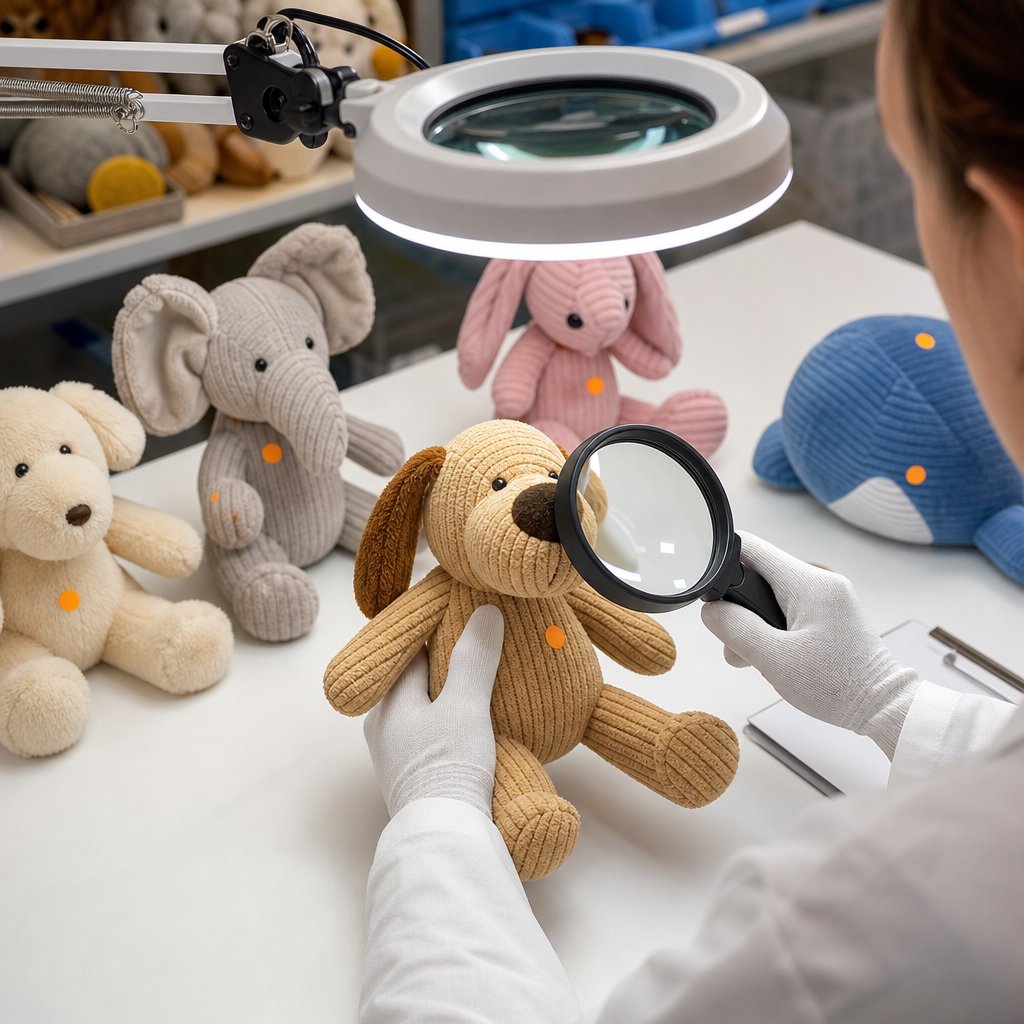
We check everything is the most expensive sentence in quality control. Full inspection sounds rigorous and ships fatigue: hour nine of any inspection looks nothing like hour one, and the misses cluster exactly where attention ran out. The professional alternative is to inspect less and decide more — statistical sampling governed by a defect catalog that both parties signed before a single carton existed.
This article sets out how AQL works on pet toy lines, how defects are classified into the three classes buyers recognize, where execution usually goes wrong, and how to write the catalog into your order so inspection stops being a negotiation.
AQL in One Honest Paragraph
AQL — acceptable quality limit — is a sampling framework, standardized in ISO 2859-1. You do not inspect the whole lot; you inspect a sample whose size depends on the lot size and the chosen inspection level, generally level II for consumer goods. Each defect class carries an acceptance number: at or below it the lot passes, above it the lot fails. The consumer-products convention is Critical 0, Major 2.5, Minor 4.0. What AQL is not: a promise about the defect rate of the lot. It is a decision rule about the sample — agreed in advance so that a disagreement about quality becomes arithmetic instead of argument. For toy categories, the critical class is set to zero acceptance, which means any single critical finding fails the lot outright.
Critical, Major, Minor on a Pet Toy Line
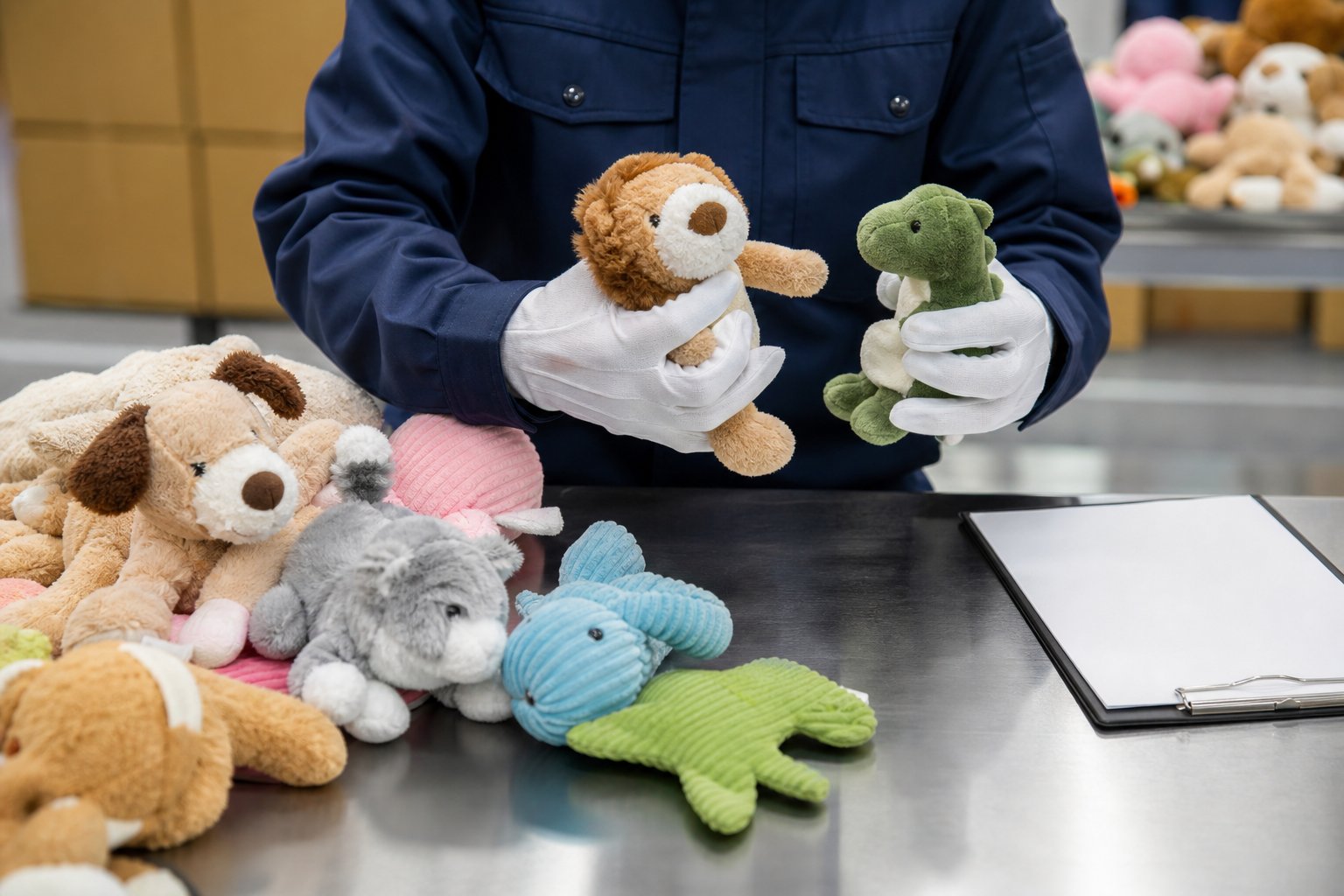
The three classes have clean definitions that survive contact with a real factory floor. Critical defects carry safety or regulatory consequences: a needle fragment in a plush, a sharp flash edge on a chew toy, a squeaker detached in the bag, contamination of any kind. Majors are defects a customer would return the toy for: an open seam, a dead squeaker, the wrong colorway, a toy that stands crooked because the filling collapsed. Minors are cosmetic: a loose thread, a faint mark, slight matting nobody notices on a shelf. The boundaries are not philosophical — they are economic. Criticals risk injury and recalls, majors drive returns, minors sit in the background of reviews. Classify by consequence and the classes practically assign themselves; classify by how much the factory wants to argue and you will re-classify every shipment.
A Defect Catalog by Toy Type
The same words mean different things on different materials, so the catalog should be written per toy family. A working starting point:
| Toy type | Critical — zero acceptance | Major — 2.5 | Minor — 4.0 |
|---|---|---|---|
| Plush | Metal fragment, sharp point, mold or pest contamination, detached eye or nose part | Open seam, dead or weak squeaker, severe filling faults, eye or nose misalignment, wrong colorway | Loose threads, light stain, slight fur matting, minor label offset |
| Rubber and TPR | Metal inclusion, sharp flash edge, uncured tacky surface, contamination | Visible air bubbles, untrimmed flash, hardness off the agreed band, parting-line splits | Slight color drift, faint surface marks, minor gloss variation |
| Rope and tug | Wire or metal in the core, contamination | Wrong diameter or ply, unraveling ends, weak splices, color bleeding | Loose fibers above the agreed norm, slight shade drift |
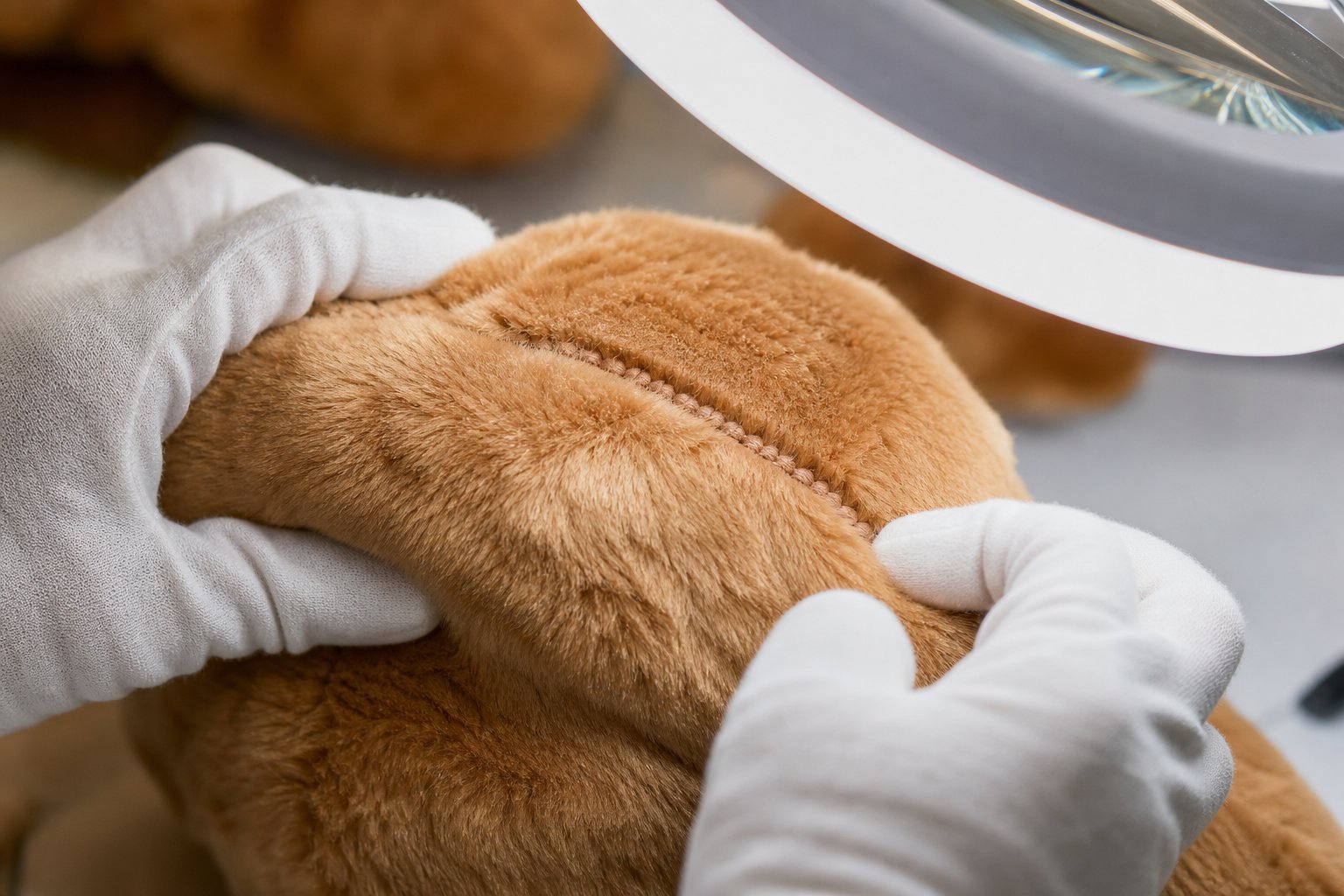
Two rows deserve emphasis. Squeaker attachment appears twice — once as a critical when the unit detaches in the bag, and in its weak-but-attached form as a major — which is why pull testing deserves its own protocol rather than a line in a table. And filling faults hide in weight: a scale at inspection catches what hands alone will argue about, a point our article on common plush defects develops fully.
Execution Details Buyers Get Wrong
The framework is standard; the failures are local. Four details decide most inspection disputes:
- Define the lot: same SKU, same production period, same line wherever possible. A lot that mixes days and lines averages away the very clusters you need to see.
- Sample randomly: cartons pulled from throughout the stack, not the three that face the door — an inspection announced a week early, with convenient pallets staged by the entrance, is the oldest trick in the book.
- Mixed-SKU orders are many lots, not one: sampling 80 pieces across ten SKUs tells you almost nothing about any of them.
- Agree the economics before production: who pays for re-inspection, and what happens to a failed lot — rework and re-sample, reject, or downgrade by written consent.
Get these four right and the acceptance numbers do the rest. Get them wrong and even a perfect catalog becomes a weapon both sides quote selectively.
Writing the Catalog Into the Order
The catalog earns its keep as an annex, not as an email. Structure it in four parts: the standard clause (ISO 2859-1, level II, Critical 0 / Major 2.5 / Minor 4.0), the defect list per toy family with a photo and class for each entry, the lot definition and sampling rules, and the disposition ladder for failed lots. Tie every entry back to the golden sample so the annex reads against a physical reference, and keep the same catalog in force at three moments: the factory audit, the in-line checks during production, and the pre-shipment inspection. One catalog, three checkpoints — that is what turns inspection from an event into a system.
Our shipments run on exactly this basis — the levels, the classes and the flow are described on the quality page — and the defect catalogs we use are shared with buyers before the first deposit, not discovered at the first claim.
Frequently Asked Questions
What does AQL 2.5 actually mean for my order?
Why is Critical always zero for toys?
How many pieces get inspected in a 1,000-piece order?
Can we skip inspection if the factory already checked every piece?
Want inspection that reads like arithmetic, not argument?
Send your category and order size — we will share the defect catalogs we annex to our own orders and the sampling rules behind them.