
Key Takeaways
- Almost every founder's first container is wrong in one dimension — category, material, quantity or partner. The path below makes the wrongness cheap.
- Five stages: select, source and sample, trial, repeat and scale, systematize — each with an exit test before the next tranche of cash.
- The category rewards the journey: analysts size pet toys at USD 10.6 billion in 2025 growing to USD 22.4 billion by 2033, a 9.9% CAGR (Grand View Research).
- Start with stock private label — 200 pieces per style, dispatch in 5–10 days — and let sell-through, not hope, release OEM and ODM spending.
- Bring in a supply chain partner when coordination eats your time; judge partners on documents and QC infrastructure, not promises.
Here is a confessional statistic from the field: a founder's first pet toy order is usually wrong in at least one dimension — the category, the material, the quantity, or the partner. The goal of a good supply chain path is not to prevent that first wrongness; it is to make it cheap, fast and informative. The prize is real. Grand View Research sized the global pet toy market at USD 10.6 billion in 2025, heading to USD 22.4 billion by 2033 — a 9.9% annual growth rate that keeps rewarding newcomers who learn faster than the field.
What follows is the path we walk with first-time buyers, condensed into five stages, honest money magnitudes, the traps that recur every season, and the moment to stop going alone.
The Five Stages, with Exit Tests
Each stage exists to buy information, and each ends with a test that releases the next budget:
| Stage | Goal | Typical time | Money posture | Exit test |
|---|---|---|---|---|
| 1. Select | A shortlist of 3 SKUs with written specs | Weeks | Time only | You can defend each SKU's reason to exist |
| 2. Source & sample | Specs confirmed against physical samples | 4–8 weeks | Sample fees, couriers | A golden sample you would sign |
| 3. Trial | Real sell-through data | One season | Small, capped | Data that survives contact with customers |
| 4. Repeat & scale | Stable reorder economics | 2–3 quarters | Inventory capital | Reorders profitable after QC and returns |
| 5. Systematize | Documents, second sources, calendars | Ongoing | Management time | You could switch suppliers per family in a month |
Founders rarely fail inside a stage; they fail by skipping one — ordering custom molds before any sell-through exists, or scaling before reorder economics are proven.
Honest Money and Time Magnitudes
Numbers first from our own program, because those we can guarantee. Stock private label starts at 200 pieces per style (600 mixed) with dispatch in 5–10 days including relabeling — the cheapest honest test in the industry. OEM customization starts at 1,000 pieces per style on a 25–35 day cycle. ODM with new tooling starts at 3,000 pieces with a 45–60 day first order. Around these, budget for sampling fees, couriers, and — at the ODM stage — tooling, which toolmakers commonly quote from a few thousand dollars for simple molds to five figures for complex ones.
Two magnitudes deserve respect. First, compliance paperwork arrives before or with your first serious order: GPSR documentation and an EU responsible person for Europe, material screening such as REACH SVHC and phthalates, and test reports your marketplace will eventually request. It is cheaper as a line item than as a listing takedown. Second, the warehouse: every unit ordered is cash lying down. The five-stage table above exists precisely so that inventory capital is released by data, not by enthusiasm.
The Trial-Order Trap
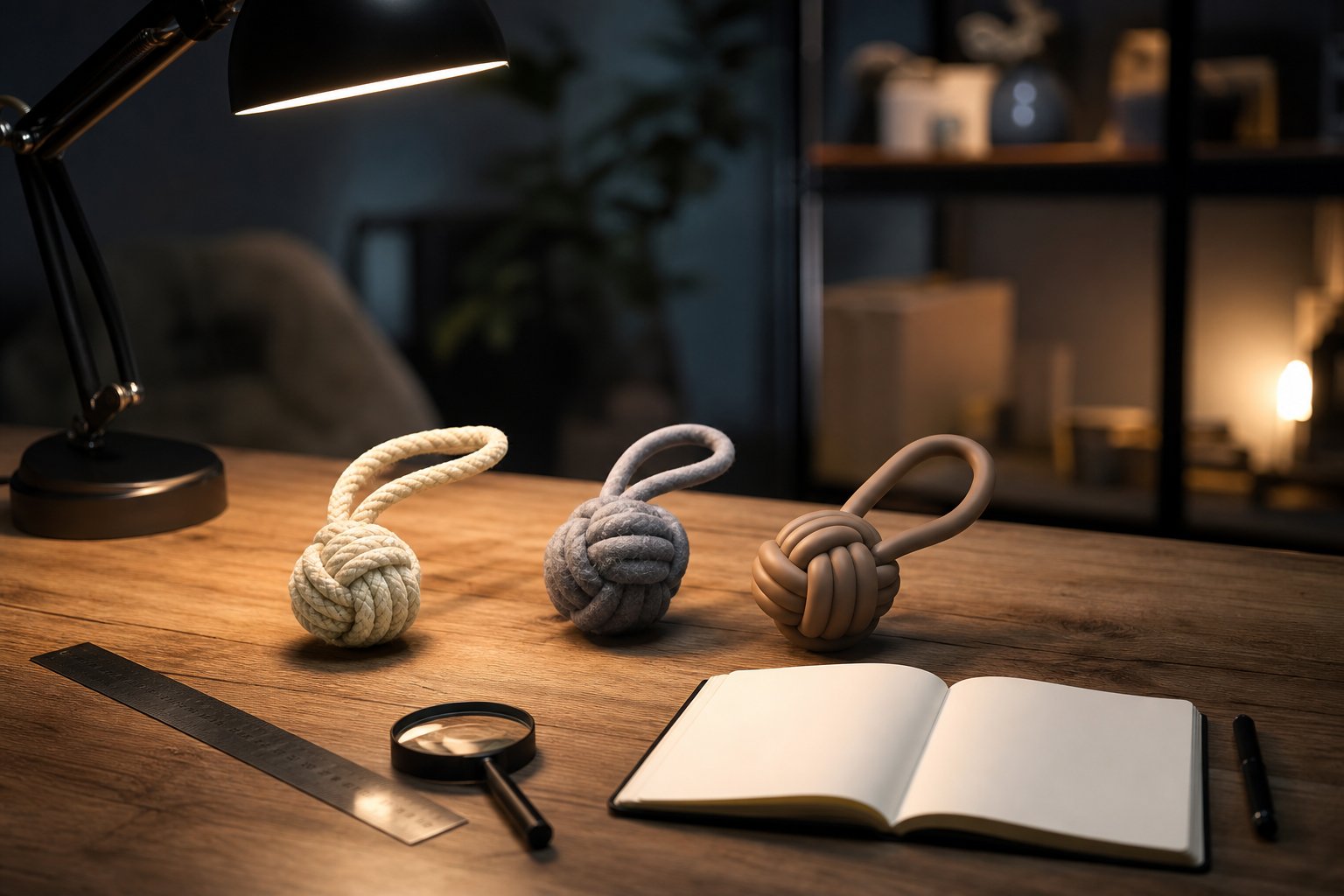
Small orders get the least attention in any factory, which is why trial orders fail in ways big ones don't: the 200-piece run is slotted to whoever is free, the fill is whatever is in the hopper, and nobody weighs the stuffing. The counter is to contract a QC minimum even on the smallest run: your golden sample as the reference, AQL Critical 0 / Major 2.5 / Minor 4.0 on release, and photos of the actual production and packing. It costs the supplier a little and costs you almost nothing — and it makes the trial's data trustworthy, which is the entire point of a trial.
Recurring Traps, and the Alternative Move
- The one-supplier fantasy. One factory mastering plush, TPR, rope and latex rarely exists. Alternative: map categories to belts and accept two or three relationships.
- Compliance as an afterthought. Documents requested by a platform mid-launch cost weeks. Alternative: GPSR, REACH-style screening and reports in the stage-two budget.
- Single-source anchors. Your best seller with no second source is your biggest risk. Alternative: qualify a second line per family once volume justifies it.
- Cash lying down. Ordering a container of an unproven design. Alternative: weeks-of-cover logic from day one, deeper only after data.
- QC as a final event. Inspecting quality into existence never works. Alternative: golden samples and in-process checks from the first 200-piece run.
When to Stop Going Alone
The honest signal is not order size; it is attention. When coordinating samples, factories, inspections and calendars consumes the hours you needed for product and marketing, a supply chain partner stops being a cost and becomes leverage. Judge candidates on infrastructure you can verify: written QC standards with AQL terms, golden sample retention (ours: 3 pieces per SKU per batch, kept 24 months), itemized quotations, and open disclosure of which factory makes what. Our own on-ramp follows the three tiers above — stock private label to OEM to ODM — precisely so a founder can climb from a 200-piece test to a 3,000-piece custom program without changing partners mid-climb.
To go deeper: the seven-day trip itinerary covers meeting suppliers in person, the AQL guide explains defect classes buyers respect, and our OEM/ODM page details the tier mechanics. The quality page documents the QC infrastructure a partner should be able to show you.
Frequently Asked Questions
How much should I budget before my first real order?
Should my first product be stock private label or custom OEM?
How do I know a supplier is real before sending money?
When does a founder need a supply chain partner instead of going alone?
Starting from zero and want the path mapped to your budget?
Send your category idea and budget band — we will draft the five-stage plan with realistic quantities, dates and documents for each stage.