Key Takeaways
- Chenghai, Shantou, produces roughly a third of the world's plastic toys, with annual industry output above RMB 50 billion and 60,000-plus toy enterprises.
- The belt's real moat is mold depth: tooling shops within minutes' reach compress sampling and modification cycles.
- Pet toys ride on this capacity as spillover — there is no dedicated pet-toy statistic for the district.
- Compliance attention shifts to plastics: plasticizer screening, PAH limits and heavy-metal migration for colored parts.
- Use Chenghai for TPR, vinyl and tooling-intensive custom shapes; pair with Yangzhou for plush and Yiwu for consolidation.
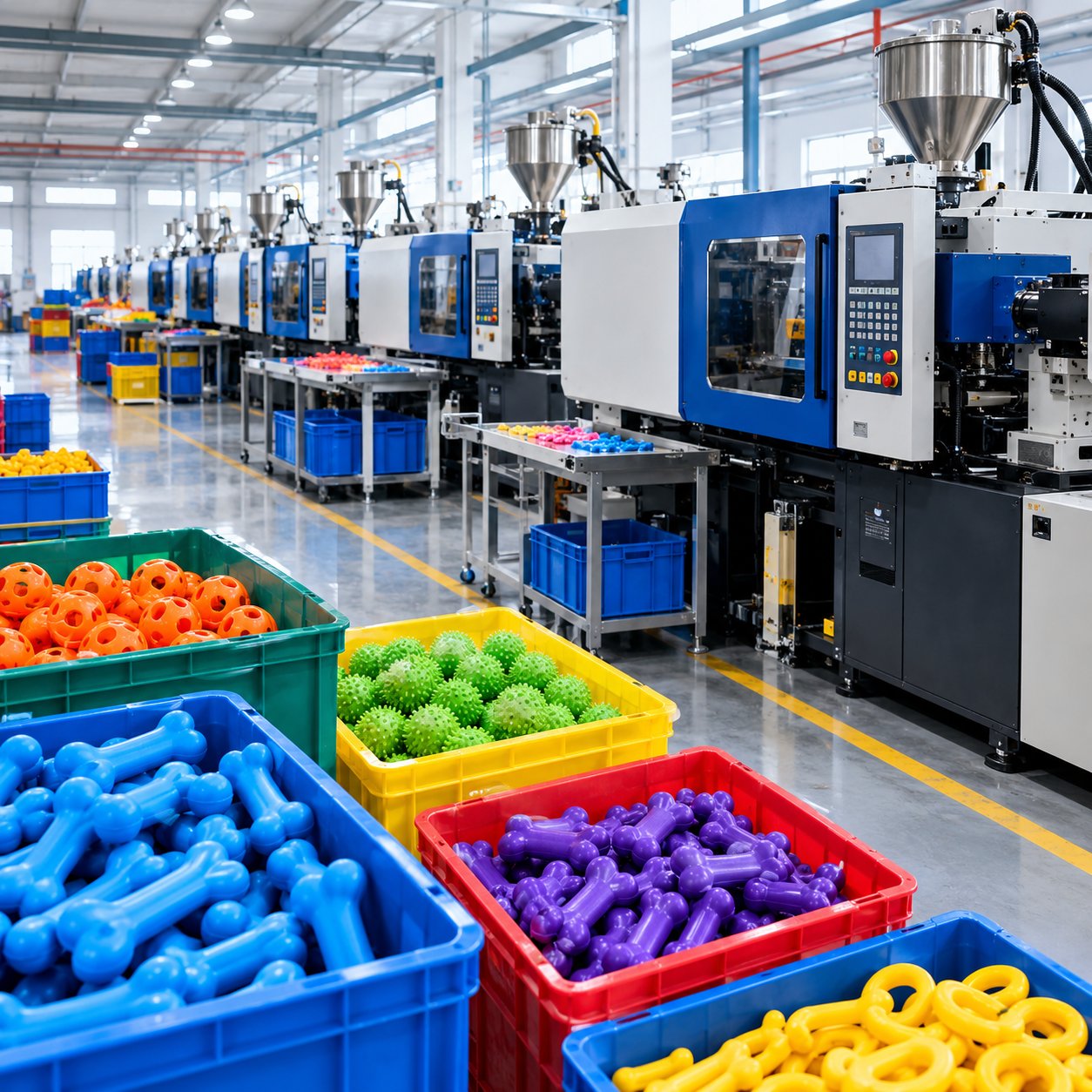
Roughly one plastic toy in three sold anywhere on earth was molded within a few kilometers of the same district: Chenghai, in Shantou, Guangdong. That single fact shapes the economics of every hard pet toy on the market — the fetch balls, treat dispensers, TPR chew shapes and vinyl squeaky figures that fill marketplace listings. You do not have to source in Chenghai to be affected by it; the district sets the pace and the price floor for plastic toys generally.
This article translates the cluster into buyer terms: the verified scale, why mold density matters more than headline output, how pet-toy production actually connects to the toy lines, and which checks to run before your order joins the queue.
The Scale in Verified Numbers
The figures, as reported by Chinese state media in 2026, are substantial by any industrial standard: annual toy industry output above RMB 50 billion, around one third of global plastic toy production, more than 60,000 toy-related enterprises, and annual exports of RMB 10.24 billion. The district has also been selected in Guangdong's first batch of cross-border e-commerce plus industrial belt pilots, which has pushed local suppliers further toward direct-to-consumer export modes.
Caliber discipline applies as always: these numbers describe the toy industry as a whole. Pet toys are not separately counted — there is no dedicated pet-toy statistic for Chenghai, and any claim of a precise pet share is invention. What the numbers legitimately support is a capability statement: nowhere else offers this density of plastic-toy tooling, compounds and machine time in one district.
Mold Depth Is the Real Moat
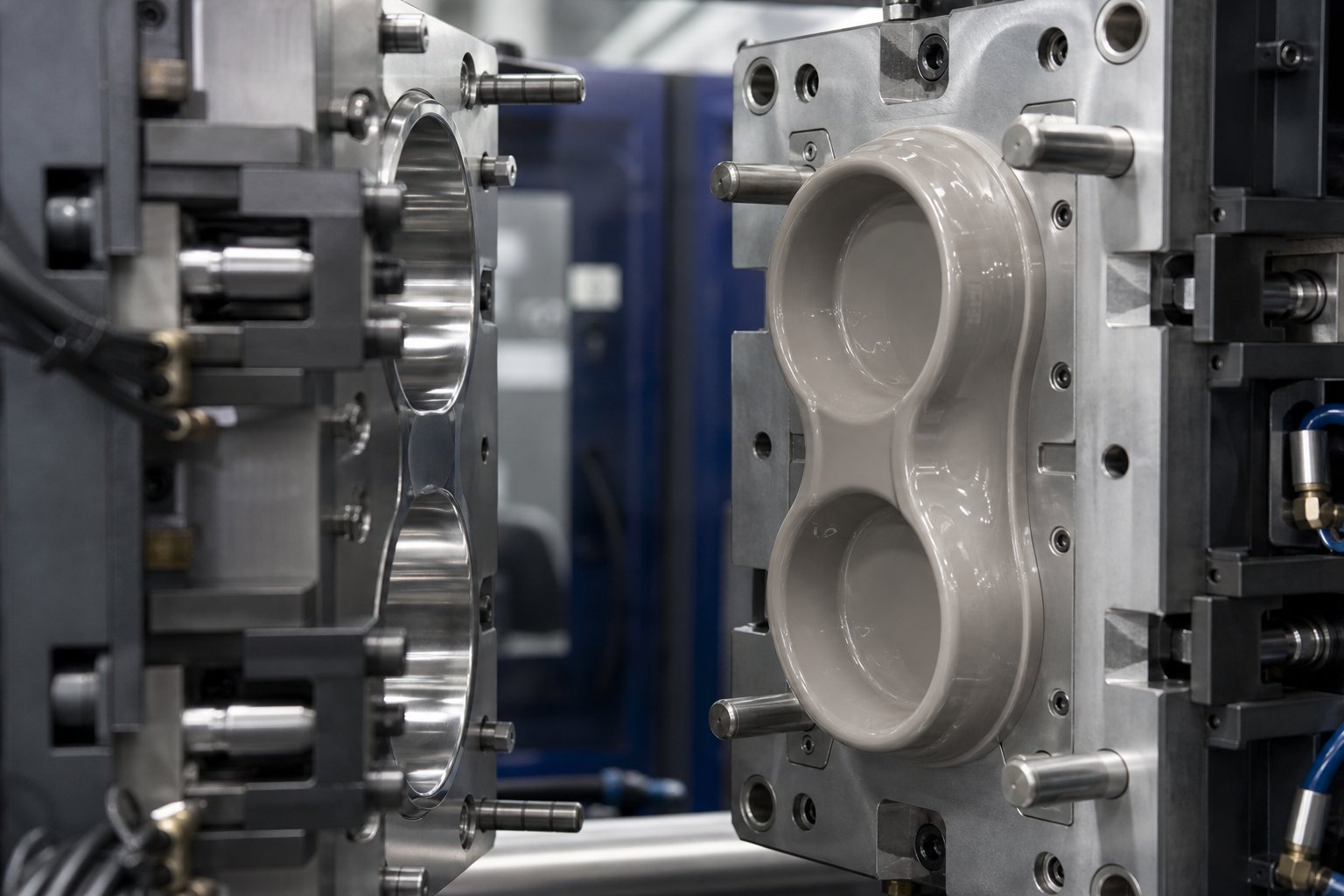
Visitors usually arrive impressed by machine count and leave impressed by something else: the mold shops. Tooling suppliers sit within minutes of the molding floors, which changes the physics of product development. A modification request that crosses cities elsewhere — new gate, thicker wall, adjusted texture — crosses a street here. The practical consequence shows up in calendars: pattern and mold modifications typically complete in 7 to 12 days in our operations, and new molds in 25 to 40 days on our lines, against an industry-wide range of 25 to 60 days for new tooling.
The second-order effect is even more valuable: because iteration is cheap, designers use more of it. A pet toy can go through three texture trials in the time a remote arrangement allows one. Buyers who understand this stop treating sampling as a fixed cost and start treating it as the cheapest lever they own. Our pieces on the fast-prototype effect and on mold cost amortization put numbers on both halves of that advantage.
The Pet Toy Spillover
Pet toys entered Chenghai not as a planned industry but as spillover: idle machine time, mold modifications of existing toy shapes, and compounders already mixing food-safe-grade materials for children's products. The connection is real but has edges a buyer should respect. A factory whose entire history is children's toys will default to toy-grade assumptions — thin walls for cost, decorations a dog can defeat, squeakers glued where they should be stitched or locked. Pet-grade is a specification you impose, not a default you inherit: thicker walls at bite points, sealed squeaker housings, embroidered or molded features instead of glued parts, and durability margins matched to jaw strength rather than toddler strength.
The upside of the same spillover is compliance maturity. Compounders serving export toy lines already run heavy-metal and plasticizer programs; asking a Chenghai supplier for a phthalate screening or migration report is a normal request, not a suspicious one.
Belt Advantage vs What You Verify
Every belt advantage pairs with a verification habit. The four that matter most:
| Belt advantage | What it gives you | Verify before you rely on it |
|---|---|---|
| Tooling speed | Modification cycles measured in days; new molds inside six weeks | Mold ownership, transfer and exclusivity terms in the contract |
| Compound variety | Color and hardness options available on the shelf | Written compound declarations; plasticizer and heavy-metal batch tests |
| Machine capacity depth | Room to scale when a SKU hits | Whether your order survives peak-season reprioritization; book slots early |
| Export experience | High-frequency container shipping and document fluency | Mixed-container packing discipline and labeling accuracy at loading |
Sampling and Tooling Math
The speed advantage compounds through the commercial calendar. With modifications at 7 to 12 days, a two-round texture iteration adds roughly three weeks; with remote tooling, the same iteration adds a season. New-mold programs of 25 to 40 days fit a Q4 development schedule if they start by early summer; the industry-wide 25 to 60 day range means the same program at a slower shop misses it. Amortization then decides what the tooling really costs: a mold spread across 3,000 units of an ODM program costs a fraction per piece of the same mold across 300. The belt makes both the speed and the volume possible — the buyer's job is to plan for both.
Division of Labor: Chenghai, Yangzhou, Yiwu
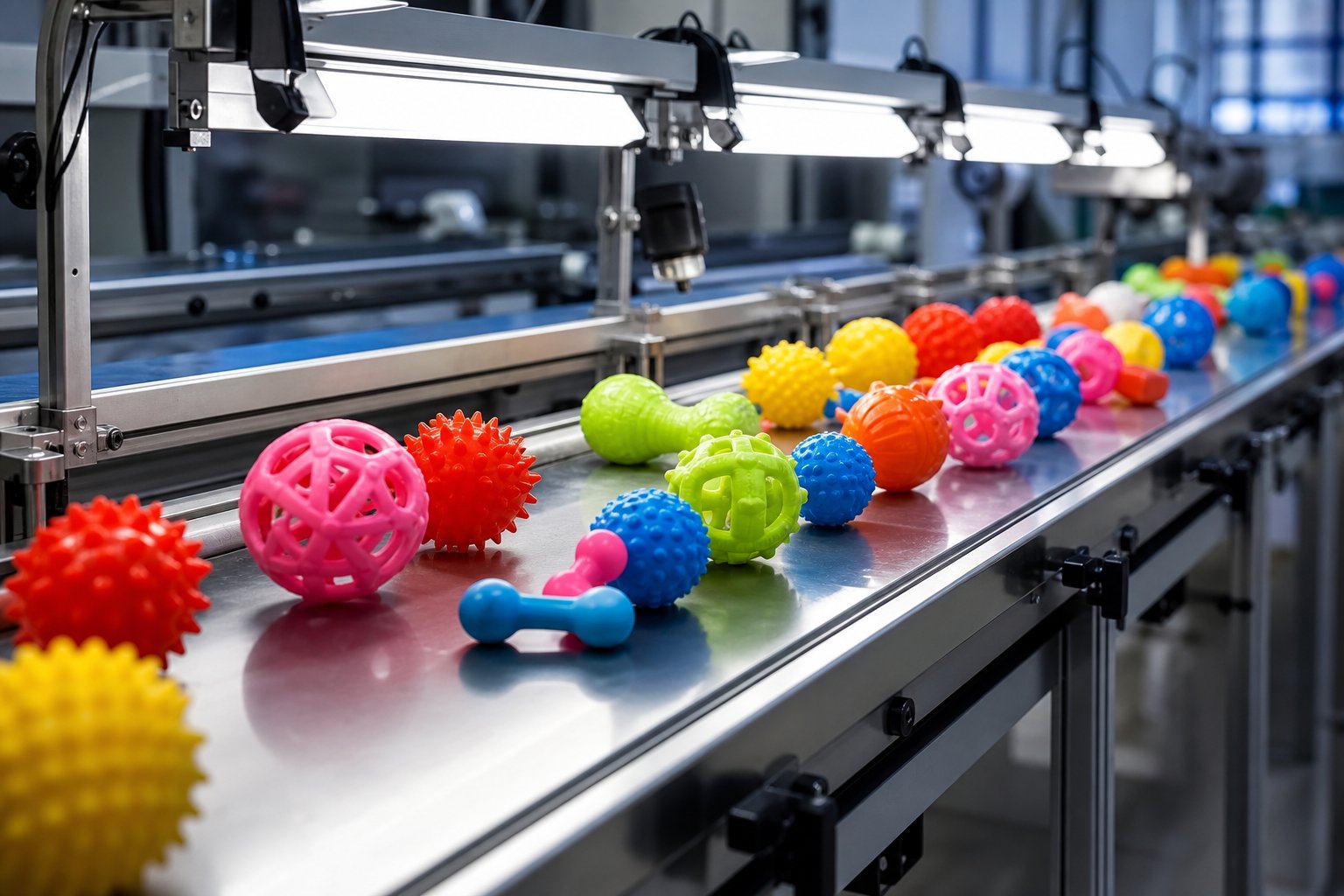
In a well-run multi-belt strategy, Chenghai owns the hard side: TPR and rubber-style chews, vinyl squeaky figures, plastic treat dispensers and everything tooling-intensive. Yangzhou owns plush and the soft side. Yiwu consolidates both, plus packaging, into one container and one document set. Trying to extract all three categories from one factory produces a supplier who is mediocre at two of them; sourcing each from its natural belt produces a program where every SKU comes from its strongest possible line. The consolidation step is what turns two belts into one shipment — which is precisely the role our factory and belt network is built to play.
Frequently Asked Questions
What is Chenghai's role in plastic pet toys?
How fast can a custom plastic pet toy be sampled there?
Is capacity available during peak season?
What compliance checks matter for vinyl and TPR pet toys?
Planning custom plastic or TPR pet toys?
Send your concept — we reply with mold options and FOB ranges by quantity, a sampling calendar, and the test plan we would attach to the order.