Key Takeaways
- A custom toy line carries several tooling tickets, not one: molds, cutting dies, embroidery files and packaging cutters each have their own quote, life and ownership terms.
- Amortization decides whether tooling is expensive: the same mold is a barrier at 1,000 units and a rounding error at 10,000.
- Ownership is a clause, not a feeling — define who pays, who keeps, who can move the tool and who maintains it.
- Shared components and staged launches cut the first line's tooling budget without cutting differentiation.
- Before committing to new steel, price the stock-MOQ alternative — recoloring an existing shape is often the smarter first order.
The number that decides whether a custom toy is possible is rarely the unit price. It is the figure on the tooling quote — and what happens to that figure over the life of the SKU. Buyers stumble on both halves. Some see a four-figure mold quote and abandon a product that would have amortized to pennies. Others never ask who owns the tool, and discover at the worst possible moment that their "exclusive" shape lives in a rack the supplier controls.
This article covers both halves: what tooling a pet toy line actually needs, how amortization turns a scary quote into a per-unit decision, and the contract language that keeps the steel on your side of the table.
The Tooling Behind a Toy Line
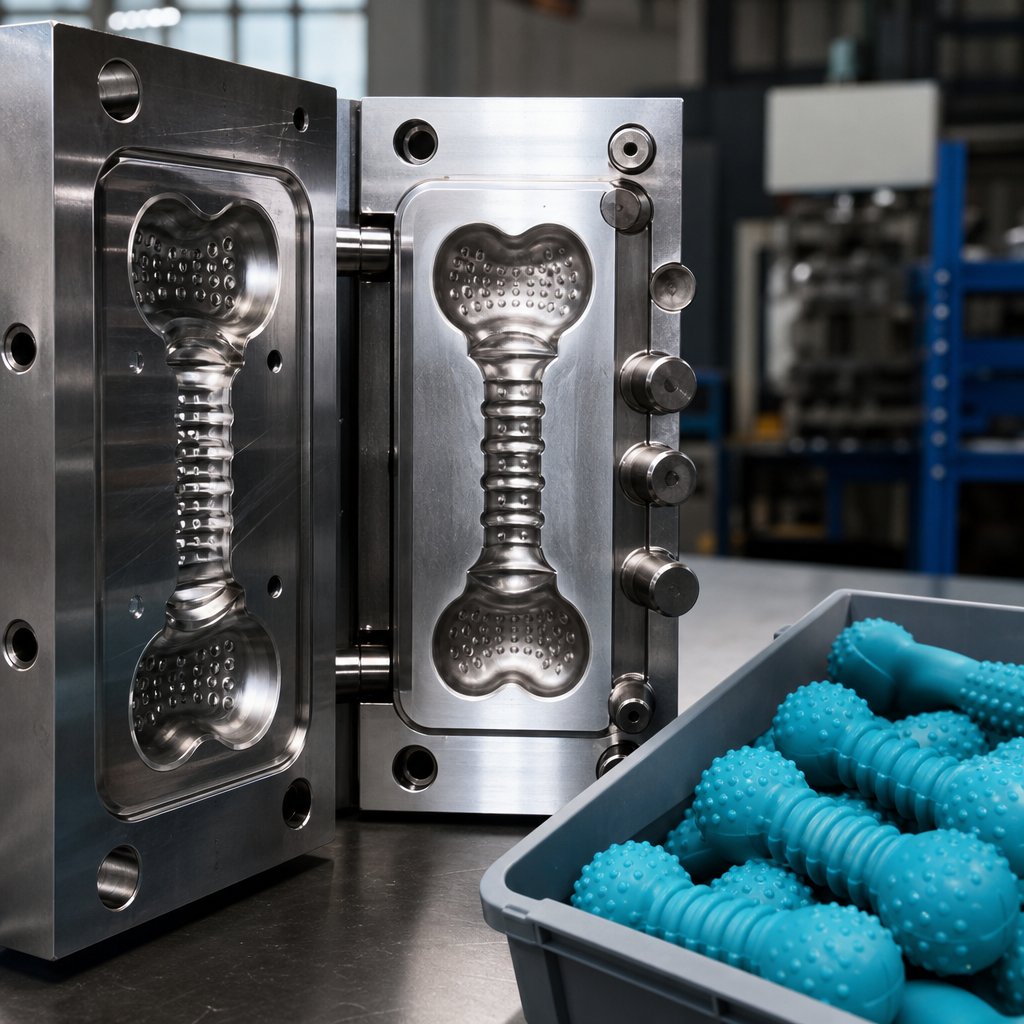
Pet toys are physically simple, which keeps tooling approachable — but a full line still touches four or five tooling types, and quotes arrive in different currencies of complexity:
| Tooling type | Typical magnitude (industry norm) | Working life | What moves the price |
|---|---|---|---|
| Injection mold — TPR/TPE/plastic parts | Simple single-cavity often quoted in the low thousands USD; multi-cavity or large parts run higher | Hundreds of thousands of shots on decent steel | Cavity count, steel grade, surface texture, runner layout |
| Compression / vulcanization mold — rubber chews | Comparable per mold; multi-plate designs cost more | Long, with plate maintenance | Cavities, plate count, heating method, parting lines |
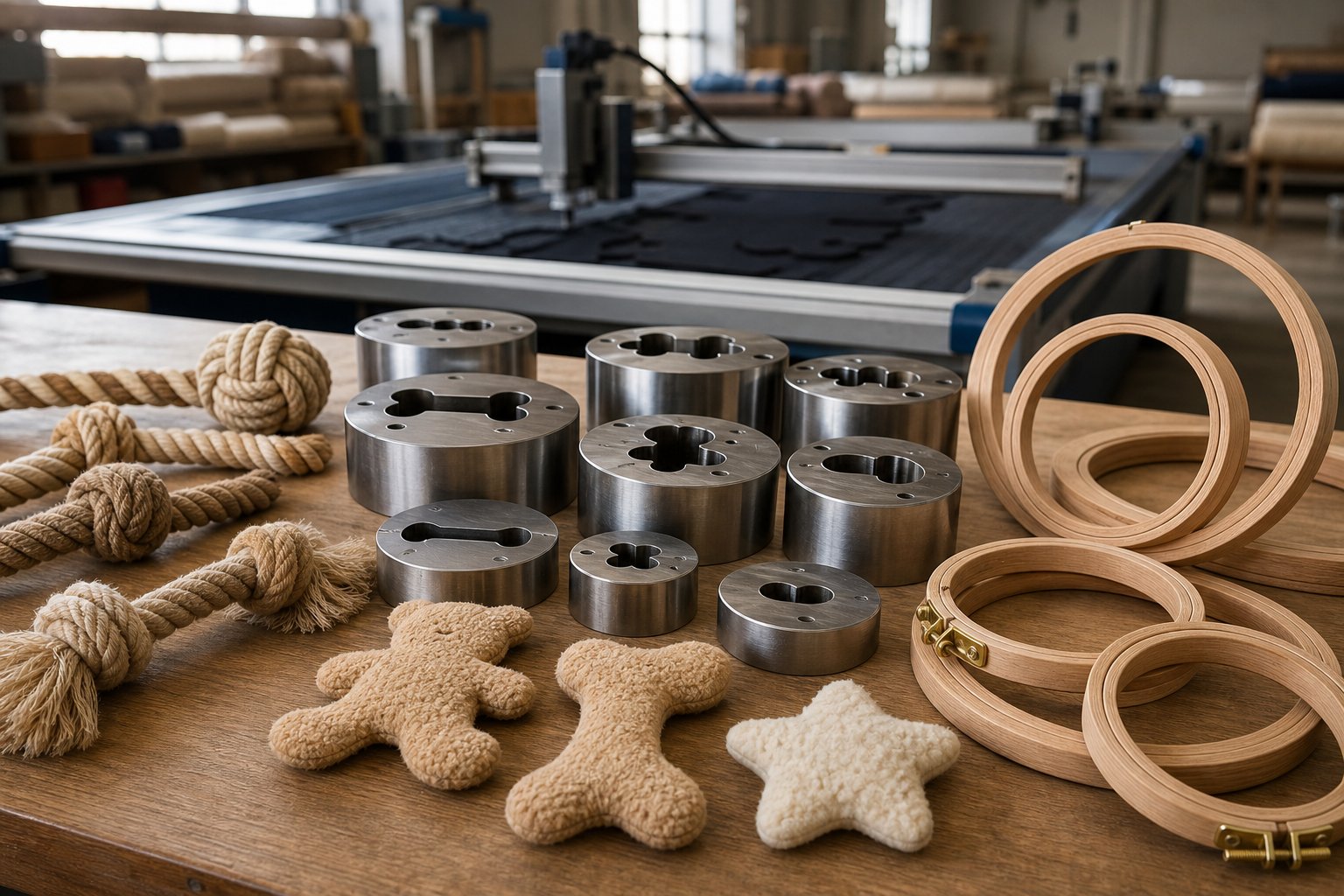
| Cutting die — rope and plush shapes | Commonly low hundreds USD | Re-sharpenable for years | Blade density, size, quantity of profiles |
| Embroidery digitizing and frames | Modest fixed fee per design | File reused indefinitely | Stitch count, color count, placement |
| Packaging die-cut and print plates | Commonly low hundreds USD | Reusable while packaging unchanged | Box style, board grade, number of colors |
Treat every figure above as a magnitude, not a price: cavity count and steel grade swing quotes more than any negotiation does. What matters is that none of these numbers is mysterious — a factory that cannot explain what its tooling quote buys is telling you something.
Amortization: The Only Math That Matters
Tooling is never expensive or cheap in the abstract; it is expensive or cheap per unit over the volume you will actually order. And the tooling line is only one row of the quote — the full stack is dissected in our FOB price anatomy. The division is trivial — which is exactly why it should be written down. An illustrative case, using a round number: assume a single-cavity mold quoted at 3,000 USD.
| Lifetime volume | Tooling per unit | What it means |
|---|---|---|
| 1,000 units | 3.00 USD | Often doubles the real cost of a light TPR toy — probably the wrong moment for custom steel |
| 3,000 units | 1.00 USD | Workable for a differentiated hero SKU with a retail price that supports it |
| 10,000 units | 0.30 USD | Rounding error — custom tooling is obviously correct |
Two honest caveats. First, lifetime volume means realistic volume, not the volume of a good month. Second, a mold that is amortized but never reordered has not amortized at all — the denominator only fills up if the SKU survives, which is why the alternative below matters.
Who Owns the Mold?
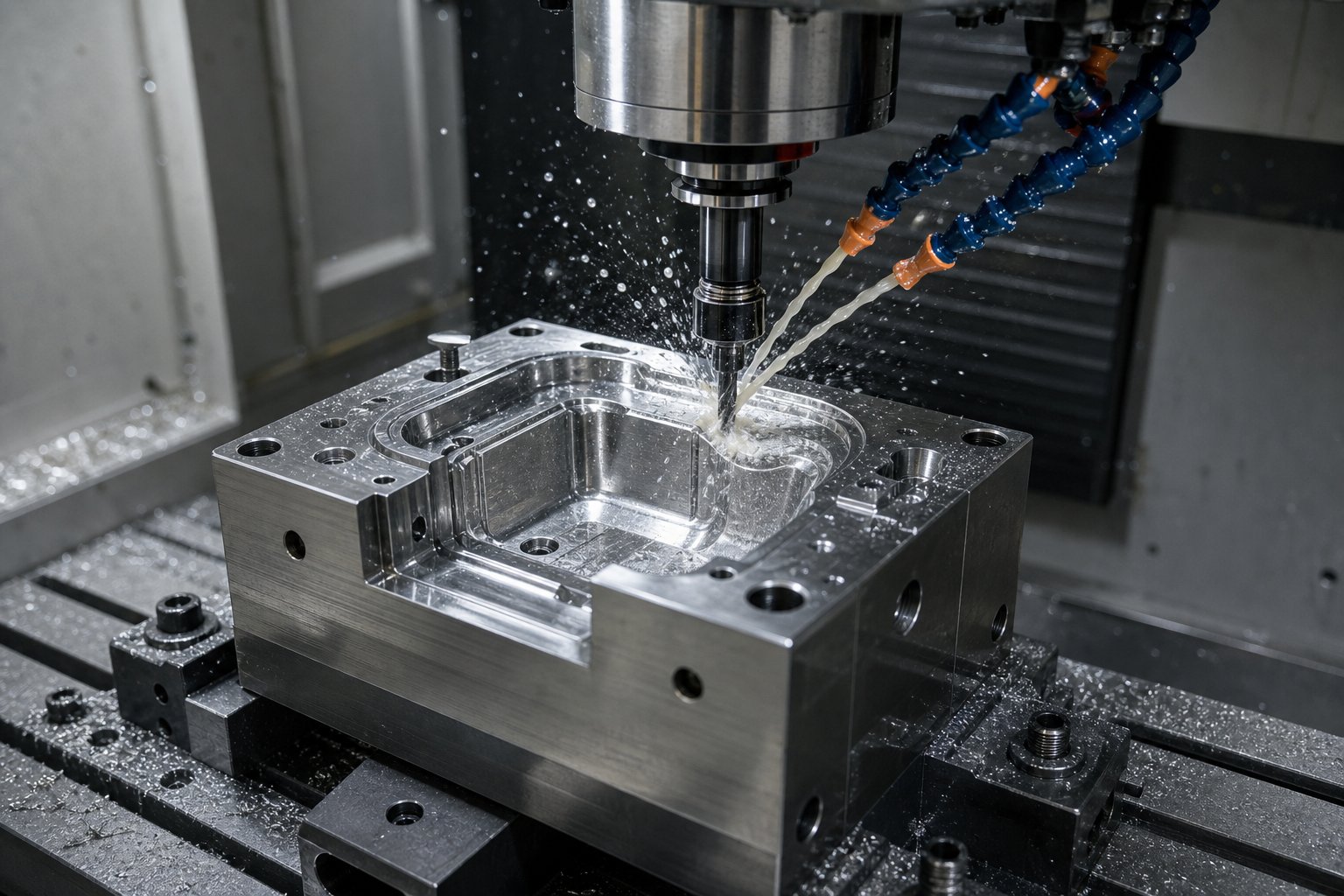
The ownership conversation has three outcomes, and only one of them is good. Buyer-paid tooling with a written ownership certificate is the clean case: you paid, you own, and the contract states that the factory will release the tool to another plant at your written instruction. Factory-paid tooling is a subsidy with a string attached — the unit price quietly carries the amortization, and moving production means the shape stays behind. The murky middle — "we'll just cover the mold for you, no need for paperwork" — is where long-term buyers get trapped.
The professional move is a short tooling clause: purchase price, ownership, storage responsibility, maintenance duties and refresh conditions (who pays when the tool wears out), transfer rights with a notice period, and what happens to the tool if the relationship ends. Factories that work with brand buyers sign this daily; hesitation is information.
Budgeting a Multi-SKU Line Without Buying a Mold House
First lines fail on scope more often than on quality. The lean path borrows three tricks from how suppliers themselves plan capacity. Shared components: squeakers, rope ends, ball cores and packaging formats stay constant across SKUs, so only the visible geometry gets new tooling. Staged launches: start with one or two hero SKUs on new steel, and let stock-mold shapes carry the tail of the range. And the middle layer — an existing mold recolored, retextured or fitted with a new rope or label — is precisely what our OEM/ODM tiers are built around: it is the cheapest way to look custom while the data decides whether full tooling is worth it.
- Rank SKUs by realistic 12-month volume; only the top tier earns new steel in season one.
- Ask which stock molds come closest to your concept — a recolor can validate demand for a fraction of the spend.
- Get cavity count, steel grade and shot-life expectations in writing with every tooling quote.
- Compare against MOQ economics: the stock-MOQ path is documented in our MOQ math article and often wins for SKUs under a few thousand units.
- Put the tooling clause and the change-order process in the same contract as the price — never after the deposit.
Frequently Asked Questions
How much should I budget for tooling on a first custom toy line?
Can I move my mold to another factory?
Should the buyer or the factory pay for tooling?
Do design changes after sampling reopen tooling costs?
Planning a custom toy and want the tooling math first?
Send sketches or a reference SKU — we reply with mold versus stock options, tooling magnitude ranges and amortized unit cost at your volume. Also see our FOB price anatomy for where the rest of the quote goes.