
Key Takeaways
- Prototype speed is governed by the tooling loop, not by sewing speed: a revision is only as fast as the nearest mold shop.
- Inside a belt, a revision on an existing tool runs days — our program quotes 7–12 days; across distance, the same change becomes a courier-and-queue affair of weeks.
- New molds are the industry's slow step: norms run 25–60 days, and T0/T1/T2 sampling discipline is what keeps them predictable.
- Fast iteration compounds: more test rounds per season means better winners, earlier Q4 lock-ins and less inventory bet on unproven designs.
- Buyers exploit the effect by batching revisions into rounds, approving on T1, and putting tooling ownership and transfer terms in writing.
Consider one change request: "make the ear sturdier and move the squeaker pocket two centimeters toward the tail." In our Yangzhou program, the pattern goes to the tooling partner that morning, the die is re-cut that week, and a revised sample is in the buyer's hands within 7 to 12 days. The identical request, sent to a factory whose tooling shop is two provinces away, turns into a sequence of couriers, queue positions and video-call misunderstandings that routinely eats five weeks. Same comment, same toy, five times the calendar.
The difference is not worker skill or factory effort. It is the physical distance between the sewing floor and the machines that cut steel. That distance — the tooling radius — is the quiet variable behind most prototype timelines in pet toys.
Prototypes Are a Tooling Problem, Not a Sewing Problem
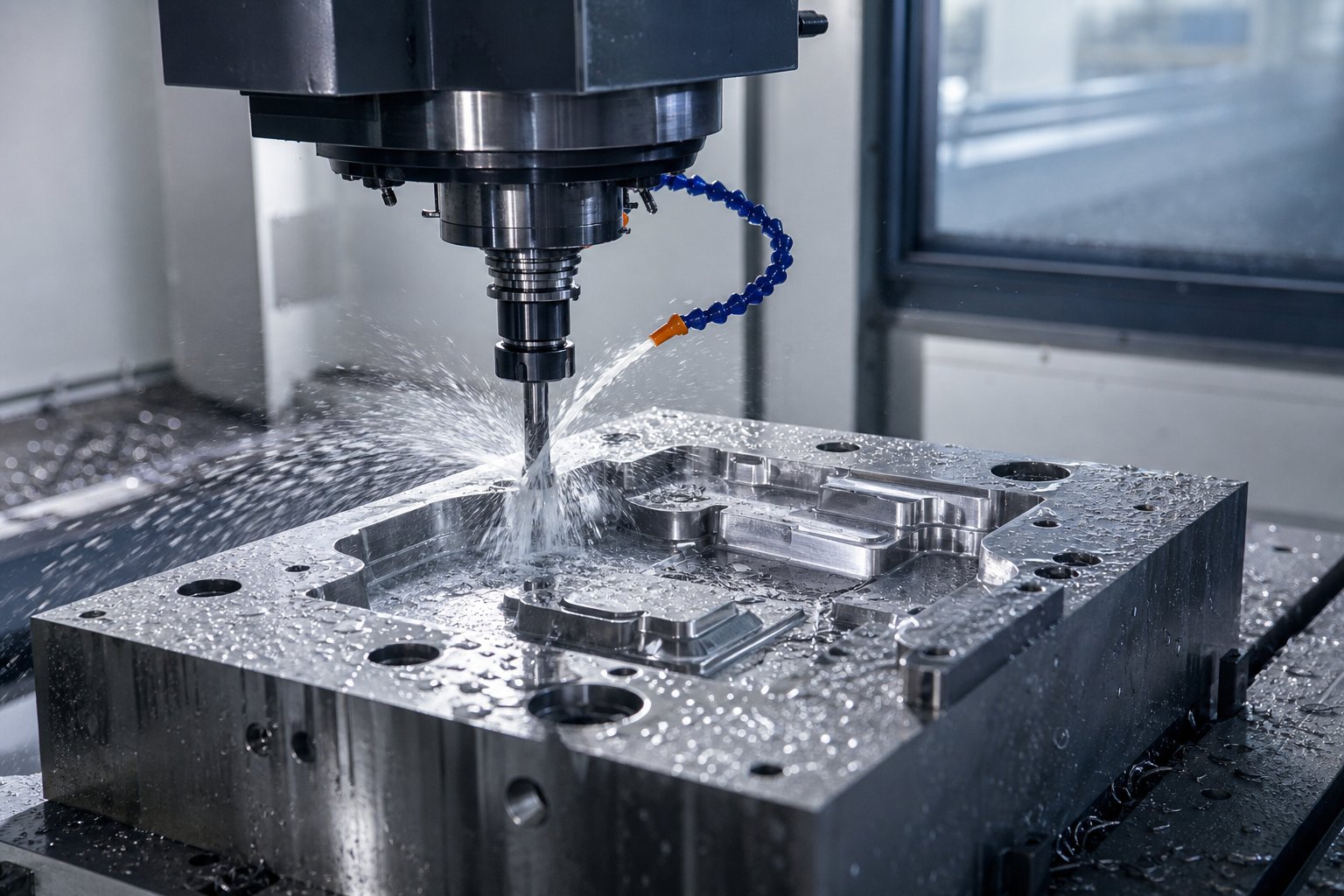
Buyers tend to imagine sampling as cutting and stitching, and for plush bodies it partly is. But the moments that decide a launch are the molded and hard components: the TPR chew part, the squeaker housing, the treat-dispenser shell, the plastic eyes and noses, the cutting dies that stamp shapes from fabric. Each lives or dies by a tool. When a buyer asks for a change, what actually must happen is a tooling event — re-machining a cavity, swapping an insert, re-burning an electrode, re-ruling a die — and only then a new sample run.
That is why two factories with identical sewing capacity can differ by a month on identical revisions. The fast one owns its tooling radius. This is the structural advantage of places like Chenghai, where industry reporting counts some 60,000 toy firms packed around a dense mold-making ecosystem, and it is why our own sampling discipline — 7–12 days on existing tools, 25–40 days on new molds — assumes short physical loops rather than heroic effort.
The Revision Loop, Measured in Kilometers
Watch the same revision travel through both geographies and the mechanics become obvious:
| Loop step | Inside the belt | Long-distance loop |
|---|---|---|
| Change review | Pattern room and tooling shop talk the same day | Emails and time zones; scope settled in rounds |
| Tooling change | CNC or electrode work next district over, days | Courier molds or files; queue behind other clients |
| First revised shot or sample | Sample room runs it as soon as the tool returns | Tool returns by freight, then enters production queue |
| Approval round trip | Courier one leg, or video review of T1 same week | International courier each way, a week per leg |
| If T1 fails | Loop repeats inside the same week | Loop repeats — another full cycle of transit |
Two honest footnotes. First, new tools are slow everywhere: the commonly quoted industry range for a new toy mold is 25–60 days, and distance mostly changes how much of that range you land at. Second, proximity does not forgive sloppy specifications — a vague change request burns loop time in any geography. The belt effect multiplies preparation; it cannot replace it.
What Fast Iteration Does to a Launch Calendar
Speed to a first sample is nice; speed through repeated samples is the actual asset. A buyer who can run four meaningful test rounds per season learns things a two-round buyer cannot: which ear shape survives shipping, which squeaker pocket survives a determined jaw, which colorway photographs well enough to earn the listing. Each round is paid in days instead of weeks, so the knowledge compounds — and the designs that reach production have already survived contact with reality.
The calendar effects stack quietly. Seasonal windows lock earlier: a Halloween or Christmas SKU finalized in spring coexists with tooling schedules; one finalized in August competes for every remaining day. Inventory risk shrinks: fast loops let you test small and scale winners, instead of betting a container on an unproven shape. And reorders get safer, because the golden sample behind the reorder is the product of several confirmed rounds rather than one hopeful shot.
The Small-Money Tooling Buyers Forget
Molds get the attention, but the cheap tooling is where budgets quietly leak. Cutting dies that stamp plush shapes, embroidery digitizing files, screen-printing films, jig and fixture changes — each is small money individually and each sits on the same critical path as the mold. When tooling partners are nearby, these items turn around together and rarely appear on the delay report. When they are far away, they surface one by one, each with its own courier and queue.
On money itself, buyers should arrive with realistic ranges. Toolmakers commonly quote simple single-cavity molds from roughly a thousand to several thousand US dollars, complex tools well into five figures, and pet-toy silicone tooling in the low thousands — figures that vary with cavity count, texture and steel. What matters more than the quote is the rate card for changes: agree what a revision costs before T0, and batch your comments into rounds. A buyer who pays per loop negotiates calmly; one who pays per comment funds chaos.
How to Exploit the Effect as a Buyer
- Ask where the tooling physically is. Not the sales office — the machine that would cut your revision. Distance in kilometers predicts your calendar better than any promise.
- Batch revisions into named rounds. Collect comments, freeze a round, review T1, repeat. Two disciplined loops beat five scattered ones.
- Approve on evidence. Review T1 by video or in person, sign the confirmation sample, and freeze the golden sample immediately after.
- Plan Q4 backwards from tooling, not from production. If the tool date slips, everything after it slips; give the tool the earliest deadline on your chart.
- Write the ownership clause early. Who paid, who owns, where it is stored, and how it transfers — one paragraph now prevents a hostage situation later.
Our OEM/ODM page lists how we handle sampling tiers and tooling terms, and our Chenghai guide shows what a dense tooling ecosystem looks like from the buyer's side. For how the belt effect feeds a full sourcing route, see the seven-day itinerary.
Frequently Asked Questions
How long should a toy prototype revision take?
What do T0, T1 and T2 mean in mold sampling?
Do I pay for revision tooling?
Who owns the mold when the program ends?
Have a revision cycle that takes longer than it should?
Send the current sample stage and your change list — we will quote the loop: what a round costs, and when the next T1 lands.