Key Takeaways
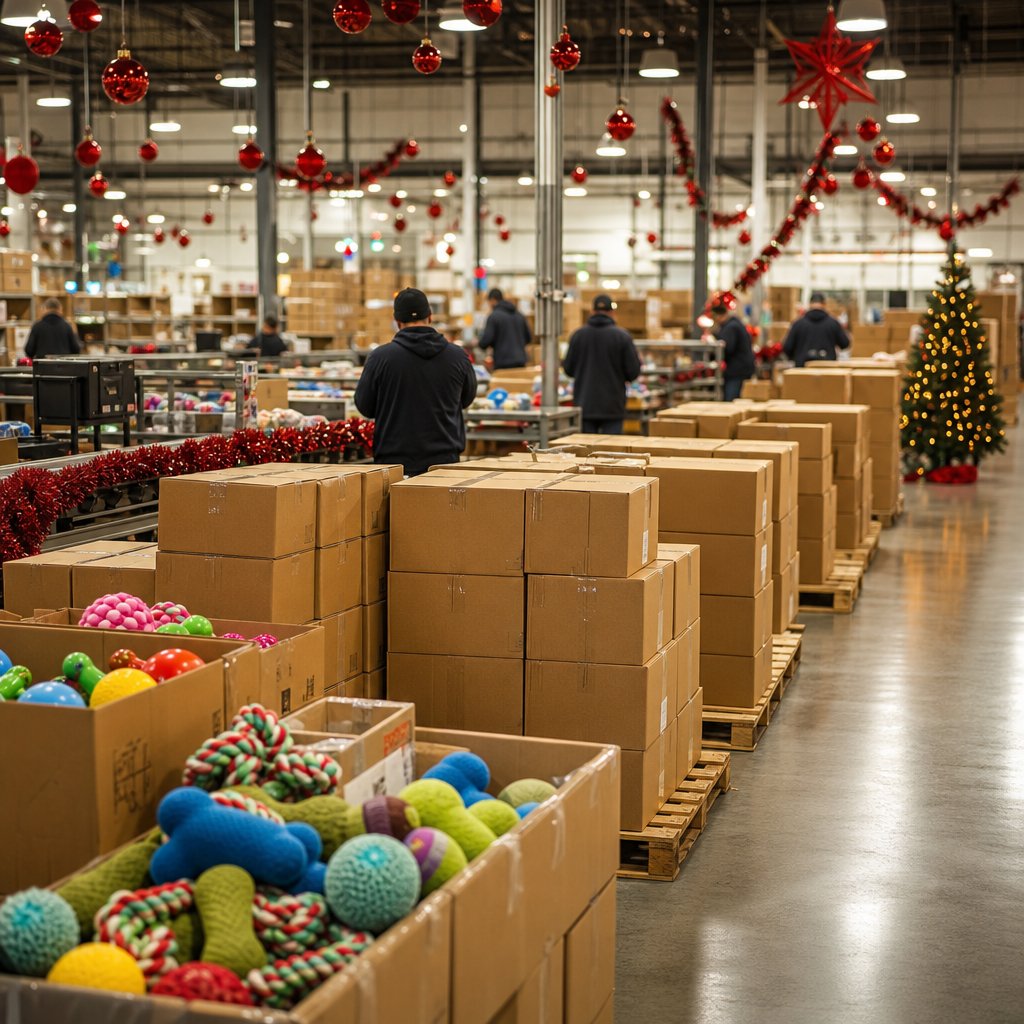
- The belt is an organism with a breath: it inhales from September, holds through December, exhales hard before Chinese New Year, and goes quiet for weeks in February.
- Q4 retail demand and the lunar-calendar shutdown land in the same supply window — orders that ignore both pay in airfreight.
- Work backwards from your shelf date: 25–35 days of production for standard orders, 45–60 for first ODM orders with new tooling, plus freight buffer.
- Carry stock in weeks of cover — deep on proven winners, shallow on tests — sized from your own lead-time risk, not a rule of thumb.
- The weeks after restart are a probation window: tighter AQL sampling, golden-sample checks and written material confirmations.
Every sourcing calendar in China runs on two clocks at once. The first is yours: the retail year, with its Halloween spike and its December gift peak. The second is the belt's: an agricultural-calendar rhythm that builds all autumn, sprints through January, and stops — genuinely stops — for the one holiday when several hundred million people travel home at once. Chinese New Year fell in mid-February in 2026 and lands in early February in 2027; either way, the manufacturing year does not resume so much as wake up slowly. Buyers who plan against only the first clock discover the second one in February, by airfreight invoice.
Two Calendars, One Factory Floor
The hinge between the calendars is labor. The workers who sew, mold, braid and pack pet toys are mobile: many return to other provinces for the holiday, and the date each one reappears is a family decision, not a policy. A factory can promise a restart date; no factory can promise that every trained pair of hands is back on it. Add the upstream layer — material vendors, packaging printers, freight forwarders — and the quiet weeks stretch further than any single plant's notice board suggests.
This is why the smart question in autumn is not "will you work through the holiday?" It is "what is your realistic shutdown window, what restarts first, and what do you need from me before you close?"
The Risk Timeline, Month by Month
| Month | What the belt is doing | Your risk | Your move |
|---|---|---|---|
| Aug–Sep | Q4 orders booked, tooling cut, materials staged | Custom projects started late lose their slot | Place ODM/custom orders; freeze golden samples |
| Oct | Peak production; every buyer competes for lines | Capacity queues; changes now cost friendships | Lock specs; no change requests without a date check |
| Nov | Peak shipments; container and air space tightens | Freight cost spikes, roll-overs at carriers | Book freight early; split shipments by priority |
| Dec | Last full month before the pre-holiday sprint | Final-call orders collide with January congestion | Ship restockables; start Chinese-market-free planning |
| Jan | Pre-CNY sprint; labor begins drifting home | Speed pressure erodes QC; trucking thins out | Tighten pre-shipment inspection; confirm trucking daily |
| Feb | Shutdown, one to three weeks; staggered restart | Assuming a single restart date | Agree restart dates in writing; plan pilot orders after ramp |
| Mar | Ramp-up; new and returning operators on lines | Early-year quality wobble on first batches | Probation AQL; verify against golden samples |
Sizing the Buffer Before You Need It
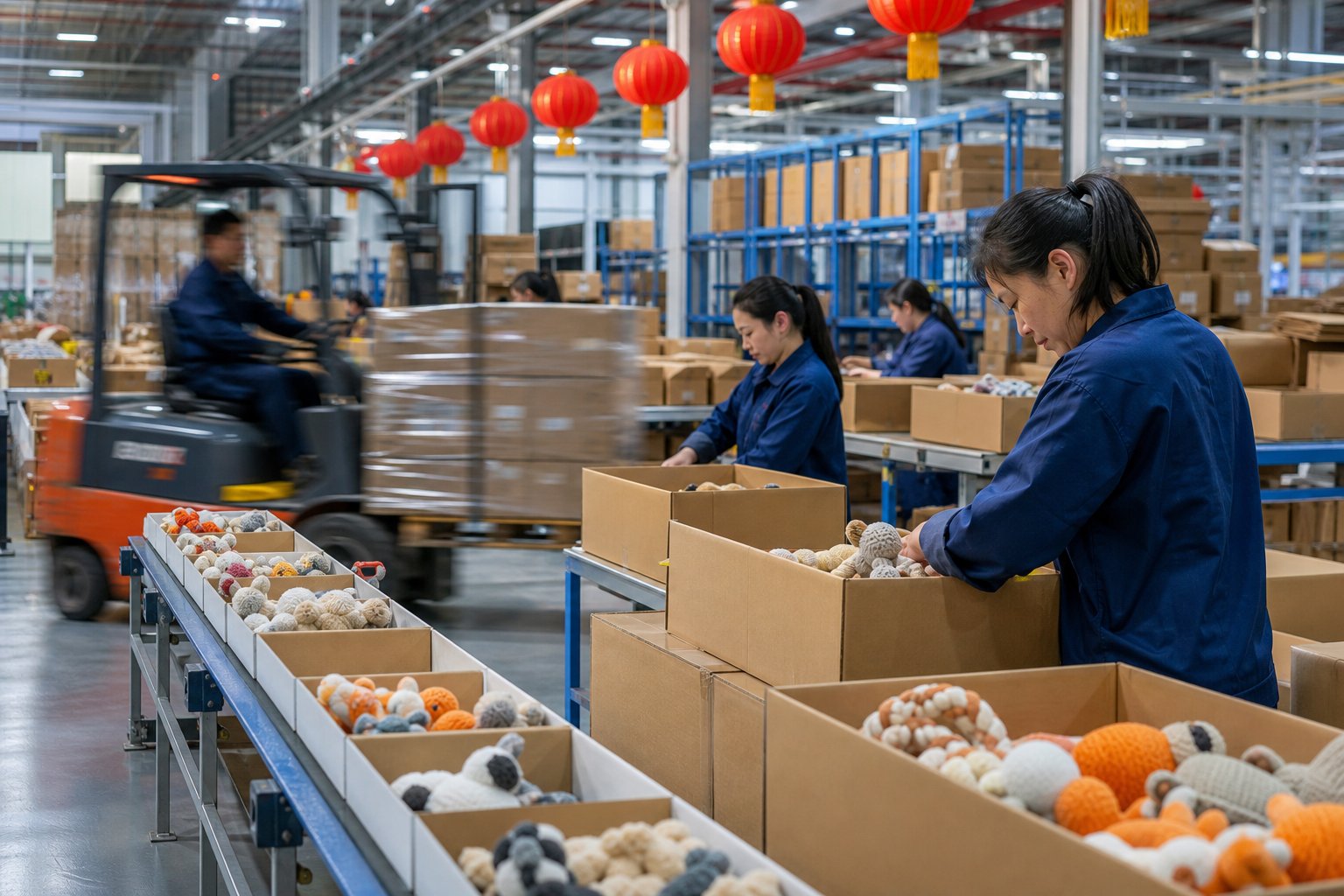
The buffer calculation is backwards, not forward. Start at your shelf date for each SKU class and subtract:
- Freight variability. The weeks your goods spend moving, plus the weeks they might wait — the second number is largest exactly in Q4 and before the holiday.
- Production lead time. Standard orders run 25–35 days including inspection in our program; first ODM orders with new tooling run 45–60 days.
- Restart friction. Orders that straddle the holiday effectively inherit the shutdown plus a ramp-up; add weeks, not days.
- Sell-through depth. Weeks of cover per SKU class: deepest on last year's proven winners, shallow on new tests that have not earned a warehouse yet.
The result differs by seller, which is the point: a stock program built on last year's data beats any universal formula. What is universal is direction — buffers set in August are cheap, and buffers set in November are bought at freight-market prices.
What Gets Negotiated Before the Holiday
The weeks before shutdown are a negotiation window most buyers skip. Confirm in writing: the final production slots and which shipments they belong to; the exact shutdown and restart dates, with a named contact over the break; the material staging for post-holiday orders, so March does not start with a fabric queue; and the treatment of any order that straddles the closure — does it finish before, or restart after, and who owns the risk in between. Our own stock program keeps a simple promise here: in-stock private label ships in 5–10 days before the cutoff, and inquiries during the break get answers within 12 working hours because the Yiwu fulfillment side runs a skeleton line.
Buyers running Q4 programs will find the seasonal calendar in our Q4 stocking guide useful alongside this timeline, and the market-versus-factory comparison explains which of your SKUs can be rescued late from stock.

After Restart: The March Discipline
The first weeks after a holiday are not normal production, and pretending otherwise is how March reviews get written. Lines return at uneven strength: some operators are back, some are replacements still learning the product, and material lots may have changed over the break. Treat the first shipments as a probation window — tightened AQL sampling, line-walk or video checks against the signed golden sample, and written reconfirmation of materials and colors. Every supplier relationship benefits from one quiet clause: the first batch after any long shutdown is inspected to a higher standard, by agreement, not by accusation.
Frequently Asked Questions
When should Q4 pet toy orders be placed?
Do Chinese factories really stop for Chinese New Year?
How much extra stock should I carry into Q4?
What should I check on the first batches after the holiday?
Building your Q4 plan against the holiday calendar?
Send your SKU list and target shelf dates — we will map production slots, freight cut-offs and a post-holiday restart plan: production confirmation, truck booking and the first post-restart delivery arranged in one pass, so the season runs on your calendar rather than the factory's.