Key Takeaways
- Coffee-wood chews are a by-product of plantation renewal — seasonal, agricultural supply, not factory supply.
- Splitting is a drying failure, not a dog failure: uneven moisture opens checks that handling and transit finish off.
- Grading by diameter and density is what turns a variable natural log into a sellable, size-matched SKU.
- Wood shipments carry destination-dependent quarantine and fumigation paperwork — confirm requirements before booking, not at the port.
- Natural variability is the product's charm and its return-driver; listings that say so honestly keep both.
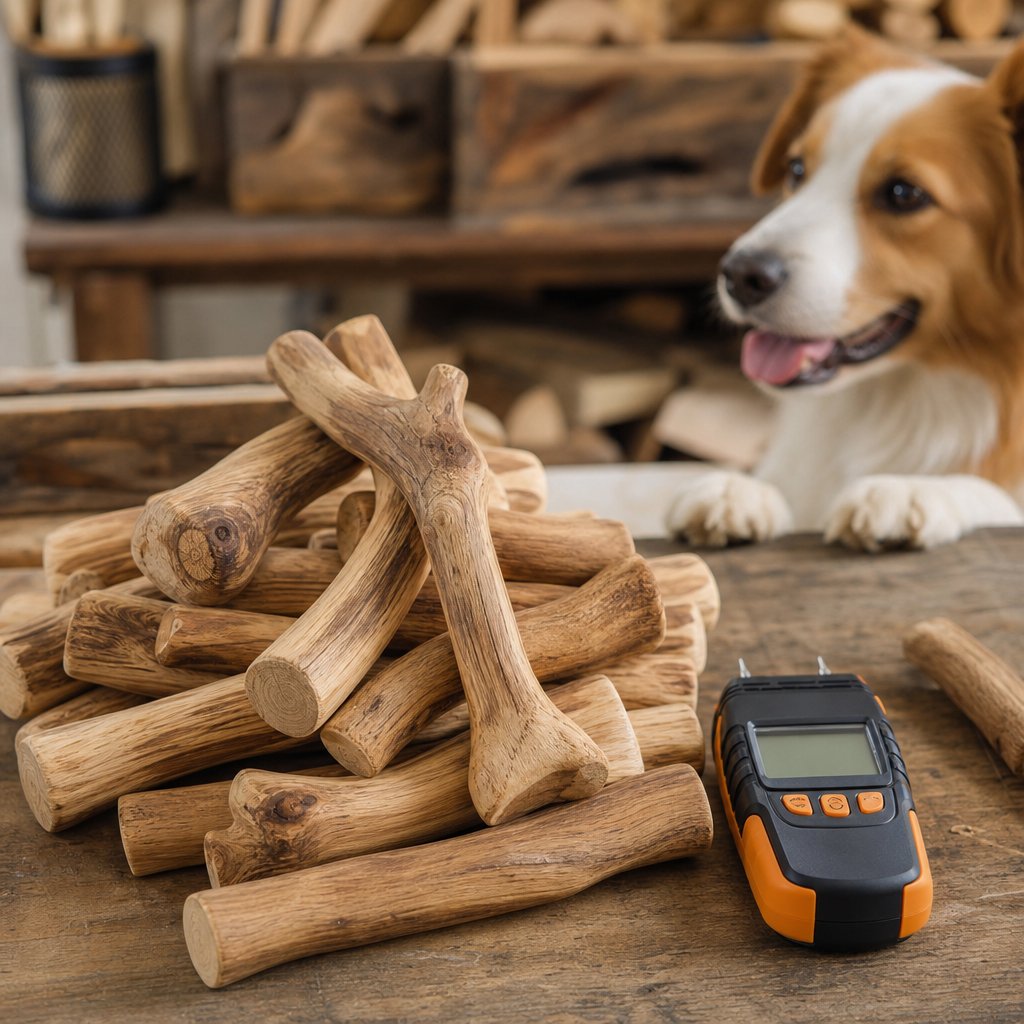
The complaint photos all look the same: a natural wood chew on a doormat, one hairline crack running down the end grain, the buyer asking whether the dog cracked it in an hour. Sometimes the dog did. More often the crack was already inside the piece when the carton was sealed — a drying failure that survived packing, sat quiet through a month of ocean humidity, and opened the day somebody finally knocked two chews together on a shop shelf.
Wood and coffee-wood chews are one of the few genuinely natural entries in the dog chew category, and they sell on that: no odor, no compound, a story customers repeat. They are also an agricultural product wearing a toy's bar code, and most of their quality problems — splitting, splintering, weight drift, re-absorbed moisture — trace back to steps that happen in the wood, not in the factory. This article walks those steps.
Where Coffee-Wood Chews Actually Come From
Coffee shrubs are periodically pruned or removed to keep plantations productive; the trimmed trunks and branches are the raw material for chews. That origin explains everything a buyer needs to predict about the supply. It is seasonal, moving with plantation renewal cycles rather than production plans. It is agricultural, so diameter, density and grain vary piece to piece even within one lot. And it is geographic — coffee country, not toy country — which means the processing chain usually starts far from the coastal factories that handle rubber and plush, and the wood-toy link is a coordination problem as much as a manufacturing one.
The practical consequence for buyers: a reliable wood-chew supplier is one who holds raw material stock across seasons and can show you the drying program, not merely the finished pallet. Suppliers who buy green wood week to week are renting their quality from the weather.
Grading: Diameter, Density and Visual Defects
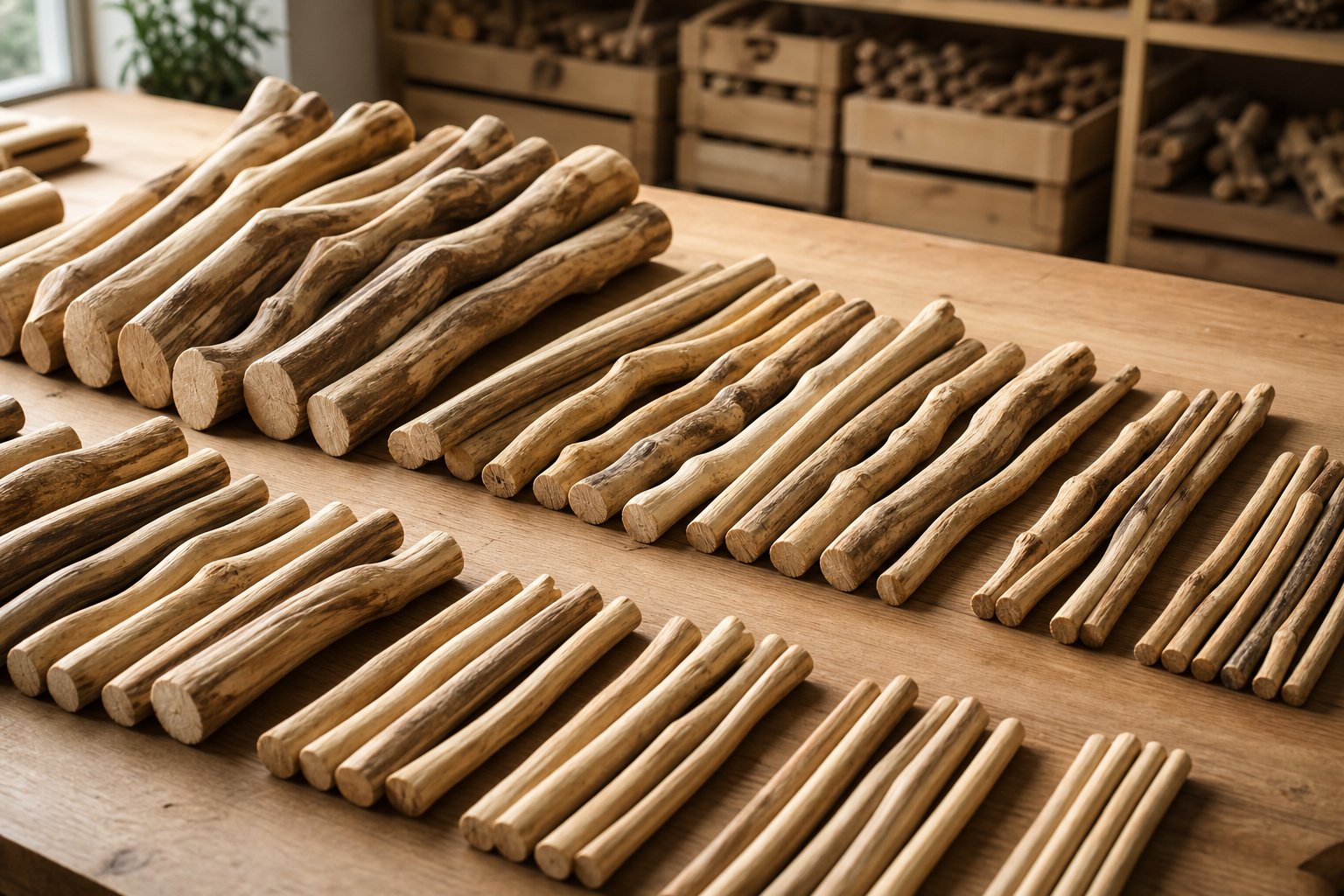
Natural logs become sellable SKUs through grading. Diameter sorting matches pieces to dog size tiers — the single most important commercial cut, because an undersized chew is a swallowing hazard and an oversized one is a shelf joke. Density and bark condition decide the surface character, and visual inspection removes the pieces that would become returns: through-cracks, soft or rotten spots, knot voids, and bark that will shed into carpets.
| Grade | Diameter logic | Typical positioning | Watch-outs |
|---|---|---|---|
| Small | Sized for toy and small breeds | Entry SKU; trial and gift bundles | Swallow-size check; splinter edges on thin sections |
| Medium | Mid-diameter, dense grain | Core seller for average adult dogs | End checks visible after rough drying |
| Large | Thick trunks, heavier weight | Power-adjacent positioning at higher price points | Weight variance is largest here; freight matters |
| Branch shapes | Natural forks and curves | Premium "one of a kind" listings | Knot voids; shape photography must match shipment |
Weight deserves its own clause: wood loses and gains moisture, so a "grams per piece" promise ages badly. Specify weight as a range per grade, and let the size tier — not the scale — carry the purchase decision.
Moisture Control: Why Chews Split
A fresh-cut branch is wet all the way through. Dry it fast and the shell shrinks while the core is still swollen; the mismatch opens internal checks, and any later knock — or a low-humidity winter indoors — widens them into the visible crack a customer photographs. Controlled drying is the entire defense: gradual schedules rather than fast heat, equalization periods that let moisture redistribute through the piece, and cutting to length only after the wood has stopped moving. Factories serious about this run drying chambers or covered shade-drying racks on schedules rather than improvising on the warehouse floor.
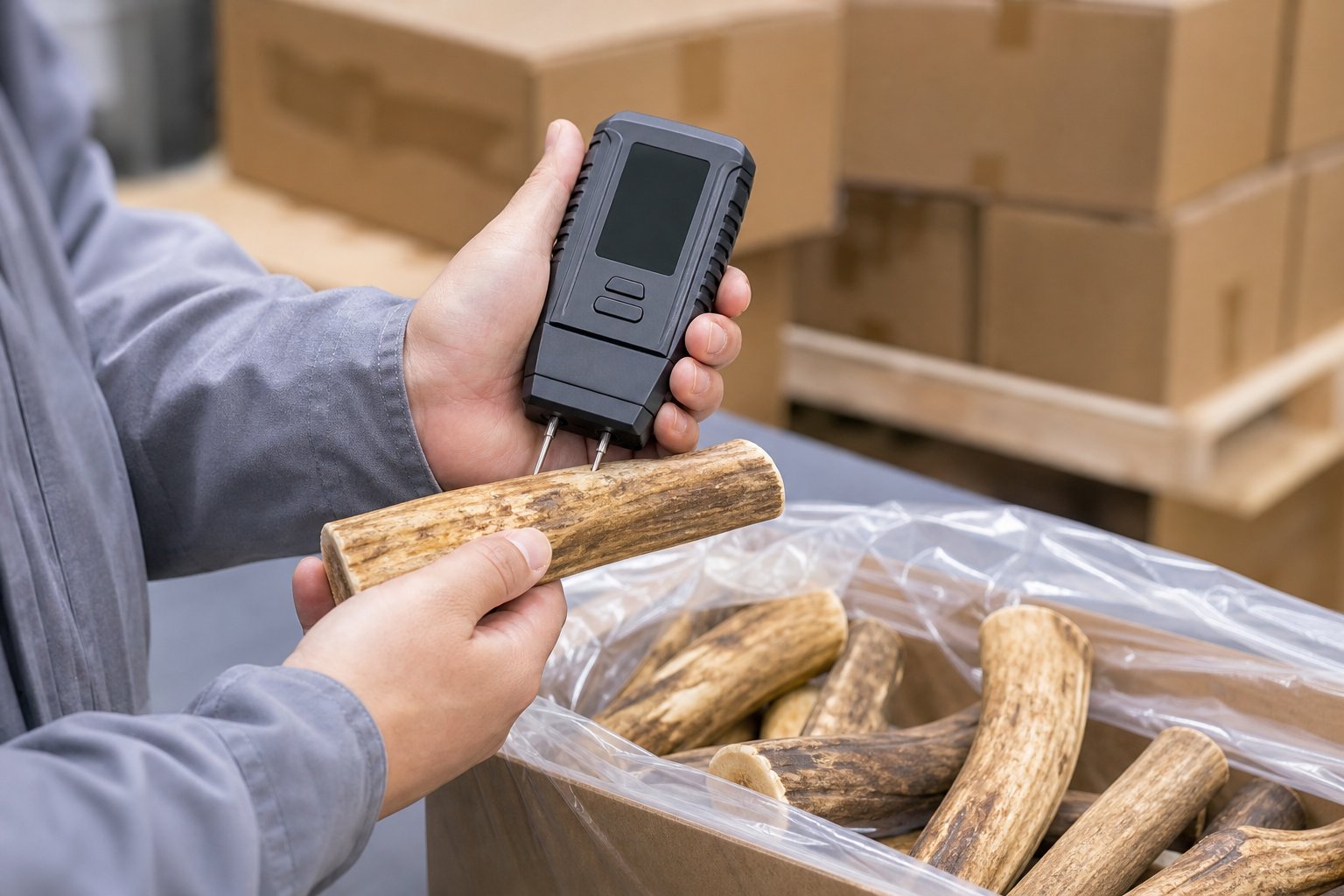
Verification is cheap and worth demanding: pin-type moisture meters read a piece in seconds, and a per-batch moisture range belongs in the inspection standard alongside diameter and defect criteria. The other half of moisture control happens after QC — in the carton. Fully sealed polybags trap residual moisture and sweat the wood inside the box; breathable packaging with desiccant in humid seasons, and dry container stowage away from doors, keep a passing batch passing until it reaches the shelf. Our piece on packaging QC covers the carton-side checks in detail.
Export Paperwork: Quarantine and Fumigation
Wood is a quarantine-sensitive commodity, and the paperwork follows the destination, not the seller's preference. Some markets require phytosanitary certification or heat treatment or fumigation declarations for wood articles; others clear plain processed wood chews with standard documentation. The cost of getting this wrong is measured in port storage days, not in fees. The working rule: confirm the destination's current requirement with your forwarder in writing before booking, align the treatment declaration with what the processing site actually did, and keep treatment records with the shipment file so a customs query does not turn into an archaeology project. None of this is difficult — it is simply a checklist that must exist before the container, and our factory and belt page notes which of our wood lines ship with which documentation set.
Merchandising Wood Beside Rubber
Wood chews rarely carry a range alone; they earn their slot as the natural counterpoint to rubber. The pairing works commercially because the two materials answer different objections — rubber answers durability and price, wood answers odor, story and the growing natural-materials preference. Retailers bundle them as starter kits for new puppies' households where the owner wants a no-plastic option; marketplaces position wood as the premium tier above entry rubber, which supports the overall price ladder rather than competing inside it. Our article on eco-friendly pet toy materials covers how natural-material claims should be worded and substantiated.
The listing copy decides whether wood's variability is a feature or a refund queue. Two sentences do the work: each piece is unique in grain, color and weight, and wood chews wear like all natural chews — replace when splinters develop and always supervise chewing sessions. Buyers who read that do not photograph the crack that was always coming; they expected variability and got it. Buyers who read nothing photograph everything, a pattern our analysis of pet product return reasons keeps confirming across categories.
Frequently Asked Questions
Where does coffee wood for dog chews actually come from?
Why do wood dog chews crack or split, and how is it prevented?
What should buyers check when inspecting a wood chew shipment?
Are wood chews safe for dogs, and what should listings say?
Adding a natural wood line to your chew range?
Send your size tiers and market — we reply with grade options, drying and QC specs, documentation sets and FOB ranges by configuration.