Key Takeaways
- The toy usually wins its fight with the dog. The parcel network is a different opponent — packaging defects cost sellers more than toy defects do.
- Packaging QC runs across three layers: the unit polybag, the printed retail pack, and the master carton. Each has its own failure modes and its own checks.
- Polybag suffocation warnings and keep-away pictograms are retail and marketplace specifications, not pet-toy law — write them into the standard anyway.
- Print color is held by a physical approved master plus Pantone references and a delta-E tolerance, not by a PDF in an email thread.
- Compressed packing of plush saves freight; approve it only after a 24-hour recovery check against the golden sample.
Here is an uncomfortable ratio from any pet toy seller's claims log: the product inside the box survives the dog far more often than the box survives the journey to the dog. Corners crushed by pallets, polybags missing the warning print a retailer's spec demands, color boxes that came back from the printer one shade away from the brand's own orange — none of these appear in a product defect catalog, and all of them are refund reasons. Packaging is a second product with its own bill of materials, its own failure modes and its own QC, and it deserves to be inspected with the same seriousness. This article walks the three layers from the inside out: polybag, print, carton — plus the plush-specific question of what vacuum compression does to the goods you are so carefully packing.
Polybags: The Small Print That Prevents Small Disasters
The bag is the cheapest component on the page and the one with the sharpest compliance edge. Pet toys are not governed by a dedicated packaging law, but every serious retail spec and marketplace guideline borrows the same children's-product conventions: thin bags carry a suffocation warning; a keep-away-from-children pictogram appears on bags above a size threshold; and bags are either vented or specified at a minimum thickness. Whether a given shipment needs all of these is decided by the buyer's channel spec, not by regulation — which is precisely why it must be written into the QC standard, where a checklist can catch it, rather than left to whoever loads the polybag machine that morning:
- Warning text and pictogram present, legible, and positioned where the fold does not hide them.
- Bag thickness and venting per the buyer's spec — thicker film for heavy chew toys that could work a corner open in transit.
- Bag size matched to the toy: excess slack lets products shift and scuff printed surfaces.
- Seal quality — a bag that opens itself in the carton delivers a dusty, handling-worn product to the shelf.
Print: Holding the Color You Approved
Nothing arrives at a brand's office more predictably than a color box that is almost the right orange. Print color drifts for physical reasons: the same ink sits differently on different paper, a new print run mixes a new batch of Pantone, and the designer's screen lives in a color space the press has never heard of. The fix is a chain of physical references, each one agreed before the run: specify Pantone numbers rather than screen values; approve a printed master panel — the physical artifact, not the PDF; agree a delta-E tolerance for the two or three colors that carry the brand; and require a press proof from the actual paper stock before the full print. Private label runs feel the sharpest pain here, because the header card is the entire brand; the cost structures of hangtags, header cards and boxes are broken down in our private label packaging price guide.
The Master Carton: Drop It Before the Courier Does
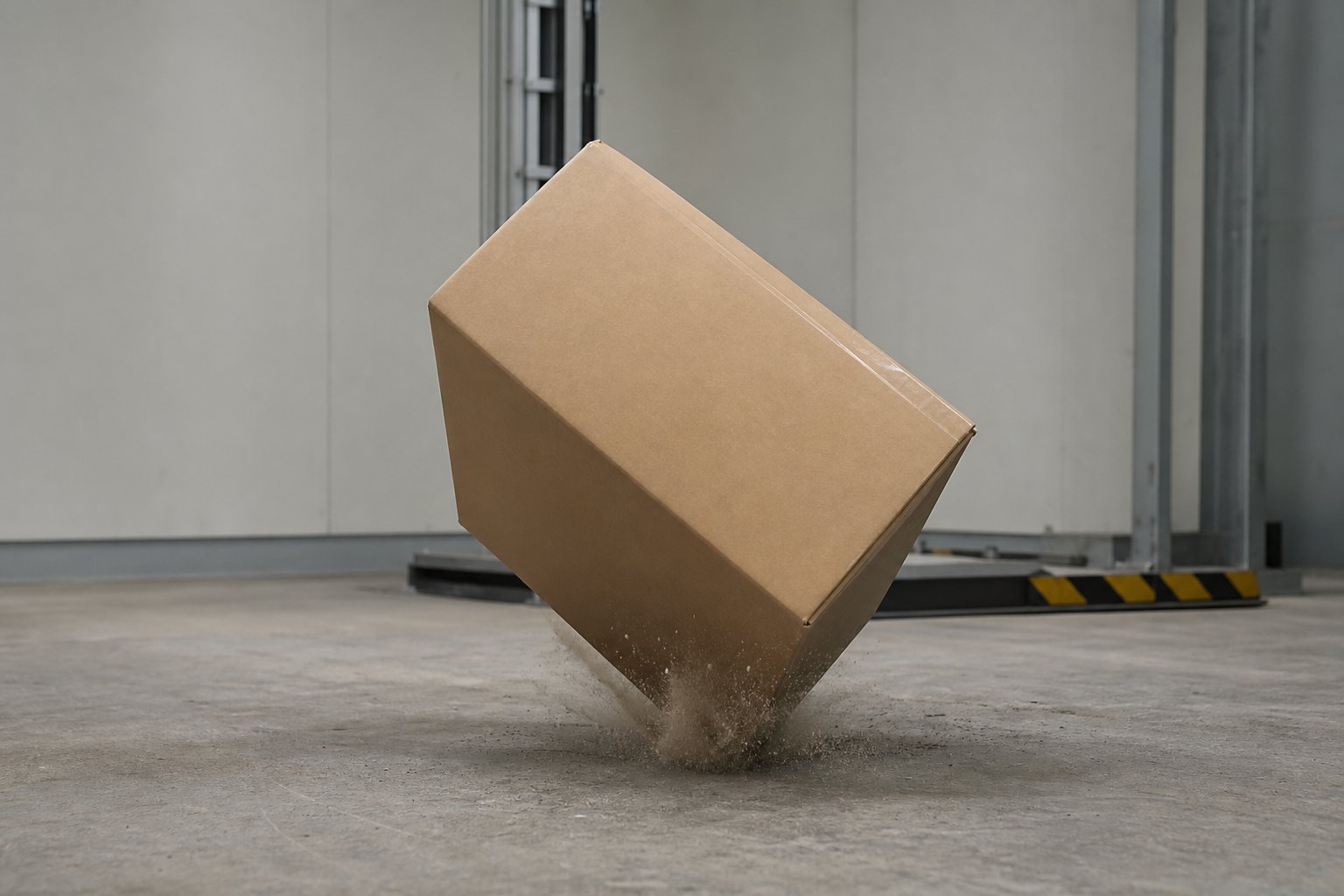
Master cartons fail in exactly two ways: they burst on impact, or they collapse under load. Both are cheap to simulate and expensive to discover in a customer's warehouse. The standard approach borrows ISTA-style procedures: a sequence of oriented drops — edge, corner, face — from heights scaled to the carton's weight class, followed by a stacking or compression check that reflects how pallets actually ride in a container. Between them, the two tests sort packaging decisions quickly: box grade, internal dividers, and the pallet pattern itself. A full lab is optional; what is not optional is that somebody drops a finished carton from a realistic height onto concrete before a season's worth of goods are sealed inside it.
| Packaging layer | Typical defect | QC check |
|---|---|---|
| Unit polybag | Missing warning print, thin film, loose seal | Spec sheet match, seal pull, print legibility |
| Retail printed pack | Color drift, scuffed surfaces, wrong label position | Compare against approved master under daylight lamp; delta-E spot check |
| Master carton | Bursting on impact, collapse when stacked | ISTA-style drop sequence; stacking/compression check; pallet pattern review |
Plush Compression: Approve the Saving, Check the Cost
Plush toys are the classic light, bulky cargo, and compressing them into bales or vacuum packs saves freight that would otherwise be spent shipping air. Most plush recovers its loft within a day of unpacking. "Most" is the word that needs a test: long-pile fabrics recover more slowly, glued or heat-sealed parts can lift, and heavily stuffed shapes may keep a crease the customer will photograph. The check costs one day and one sample: unpack a production-packed unit, wait 24 hours, and compare loft, shape and seams against the golden sample that was never compressed. Approve the packing method per SKU, not per product family — the fabric decides, and fabrics differ within the same range.

Writing Packaging QC into the Order
Packaging QC fails in the gap between the artwork email and the loading dock, so close the gap in four lines of contract: an approved physical master set (print panel, polybag spec, carton spec) referenced by the PO; polybag warning print listed as a named inspection point; drop and stacking acceptance stated as the pass rule for cartons; and the compression recovery check written in for plush SKUs packed compressed. Suppliers who run their own packaging line — as our consolidated packing operation in Yiwu does for dropship programs — will recognize every clause; the negotiation is shortest with factories that already pack retail-ready cartons daily. For the QC logic on small runs specifically, where packaging errors hide most often, see our guide to small-order QC.
Frequently Asked Questions
What polybag warnings do pet toy packages need?
How do I keep the color box printing consistent with my approved design?
Which carton tests actually matter for toy shipments?
Does compressed packing damage plush dog toys?
Want packaging that survives the journey and the shelf?
Send your channel and packaging format — we reply with the spec we would hold, the packing options and FOB ranges per tier.