Key Takeaways
- A mixed container is a translation device: it converts retail assortment needs into factory MOQ language without forcing a thousand units of anything.
- The loading plan is engineering — cube, weight and unloading sequence decide whether receiving takes a day or a week.
- The packing list is the contract of the box: per-SKU carton counts and marks, agreed before the first carton is stuffed.
- A photo and seal protocol at stuffing is the cheapest insurance in the trade.
- At destination the tally is per SKU, not per pallet — and the discrepancy window is short, so be ready to use it.
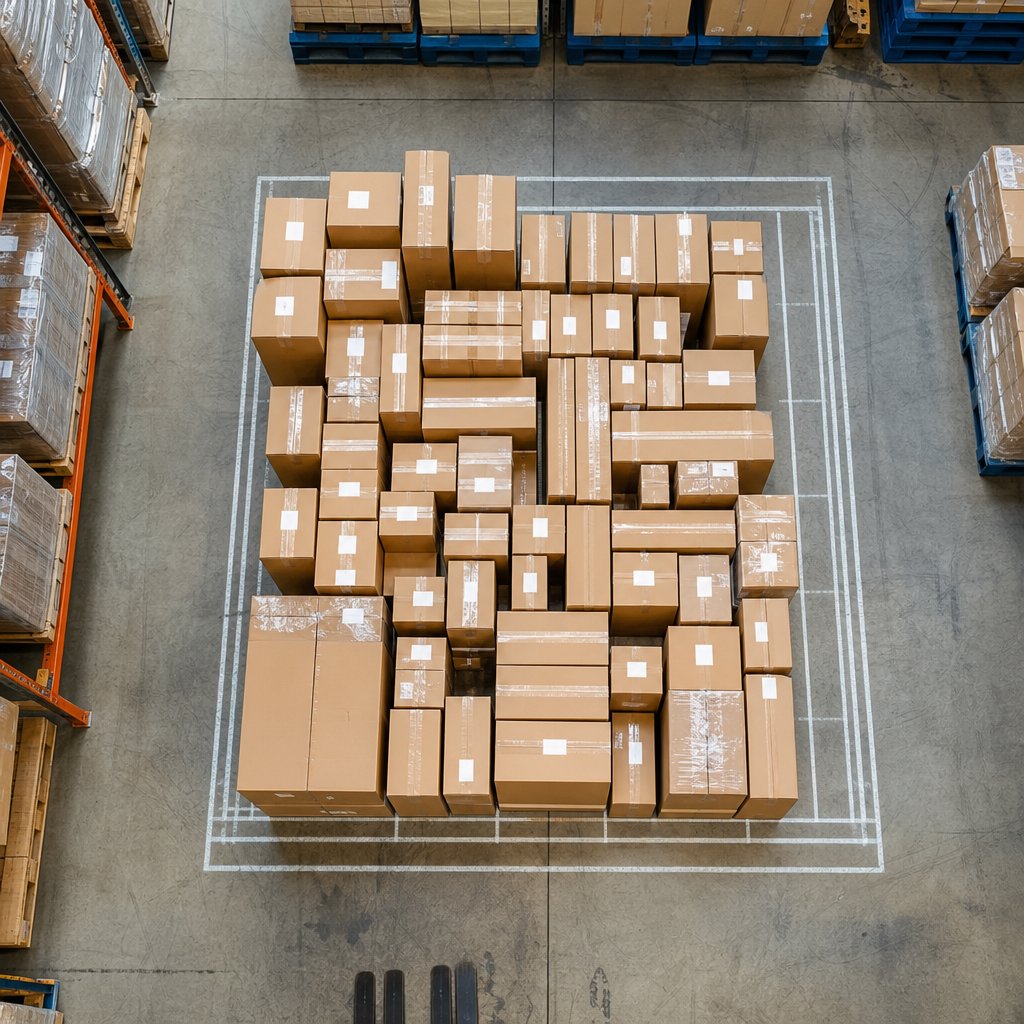
A retail buyer needs fifty SKUs to make a planogram work. A factory speaks in thousands per shape. Between those two dialects sits the mixed container — and the suppliers who run consolidation well are quietly doing some of the most skilled work in the pet toy trade. Done badly, a fifty-SKU box arrives as a two-week receiving headache and a claims negotiation. Done well, it arrives as a store-ready assortment that no single-factory order could have produced.
This article walks the whole operation: why consolidation exists, how a mixed load is planned and stuffed, the paperwork that keeps fifty products distinguishable inside one steel box, and what to check when the doors open at destination.
Why Consolidation Exists at All
The economics are simple to state and easy to forget. Assortment sells; MOQs resist it. A chain pet store needs plush, rubber, rope and cat toys in balanced depth; a subscription box needs constant rotation; a distributor needs breadth across price tiers. No single SKU justifies a container, and no factory holds every category. Consolidation answers both: many suppliers' lines feed one box, each SKU at its own sensible minimum.
Geography decides how well it works. In a manufacturing belt, consolidation is short-distance freight between lines and one warehouse; in scattered sourcing, it is a truck tour. Our own setup is built on this — production lines for plush sewing, injection and vulcanization, and rope weaving feed a consolidation warehouse in Yiwu, where groupage and dropship fulfillment share the same floor. Buyers who have visited the belt describe the effect the same way: the container is not the end of the supply chain; it is the reason the supply chain is arranged the way it is.
How a Mixed Load Gets Planned
Weeks before any container arrives, consolidation is already a scheduling problem. Each product family runs on its own line at its own pace — sewing lines output by the hour, molding by the cycle — so the coordinator works backwards from a booking cut-off, staging finished SKUs in the warehouse as they clear inspection. The shipping decision comes next: which container size, whether the load palletizes or floor-loads (floor-loading fits twenty to thirty percent more soft toy cartons but costs labor at destination), and how the cube divides.
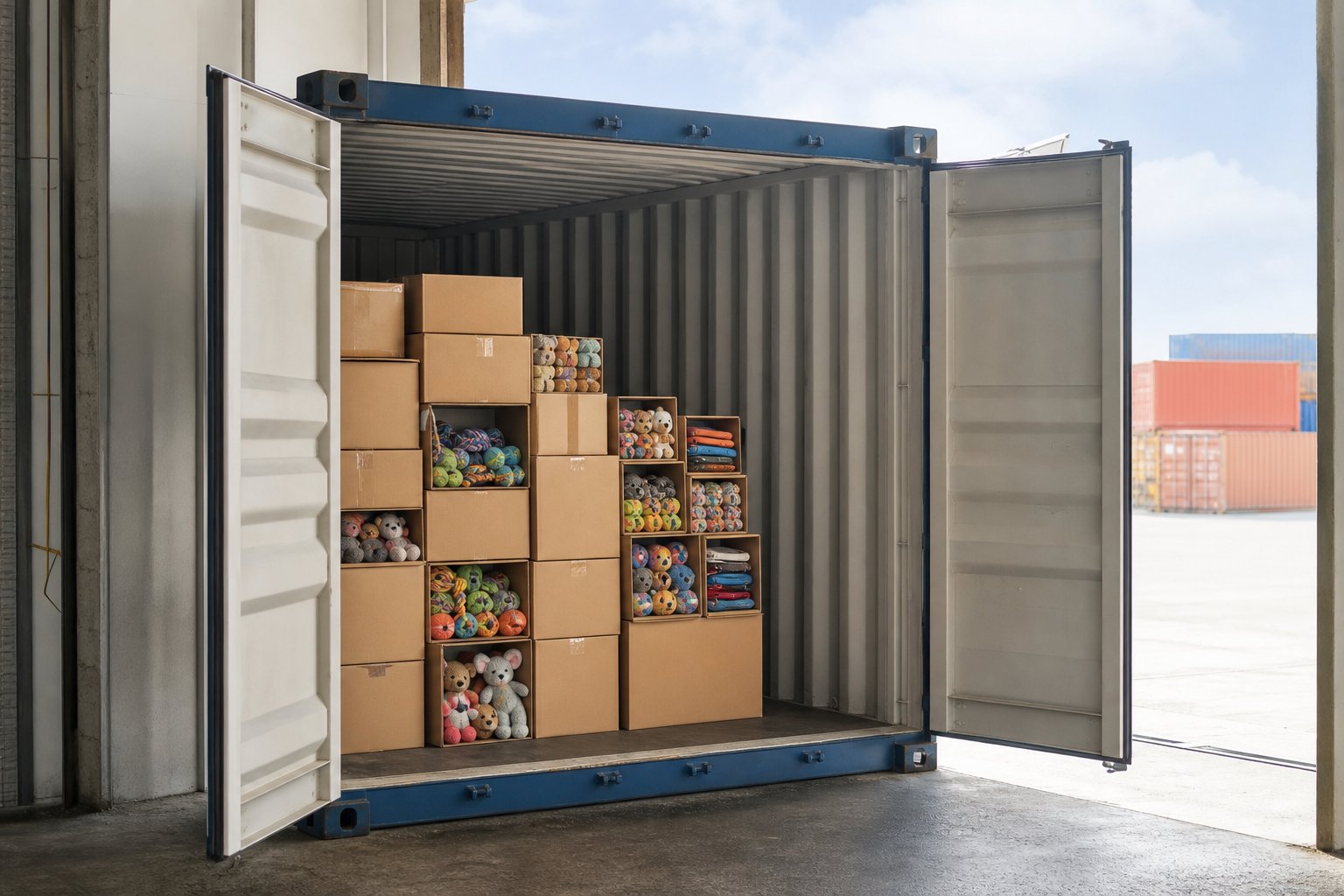
Then the loading plan, which is where skill shows. Weight goes low and distributed — cartons of rubber chews at the bottom, plush on top; axle-weight limits split heavy lines front to back; the first third of the box gets loaded in reverse order of unloading priority, so the SKUs needed first at destination come out first. A written plan turns all of this into a checklist the stuffing crew can execute. Without one, the container gets filled the way water fills a hole — dense at the door, chaos at the nose.

Paperwork: The Mixed-Load List and the Marks
Fifty SKUs inside one box are only as separated as the paper says they are. The master document is the packing list: one line per SKU with units per carton, carton count, net and gross weights, and cubic measure. Its numbering system is the load's skeleton — every carton carries a shipping mark identifying the shipment, a per-SKU label, and a sequential carton number tied to that list. On the commercial invoice, each SKU appears as its own line with its own classification, because a consolidated customs description invites exactly the inspection a mixed load does not need.
Three disciplines keep this honest. Freeze the packing list at cut-off — a SKU added at the dock is a SKU nobody counted. Match the marks physically: the number on the carton must equal the number on the list, checked as each carton crosses the door. And record the stuffing: time-stamped photos of the empty box, the load by section, the closed doors and the seal number. That last photo set settles more disputes than any contract clause, because it converts memory into evidence.
Acceptance Points When the Doors Open
Receiving a mixed container is an inspection event, and the buyer's team should treat it like one. The sequence that works: verify the seal number against the stuffing record before breaking it; photograph the doors and the load face as they open; tally cartons against the packing list by mark and number while unloading, not after; sample carton condition per section, since transit damage clusters — one corner of a bad stow, not a uniform percentage. Only then open cartons, and count at SKU level for the lines where assortment accuracy matters most.
Discrepancies have a half-life. Contracts define a claim window precisely because evidence decays — containers return, cartons scatter to stores, staff move on. A buyer who tallies on the dock with the packing list in hand converts a potential dispute into a five-line email. A buyer who discovers a shortfall during a February stock count converts it into a memory.
Consolidated or Split: When Each Wins
| Dimension | One mixed container | Split shipments |
|---|---|---|
| Freight and handling cost | Lowest — one move, one clearance | Higher — each shipment repeats the fixed costs |
| Cash flow | One payment cycle covers the whole range | Staged payments follow staged arrivals |
| Timing risk | Concentrated: one delay touches fifty SKUs | Distributed: one delay touches one family |
| Receiving effort | One intense tally event | Several smaller, slower events |
| Best for | Seasonal builds, chain assortments, distributor ranges | Replenishment models, fast-rotating bestsellers, test orders |
Mature importers end up running both: the seasonal range consolidates; the proven bestsellers replenish in smaller, faster loops. The decision is per-range, not per-company — and it shifts with the calendar, which is exactly why the consolidation conversation belongs in the planning season covered in our Chinese New Year and Q4 stock article. The mechanics of the stuffing day itself — verification, loading, the seal — are documented step by step in our container loading walkthrough.
Frequently Asked Questions
How many SKUs can realistically share one container of pet toys?
Who books the freight for a consolidated mixed container?
How are mixed cartons labeled so receiving can sort them?
What should I do if counts are short when the container arrives?
Building a range that needs one container, not one factory?
Send your assortment list — we will return a consolidation plan across our eight production lines, with cube estimates, MOQ per tier and a stuffing schedule that fits your booking.