Key Takeaways
- "Durable" is an adjective; cycle counts are data. A small in-house lab converts durability claims into comparable, repeatable numbers.
- Three rigs cover most of the risk: a drop rig for handling and fetch throws, a jaw simulator for chewing loads, and a torsion rig for tug and rope toys.
- Set pass rules before testing: define the failure mode, fix the sample size, and record cycles to failure for every unit.
- Lab data ranks products against a reference; it cannot promise survival against any particular dog. Market the protocol, not an absolute.
- When auditing a supplier, look for rigs with wear marks, written cycle protocols and dated failure records — not a lab that exists only in the brochure.
Somewhere in most supplier catalogs sits the sentence every buyer has learned to discount: "our toys are extremely durable." The sentence costs nothing to write and nothing to prove. What separates a durability claim from a durability fact is a room with rigs in it — a place where toys are dropped, bitten and twisted on purpose, on a schedule, with the failures kept on a shelf instead of thrown away. This article walks through what a working pet-toy durability lab looks like from the inside: which tests earn their keep, how pass rules are set, where lab data must stop short of what a real dog can do, and what to look for when a supplier shows you theirs.
What a Durability Lab Is Actually For
A working lab serves three purposes, and it is worth separating them because they fail in different ways. First, product development: when a compound or a wall thickness changes, the lab answers whether the new version is better, worse or simply different — before customers answer it for you. Second, batch consistency: a production batch should survive the same cycle count as its golden sample, and the lab is where that is checked cheaply. Third, substantiation within limits: test records give marketing an honest protocol to describe instead of an adjective to inflate.
What a lab is not for is proving indestructibility. Any rig can be defeated by a determined dog with an angle the fixture does not cover, which is why mature programs report comparisons — "outlasted our previous SKU by a factor" or "completes the medium-tier protocol" — rather than promises.
The Three Rigs That Do Most of the Work
Elaborate labs exist, but three fixtures cover the large majority of real-world failures:
| Rig | Typical setup | What it predicts | What it cannot tell you |
|---|---|---|---|
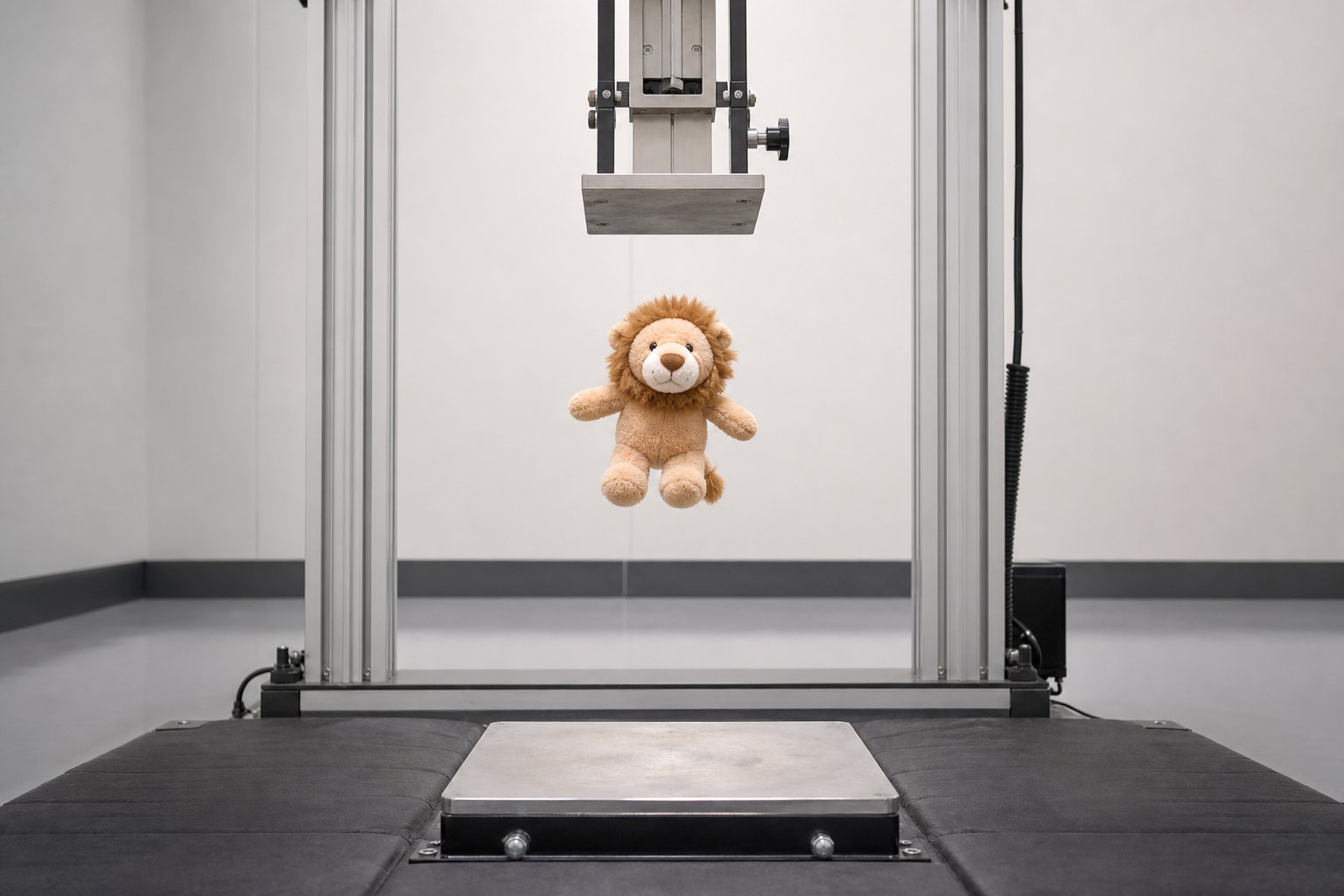
| Drop rig | Fixed-height releases onto a hard plate, flat and on edges, repeated cycles | Shipping and handling damage, fetch-throw survival for hard toys | Anything about chewing |
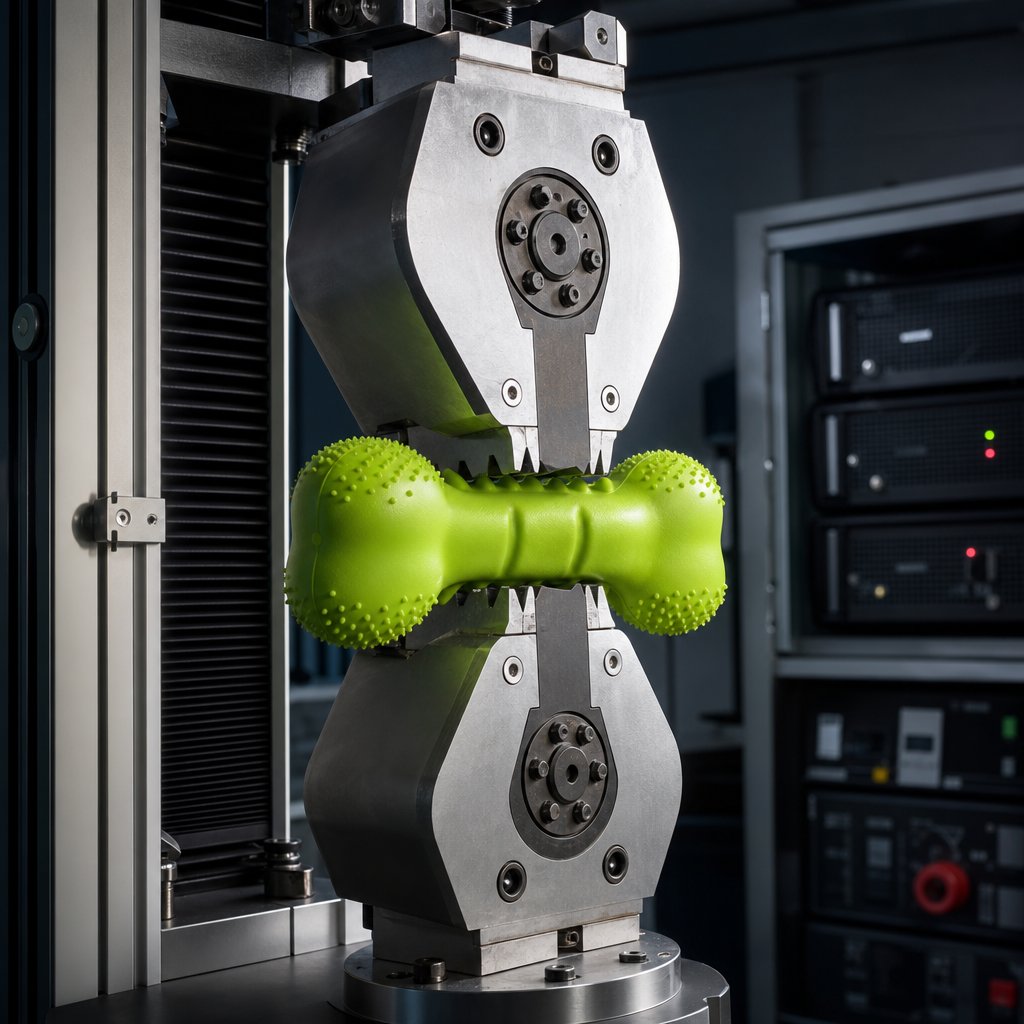
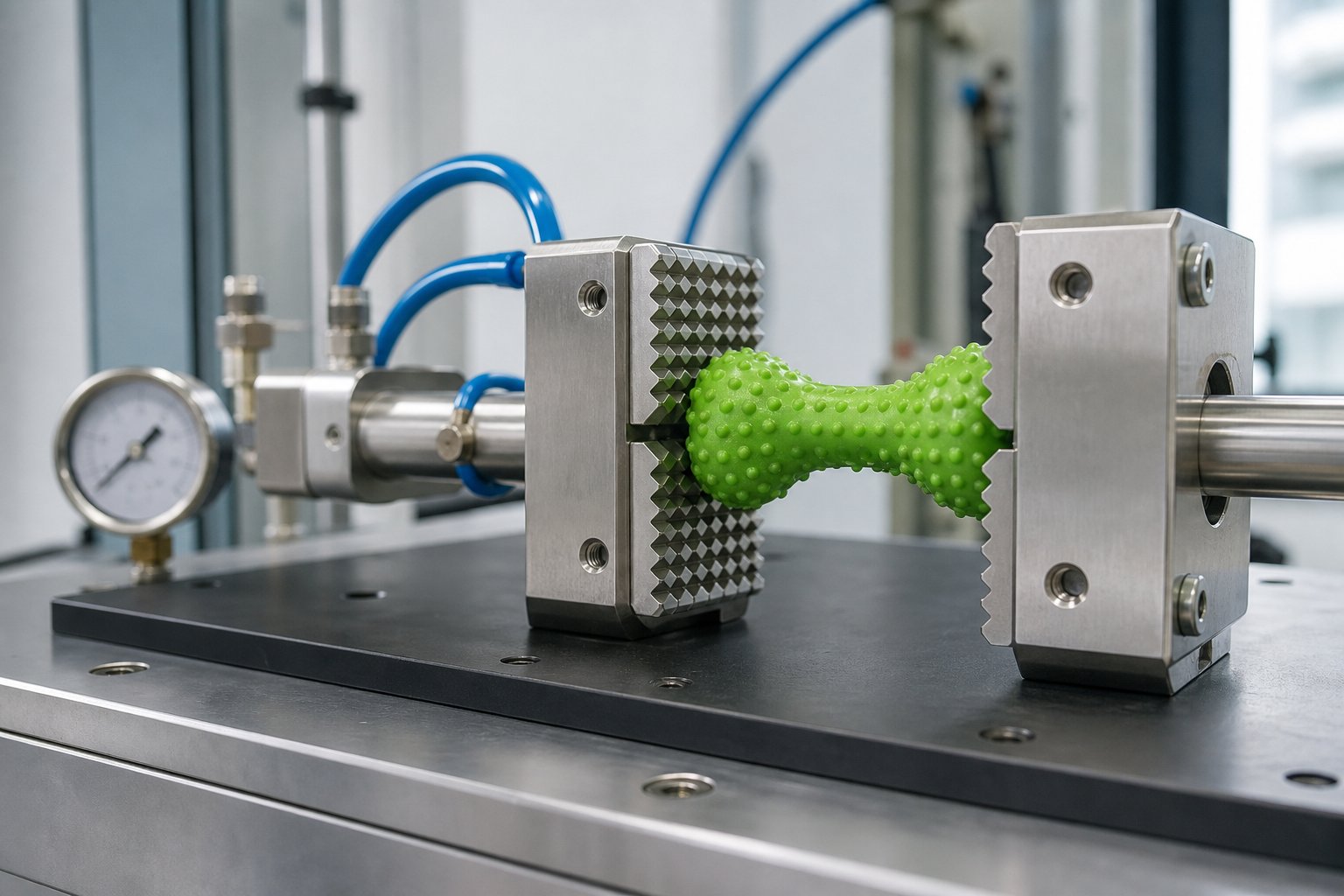
| Jaw simulator | Pneumatic or servo clamps with tooth-patterned faces, load set per dog-weight tier, thousands of cycles | Crack initiation, squeaker housing fatigue, tear propagation in TPR and rubber | Saliva chemistry, tooth angle, a dog's patience |
| Torsion rig | Clamped ends twisted repeatedly, sometimes wet to soften fibers | Rope yarn wear, handle and loop tearing on tug toys | Puncture from pointed teeth |
A fourth test — the straight pull for attached parts such as squeakers and eyes — is usually done on a simple force gauge rather than a rig, and it deserves its own article. The point of the table is honesty on the right-hand column: every rig answers one narrow question, and knowing which question it does not answer is what makes the data credible.
Pass Rules: Deciding What "Failed" Means
The difference between testing and playing with toys is the rulebook written before the first cycle. Three decisions make a protocol defensible:
- Define failure in advance. Visible crack, filler exposure, squeaker release, loss of function — pick the list per toy type and write it down. A tester who decides mid-run what counts as failure will unconsciously protect the sample he approved.
- Fix the sample size and the reference. Three to five units per configuration is the working norm, always run alongside a control: the previous version of the same SKU or a benchmark product at the same tier.
- Tier the cycle counts. Match counts to dog-weight bands — a protocol for a 4 kg companion dog is not a protocol for a 35 kg working breed. The numbers are internal standards, chosen by the supplier; what matters is that they exist, are written, and are the same for every batch.
Records should capture cycles to failure for every unit, the observed failure mode, and photographs. A notebook of failures is worth more than a wall of passed certificates — it is the dataset from which the next product revision comes.
The Honest Limits of Lab Data
Lab rigs repeat one motion perfectly; dogs refuse to. Real chewing varies tooth angle, saliva wetting, ambient temperature — TPR compounds stiffen noticeably in cold weather — and above all motivation, since a dog left alone with a toy applies an entirely different work rate than one playing fetch with its owner. For that reason, defensible claims from lab data are comparative and tiered: this toy completes more medium-tier cycles than its predecessor; this rope survived more wet-twist cycles than the market benchmark. The moment a supplier translates cycles into "survives X months with a power chewer," the data has left the lab and entered fiction.
Visiting a Supplier's Lab: What to Look For
A lab visit — or a video walk-through, which most factories can arrange on short notice — tells you in ten minutes whether the lab is a working one:
- Rigs show wear and recent use; fixtures smell of rubber and carry scuff marks. A showroom lab with dust on the clamps is answering a different question.
- Protocols exist on paper: cycle counts per tier, failure definitions, sample sizes — and staff can find the document without searching.
- Records are dated and tied to batches, and failed samples are kept on a rack rather than binned.
- Someone can answer the hardest question well: "what can this test not tell you?" An honest answer is a stronger signal than any certificate on the wall.
If you cannot visit, ask the supplier to describe a failure — not a pass. Factories that test for real have failure stories with dates and photos; factories that do not, only have adjectives. Our own practice is to publish the criteria on the quality page and ship batch-level test records with the goods, and to keep the rating language aligned with the durability rating guidance and the claims compliance notes we apply to listings.
Frequently Asked Questions
Can a durability lab prove a dog toy is indestructible?
How many test cycles should I require from a supplier?
Do durability tests use real dogs?
What durability claims are safe to make on a listing?
Want durability numbers behind your next toy line?
Send your category and dog-weight tiers — we reply with the test plan, tier definitions and FOB ranges for the configurations that pass it.