Key Takeaways
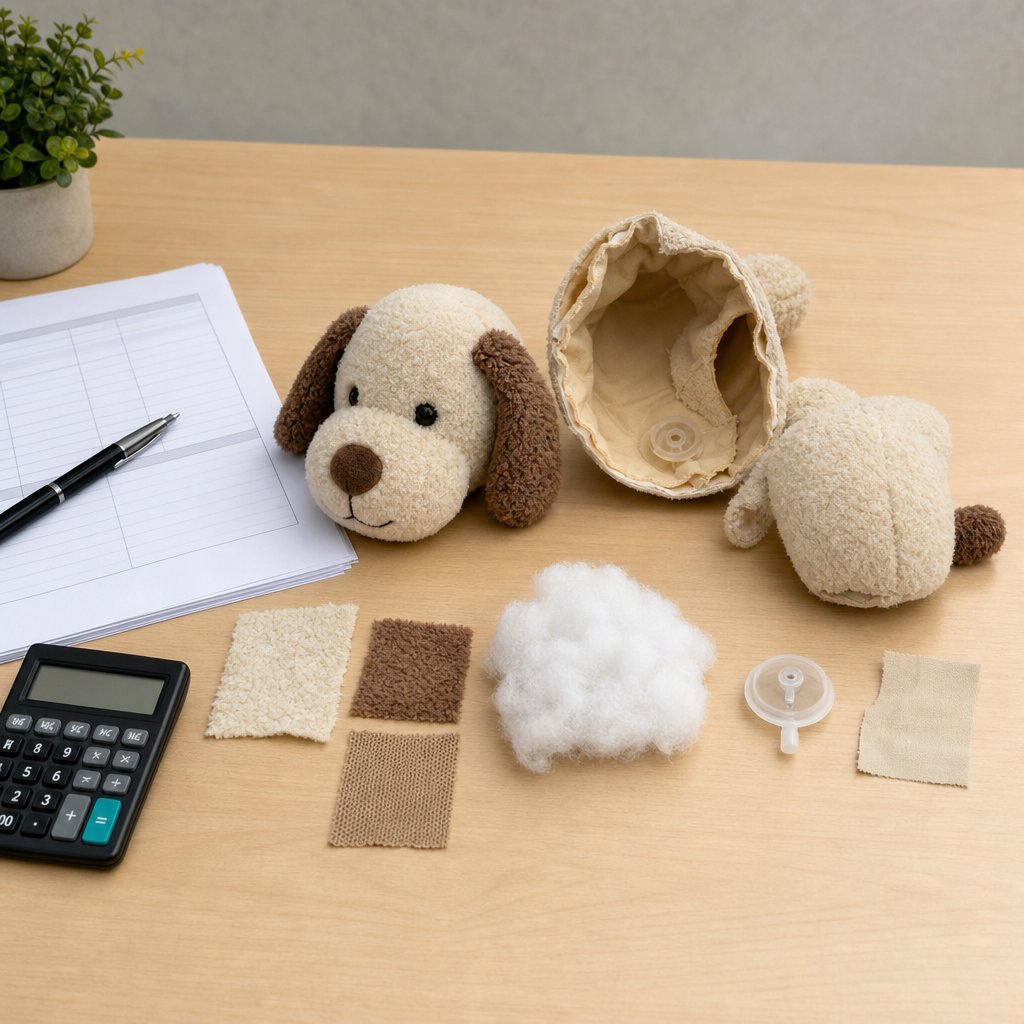
- A plush toy quote is a summary, not an answer: five cost blocks sit under it, and each block hides its own negotiation.
- Fabric and fill dominate the material block; grammage and fill density explain most gaps between identical-looking toys.
- Labor's share rises with construction: embroidery, multiple fabrics and hand shaping add minutes faster than buyers expect.
- Compare quotes by decomposition — same size, same grammage, same packaging scope — or the cheapest number wins by being thinnest.
- A quote far below the field usually has an explanation: recycled fill, lighter fabric, a smaller build or a squeaker you would not approve.
Ask three suppliers to quote the same plush dog toy and you will probably receive three numbers spread across a third. None of them is lying. Each number compresses dozens of decisions — fabric grammage, fill density, squeaker grade, stitch count, packaging scope, margin — into a single figure. Negotiating that figure without decomposing it is how buyers end up owning the toy they did not order.
This article dissects a mid-tier plush dog toy FOB quote into its working blocks, explains where the real price gaps come from, and gives you the questions that get a breakdown without insulting the person who wrote the quote.
The Quote Is a Summary, Not an Answer
A FOB number is a conclusion. Like all conclusions, it is only as good as the reasoning underneath — and unlike most conclusions, it will be renegotiated. The buyers who negotiate best are not the ones who push hardest on the total; they are the ones who know which block should move and which block, if it moves, will cost them quality.
Two truths frame everything that follows. First, materials dominate: fabric, fill and hardware are the largest block in almost every plush build. Second, labor is not cheap in soft toys, whatever the category's reputation — minutes per unit accumulate quietly through sewing, turning, stuffing and shaping, and complexity raises them faster than unit price suggests.
The Five Blocks Inside a Plush FOB Quote
Structures differ slightly by factory, but the anatomy below covers what a professional quote should decompose into. Treat the shares as orientation for a typical mid-tier plush dog toy, not as constants — every construction redistributes them.
| Cost block | What sits inside | What moves it | Indicative share* |
|---|---|---|---|
| Materials | Fabric, fill, squeaker, thread, trims | Fabric grammage, fill weight, squeaker grade | 40–55% |
| Direct labor | Cutting, sewing, turning, stuffing, shaping, trimming | Construction complexity, embroidery, hand work | 15–25% |
| Packaging | Polybag, hangtag or header card, carton | Packaging style and printing process | 8–15% |
| Overhead and management | Supervision, QC, utilities, depreciation | Factory scale, certification burden | 8–12% |
| Margin | Factory profit on the order | Order size, season, relationship | 10–20% |
*Indicative ranges for orientation only; actual shares shift with size, materials and quantity. Note what the table implies about negotiation: pushing on margin alone attacks perhaps a tenth of the price, while a grammage decision silently moves half of it.
Where Price Gaps Actually Come From
Two toys can share a product photo and differ by a third in cost. The usual suspects, in order of impact:
- Fabric grammage. The same velour is woven in a range of weights; the lighter one looks identical in a photograph and wears out twice as fast under a determined chewer.
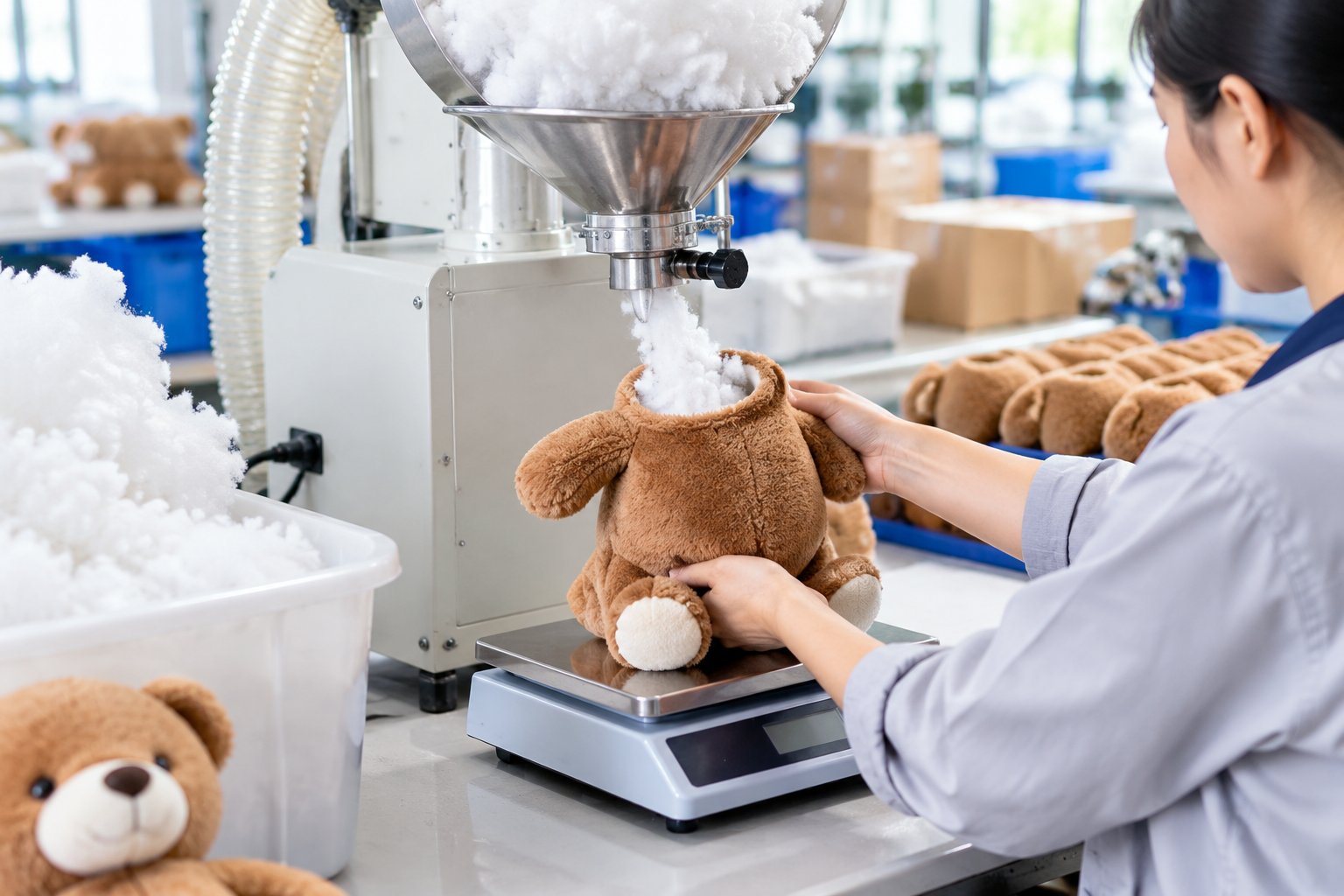
- Fill density. Fill is priced by weight; a lighter-stuffed toy is softer to squeeze and cheaper to build — and sags into a rag after a month of play.
- Squeaker grade. Units differ in loudness, durability and attachment hardware. The bottom of the range is quiet, short-lived, and lightly fixed into the seam.
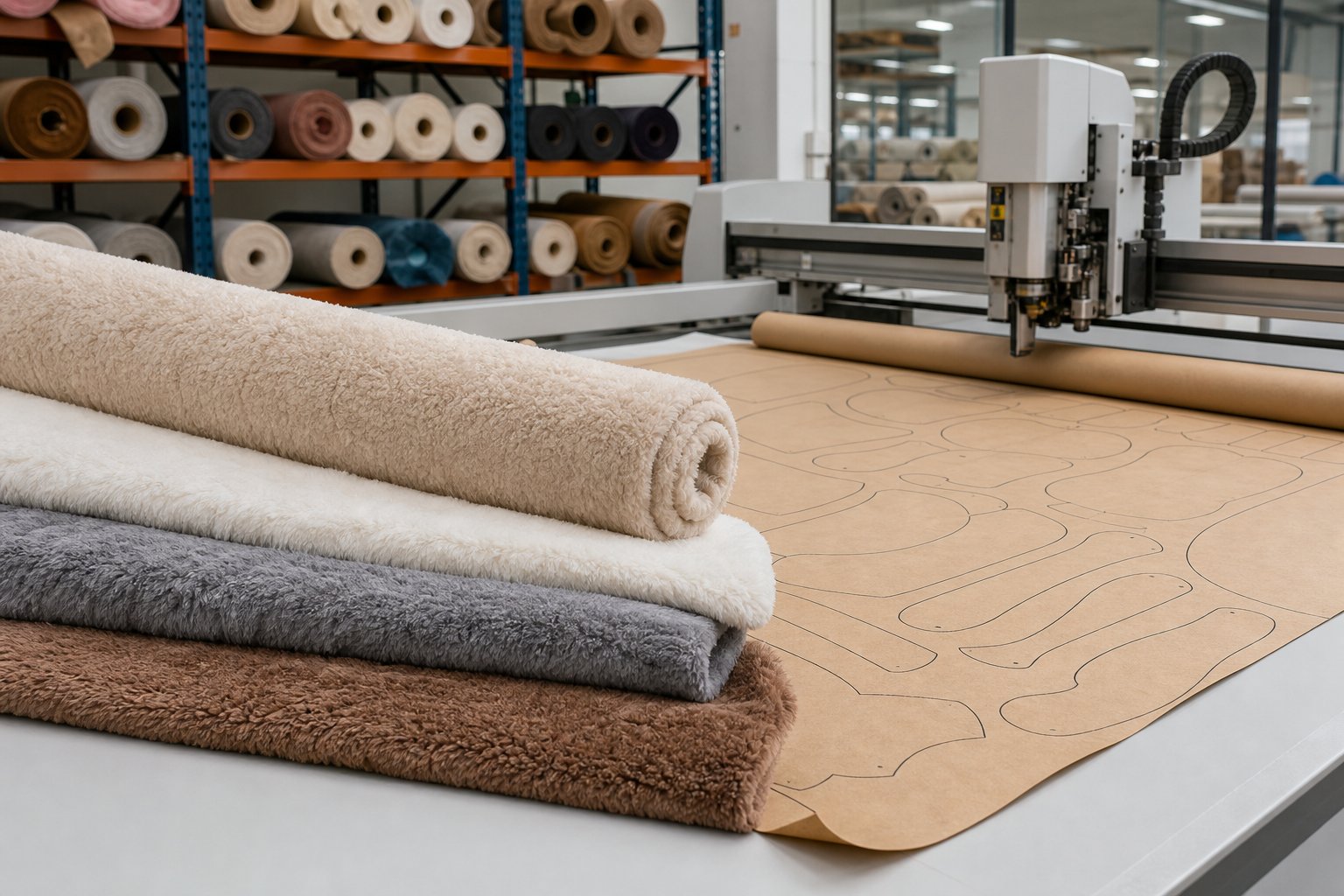
- Pattern complexity. Every additional pattern piece adds cutting, sewing and turning minutes. Ten pieces versus six is a real labor gap on any volume.
- Decoration choices. Embroidery, printed fabric and appliqué each carry different machine times and setup costs, which is why "the same design" quotes differently with the eyes swapped from stitched to plastic.
How to Ask for a Breakdown Without Insulting Anyone
Factories guard their margin; that is fair. The professional move is to ask for structure, not for their profit. The phrasing that works: "To compare offers fairly, we use a standard cost structure — materials, direct labor, packaging, factory overhead. Could you fill in the first four on your quote? We leave margin to you."
Pair the request with the spec basis, in writing: finished size, fabric type and grammage, fill weight, squeaker specification, decoration method, and packaging scope. A quote that arrives with those fields filled is a quote the factory expects to be held to — which is exactly the supplier you want. Our OEM and ODM process page lists the spec fields we quote against for custom work.
The Standard Comparison Traps
Even with breakdowns in hand, four traps distort most comparisons. Scope mismatch comes first: one quote includes hangtags and printed polybags, the other counts a plain bag — a difference worth more than the "discount" one supplier is advertising. Size drift is second: twelve and fifteen centimeters are routinely confused across languages and sample photos. Third is trade-term blur, where EXW and FOB figures sit side by side in the same spreadsheet. Fourth, and most expensive, is sample-versus-production divergence: the quoted build is the sample you approved, not the build that would ship at your price. Each trap is closed the same way — one spec sheet, signed, that every quote must answer to.
When the Low Quote Is a Signal
Not every cheap quote is a trick, but every quote far below the field has a mechanism. The common ones: recycled fabric or fill that smells and sheds, thinner squeakers, a smaller finished size hidden in a scaled photo, skipped processes such as pile brushing or double stitching, and packaging quoted as "standard" without print. None of these shows on the quotation; all of them show in reviews and returns within a season.
The test is mechanical rather than rhetorical. Ask for grammage and fill weight in writing, then weigh and measure the production sample against the golden sample before the container books. Grammage checks, fill-weight sampling and a cut test on one unit cost an afternoon; they are the cheapest insurance the category sells. For what those checks cost when skipped, our article on the full cost of a bad batch runs the arithmetic.
Price is one axis of the buy; quantity is the other, and they interact more than most buyers model. The quantity side of the equation — how minimums shape unit price and cash — is laid out in the real math behind MOQ.
Frequently Asked Questions
Why do identical-looking plush toys get such different quotes?
What share of the FOB price is labor?
How do I compare two quotes fairly?
Should I worry if one quote is far below the others?
Want a quote you can actually read?
Send your toy's size, target quantity and market — we will return a decomposed FOB structure with the spec basis stated line by line.