Key Takeaways
- MOQ is arithmetic, not stubbornness: setup costs do not shrink with quantity, so small runs carry them on fewer units.
- Three drivers set the floor: fabric dye lots, trims and label minimums, and changeover time on the line.
- Unit price steps down in tiers, not smoothly; the largest drop usually sits in the first doubling of volume.
- Cash and forecast risk rise faster than unit savings beyond a point — the cheapest unit price is rarely the cheapest decision.
- Structured tiers — stock private label, OEM, ODM — let buyers step up deliberately instead of over-ordering for a price break.
Every buyer has heard the sentence: minimum order, 1,000 pieces. It lands like a toll booth on the road to a new SKU. The common responses — push back, walk away, or hold your nose and over-order — all treat the number as a mood. It is not. MOQ is arithmetic, and once you see the arithmetic, you can negotiate the variables instead of the vibe.
This article opens the math for one toy SKU across two quantities — 500 units and 5,000 units — explains where the price actually moves, and ends with a procedure for deciding how many units your cash should really carry.
The Setup Costs That Do Not Shrink
Before a single sellable unit exists, an order consumes fixed effort and materials. These costs are roughly the same whether the order is 500 pieces or 5,000 — which is the whole story of MOQ in one sentence.
| Setup block | What it costs the factory | Why small orders feel it hardest |
|---|---|---|
| Changeover | Line stops, re-tooling, first-article checks | The same fixed effort spreads over fewer units |
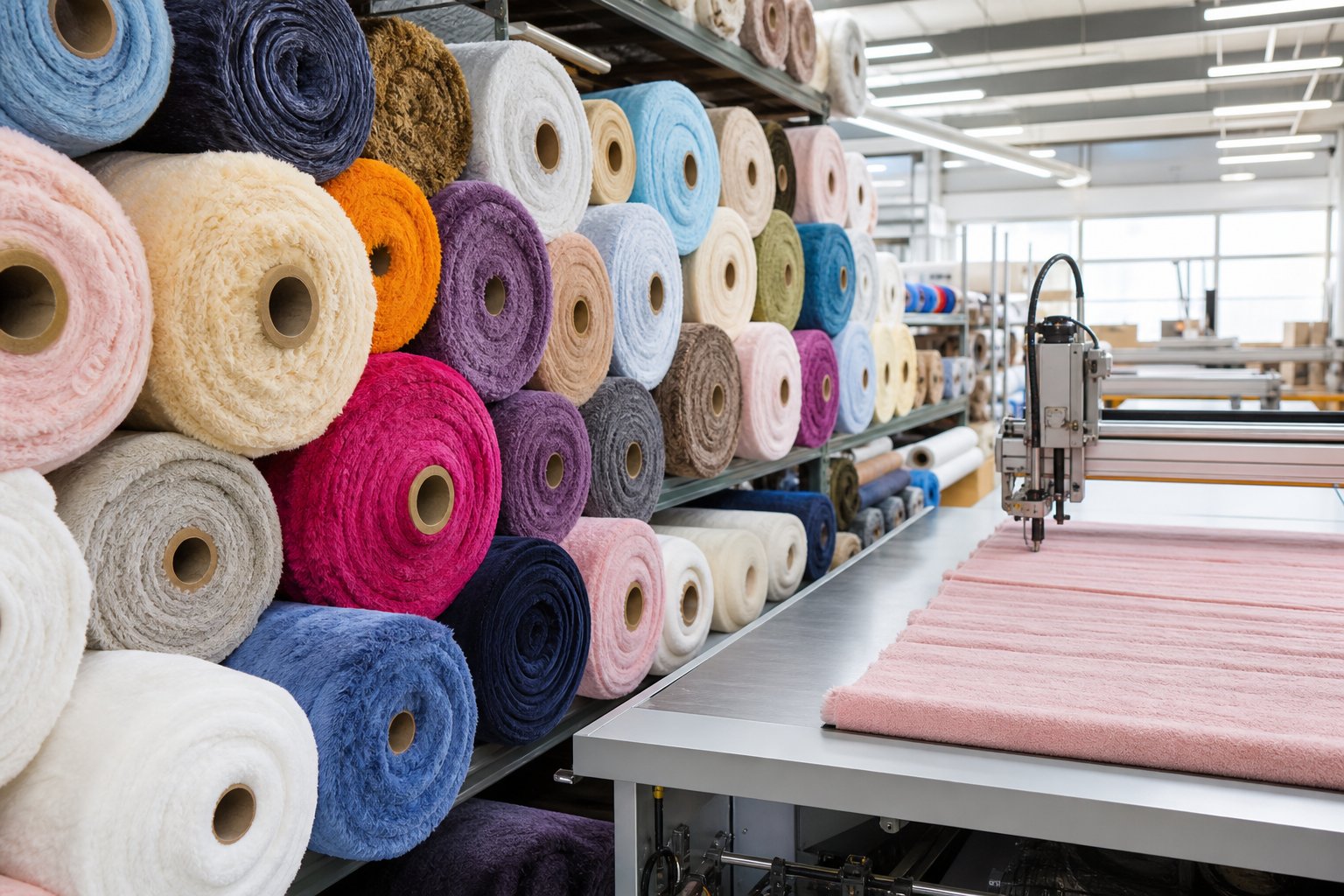
| Fabric | Dye lot and roll minimums at the mill | Leftover custom-dyed fabric has no next home |
| Trims and labels | Plate fees and minimum print runs | A plate fee per unit explodes below a threshold |
| Packaging | Carton and print minimums | Boxes are bought in thousands either way |
| QC and admin | Sampling plans, documents, booking | Roughly fixed per order regardless of size |
Notice that two of the five blocks live outside the factory — the mill and the print shop set their own minimums, which the factory simply passes through. That is why some MOQs refuse to move no matter how charming you are on the call: the factory itself may be flexible while its suppliers are not. Soften a constraint on any one block and the minimum falls with it — that is the whole art of "negotiating MOQ" done properly. And sequence matters: relaxing constraints before counting units saves more time than pushing units and being bounced back by material minimums.
Where the Price Actually Moves
Unit price does not glide down as quantity rises; it steps. The steps sit where a constraint releases: a dye lot that finally divides evenly, a print run that amortizes, a line that no longer stops between sub-batches. In practice, the steepest drop between 500 and 5,000 pieces lands in the first doubling or two — the move from 500 to 1,000 typically buys more per-unit relief than the move from 2,000 to 5,000.
Two mechanical effects drive the middle of the curve. Fabric utilization improves with volume because markers can be planned across more lays instead of working around short remnants. Line balancing improves because longer runs amortize the awkward first and last pieces of every operation. Neither effect is mysterious; both simply need units to spread across.
A Tiered Way to Buy, Not a Single Number
The healthiest supply relationships replace "the MOQ" with a ladder that matches order size to commitment. Our own structure works this way:
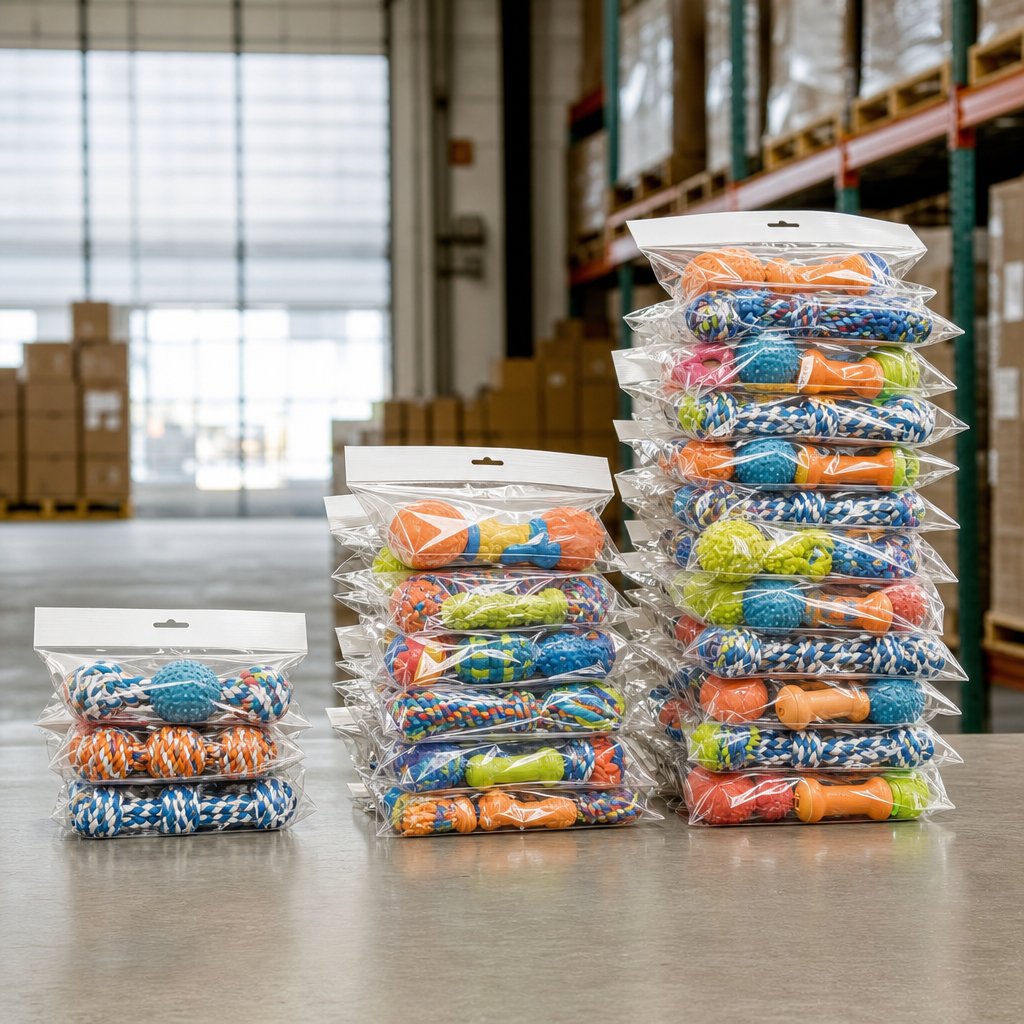
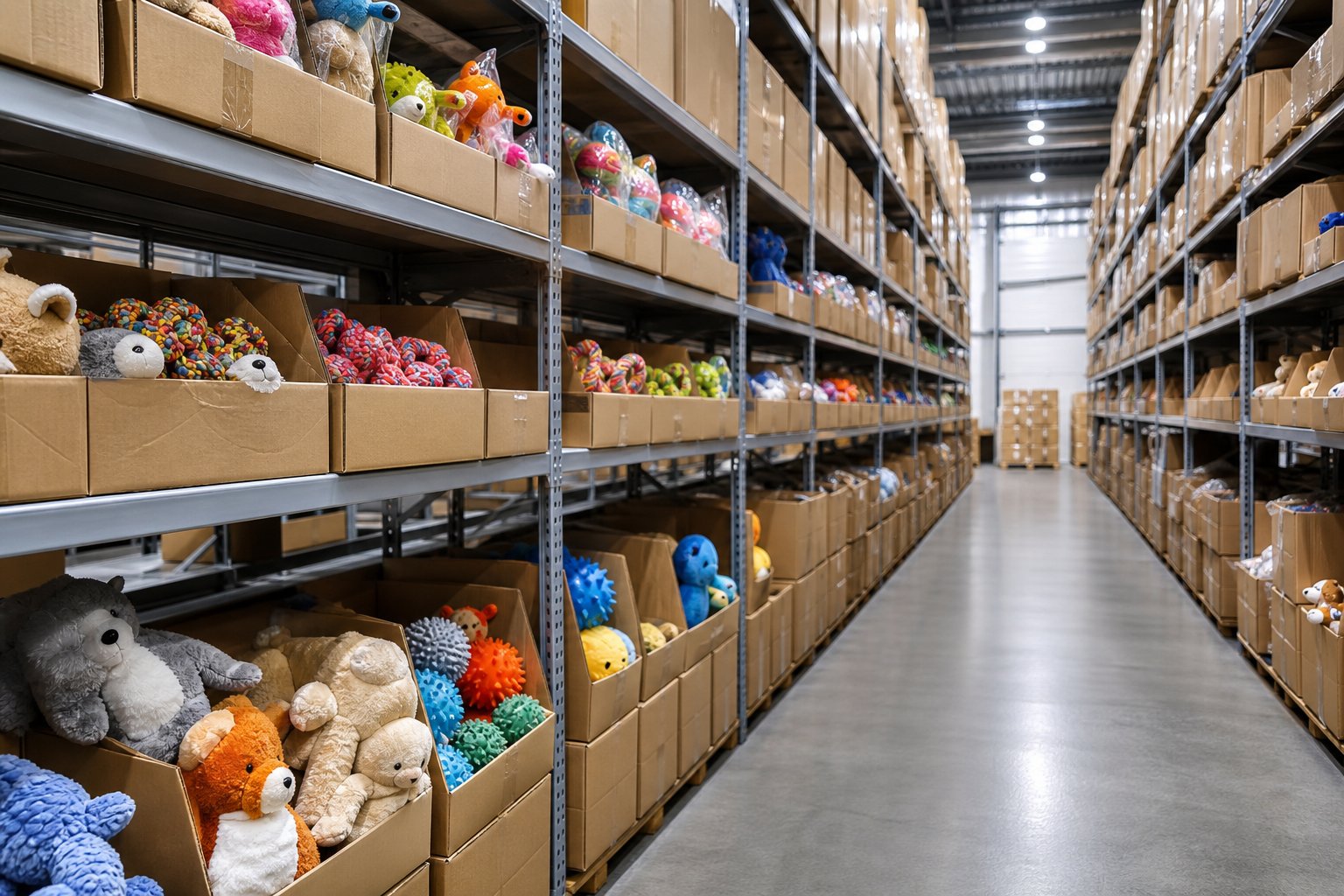
- Stock private label — 200 units per design (600 mixed across designs): existing molds and materials, relabeled and repacked, shipping in 5–10 days from our consolidation center. Built for testing designs and feeding dropship programs.
- OEM customization — 1,000 units per SKU: your colors, labels and packaging on proven structures, with 25–35 days production including inspection.
- ODM with new tooling — 3,000 units per SKU: new molds and structures, first order in 45–60 days, priced for differentiation rather than speed.
The ladder matters because it lets each quantity tier price its own risk. A 200-unit stock run borrows existing materials and carries almost no setup; a 3,000-unit ODM run pays for tooling and demands a design you are sure of. Lumping all three under one "MOQ" number is how buyers end up over-committing to unproven designs.
The Hidden Costs on Both Ends
Small orders carry visible unit prices and invisible placement risk: short runs get scheduled at line ends, between bigger jobs, sometimes on training crews — the dynamics covered in our operator-skill piece — so the defect rate you measure may belong to the schedule, not the supplier. They also pay proportionally more for setup, and they wait longer per unit.
Large orders carry different hidden costs. Cash locks up from deposit to sell-through. Storage and handling accrue. Forecast error stops being theoretical: a design that misses costs ten times as much at 5,000 units as at 500. And a large first buy forfeits the cheapest information available in this category — what the market actually does with the design. Every month of tied-up cash has a price in financing, space and missed pivots, which is why the break-even is rarely where the unit price bottoms out.
Deciding the Order Size: A Simple Procedure
Five steps turn MOQ from a standoff into a decision:
- Start from a forecast you can defend — last season's data, marketplace search volume, or a bounded test budget — not from the discount table.
- Match the tier to the proof: unproven designs buy at stock or small OEM tiers; proven designs earn the deeper quantity breaks.
- Price the total, not the unit: add carrying cost, storage and obsolescence risk to the larger order before comparing it with the smaller one.
- Check component minimums before promising dates — fabric dye lots and print runs, not the factory, set the true floor.
- Keep a fast top-up path: a stock tier or dropship arrangement that can refill a winner while the next bulk run produces.
That last step is where the 500-versus-5,000 question usually dissolves: the right answer is often 1,000 now with a reserved fast-refill lane, rather than either pole. The economics of running both models side by side are compared in dropshipping versus bulk import.
And when you do compare the quotes at each tier, keep the decomposition discipline from the FOB price anatomy — quantity changes the price; it should never quietly change the spec. For the tier structure itself, see our dropship and stock program.
Frequently Asked Questions
Why does the unit price drop so sharply from 500 to 5,000 pieces?
Can MOQ be negotiated down?
Can I mix designs to reach a minimum order?
When is it worth jumping to a higher quantity tier?
Testing a design before you commit 5,000 units?
Send your SKU list — we will map it to stock, OEM and ODM tiers with FOB ranges and refill paths for each.