
Key Takeaways
- Odor is the return reason that never appears in a defect catalog — and the one that most reliably shows up as one-star reviews that begin with "when I opened the box."
- Sensory judgment only becomes enforceable when it is structured: same panel, same reference sample, same three readings, same written scale, every batch.
- The three-reading method — unboxed, rubbed, blocked — catches the three ways odor reaches a customer: in the box, in the hand, and after a week sealed in packaging.
- A five-point grade scale with a disposition per grade turns "it smells" into an actionable inspection result.
- Odor control is ultimately a materials decision — recycled content and process oils — so pair the sensory protocol with raw-material clauses and PAH test backing for recycled rubber.
The most expensive smell in the pet business is the one you discover at the same moment your customer does. Rubber and TPR toys ship sealed in polybags and cartons for weeks; whatever the compound gives off concentrates in that packaging. Usually the result is a faint rubbery note buyers accept. Sometimes — recycled content high, process oil cheap, curing residue lingering — it is a return rate no defect catalog predicted, because "smells like tires" is not a defect anyone wrote down. This article lays out a sensory protocol that makes odor inspectable at batch level: who smells, how, against what reference, and what happens to a batch that fails.
Why Odor Needs a Protocol, Not an Opinion
Left unstructured, odor inspection fails for three boring reasons. First, subjectivity: "noticeable" to one inspector is invisible to another, especially one who spent the morning on the molding floor. Second, adaptation: a nose exposed to a smell for ten minutes stops reporting it, which is why factory staff genuinely cannot smell what your customer can. Third, batch drift: compounds change with recycled feedstock and supplier lots, so a sample you approved in March says nothing about a batch produced in July.
A protocol fixes all three the way sensory labs do — trained panel, sealed reference, fixed method, written record. None of it requires a laboratory. It requires agreement that the judgment is a measurement, taken the same way every time.
The Three-Reading Method
One sniff is not a reading. Odor reaches the customer through three different routes, and each has its own check:
| Reading | How it is taken | What it simulates | What it catches |
|---|---|---|---|
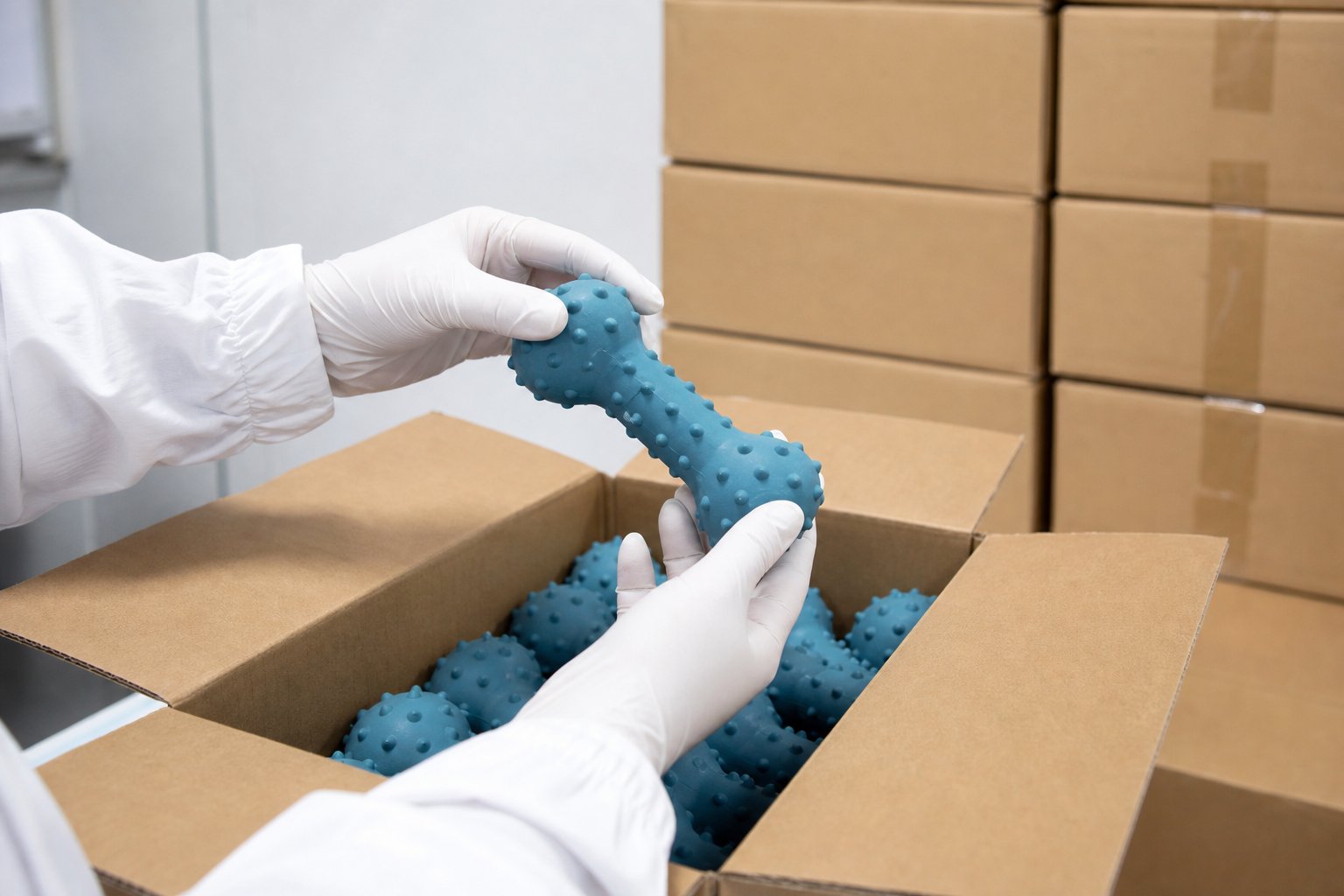
| Unboxed | Carton opened, toy lifted out, judged within seconds | The customer opening the package | Volatile compounds accumulated in the box |
| Rubbed | Surface kneaded firmly for several seconds, then judged at close range | A dog working the toy, a owner washing it | Oils and additives rising to the surface |
| Blocked | Toy sealed in a bag for 24 hours, then opened and judged | Weeks in retail packaging | Slow outgassing the quick check misses |
The blocked reading saves you. A toy can pass the unboxed check on the factory floor and still build noticeable odor after three weeks sealed in a polybag on a summer pallet. If the protocol has budget for one elaboration, spend it on the 24-hour bag.
A Five-Point Scale You Can Enforce
The scale below is the working pattern in low-odor production programs. Its value is not precision — every grade maps to a disposition, so the inspection ends in a decision rather than an argument:
- Grade 0 — none. No perceptible odor beyond the reference sample itself. Ships without comment.
- Grade 1 — faint. A light rubbery note, comparable to the sealed golden sample. Normal for the category; ships.
- Grade 2 — noticeable. Clearly perceptible at arm's length. Batch is aired in a ventilated area for 24–72 hours and rechecked; ships only if it returns to grade 1.
- Grade 3 — strong. Perceptible before the carton is fully open. Batch isolated, root-cause review on the compound and process, re-inspection before any release.
- Grade 4 — chemical or off-odor. Solvent-like, sour or unfamiliar smell. Shipment holds; this grade signals a material change that needs investigation, not fresh air.
Two panel rules keep the scale honest. The sealed golden sample must sit beside every reading — memory is not a reference — and any grade 2 or higher finding is confirmed by a second inspector before it becomes a batch disposition.
Panel, Room, Records
The hardware of a sensory protocol is almost embarrassingly small. A panel of two to three trained people, rotated so no single nose owns the judgment; inspectors free of colds, perfume and the molding floor's adaptation; a neutral, ventilated room away from the production lines; sealed reference samples; and a one-line record per batch: date, batch number, raw-material lot, three readings, grades, disposition, inspector initials.
The record is where the protocol pays. Three grade-2 findings across four months, all on batches using the same regrind lot, are a supplier conversation waiting to happen — but only if the lot numbers were written down. Trend review is a five-minute monthly habit that turns scattered readings into a supply-chain signal.
When a Batch Fails: Disposition Paths
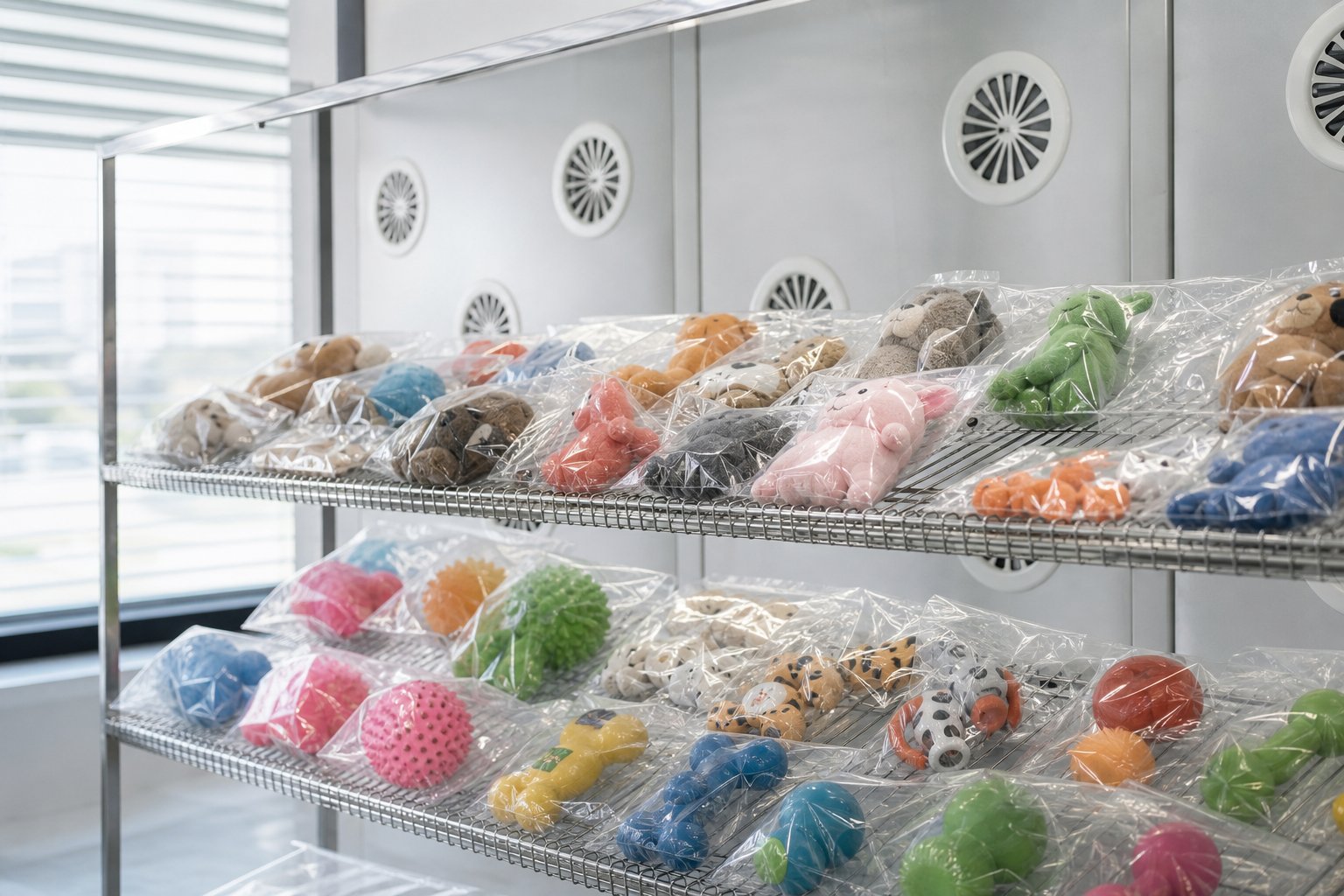
Grades 2 and 3 are usually recoverable. Airing in a ventilated space for one to three days removes most volatile residue from TPR and rubber surfaces; recheck against the golden sample decides release. Grade 3 additionally calls for a root-cause review — usual suspects: recycled content, process oil, curing residue — before the next run starts, not after it fails too. Grade 4 is different: it means the compound itself changed, and the batch should not be rescued with scent. Masking fragrances create their own exposure questions, disguise the root cause, and simply reschedule the complaint to the review section of your listing.
Buyers sometimes ask whether failed batches can be "released with consent." Grade 2 can be, after successful airing. At grade 3 or above the professional answer is no — and a supplier's offer to re-run and re-inspect at its own cost says more about the factory than any audit certificate.
Writing It into the Order
A protocol that lives in a blog post protects nobody. Four clauses put it to work, none heavier than a paragraph: the sealed golden sample is the odor reference for the batch; every batch passes the three-reading method at final inspection; grades and dispositions follow the five-point scale above, with odor listed in the AQL defect catalog (Critical 0 / Major 2.5 / Minor 4.0 is the consumer norm); and records carry batch and raw-material lot numbers, available on request. For the background on why compounds smell in the first place, see our breakdown of odor control in rubber and TPR production; for how the reference sample itself is sealed and signed, see the guide to golden samples. Our own inspection criteria are published on the quality page — including the odor protocol described here.
Frequently Asked Questions
What does a batch-level odor inspection involve?
What grading scale works for pet toy odor?
Can a strong-smelling batch be saved?
How do I write odor into an inspection standard?
Shipping rubber or TPR toys and want odor off your review section?
Send your category mix — we reply with the low-odor options, FOB ranges and the batch sensory protocol we run as standard.