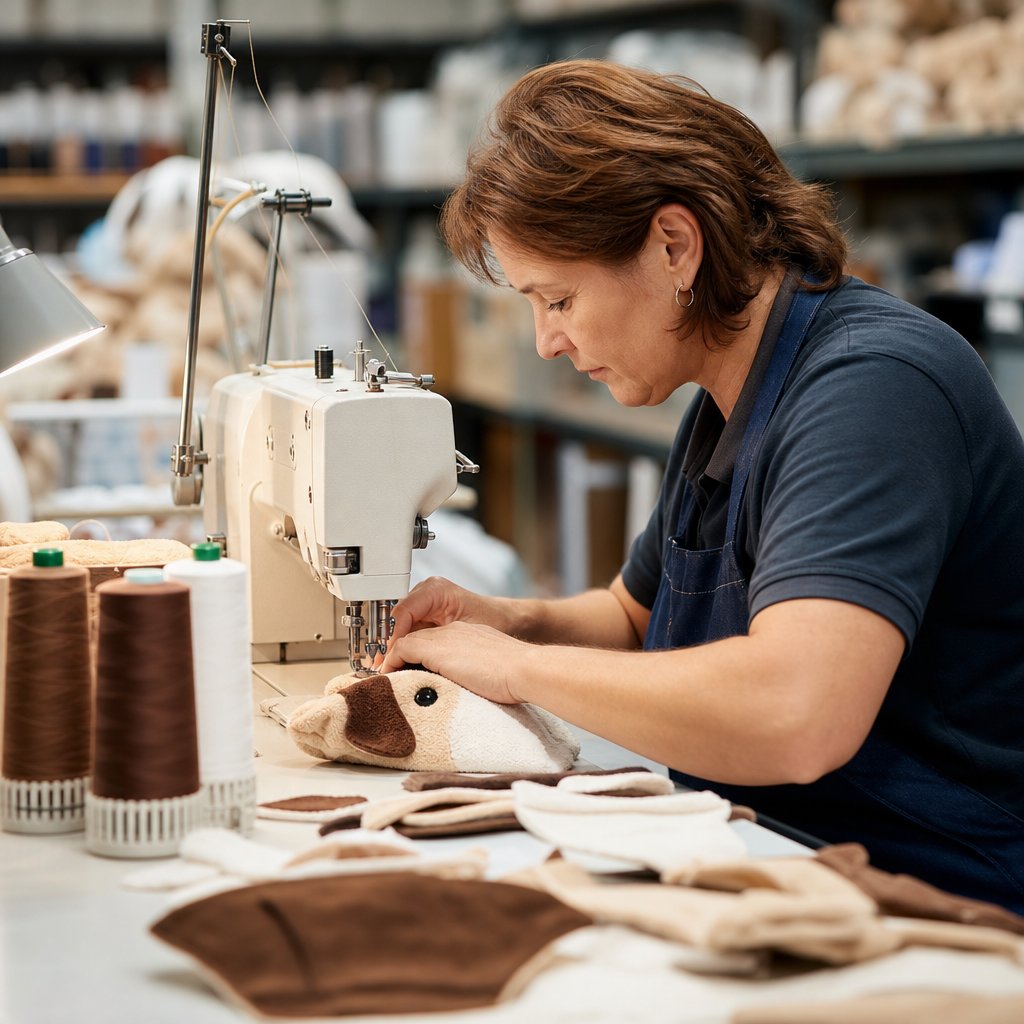
Key Takeaways
- In plush pet toys, operator skill is a production variable, not a soft factor: the same SKU can run far higher defect rates on a trainee line than on a senior crew.
- Defects cluster by station — open seams trace to sewing, lumpy fill to stuffing, twisted faces to shaping — so audit by workstation, not only at final inspection.
- Ask for crew structure and average tenure; a machine list tells you capacity, not consistency.
- You can request a skilled line for your order — it costs nothing, but it only works if the request is written into the order confirmation.
- Peak seasons reshuffle crews; build a staffing clause, first-article re-checks and schedule buffer into Q4 and pre-CNY orders.
Every plush buyer eventually meets the same puzzle. Two orders of the same toy, from the same factory, in the same fabric lot, run on the same machines. One shipment sails through inspection; the other arrives with open seams, lumpy bellies and eyes that look in different directions. The variable that explains most of the gap is rarely the price paid or the factory's brochure — it is who was sitting at the machines, and how long they had been sitting there.
Soft toy production looks automated from the outside. In reality, between the cutting table and the carton, a plush dog toy passes through more hands than almost any other product in the pet category. Cutting has been mechanized for years and stuffing is heading that way, but turning, seam finishing, feature alignment and final shaping remain hand skills with learning curves measured in months. This article maps where skill enters the product, what it does to defect rates, and how to write it into an order so that reorder number ten matches order number one.
Where the Skill Sits on the Line
Walk a plush line in production order and the skill profile is uneven. Cutting is the least sensitive station once dies and markers are set — a machine result. Sewing is the hinge: the operator sets thread tension per fabric batch, holds a consistent seam allowance through corners, and decides whether a curve sews smooth or waves. Turning is where overstretched seams tear. Stuffing decides whether every unit weighs and feels the same. Shaping and eye work decide whether the toy looks like the sample or like its cheaper cousin. Each of these is a person, not a machine setting.
| Station | Skill-linked defects | What senior hands do differently | Check to request |
|---|---|---|---|
| Sewing | Open seams, skipped stitches, wavy edges | Set tension per fabric batch; hold seam allowance through corners | First-article check when the line starts |
| Turning | Stretched seams, torn limbs | Turn with steady pressure and re-form seams by hand | Spot-check at inline inspection |
| Stuffing | Lumpy fill, weight drift between units | Keep fill density even; weigh by feel against a reference | Weight sampling per batch |
| Shaping and eye work | Crooked features, loose embroidery | Align features to a jig; brush pile uniformly | Symmetry check against the golden sample |
| Packing | Wrong labels, missing polybag warnings | Check the label kit against the order sheet | End-line label audit |
The practical consequence: a final inspection alone tells you that something went wrong, but a station-level view tells you where and often why. Buyers who record defects by station see patterns build weeks before they would surface as a rejected shipment.
New Factory, Old Factory: Reading the Crew Structure
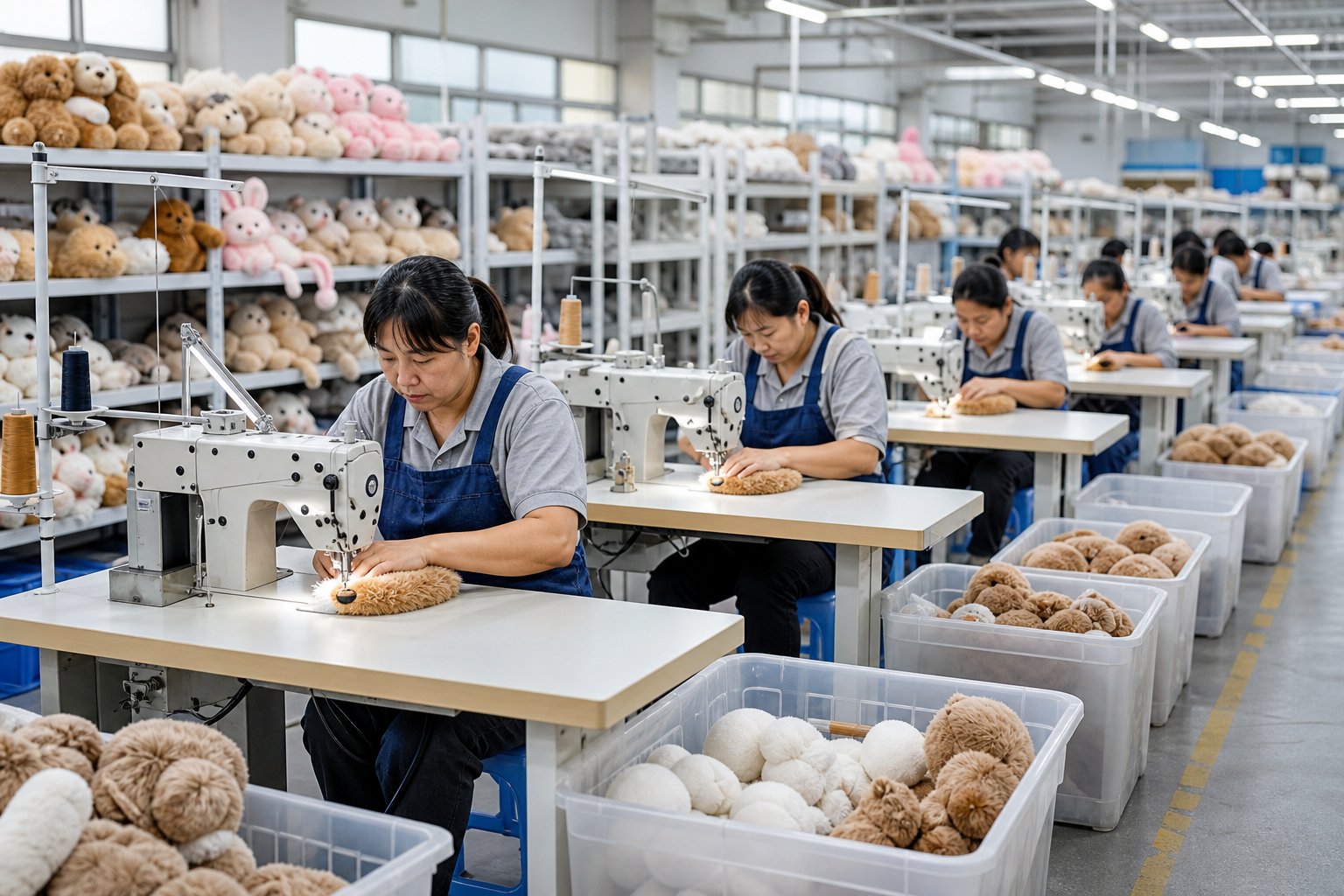
The age of a factory predicts less about quality than the age of its crews. Older plants often carry veterans with ten or more years on the same operations — low variance, but sometimes dated machines and a stubborn "we have always done it this way." Newer plants run digital cutters and modern equipment, but their crews are greener and the spread between their best and worst lines is wider. Neither profile is better; they fail differently.
The questions that matter are numeric. How many sewing lines does the plant run? What is the average tenure of senior operators? Where do QC inspectors come from — ex-operators are usually a good sign, because they know what a bad seam feels like before it fails? And how are new hires trained: paired with a senior hand for weeks, or dropped onto a line? A factory that can answer these in minutes usually manages its crews; a factory that answers in adjectives usually does not.
Can You Actually Request a Skilled Line?
Yes — and the request costs the factory nothing beyond scheduling attention. Large buyers get the best lines by default; everyone else gets what is left unless they ask. The mechanism is simple: name the requirement in the purchase order ("production on a senior line, first-article sign-off required"), confirm the line in the order confirmation, and require a first-article check when the line starts. A request made only in chat messages is a request that evaporates by production week.
Small orders deserve special attention here. Short runs tend to be scheduled at line ends, between bigger jobs, or on training lines — the same dynamics covered in our piece on keeping QC intact on small private label runs. If your 300-piece trial order runs on a trainee line, the trial measures the wrong thing.
Peak-Season Turnover and Quality Waves
Crews are not static, and the calendar moves them. Before Chinese New Year, experienced workers leave weeks early; production continues with whoever remains. After the holiday, return is partial and staggered. In Q4, overtime stacks fatigue onto the same hands. The result is a predictable quality wave, and buyers who ignore it blame the factory for problems the calendar created.
The countermeasures are timing and clauses, not heroics. Move pre-production samples earlier so approval does not collide with departure season. Densify inline checks in the weeks when turnover peaks. And add a staffing clause to the order: a material change in the crew assigned to your SKU triggers notification and a first-article re-check. Factories that run disciplined programs accept this language; the ones that resist are telling you how their lines actually work.
An Order Checklist That Prices Skill In
Skill is not a line item on any quotation, which is exactly why it has to be handled structurally. Six actions cover most of the exposure:
- Ask for crew structure in numbers: sewing lines, average tenure of senior operators, and the QC team's background.
- Name your line in the purchase order and confirm it in the order confirmation, not in chat.
- Require a first-article check at line start and after any crew change, signed against the golden sample.
- Add inline inspection at roughly one-third completion, weighted toward sewing and stuffing stations.
- Record defects by station in the inspection report so trends are visible instead of averaged away.
- Keep the golden sample at the line, not only in the QC office — the reference has to live where the hands are.
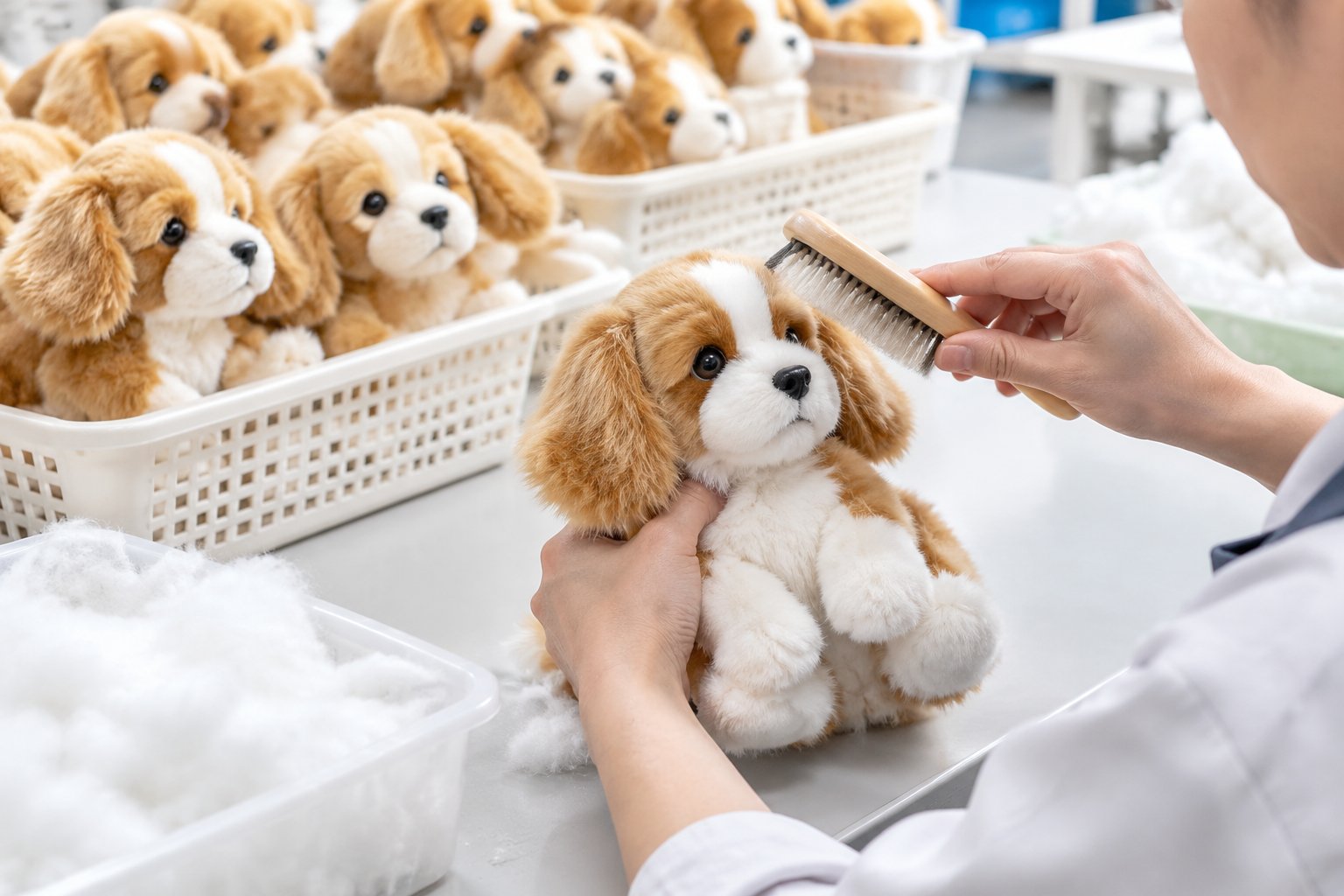
Station-level thinking is what separates an audit from a factory tour. It pairs naturally with a defect catalog — our article on twelve common plush toy defects maps symptoms to stations. For the standards we hold our own lines to, see the quality and testing page.
Frequently Asked Questions
Can a buyer really request experienced operators for their order?
Doesn't automation remove the operator variable?
How can I judge crew stability before ordering?
What should I do when ordering before Chinese New Year or Q4 peaks?
Want the same quality on reorder ten as on order one?
Send your category and target quantity — we will reply with line options, QC checkpoints and FOB ranges for your program.