Key Takeaways
- No factory ruins a 500-piece order on purpose. It happens in the scheduling queue: small runs inherit the line's leftover time, leftover materials and newest operators.
- Five QC nodes survive every order size: golden sample sign-off, first-article check, needle detection, final AQL inspection and retained samples.
- What compresses on a small run is reporting overhead — not the checks themselves.
- Protect a small order with scheduled specifics in the PO: named line, named week, first-article photo within 24 hours, inspection arrangement agreed up front.
- Small does not mean low-stakes: the recall cost of a defective batch does not scale down with the invoice.
Every buyer has a small-order story, and they all sound the same: the reorder of the hero SKU came back slightly wrong — a shade off, a hangtag from last season, a seam the first batch never had — and the factory, genuinely puzzled, cannot find what changed. Nothing "changed." What happened is smaller and more systemic: the order was 500 pieces, and 500 pieces does not buy the same attention 5,000 does. The fix is not to feel betrayed; it is to understand exactly where small orders lose quality, and to hold the five or six checkpoints where that loss is actually preventable.
Why Small Orders Drift to the End of the Line
The drift has nothing to do with how much the factory likes you. It is scheduling arithmetic. A 500-piece run needs the same setup, the same changeover and roughly the same quality supervision per hour as a 5,000-piece run, while producing a tenth of the revenue — so it gets scheduled into the gaps: after the big run finishes, on the materials left over from the big run, with whoever is free on changeover day. Each of those gaps carries its own defect. Leftover fabric means a different dye lot, which means the reorder does not match the launch batch. Changeover-day crews skew junior, because seniors set up the next big run. End-of-line slots mean first-article checks get skipped, because the machine is needed elsewhere tomorrow morning.
Understanding the mechanism changes the conversation. The question is never "why is your quality bad" but "which gap did my order inherit" — and the answer is preventable in the purchase order.
The Five Nodes Worth Keeping on Any Run
Full QC on a small run is not about doing everything a container order does. It is about keeping the checkpoints where a small run's specific risks live, and shrinking the paperwork around them:
| QC node | Full-run practice | Small-run adaptation |
|---|---|---|
| Golden sample & first article | Signed golden sample; first-article approval at line start | Unchanged — plus a first-article photo within 24 hours of line start |
| In-process checks | Hourly line checks by QC | Two to three checkpoints across the run instead of hourly |
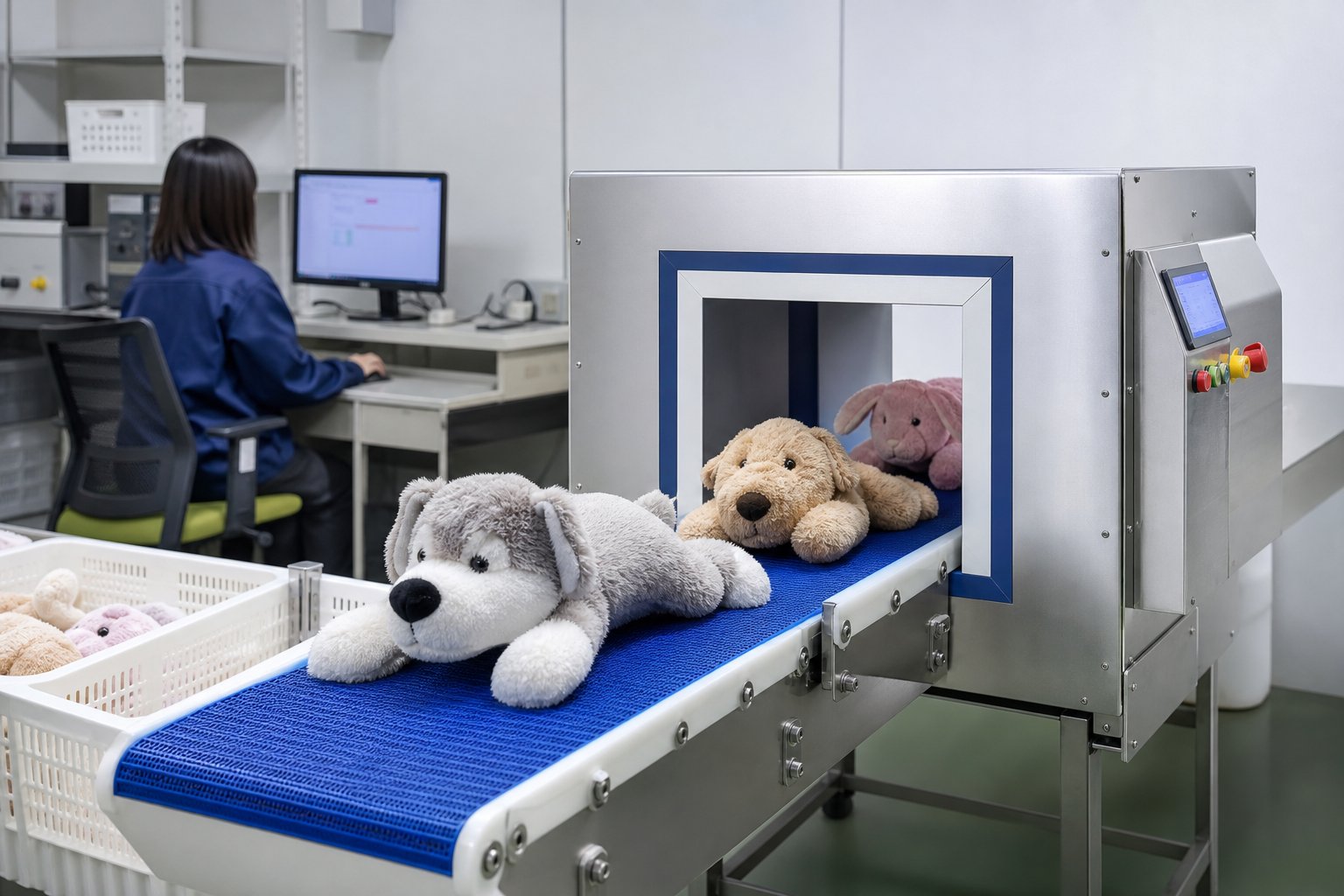
| Needle detection | 100% pass-through, logged by batch | Unchanged — never waived, log still required |
| Final inspection | AQL sampling, sometimes third-party | AQL sampling on the full packed lot; self-inspection plus a buyer spot check is the budget pattern |
| Retained samples | 3 pieces per batch, 24 months | Unchanged — the smallest order still leaves samples behind |
Read the middle column as the physics and the right column as the negotiation. The nodes do not shrink because the order did; the reporting does. A one-page inspection summary with photographs serves a 500-piece run perfectly well — what does not serve it is discovering the seam problem in the review section of your listing.
The Awkward Middle: Where 500-Piece Runs Sit
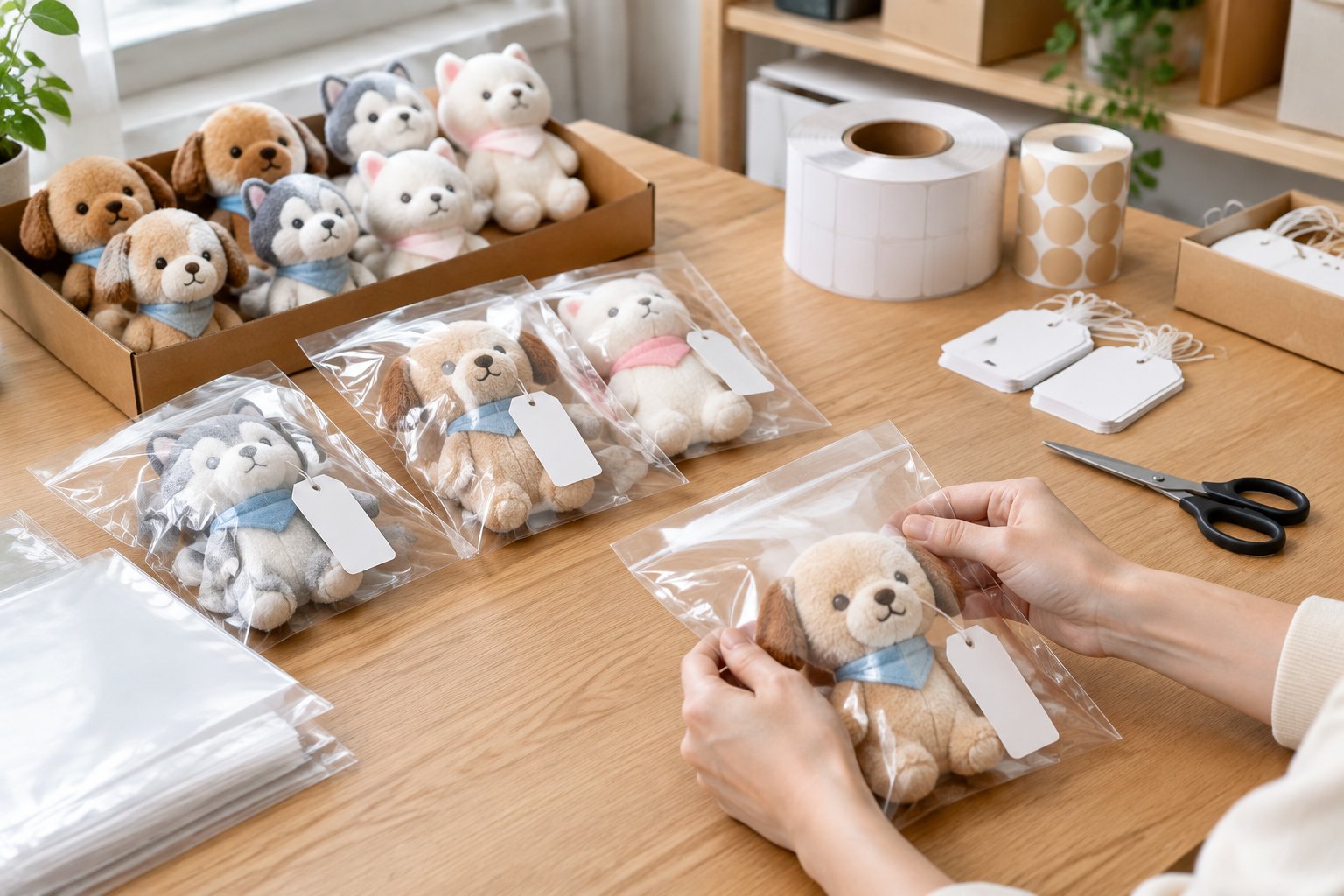
Position matters in a supplier's cost structure. Our own three-tier MOQ ladder makes the point concretely: stock private label starts at 200 pieces per SKU (600 mixed), OEM customization at 1,000, and ODM new-mold work at 3,000. A 500-piece private label run sits above the entry tier but below the standard OEM volume — the awkward middle where some factories improvise, stretching the order across a production line's spare hours. The professional alternative is structural, not motivational: put small runs on a process built for them. Stock-based private label programs exist precisely so that a 200-to-800-piece run follows a designed path — items already in stock, labeling and repacking as the value-add, dispatch in 5 to 10 days — instead of competing with a container order for line time. When you quote a small run, ask which path it takes: a designed small-run process, or the leftover hours of a big one. The answer predicts the quality better than any sample.
The Conversation That Protects Your Order
Everything above converts into four requests that take one email. First, the PO names the production line and the week — scheduling specificity is what the drift was avoiding. Second, you receive a first-article photo within 24 hours of the line starting, against the golden sample. Third, the inspection arrangement is agreed before production, not negotiated after: who inspects, when, against which AQL. Fourth, retained samples ship or stay per the standard — three pieces, 24 months — regardless of quantity. Factories that balk at these four are not objecting to the work; they are telling you the order was never scheduled, which is exactly the information you needed before the seam failed. Our own OEM/ODM customization program states these conditions on the page, because a process that only works for big buyers is a process with a gap in it.
The Small-Order Failure List
Audit any failed small run and the same suspects appear. Keep the list; it doubles as a pre-shipment checklist:
- Color drift from a leftover fabric lot — the reorder that does not match the launch photos.
- Skipped first article — the machine was set up from memory, not from the golden sample.
- Junior-operator seams — changeover-day crew, visible as uneven seam allowances.
- Old artwork hangtags — last season's version pulled from the label drawer.
- Short carton counts — small runs are re-counted least and shorted most often.
- Neighboring-SKU packaging — right toy, wrong spec sheet, because the polybag machine was already loaded.
Every item on the list is a scheduling failure wearing a quality costume — which is why the fix is always upstream, in the four requests above. For the defect catalog behind the seams, see our plush defects guide; for the sample discipline the first article depends on, see the golden sample guide.
Frequently Asked Questions
Why do small pet toy orders get worse quality than large ones?
Which QC steps can be skipped on a 500-piece run?
How do I get a factory to take a small order seriously?
What are the most common small-order quality failures?
Starting with a small run and want it treated like a real one?
Send your SKU list — we reply with the stock private-label path, its QC steps and FOB ranges from the 200-piece tier up.