Key Takeaways
- At small volumes, packaging behaves like tooling: plate fees and print minimums dominate, and unit prices fall in steps as quantity rises.
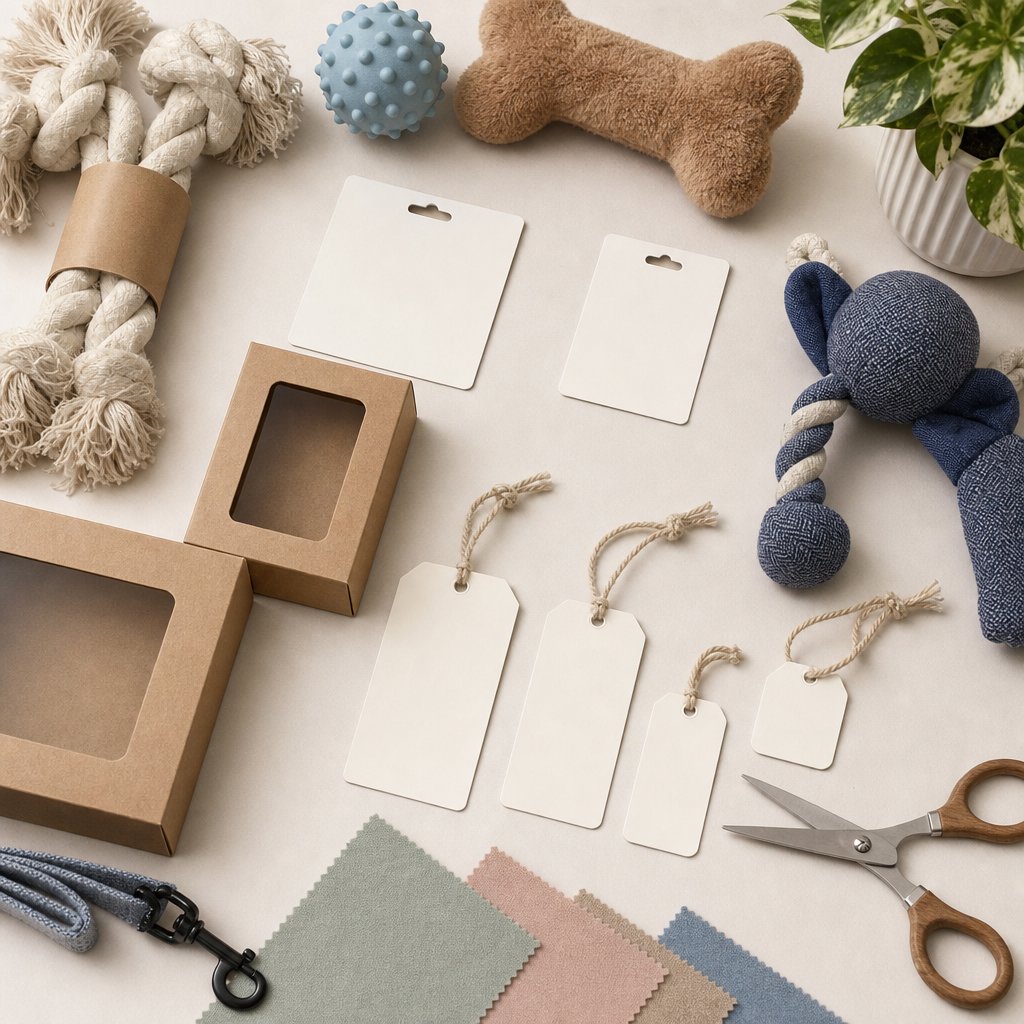
- Header card plus polybag is the cheapest retail-presentable format; window boxes lift shelf appeal and freight cube at the same time.
- A packaging revision costs plate re-makes and days of lead time — version artwork like a document, not like an opinion.
- Polybag warning text, barcode grade and label durability are QC items, not design details.
- A disciplined low-budget stack — hangtag or header card, printed polybag, strong master carton — covers most retail and marketplace needs.
Private label lives or dies on packaging, and packaging lives or dies on volume. The same hangtag that costs a coin at ten thousand units costs a small ransom at five hundred, because print economics are made of fixed costs — plates, setup, minimum runs — that refuse to shrink with your order. Buyers who model packaging at wholesale volumes are routinely shocked by their first 200-unit private label quote.
This article prices each packaging item, explains the minimum-order mechanics behind the numbers, and builds a low-budget stack that still reads as a brand on a shelf or a marketplace thumbnail.
The Packaging Bill, Item by Item
| Item | Indicative unit cost at small runs* | MOQ behavior | Lead-time effect |
|---|---|---|---|
| Hangtag | Cents, rising steeply below 1,000 pcs | Plate fee plus print minimum | First run adds days for plates |
| Header card + polybag | Lowest per-unit retail look | Digital option removes plates for small runs | Short; artwork approval is the gate |
| Printed polybag | Cents | Standard sizes stocked; prints need runs | Short if a standard size fits |
| Window box | Tens of cents | Highest minimums; adds a gluing step | Longest; also adds freight cube |
| Sticker or label | Lowest cost, weakest branding | Very low minimums | Minimal |
*Indicative magnitudes for small private-label runs; spec and quantity move every number. The pattern behind the table is simple: every item that needs a plate or a die carries a fixed entry fee, and every entry fee is spread across your quantity. Two SKUs with identical toys can carry packaging costs that differ by multiples, purely because one ordered 300 hangtags and the other 3,000.
Choosing the Format by Channel
The right packaging is a channel decision before it is a design decision. Marketplace-only programs live and die on the thumbnail, so the header card plus reclosable polybag does nearly everything: it carries the brand, holds the legal text, survives the parcel network and costs cents. Retail shelves want more — a window box or a well-finished hangtag that survives handling and reads at arm's length. Subscription boxes and multipacks often need nothing more than a refined tag, because the box around the box does the presenting. Match the format to where the product is actually judged, and spend where judgment happens.
Two detail checks pay for themselves quickly. First, the thumbnail test: shrink the header card design to postage-stamp size — if the brand mark disappears, the marketplace listing will live or die on the product photo instead, and the card can lean toward legal text rather than hero graphics. Second, the opening test: a polybag a customer cannot reseal becomes a returns problem, and a hangtag attached with the wrong fastener becomes a quality complaint photographed from three angles.
Why Small-Quantity Printing Hurts
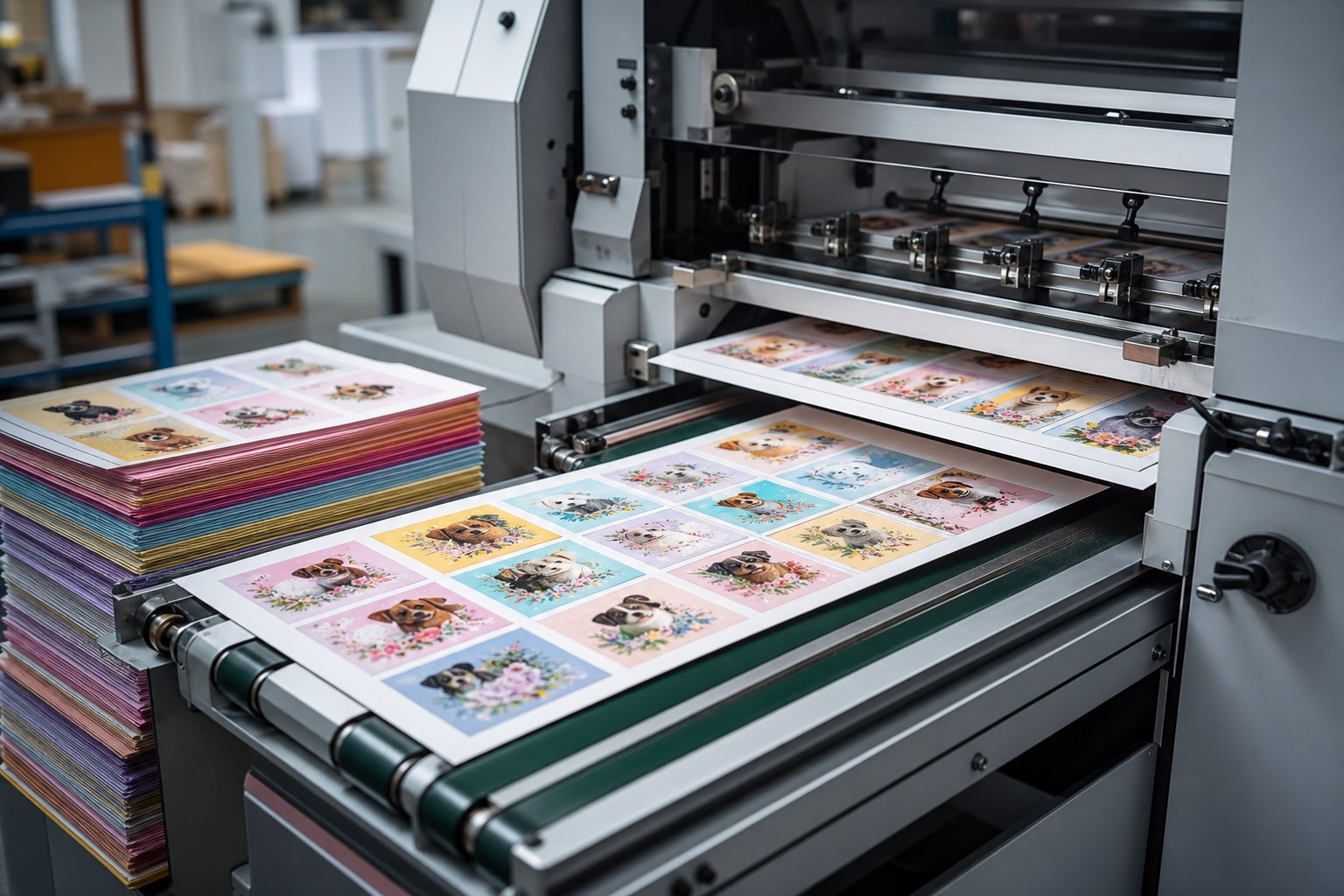
Offset printing is a rail network: superb economics once the train is moving, brutal for a single passenger. Plates and press setup are the train. At a few hundred units, those fixed costs land on each unit like a fine. Digital printing removes the plates entirely and prices per sheet — a higher unit cost that almost always wins below roughly a thousand pieces. The practical move for small programs is digital for the launch, offset once the reorder justifies the plate, and stocked standard-size polybags throughout, because bag prints carry their own minimums while plain bags sit on a shelf waiting.
Timing matters as much as process. Plates take days to make before the first sheet prints, which is why packaging quoted in artwork-approval days tends to slip precisely when a launch date is fixed. Ordering plain stocked bags with printed cards, instead of printed bags, keeps one dependency off the critical path.
Revisions, Versions and Lead Time
Packaging artwork is the most frequently revised file in any pet toy program — and each revision can trigger a plate re-make, a reprint and a week of quietly vanished schedule. Three habits keep it contained. Keep the dieline with the factory, not only with your designer, so spec and print stay in one place. Version the artwork — file names, dated PDFs, a change log — so the factory prints the file you meant. And lock brand colors to a standard reference, because "the blue from last time" is a color that changes with every press. The print-quality checkpoints — color drift, barcode grade, label adhesion — belong in inspection; they are listed among the checks in packaging QC for pet toys.
A Low-Budget Stack That Still Looks Retail
For a first private label line, this combination covers most needs without entertaining a single plate fee:
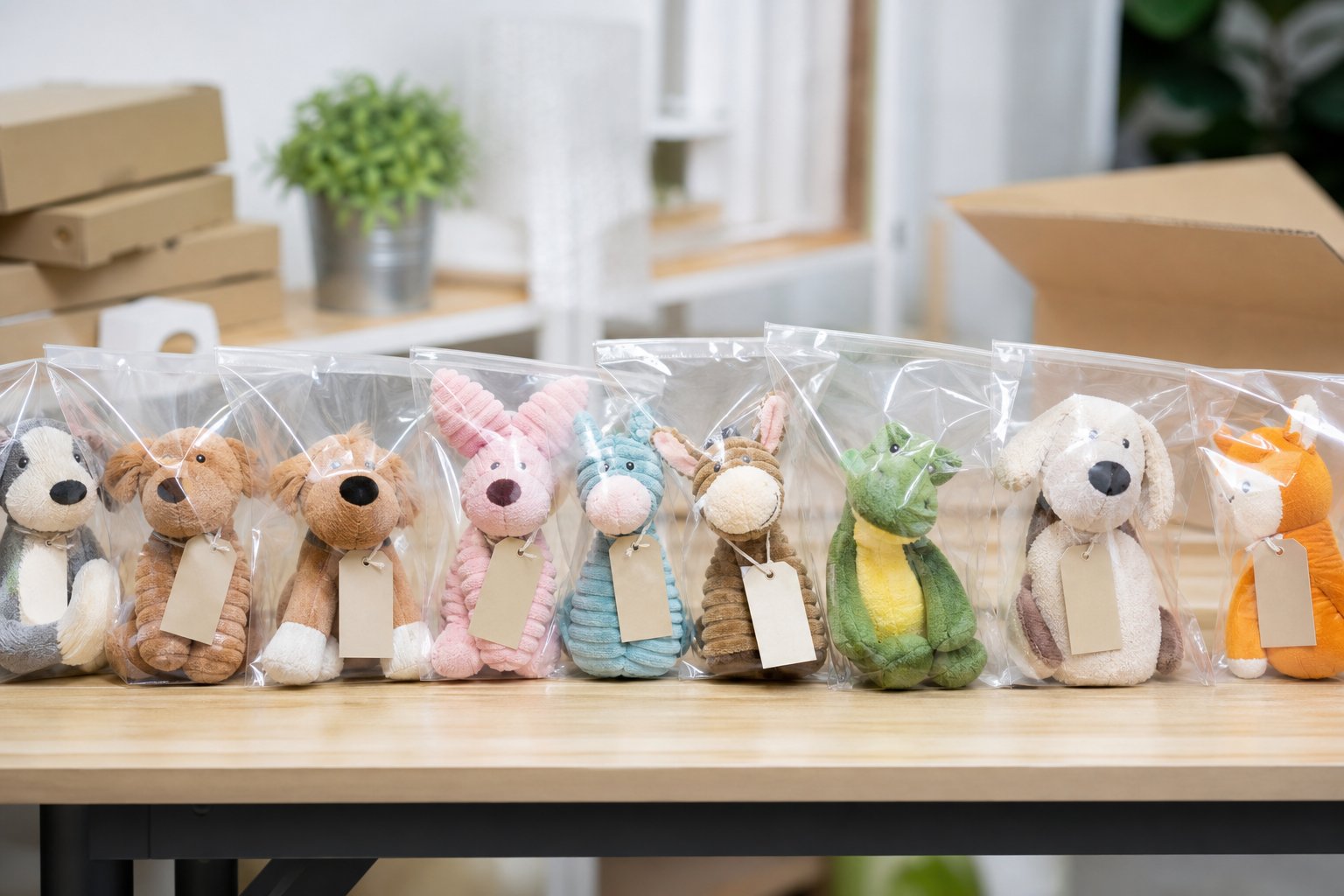
- Printed header card on a reclosable polybag as the base format — brand up front, legal text on the back.
- A single-color hangtag for the logo touchpoint, printed digitally until volumes justify a plate.
- Window boxes reserved for one or two hero SKUs, where shelf presentation actually earns their cost.
- A scannable barcode printed at proper grade on the header card or tag — tested, not assumed.
- A master carton labeled for the channel, so the last fifty meters of logistics look as good as the first fifty.
Packaging quantities, like toy quantities, obey the same minimum-order arithmetic — the mechanics are the same as in the real math behind MOQ, just with smaller numbers. And when you are ready to brand stock products instead of custom ones, the packaging workflow is built into our OEM program.
Frequently Asked Questions
What is the cheapest packaging that still looks retail-ready?
Why is packaging so expensive per unit at small quantities?
Can I print packaging myself and send it to the factory?
How much lead time should private label packaging add?
Branding a line and pricing the packaging honestly?
Send your SKU list and quantities — we will return packaging options with unit magnitudes, MOQ behavior and lead times per item.