
Key Takeaways
- Every gram is paid twice — to move it and to store it. Remove grams the customer never valued, not the ones they can feel.
- Three paths to lighter: material substitution, structural simplification, de-plasticization. Each carries a shelf-feel risk to price.
- Parcel channels optimize volumetric weight; retail shelves optimize presence. Decide per SKU which game it plays.
- Compression is the plush category's structural advantage — if the packaging and the fill permit it.
- Savings compound: per-unit grams become carton cube, carton cube becomes container space, container space becomes freight money.
A gram on the packing list is paid twice: once to move it, once to store it. The skill in packaging optimization is not removing weight — it is removing weight the customer never valued, while keeping every gram they can feel. Most pet toy packaging carries both kinds. A window box with a molded insert projects value a gift buyer will pay for; the same box on a chew toy sold in a polybag-friendly category is just air that ships.
This article maps where the weight actually sits in toy packaging, the three paths to lighter, the different games played by parcel channels and retail shelves, and a worked example of how per-unit grams compound into freight money.
Where the Weight Actually Sits
The audit takes twenty minutes and a kitchen scale. Weigh each component separately: the outer box or header card, the blister or tray, the polybag, inserts and instruction cards, tape and labels. On a typical boxed plush toy, the printed box plus tray routinely rivals the accessory hardware in weight — and exceeds it in cube. Two second-order items also belong on the list: carton board grade (the master carton is packaging too, and it travels in every freight bill), and fill density on plush, where over-stuffing is sometimes a design habit rather than a quality decision.
What the audit usually reveals is a mismatch: the heaviest, bulkiest components are attached to the SKUs that ship the most units through the channels that charge the most for bulk. That is the target list.
Three Paths to Lighter
| Path | Typical moves | Effect on weight and cube | Perceived-value risk |
|---|---|---|---|
| Material substitution | Lighter board grades, thinner films, paper tape, soy inks; lighter master carton board | Modest per unit; compounds strongly across cartons | Low until board feels flimsy — stacking and crumple tests set the floor |
| Structural simplification | Box to header card plus bag; tray removed; fewer inserts; flatter folds | Largest — removes whole components and centimeters | Highest: gift SKUs and peg displays may genuinely need the structure |
| De-plasticization | Blister to paper window or molded pulp; bag to paper overwrap | Mixed — paper can weigh more but prints greener and retails greener | Low to medium; some markets reward it on the shelf |
The paths combine, but not freely. A header-card pack made from board so light it curls on the peg has traded a real cost for a real complaint. The discipline is to take each step to its sensible floor — set by stacking strength, drop tests and a crumple check in the hand — and stop there. Perceived value is not marketing folklore; it is the reason the customer's hand does not hesitate at the shelf, and packaging is where most of that instinct is formed.
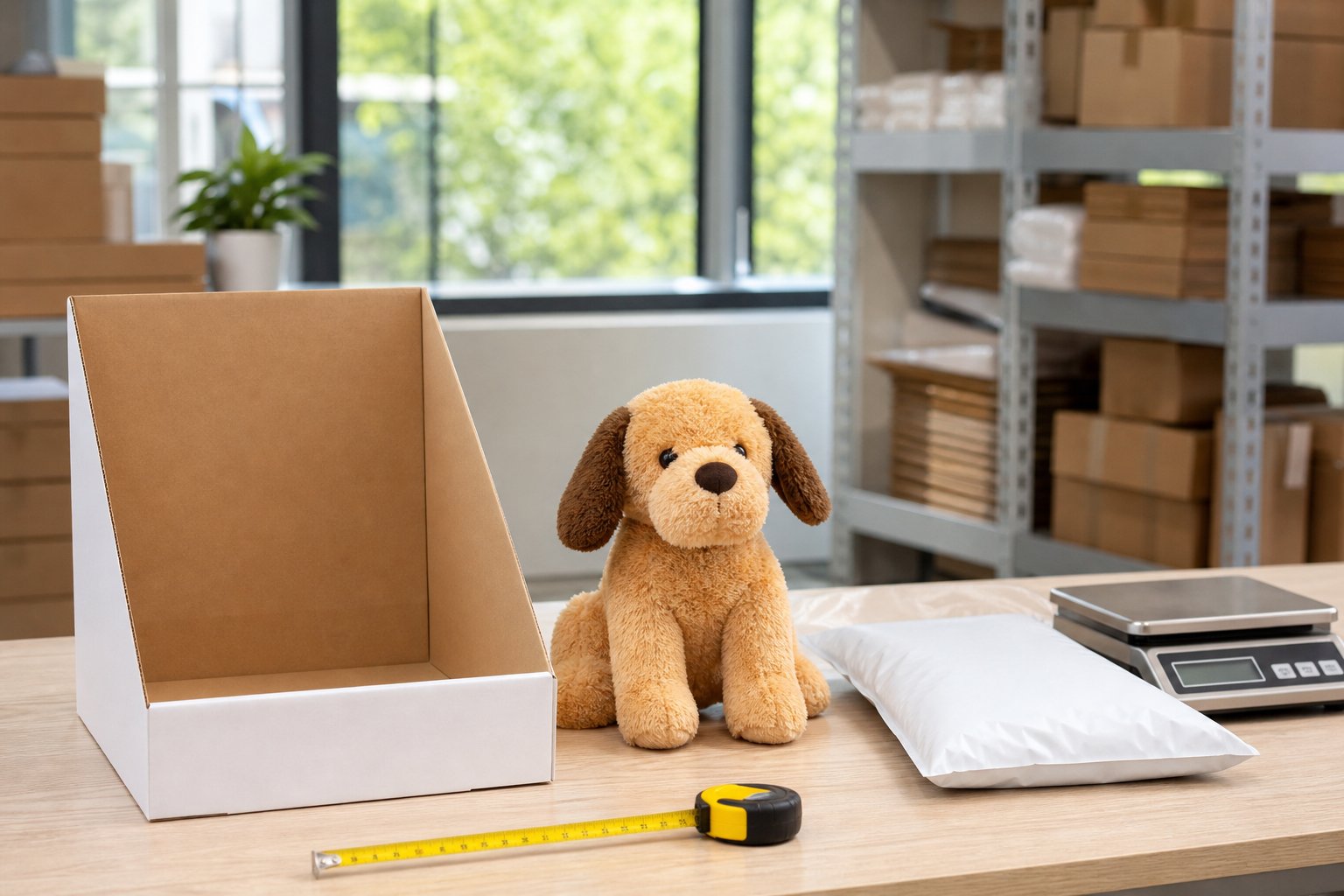
Two Different Games: Parcel Versus Shelf
A package that is optimal in a retail aisle is often wrong in a courier van. Retail shelves reward presence — footprint, face height, stackability, the solid feel of a box — and punish flimsy. Parcel channels reward geometry: carriers bill by the greater of actual and volumetric weight, so every centimeter of box depth is margin leaving through the label printer. The arithmetic differs by mode — air express divides cube by a volumetric divisor commonly around five to six thousand cubic centimeters per kilogram, sea LCL bills by cubic meter — but the direction is identical: smaller wins, compression wins bigger.
Plush is the category with the structural advantage here: soft goods compress. A plush toy that ships vacuum-flattened can post a fraction of its loose volumetric weight — provided the packaging permits compression, the fill recovers, and nobody gift-boxes it at origin. Hard materials — the rubber, nylon and rope families in our materials matrix — do not compress, so their optimization happens in material and structure, not vacuum. Match the path to the physics: our volumetric weight article runs the full arithmetic, and the packaging cost side — hangtags, header cards, boxes line by line — sits in our private label packaging breakdown.
A Worked Example, In Illustrative Numbers
Take a hypothetical boxed plush toy and its lighter twin, assumptions stated. The original ships in a full window box with a formed tray: 180 grams of packaging, box volume of roughly three liters. The optimized version ships the same toy in a printed header card and bag, compressed flat: 25 grams of packaging, under half a liter once compressed. Now scale it — an illustrative 10,000-unit season, parcel-shipped in part, container-shipped in the rest:
| Line (illustrative) | Boxed version | Light version |
|---|---|---|
| Packaging weight per unit | 180 g | 25 g |
| Packaging mass across the season | 1,800 kg | 250 kg |
| Units per master carton | 24 | 60 |
| Container space for 10,000 units | Deep into a second container | Comfortably inside one |
| Parcel billed weight per unit | Volumetric, several times actual | Close to actual |
Read the middle rows again: the packaging itself, not the toy, decides whether the season needs one container or two. That is the compounding effect in one line — and it is why packaging belongs in the product brief and the landed-cost model, not in an afterthought folder. What the table cannot show is the other half of the decision: whether the header-card version still sells. That answer is empirical, and it belongs to a shelf test, not a spreadsheet.
Running the Optimization Pass
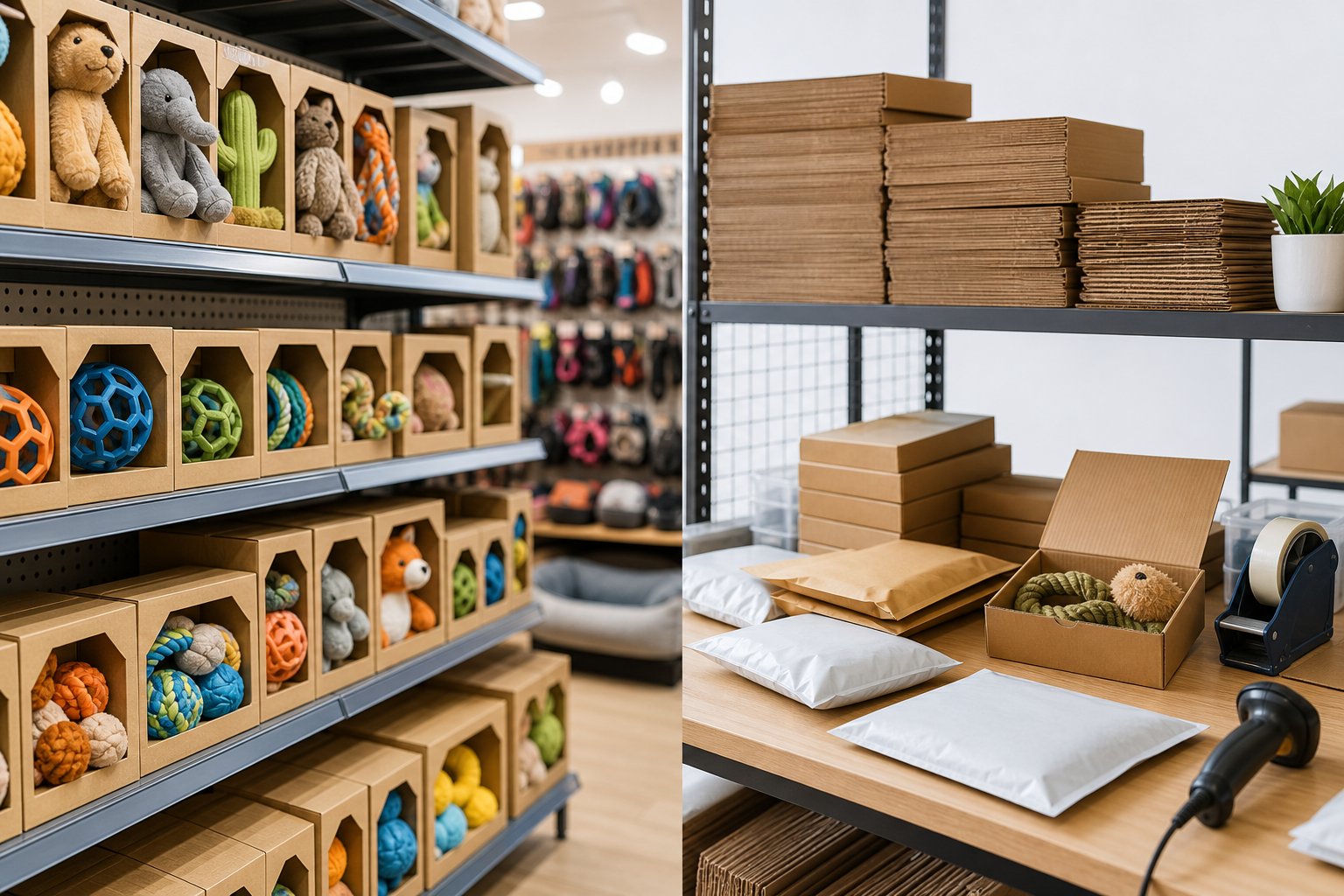
- Weigh and measure every component; rank by grams and centimeters shipped per unit.
- Tag each SKU parcel-first or shelf-first — the two games have different winners.
- Attack the top-ranked component with the lowest-risk substitution first; retest stacking, drop and crumple.
- For plush, run a compression recovery test with realistic dwell time before committing the season.
- Shelf-test the lighter pack against the old one with real buyers before the print run.
- Re-weigh, re-measure, and update the landed-cost model — savings count only when measured.
Frequently Asked Questions
Does lighter packaging really move the needle on freight costs?
Will customers think less of a header-card pack than a box?
What is compression packaging for plush toys, and does it hurt the product?
How do I start a packaging optimization pass?
Want a lighter pack that still sells on the shelf?
Send your current packaging photos and dims — we will reply with two lighter configurations, their per-unit gram and cube deltas, and what each does to your freight bill.