
Key Takeaways
- Pet retail runs on four waves: new-year health, spring-summer outdoor, Halloween and the Christmas gifting run.
- Christmas shelf presence is won in July: samples by early summer, POs by midsummer, production through late summer, freight in autumn.
- Chinese New Year sits inside every Q4 plan — a late CNY compresses the restart, so ship earlier or stock deeper.
- Shoulder seasons are cheap shelf space: enrichment in January, outdoor fetch in spring, routine items in early autumn.
- Relay inventory between moments: holiday novelties exit into bundles while evergreen SKUs take the shelf back.
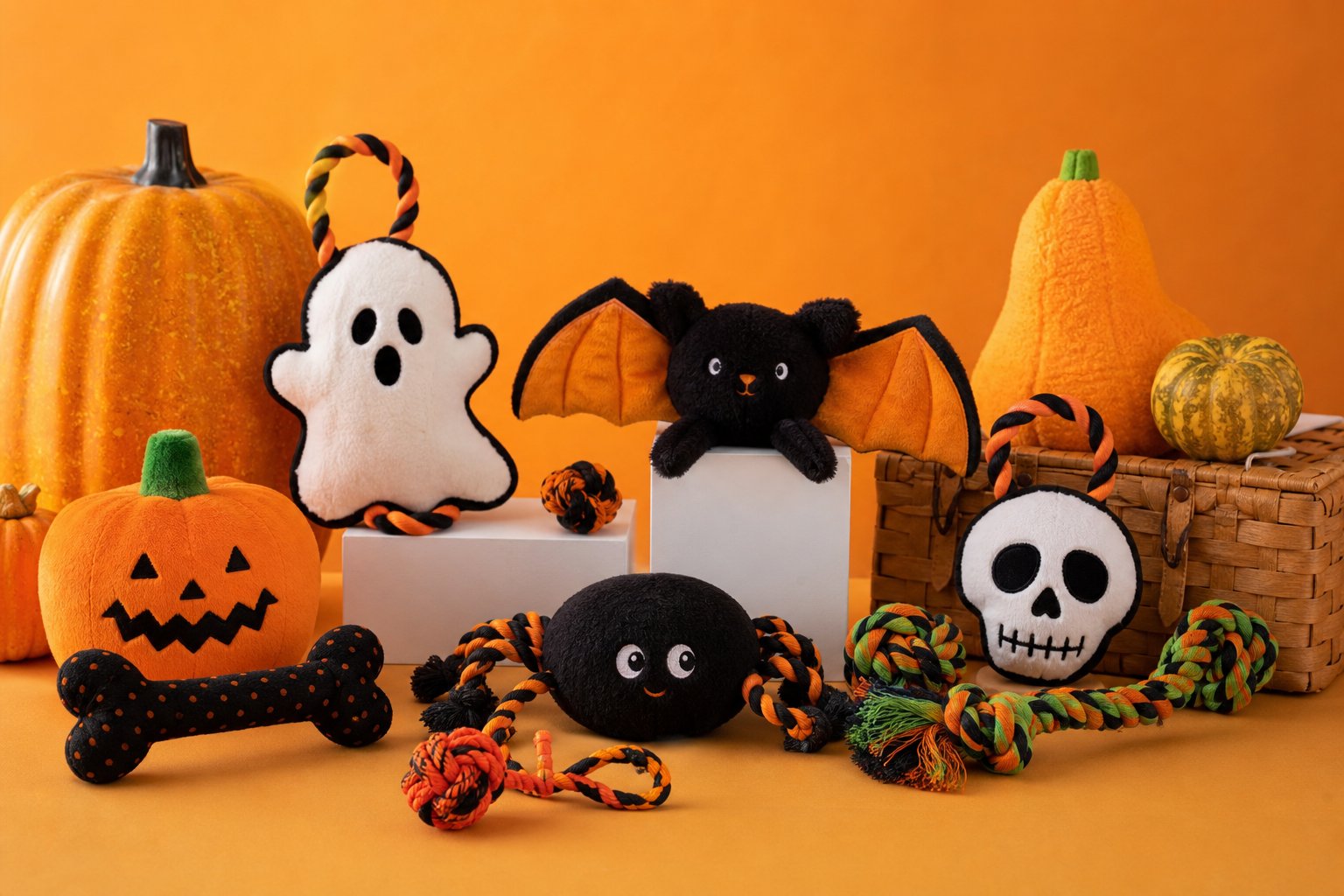
In 2025, American households were projected by NRF's annual survey to spend around USD 860 million on Halloween pet costumes alone. The production slots for the toys that ride that wave, however, were mostly booked somewhere around June. That gap — between when demand becomes visible and when supply can still respond — is the entire argument for running a launch calendar instead of a launch mood.
This article lays out the year in four quarters, shows how to backward-schedule the biggest one, and covers the two levers sellers usually discover too late: the Chinese New Year overlap and the inventory relay between moments. The context is a category worth planning for — US pet industry spending reached USD 158 billion in 2025 per APPA, and gifting occasions keep multiplying inside it.
The Year at a Glance
Four waves carry the category. Each one has a buyer-side clock and a factory-side clock, and the factory clock always rings first:
| Quarter | Retail moment | Buyer actions | Supply-side deadline |
|---|---|---|---|
| Q1 | New-year health and enrichment; Valentine gifting | Review last Q4's data; brief the spring refresh; lock January themes | CNY shutdown planning; confirm Q2 production slots |
| Q2 | Spring and summer outdoor; fetch, travel, water toys | Finalize summer SKUs; shoot lifestyle content; collect peak freight quotes | Production for early-summer launches; Halloween sampling round |
| Q3 | Back-to-routine; Halloween ramp; Christmas buying | Place Halloween and Christmas POs; approve golden samples; set promo floors | Peak production window; QA and lab capacity tighten industry-wide |
| Q4 | Christmas and holiday gifting; last-minute bundles | Launch, replenish, switch freight modes as cut-offs approach | Sea-freight cut-offs; air or local stock for late demand |
Read the table right to left and it becomes a planning tool: every buyer action has a supply-side deadline that arrives weeks earlier, and the quarters where buyers feel busiest are exactly the quarters when factory capacity is already spoken for.
Treat the table as a contract with your own supply base, not a poster. When a quarter's buyer column slips, the factory column does not move with it — capacity simply reallocates to whoever confirmed on time. The brands that repeatedly make holiday windows are rarely the ones with the fastest factories; they are the ones whose decisions arrive before the calendar's midpoints, a discipline no peak-season scramble can retrofit.
Backward Scheduling: Christmas Is Won in July
Backward scheduling means starting from the day the product must be promotable and walking the chain home. For a Q4 gifting SKU, the working version looks like this:
- Early-to-mid November: retail live, listings reviewed, promo floors loaded.
- October: stock received at fulfillment centers — marketplaces set their own inbound cut-offs before peak.
- September into October: ocean freight departing; late bookings roll to air freight at a multiple of the cost.
- August through September: mass production, with the golden sample approved no later than July.
- May into June: samples, quotes and tooling decisions.
- March into April: concepts, briefs and supplier selection.
Each step contains a review round, and each skipped review returns later as delay — the schedule does not forgive compression, it just moves the compression to the most expensive link, which is freight.
The Chinese New Year Overlap
Chinese New Year lands between late January and mid-February depending on the year, and the manufacturing belt pauses for several weeks — with a restart ramp that takes longer than the calendar implies. For Q4 sellers, CNY matters twice. First, it fixes the real deadline for anything that slipped: orders that miss the pre-holiday shipping window either wait for the ramp or become February deliveries. Second, it compresses Q1 replenishment, because the weeks you would normally use to restock are consumed by the shutdown. Pin the following year's CNY date on the wall in July, and plan Q4 with it in view — our piece on CNY and your Q4 stock walks the timeline in detail.

Shoulder Seasons Are Not Empty
The weeks between waves are where smaller brands quietly gain ground. January supports enrichment and healthy-routine themes — puzzle feeders, slow-release treat toys — riding the new-year mindset. Spring pulls outdoor fetch, travel and water toys forward. Early autumn favors back-to-routine items as households re-set schedules. Media is cheaper, competing launches thinner, and a new SKU can be tested on real traffic before you bet a Q4 slot on it. Calendars differ by market, so import the logic, not someone else's dates.
One more shoulder-season use: content and review farming. Launching a functional SKU in May gives it time to collect reviews and UGC before Q4, when advertising costs rise and every listing fights harder for attention. A toy that enters November with a review base converts better than a better toy that enters cold.
The Inventory Relay Between Moments
A calendar only works if inventory moves in relays instead of piling up at each finish line. Holiday novelties exit through bundles — costume toys folded into stocking-stuffer multipacks, Halloween stock cleared into autumn value packs — while the evergreen core of chew bones, ropes and balls holds the shelf year-round. Subscription boxes absorb seasonal overflow smoothly because their volume is contracted in advance. And for late opportunities without time to open tooling, private label over in-stock designs keeps you inside the season: our dropship program exists precisely to let you list and test gift bundles without committing container capital first. For the full holiday build-out, see the dedicated Q4 pet gift season calendar.
Time the relay by warehouse calendar, not by gut. Set exit dates for seasonal packaging in advance — the day after a holiday, novelty packaging starts costing you conversions — and pre-plan the bundle SKUs, barcodes and listings so the exit takes days rather than weeks. The relay only works when the next runner has already warmed up.
Frequently Asked Questions
When should I start preparing for Christmas pet toy sales?
How does Chinese New Year affect Q4 planning?
What sells in the slow quarters?
Can I catch a late trend without custom production?
Planning next year's calendar against real factory slots?
Send your launch windows — we map them against production and freight capacity and reply with FOB ranges and slot reservations.