Key Takeaways
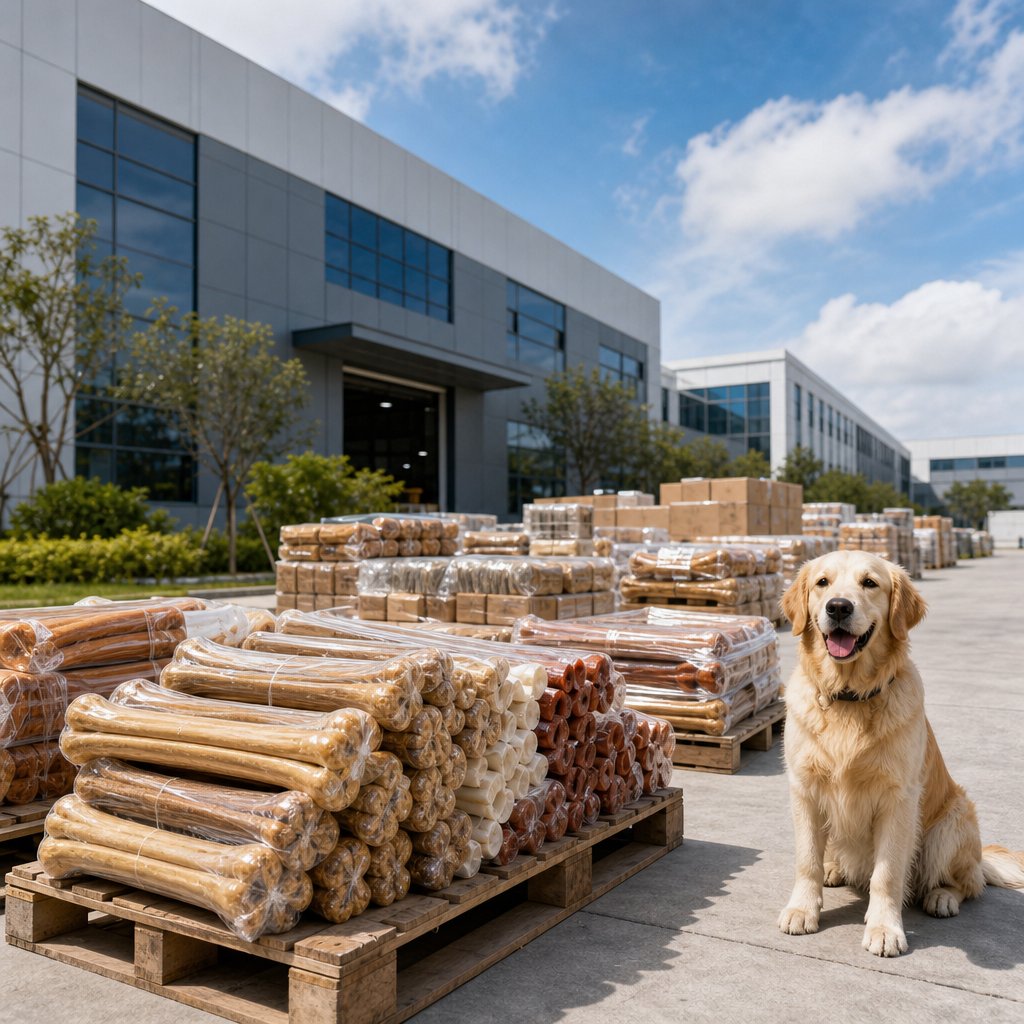
- Pingyang county, Zhejiang, holds China's only nationally recognized county-level title as a pet supplies export base, awarded in 2014.
- The belt grew out of leather craft — chews first, then toys, leashes and a full supplies lineup; roughly 100 enterprises produced over RMB 5 billion in 2024.
- Chew exports are reported at more than half the national total by Xinhua-sourced media; customs-based figures put the share above sixty percent — cite one caliber, never blend.
- Leashes and harnesses from the county account for about a third of domestic output, per local reporting.
- The sourcing checks that matter: raw-material traceability, moisture control, mouth-contact testing and batch retention.
Some industrial belts are planned; Pingyang's was inherited. A coastal county in southern Zhejiang with a long craft tradition in leather discovered, over the 1990s and 2000s, that the skills of cutting, processing and stitching hides translated almost without modification into dog chews — and from there into leashes, toys and a full pet supplies catalog. The founders did not set out to build a pet industry; they followed the material, and the material was good.
Today Pingyang is one of the few places in China carrying an official national title for pet products. This article covers what the belt makes, how to read its export numbers responsibly, and the checks that matter most when the product spends hours inside a dog's mouth. It belongs to a series on China's supply geography — see also our city map of who makes what.
The Origin Story and the Title
The official marker came in 2014, when Pingyang was designated China's Pet Supplies Export Base — the only county-level region holding that national designation. The scale behind it has kept growing: by 2024, per Xinhua reporting citing People's Daily in 2025, the county counted roughly 100 pet supplies enterprises with combined output value above RMB 5 billion.
The leather-chew gene still shows in the belt's structure. Many factories run chew lines and soft-goods lines under one roof, and the supplier network spans chews, toys, leashes and accessories within a short drive. For buyers, that density has a specific payoff: mixed-category programs that would take three cities elsewhere can be scoped here in a single visit.
Titles aside, the practical meaning is concentration. When a county's factories share suppliers of hides, webbing, hardware and packaging, a buyer's iteration loop shrinks to the speed of a same-day conversation. That concentration, more than any certificate, is why chew programs and mixed soft-goods programs keep coming back to this corner of Zhejiang.
What the Belt Makes Today
The category map reflects the leather origin and the extensions built on top of it:
| Category | Presence in the belt | Buyer note |
|---|---|---|
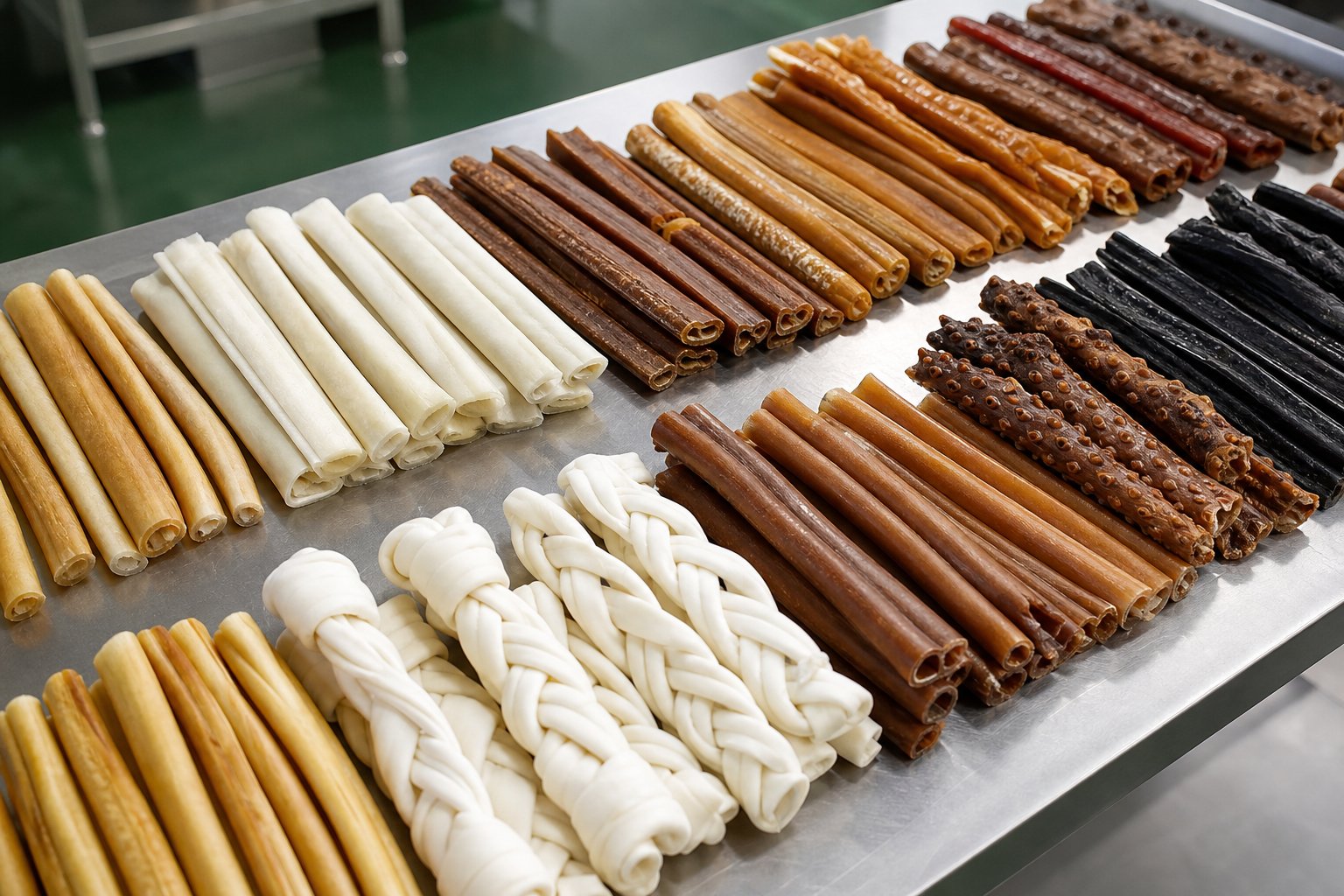
| Natural and leather chews | The founding category, with the deepest processing base | Ask for raw-material sourcing records and moisture specifications |
| Pet toys | A growing share; a locally headquartered listed company carries pet toys in its business name | Verify toy-standard test reports if your retail channel requests them |
| Leashes and harnesses | About one third of domestic output, per local reporting | Hardware and webbing grades vary; specify stitching density and load paths |
| Grooming and accessories | Rounding out the full-line supply story | Compare across suppliers — category breadth does not equal depth |
Reading the Export Numbers
Two export calibers circulate for the belt's signature category. Xinhua-sourced reporting describes Pingyang's chew exports at more than half of the national total; customs-based figures put the share above sixty percent. Both are legitimate — they measure with slightly different scopes — and the professional rule is to cite one with its year rather than blend them into a number that belongs to neither.
Two more cautions. Single-company figures — such as a Hubei-based toy maker whose exports of 15 million pet toys a year circulate as a sample of national capacity — describe one enterprise, not a belt, and should never be extrapolated. And no official statistic isolates pet toys as a standalone export category; any precise "China pet toy exports" figure you encounter is an estimate wearing a suit. For buyers the practical consequence is simple: anchor negotiations to your own order data and the supplier's own export records, and treat regional shares as background color in a pitch deck, never as a line in a cost model.
Sourcing Checks That Matter
Chews and natural-material products fail differently from plastic toys — quietly, in transit, or a month later in a review. The checks worth demanding:
- Raw-material traceability: where the hides and natural materials originate, with batch records that connect shipments to sources.
- Moisture control: drying specifications, readings on finished goods, and packaging that keeps the product stable through a container summer.
- Mouth-contact testing: screening appropriate to a product a dog holds for hours — heavy metals and material safety, documented against the actual supplier entity.
- Batch retention: retained samples per batch — three pieces, kept for two years in our program — so any post-shipment question has a reference.
- Odor standard: natural materials vary; write a sensory acceptance standard into the order instead of discovering your tolerance in the review section.
How Pingyang Fits the Multi-Belt Play
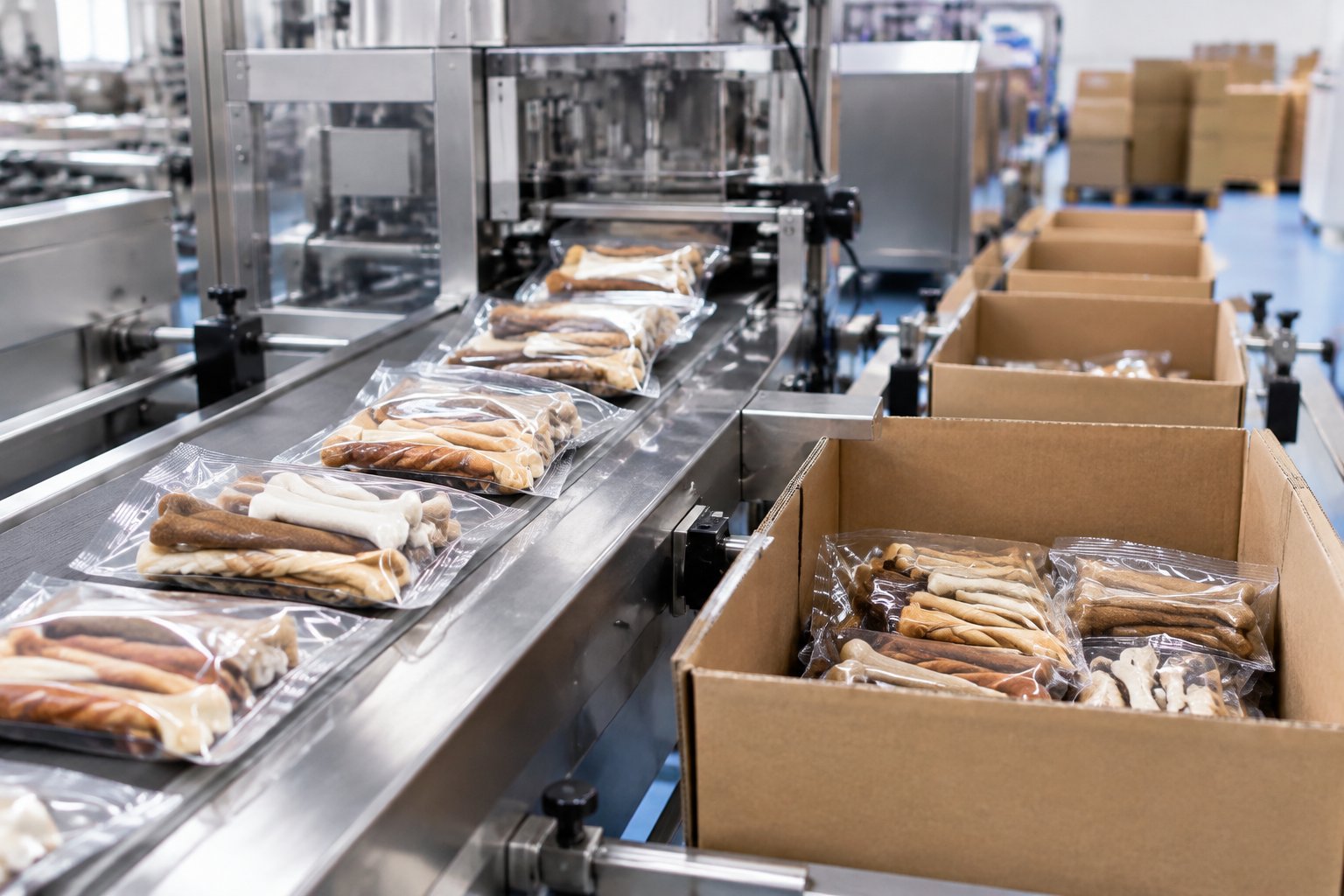
In the national division of labor, Pingyang anchors the chew-and-soft-goods end of the category — natural materials, stitching, load-bearing hardware. It pairs naturally with Yangzhou for plush, with the Shantou-area plastic belt for molded toys, and with Yiwu for consolidation and fulfillment. Buyers who treat the belts as one supply surface — chewing here, plush there, everything consolidated into one container — consistently beat buyers who try to solve every category inside one factory. Our factory and belt page maps how the pieces connect, and for the chew category itself, our guide to wood and coffee-wood chews covers one of the fastest-growing natural-material lines.
Frequently Asked Questions
What is Pingyang known for in pet supplies?
Are the export share figures reliable?
What should I verify with a chew supplier there?
Can I source toys and leashes in the same trip?
Building a chew or multi-category program?
Send your category list — we reply with FOB ranges, which belt each category runs best in, and the test plan we would attach to the order.