Key Takeaways
- A detached squeaker is a swallowing hazard: attachment strength is a safety property, not a comfort feature.
- Toy-standard practice applies pull forces of roughly 90 newtons for several seconds to small components — a voluntary reference worth adopting.
- Strength varies in production: adhesive dose, fabric allowance, stitch passes, housing geometry, operator and pace.
- At inspection, the gauge is the verdict and the hand-pull is only a filter; record measured values, not just pass or fail.
- Write the force, the dwell time, the sampling frequency and the reference sample into the order.
The squeaker is the smallest component in the toy and the largest line in its risk ledger. A detached squeaker is exactly the size of object that lodges in a dog's throat or travels down the intestine; an emergency clinic visit follows, then a review that says almost swallowed, then a marketplace case. No other single failure mode moves so quickly from a factory detail to a brand problem.
That is why mature buyers treat squeaker attachment as a measured property with a number, a method and a sampling plan — not as a hope. Here is how the pull test works, where strength is won and lost in production, and how to write it into an order.
The Risk Chain: One Loose Squeaker, Three Losses
Start with the dog. A squeaker that detaches under chewing presents two hazards at once — a choking shape and a rigid object that can injure the digestive tract if swallowed. Then the owner: an emergency visit converts an affordable toy into an expensive memory, and the review will say so in detail. Then the brand: platform complaint mechanisms, chargebacks and the permanent archive of product-safety reviews. The chain is what makes attachment strength different from other defects — a cosmetic flaw loses a sale, but a detached squeaker can lose the listing. Pet buyers increasingly recognize this, which is why squeaker attachment appears in pet-toy diligence checklists; the pet-toy standard ASTM F2999 explicitly covers squeaker attachment among its hazards, and child-toy practice supplies the test method the industry borrows.
How the Pull Test Works
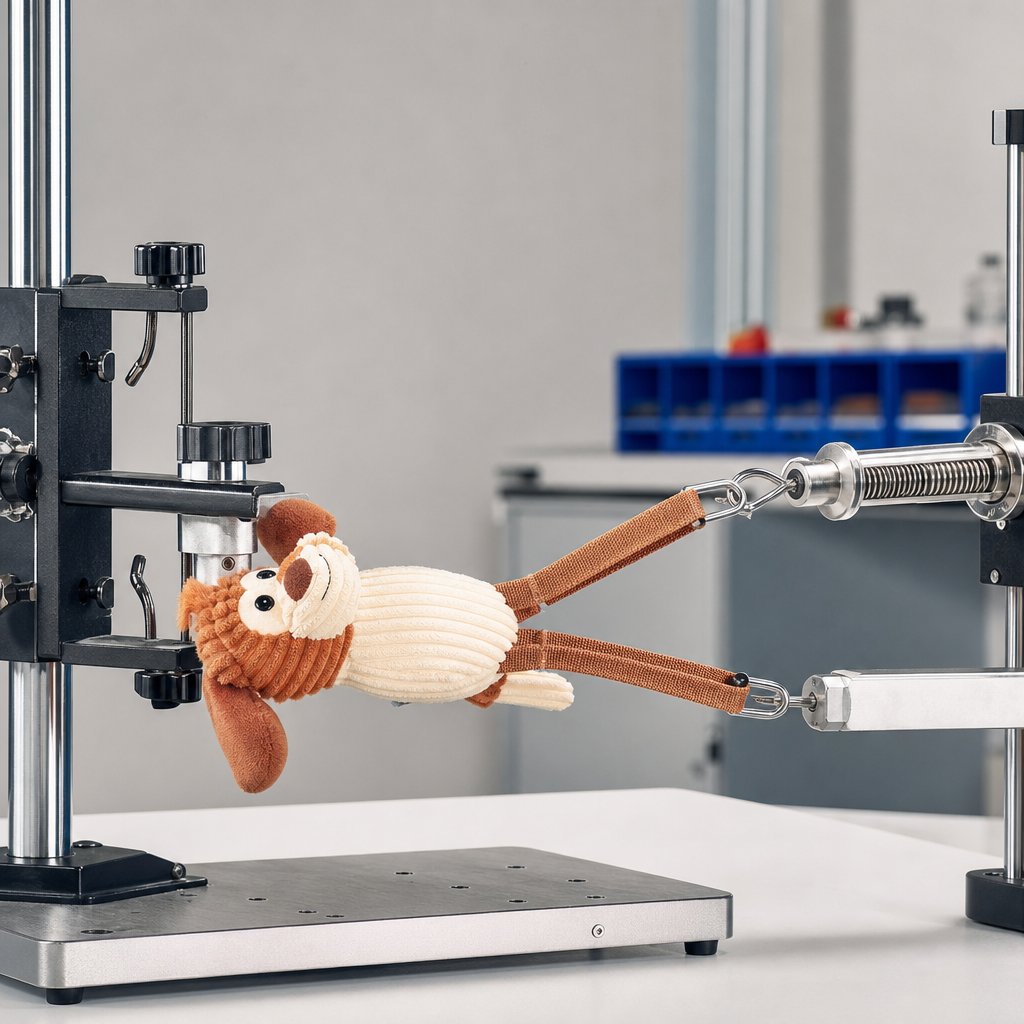
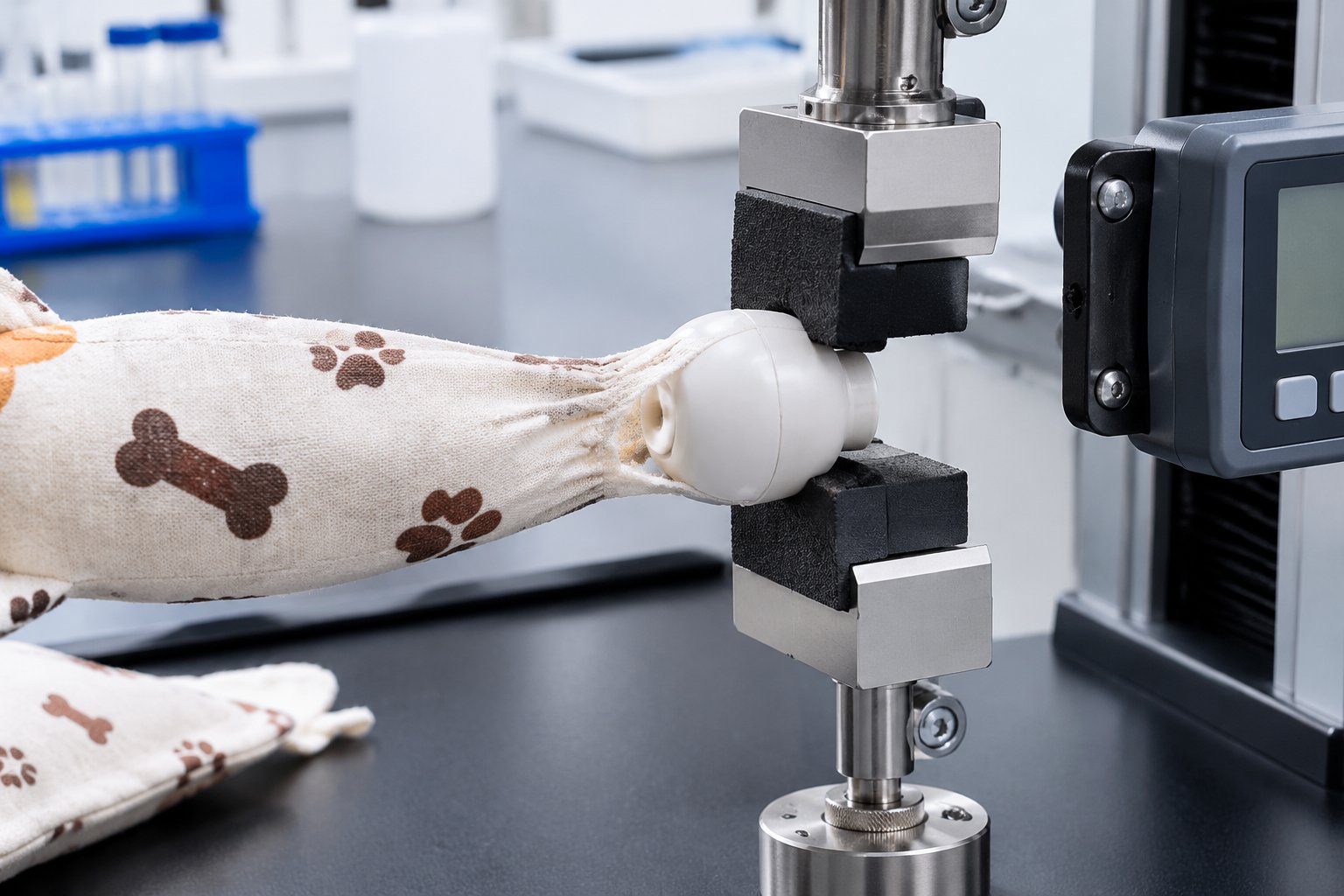
The method is borrowed from children's toy testing and simplified for the pet trade. The toy body is clamped so the squeaker sits exposed; a force gauge grips the component — a fabric strap or padded jaw works better than bare metal, which cuts the pouch before the seam is honestly tested. Force is applied at a steady rate up to the target and held; child-toy standards commonly specify forces around 90 newtons held for several seconds, and that figure is the working reference most pet buyers accept. Two readings matter more than the pass mark. First, hold-to-target: the toy must survive the force with the squeaker still fixed. Second, pull-to-separation on a subset: how the attachment fails — fabric tearing, stitches sliding, adhesive letting go — tells the factory which process to fix, which is information a pure pass or fail throws away.
Where Attachment Strength Varies in Production
Attachment looks identical on a finished toy and behaves nothing alike across a production run, because five variables drift quietly:
- Adhesive dose and coverage — a half-second less glue at one station is invisible until the pull test names it.
- Pouch allowance — fabric cut tight leaves the seam doing work the pouch should share.
- Stitch passes and density — one reinforcing pass instead of two halves the margin on a busy day.
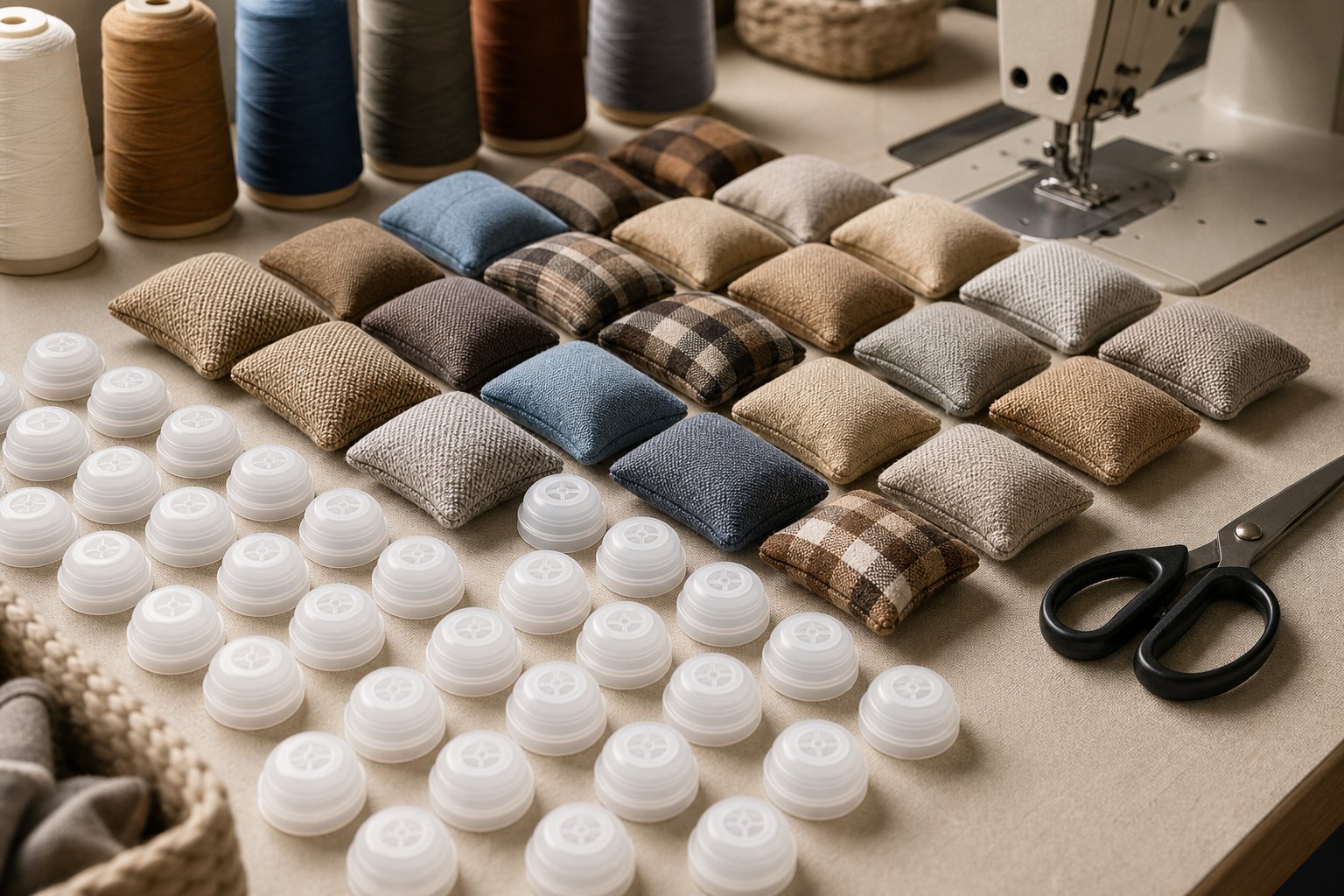
- Squeaker housing geometry — a flanged housing anchored in fabric outperforms a smooth barrel held only by glue.
- Operator and pace — attachment steps moved to new hands mid-run show up in the numbers within days.
The golden sample freezes the design of all five; only measurement catches their drift. This is why the squeaker types and their fixing methods should be written into the specification — our article on squeaker units covers the hardware side — and why the pull values belong in the order rather than in a quality manager's head.
The Fast Check at Inspection
A full laboratory setup is not needed to keep a line honest. The working ladder has two rungs. On the line, every toy gets a firm hand-pull against the sewn squeaker — ten seconds of honest effort by a trained inspector catches the gross failures and costs minutes per hour. At pre-shipment, sampled pieces go to a gauge: pull to target force — the working reference remains the roughly 90-newton hold borrowed from toy practice — record the value, and pull a subset to separation for the failure mode. Chart the values by lot. A lot that passes but arrives visibly weaker than the golden sample's readings is an early warning with a free lesson attached: something in production moved, and it will move further next lot. Failures route back through the five variables above; in practice three of them — glue dose, stitch passes, pouch allowance — explain most of what the gauge finds. For buyers building a full inspection regime, our article on AQL defect classes shows where attachment findings sit in the class system, and the quality page lists the pull values our own shipments are held to.
Specifying It in the Order
The clause that works is short and measurable. It names the force target and dwell time; the gauge and clamp method; the sampling frequency — first article per shift, sample per lot; the reference — the sealed golden sample and its recorded values; the retest triggers — squeaker supplier change, pouch pattern change, sewing line change; and the disposition — lots failing the pull are reworked at the attachment station and re-sampled, never re-glued by hand and mixed back. One clause, five sentences, and the most dangerous failure mode in the category becomes someone's daily number instead of an emergency-room anecdote.
Frequently Asked Questions
What pull force should a dog toy squeaker withstand?
How do you test squeaker attachment without destroying the toy?
Why do squeakers pass on the sample and fail in bulk?
Is a glued-only squeaker acceptable?
Want squeakers that survive the pull test and the reviews?
Send your squeaky toy program — we will share our attachment specs, pull-test records and the clause wording we run in our own orders.