Key Takeaways
- Fill is the biggest invisible lever on a plush toy: PP cotton for bounce, pearl cotton for firm shapes, recycled fiber for entry cost — each with a different failure story.
- The question is not only what the fill feels like on day one, but what it does when the shell finally tears.
- Squeaker fixing — glue pocket, sewn pocket, or both — is a spec, and it is the single most common escape route for loose parts.
- An inner safety liner converts a worst-case breach into a survivable one; it costs a little and reads well in every review after a de-stuffing.
- Buyers inspect plush with scissors: dissect batch samples, photograph what is inside, and write the fill and fixing specs into the order.
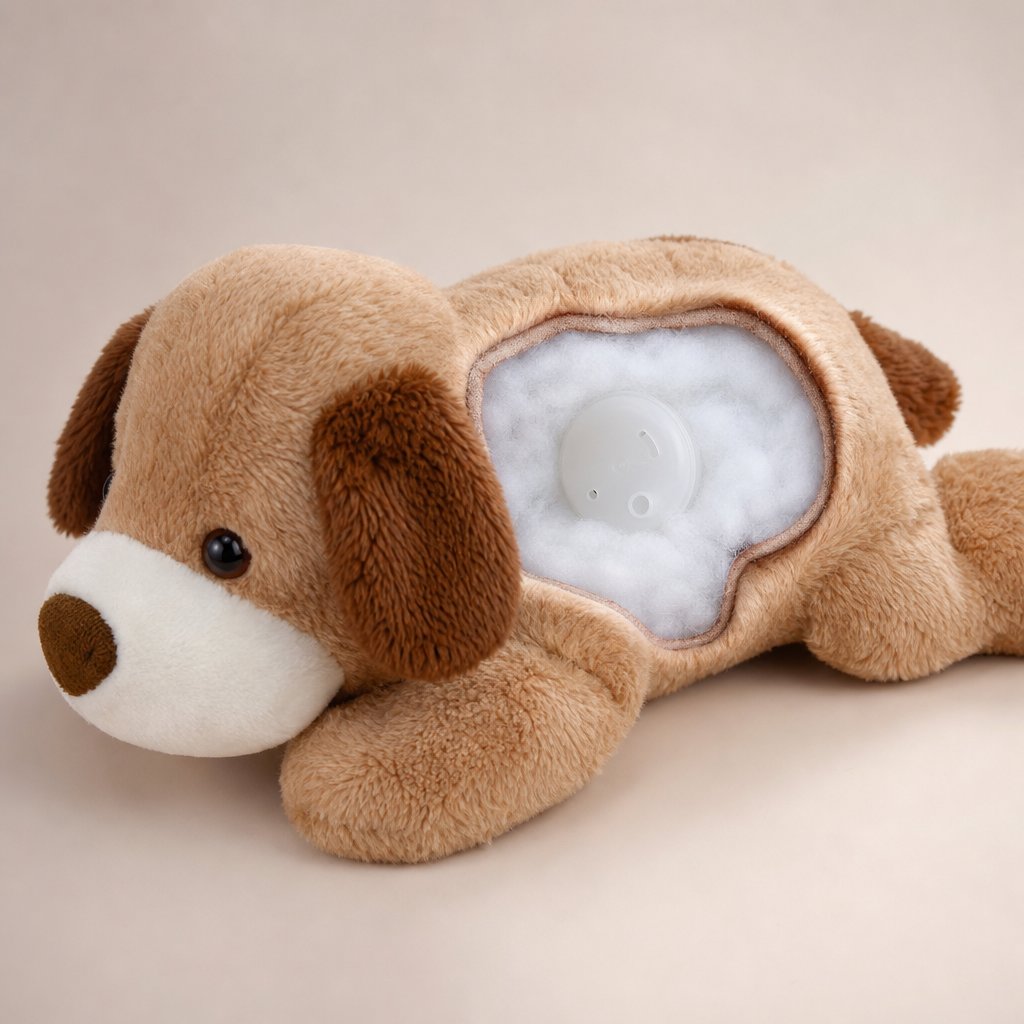
Before you write another plush purchase order, take a pair of scissors to your current bestseller. Ten minutes of cutting and pulling will tell you more about why it earns its reviews than any catalog page: whether the fill springs back or clumps, whether the squeaker sits in a pocket or floats loose, and whether there is a second layer between a dog's teeth and the stuffing. The inside of a plush toy is where its future reviews are written — and where most of its cost is quietly decided.
This guide opens the toy up in three moves: the fill menu and what each option does after the shell breaks, the ways squeakers are held and how they fail, and the safety layer that most listings never mention but every serious program specifies.
The Fill Menu: PP Cotton, Pearl Cotton and Recycled
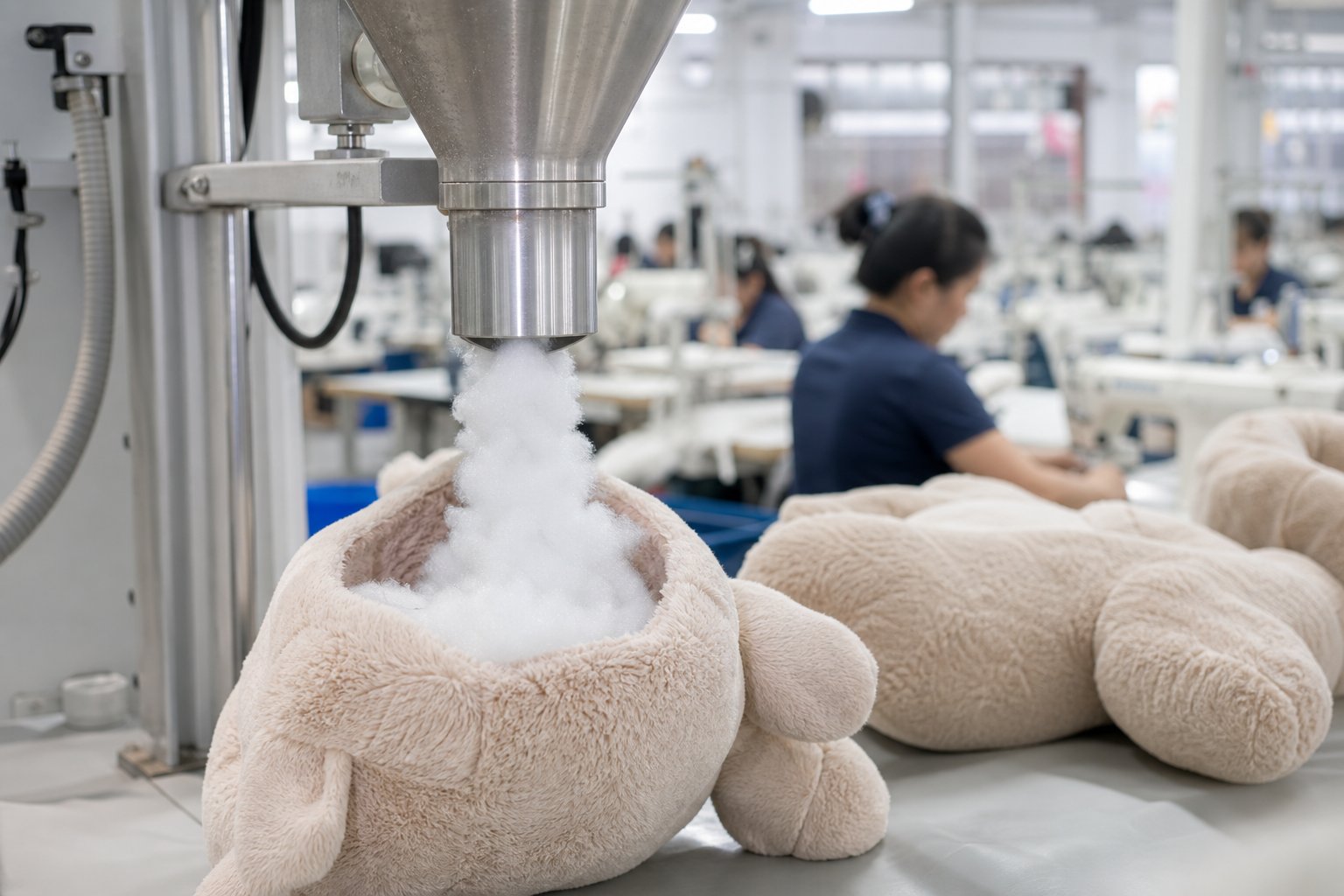
PP cotton is the industry default: a polyester staple fiber, usually silicone-finished, that is blown into the shell in flakes. Its virtues are exactly what a dog toy needs — springiness, quick loft recovery after a squeeze, washability and a clean, low-odor profile. Its weakness is weight: pure PP fill in a large body can feel insubstantial, which is why better toys tune firmness rather than just volume.
Pearl cotton — foam beads or rolled EPE foam — is the firmness tool. Packed into heads, limbs and bodies that must hold a pose, it keeps shape under hours of carrying and gives the "dense" hand feel shoppers associate with quality. It does not fluff back the way PP cotton does, so it is used where shape matters more than squish.
Recycled or reclaimed fill sits at the entry tier. It costs less, and saying "recycled fill" honestly is a legitimate positioning — but reclaimed fiber is shorter and less resilient, clumps faster under chewing, and can carry inconsistent cleanliness between lots. The commercial failure is not using it; it is paying PP-cotton prices for it, or claiming "premium fill" in copy while a squeezed toy flattens like a failed pancake.
| Fill | Feel on day one | Behavior after the shell tears | Cost tier | Watch-outs |
|---|---|---|---|---|
| PP cotton (virgin) | Springy, lofty, quick recovery | Scatters as light clumps; easy for a dog to pull out | Mid | Under-filling reads as "cheap" in hand |
| Pearl cotton / EPE | Firm, dense, holds shape | Beads escape one by one; slow leak, long-lived mess | Mid-to-high | Not for chew-target zones without a liner |
| Recycled / reclaimed fiber | Acceptable; less springy | Clumps and flattens; fibers tangle in saliva | Low | Lot consistency and cleanliness vary; declare honestly |
Read the middle column before the price column: the failure a buyer sees in reviews is always the post-tear behavior, never the spec sheet.
Squeakers: Held by Glue, Thread, or Both
A squeaker inside a sealed shell is not automatically a fixed squeaker. Three fixing methods dominate production. Glue pocket: the unit is seated in an adhesive cup inside the cavity — fast and cheap, and the first thing to let go once saliva and flexing work on the bond. Sewn pocket: the squeaker sits inside a small fabric pouch stitched into the shell — slower to produce, mechanically secure, and the method behind most toys that keep their squeak after a de-stuffing incident. Combined glue-plus-pocket: the standard for dog-grade product, where the first tug on the toy will be a determined one.
Failure mode matters more than loudness. A squeaker that detaches becomes the highest-value loose part in the toy — small, flavored by play, and exactly swallow-sized. That is why pull-testing the squeaker is a standing item in our plush inspection standard, and why the deeper mechanics — reed types, loudness classes, attachment forces — get their own guide in the squeaker explainer.
The Layer Nobody Markets: Inner Safety Liners
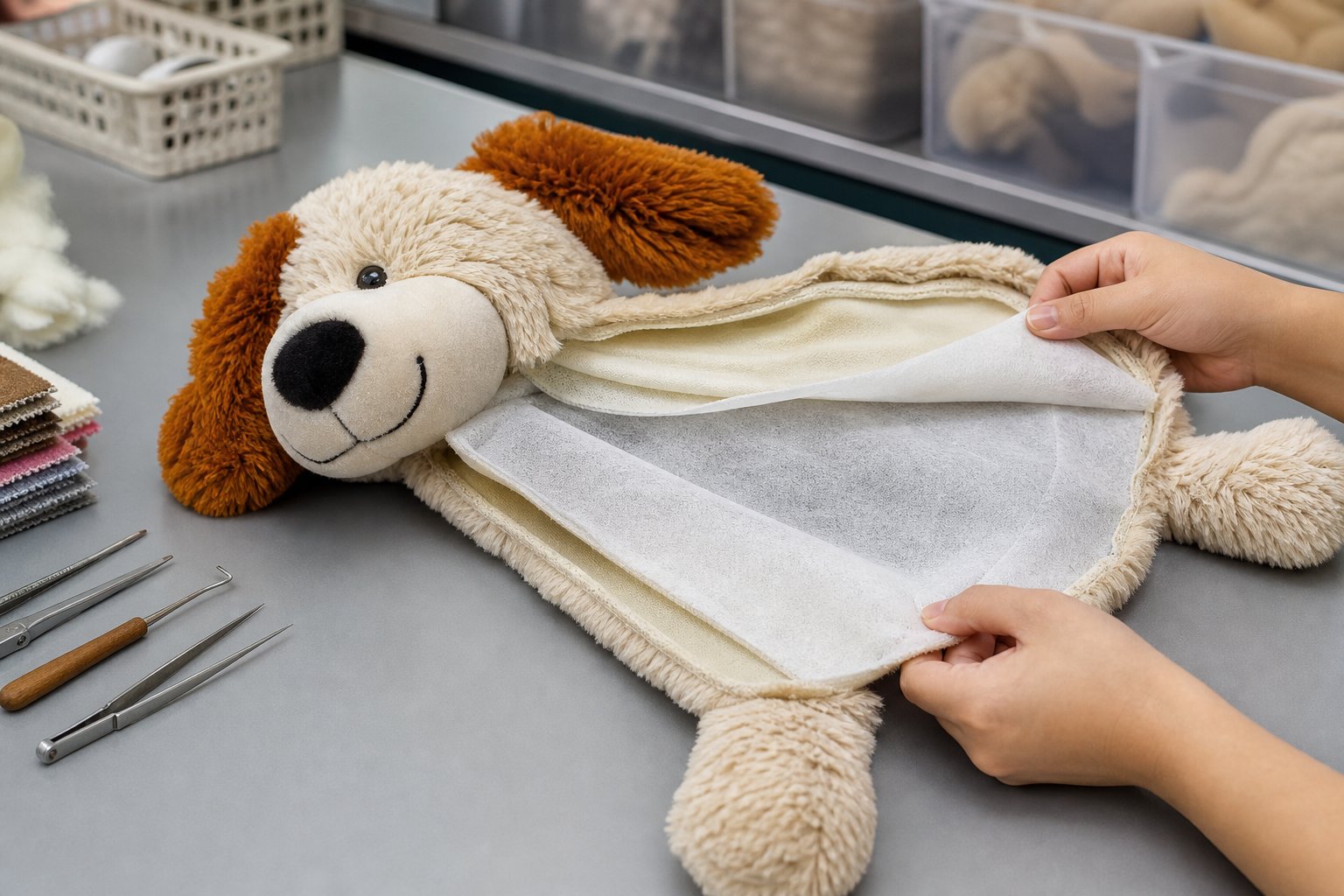
Between the shell and the fill, serious plush programs sew a second layer: an inner liner, usually a nonwoven or tightly woven bag enclosing both fill and squeaker. Its logic is failure management. When a dog breaches the outer fabric — and given enough sessions, a determined chewer will — the liner keeps the fill mass together and the squeaker contained, converting a five-minute catastrophe into a slow-motion event the owner can interrupt. Buyers who add a liner typically see the change most clearly in review language: "he gutted it but nothing went everywhere" is a four-star sentence, not a one-star one.
The liner also disciplines the production line: with a second bag to sew, seam density and stitch quality get a second checkpoint, and the toy's overall structure gains the same logic that seam-strength engineering follows — the product should fail slowly and visibly, not all at once.
A Buyer's Dissection Checklist
Plush internals cannot be judged through fabric, so inspection ends with scissors. Four checks, in order:
- Fill identity and firmness — squeeze against the golden sample, then cut open: fiber type, evenness of fill, no recycled content where virgin was ordered.
- Squeaker fixing — locate the unit, identify the method (glue, pocket, both), and pull-test resistance per the agreed force spec.
- Liner presence and closure — confirm the inner bag exists, is fully closed, and encloses the squeaker, not just the fill.
- Documentation — photograph the dissected units and attach them to the inspection report; the photos settle next quarter's "same as before" debates.
Pair the dissection with a squeeze test on intact units — fill migration inside the shell (fill drifting to one end) is invisible until the toy is held, and it is the complaint that "went flat in a week" reviews are made of.
Frequently Asked Questions
What is the stuffing inside plush dog toys made of?
How are squeakers fixed inside a plush toy?
What is an inner safety liner in a plush dog toy?
How should buyers inspect plush toy internals?
Specifying a plush platform and want the internals right?
Send your target tier — we quote fill, squeaker fixing and liner options with FOB ranges and the inspection points we would run.