Key Takeaways
- Suppliers can produce assets buyers cannot: production footage, lab tests and sample shows — credible precisely because no seller can fake a working factory.
- Factory footage answers "is this supplier real"; UGC answers "does my dog love it." They do different jobs — use both, in the right order.
- Commissioned play-test videos only work with a written brief: dog profiles, chew tier, unscripted sessions and signed releases.
- Usage scope, territory, exclusivity and edit rights must be settled in writing before the camera is on.
- Organize the library by SKU and funnel job, not by shoot date, or it dies with the next staff change.
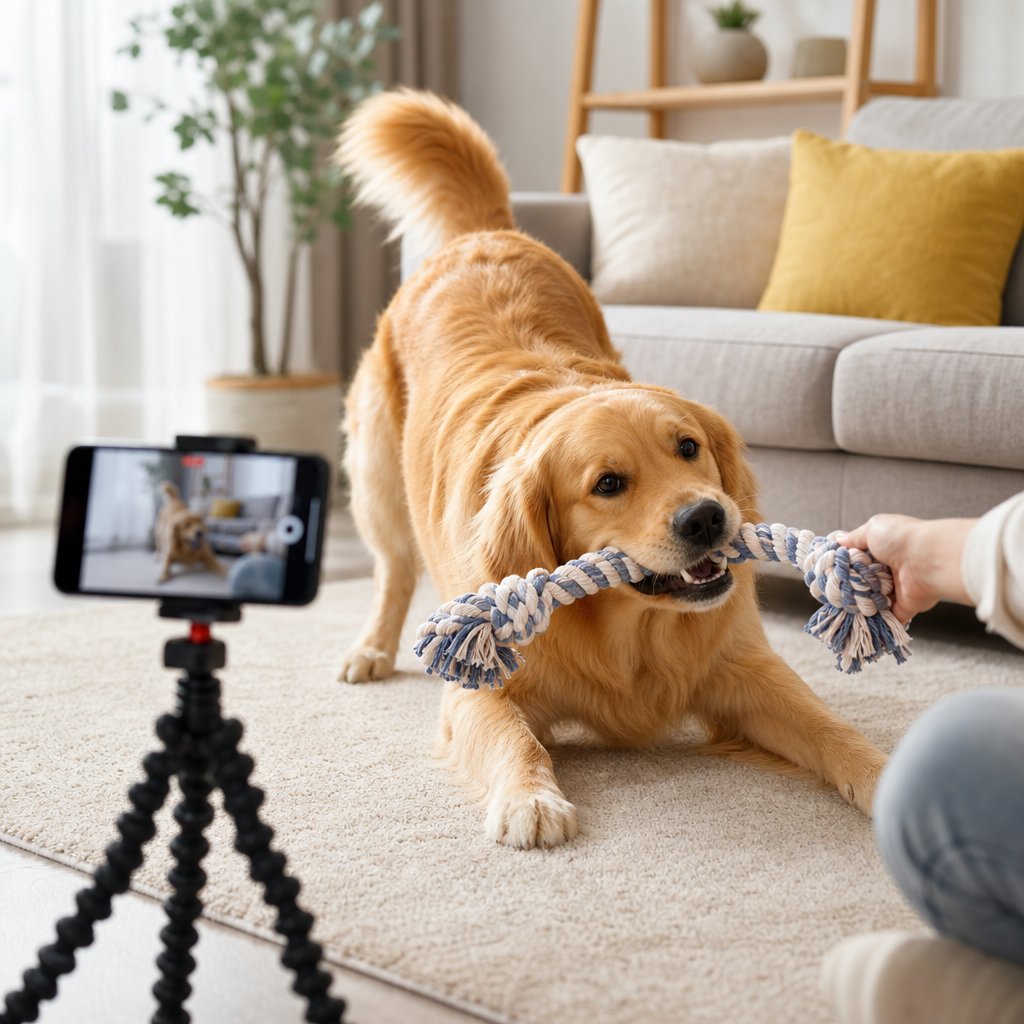
A product page can claim a squeaker survives a determined terrier. A fourteen-second clip of the terrier trying — and the squeaker still squeaking at the end — sells harder than any adjective on the page. Video is where pet toy claims stop being adjectives and become evidence, which is why the brands that grow steadily treat content as part of procurement rather than an afterthought of marketing.
Most buyers, however, only ask suppliers for photos. That leaves the cheapest asset class — supplier-side video — unused, and forces brands to buy their way into content later at retail prices. This piece maps what suppliers can legitimately produce, what should stay with real customers, how to brief a play-test shoot, and how to keep the whole library usable a year from now. The still-image half of the job is covered separately in our pet toy photography shot list.
What Suppliers Can Actually Produce
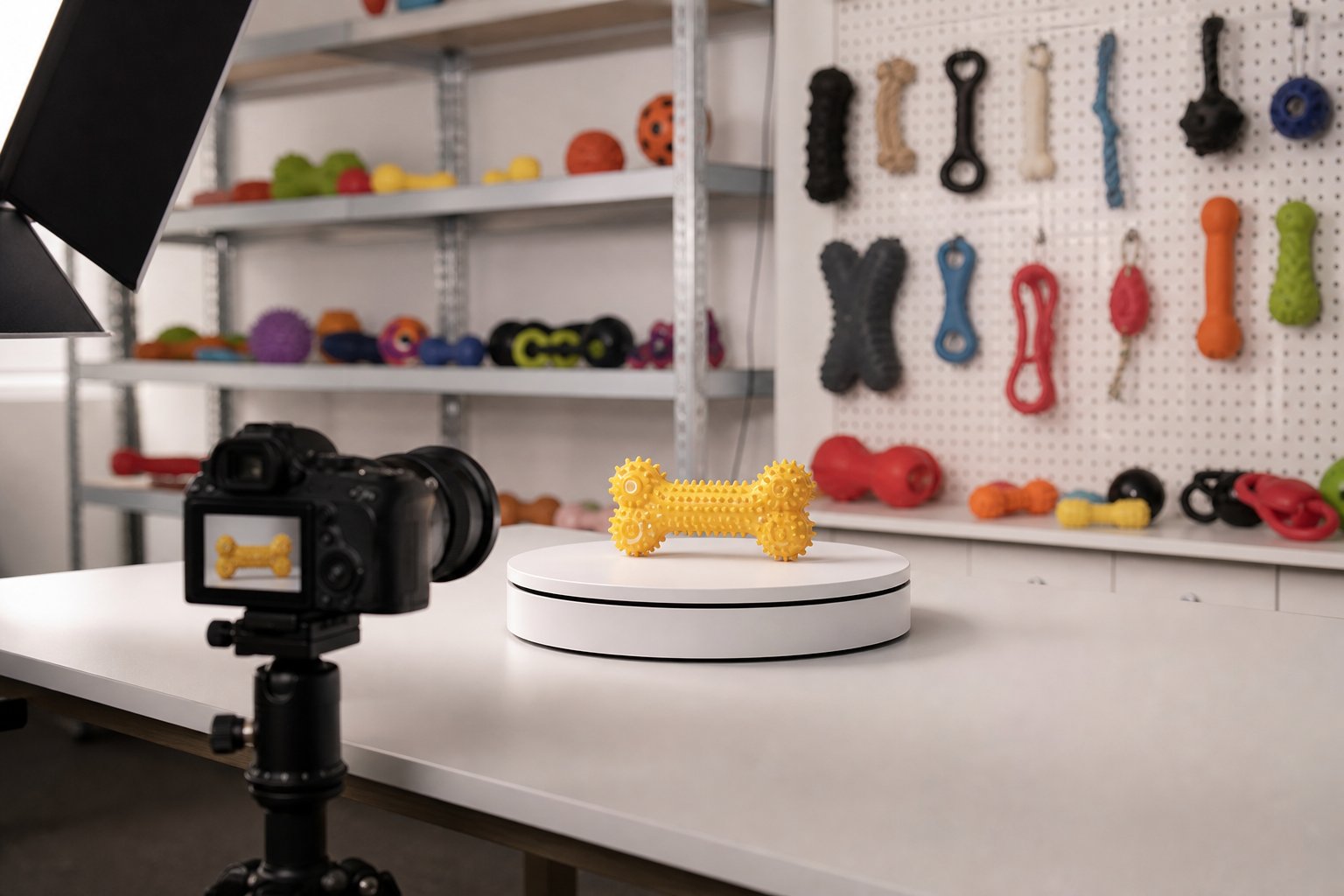
Three asset classes live naturally on the supplier side. First, line and process footage: compounding and mixing, injection molding, sewing stations, needle detection, packing lines. Second, test and QC clips: squeaker pull tests, drop tests, durometer readings, bite-simulation cycles on a fixture. Third, sample showcases: a new range rotating on a turntable or shot against clean backgrounds before it ships. A factory with real lines and a real lab can capture all three in an afternoon, which is exactly why the footage reads as credible — audiences can tell it was not staged in a living room.
What suppliers cannot produce is authentic dog reactions. A "UGC-style" clip filmed beside the molding machine is advertising wearing a costume, and audiences plus platform policies increasingly treat that distinction as material. The honest split: factory content proves the product, customer content proves the love, and commissioned play-tests sit in the middle with clear labeling.
Who Covers Which Job
Before requesting anything, assign each asset a funnel job. The map we use with clients:
| Asset | Where it comes from | Job in the funnel | Limit |
|---|---|---|---|
| Line and process footage | Supplier factory | Proof of real manufacturing; brand-story and B2B trust | Not consumer-styled; needs an edit pass |
| Test and QC clips | Supplier or third-party lab | Turns durability claims into evidence | Shows methods, not promises; wording must stay honest |
| Sample showcase | Supplier showroom | Fast catalog coverage across a new range | Generic look; often shared with other buyers |
| Product loops | Either side | Marketplace video slots; silent autoplay | Needs a shooting spec or it arrives unusable |
| Real UGC | Your customers and creators | Conversion, social proof, ad creative | Uncontrolled; needs rights and curation |
The pattern to notice: the further down the table, the higher the conversion power and the lower the control. Procurement's job is to lock down the top four cheaply, so marketing can spend its budget on the fifth.
The Play-Test Brief
Commissioned play-test videos sit between factory footage and organic UGC, and they only work with a written brief. The one-page version we recommend:
- Dog profiles: two or three sizes and coat types matched to the SKU's target buyer, noted in the file name so editors can pair footage to audiences.
- Chew style on record: gentle, average or committed — the footage must match the durability tier you plan to claim on the listing.
- Unscripted session length: enough minutes of real play that the toy's behavior shows, not a single staged grab for the camera.
- Camera notes: steady frame, natural light, both vertical and horizontal takes, and at least one take where the squeaker is audible.
- Honesty clause: when the toy meets its match, keep the tape. Failure footage against an oversized dog is internal gold — it stops marketing from over-claiming.
- Signed releases from the dog's owner covering every use you intend, including paid ads.
Rights and Clauses
For supplier footage, settle six things in writing before shooting: usage scope (listings, ads, social, trade shows), territory, duration, exclusivity, editing rights and raw file delivery. The exclusivity line matters more than buyers expect — process footage from a popular line is exactly what a competitor on the same products will ask for next. For creator content, add deliverable counts, a usage window, paid-media permissions and a category exclusivity limit sized to the fee.
Keep a one-page template rather than negotiating from scratch each time, and keep it consistent across channels — the terms you show a marketplace legal reviewer should match the terms you can actually produce. If you sell through distributors or large retail accounts, check whether your channel agreements already restrict how supplier footage may be used; the channel programs we run all start from that audit.
Organizing a Library That Survives Staff Turnover
Content rots organizationally faster than it rots creatively. The fix is boring and effective:
- Folder per SKU, not per shoot — file assets where the next hire will look for them.
- Tag by funnel job: proof, play, scale, how-to. A tag beats a memory.
- One naming convention: SKU code, asset type, version. Ban "final_final" on pain of death.
- Keep raw plus edited: edits age faster than raws, and re-crops are cheaper than re-shoots.
- Refresh quarterly: retire anything showing discontinued packaging or an old logo.
- Feed the loop with reviews: when customers keep praising a strength you never marketed, that is next quarter's hero clip. Our review-driver analysis shows how to wire that feedback into content planning.
Frequently Asked Questions
What content can I ask a pet toy supplier for?
Is factory footage useful on consumer listings?
What should a play-test video brief include?
Who owns supplier-shot videos?
Want supplier-side video assets with your order?
Tell us your SKU list and channels — we reply with FOB ranges and line up factory footage, test clips and sample shoots with usage terms in writing.