
Key Takeaways
- A dog's toy needs are set by life stage — teething gums, adult energy, aging teeth — more than by breed or size alone.
- Teething puppies need compressible soft textures; firm nylon and hard rubber belong to later stages.
- Adolescence is the destruction phase: durability expectations jump before the dog is full-grown.
- Seniors trade bite force for engagement — scent, puzzle and comfort formats outsell toughness.
- Stage bundles answer the buyer's real question and lift order value while cutting mismatch returns.
The listing said puppy toy. The customer's review said twenty minutes. A teething puppy met a thin plush with a single reinforced seam and sheared it along the seam like a zipper — and the brand absorbed a one-star review for a product that was, in fairness, never designed for the animal it was sold to. Life stage mismatch is one of the quietest failure patterns in pet toys: the toy is not bad, and the dog is not abnormal. They simply belong to different stages of the same chart.
This article is that chart, written for buyers. It maps the four phases of a dog's toy life to the material systems and product forms that fit each one, then shows how to merchandise the chart itself as stage bundles — the format that solves the end customer's actual question and, handled honestly, cuts mismatch returns.
Teething: Gums First, Toys Second
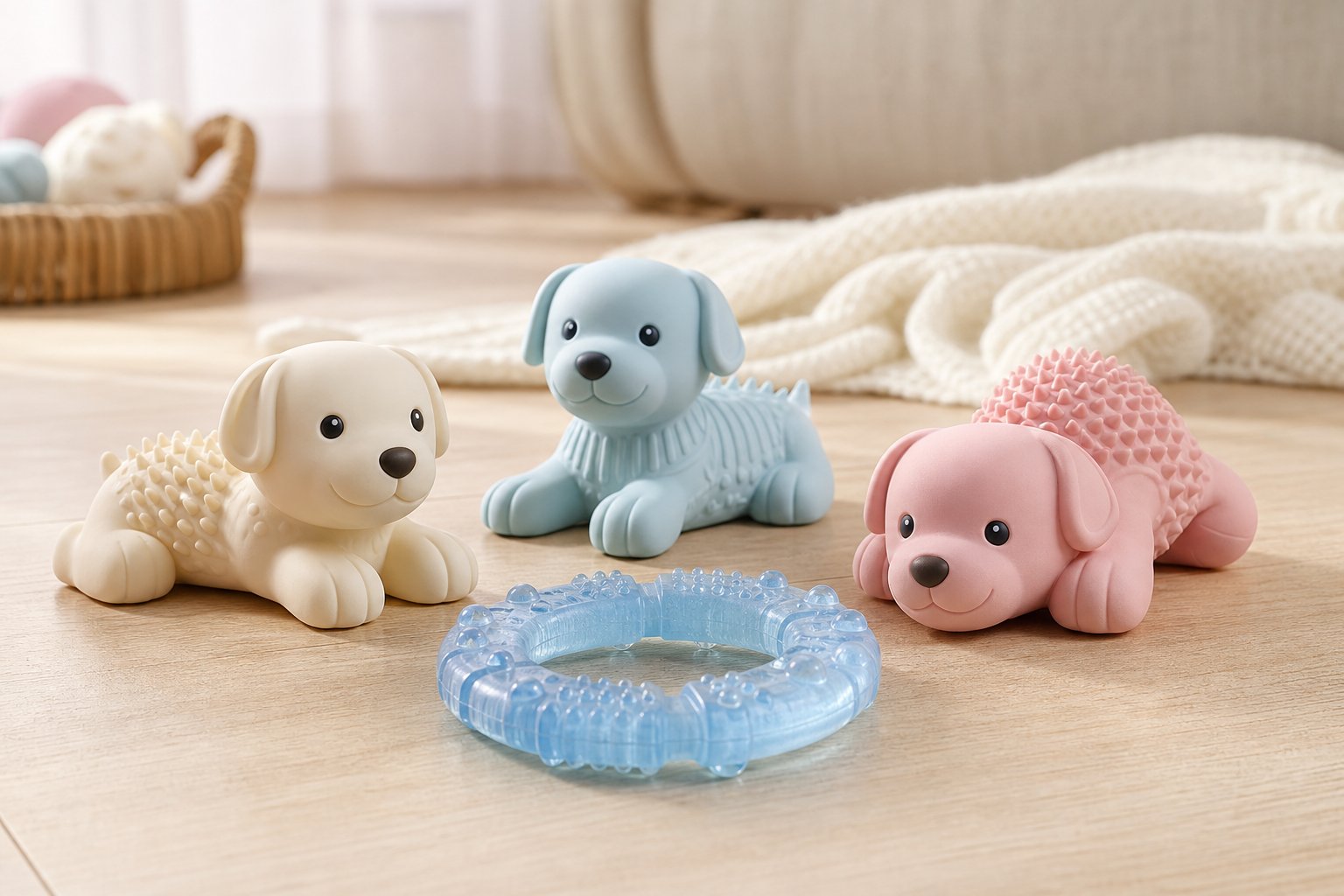
During the teething months the objective is not durability — it is relief. Gums are swollen and itchy; the winning textures are ones a puppy can compress with its back jaw: soft TPR, latex-style squeaky toys, and rubber shapes soft enough to chill in a freezer without turning stone-hard. These are the categories where thin-wall latex and low-Shore TPR are genuinely the right answer rather than a cost compromise — a point our article on nylon hardness and power chewers comes back to from the other direction.
Two boundaries keep this stage safe. First, avoid firm nylon and dense rubber: teething teeth are temporary equipment, and hard surfaces wear them pointlessly. Second, treat plush carefully — puppies shear fabric with needle teeth faster than any adult dog, so plush at this stage either has reinforced seams and a safety lining or is positioned as a comfort item for supervised naps. In both cases, size up: a toy that can be swallowed whole is a hazard in any material.
Adolescence: The Destruction Phase
The adolescent dog — roughly the first year to eighteen months for most breeds — combines adult jaw force with teenage boredom and no adult judgment. This is where most "my dog destroys everything" reviews are written, and it is the stage that justifies owning a genuine durability tier in your range. Rubber and rope earn their place here: fetch shapes that absorb Frustration, tug toys that channel it into play with the owner, and puzzle feeders that convert destructive energy into problem-solving. Rope deserves one caveat — it works best as an interactive format, because unsupervised dogs unravel it, a failure mode covered in our piece on rope grades and shedding.
The merchandising consequence matters more than the material science: adolescent owners are your highest-frequency repurchasers. A buyer who loses two toys in a month to a healthy adolescent is not a refund problem — they are a replenishment opportunity, if the listing told them the destruction was normal and pointed to the next tier up.
Adults: The Interest-and-Durability Balance
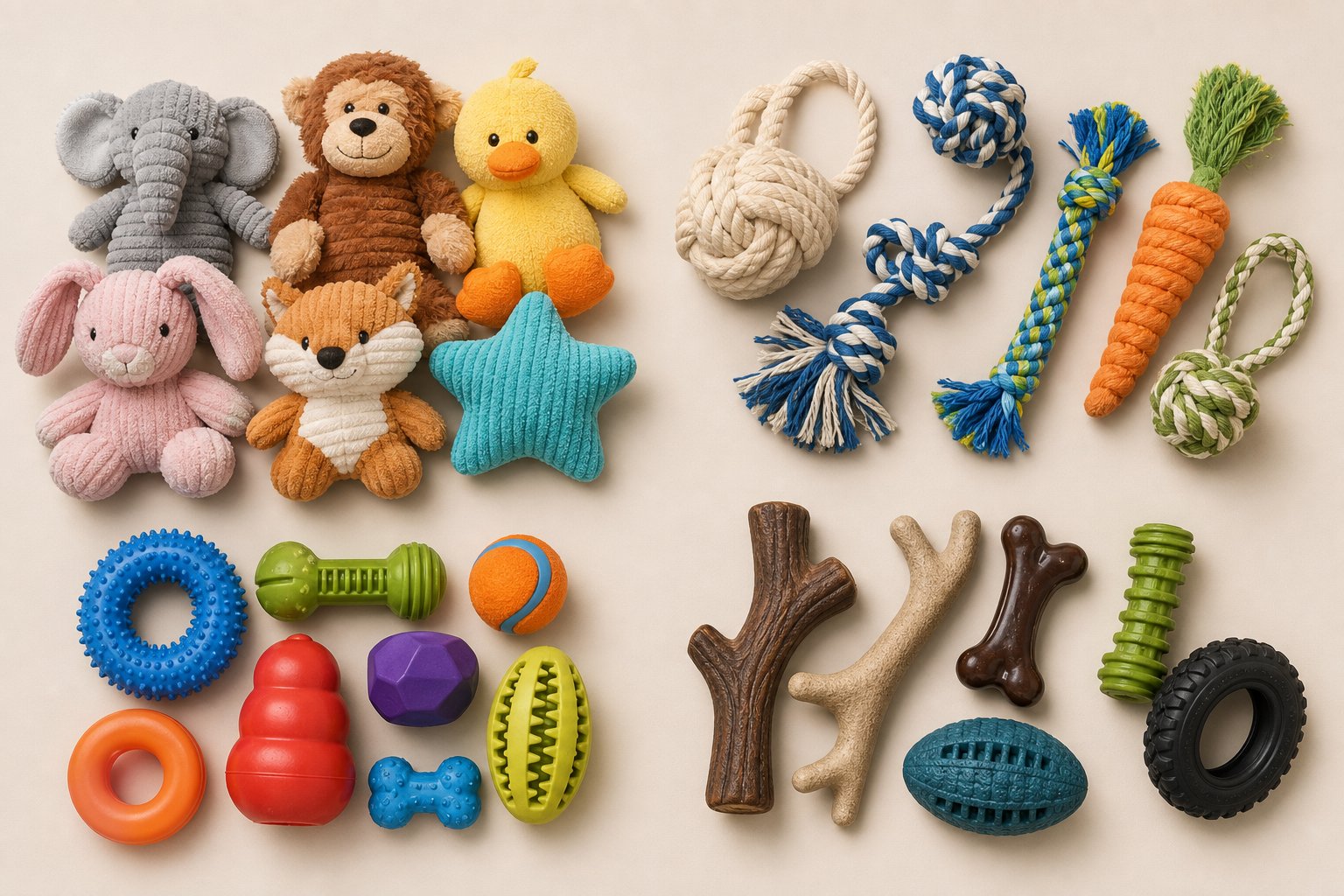
The healthy adult dog is the center of gravity of every toy range, and the stage where material choice becomes a genuine trade-off. Jaw force is at its peak, but interest, not destruction, is the limiting factor: adults abandon toys that stop predicting anything. The practical range spans three material systems used for different jobs — rubber and firm TPR for solo chewing, rope and fabric for interactive tug and fetch, and puzzle or treat-dispensing formats for feeding-time engagement. Our category overview maps the full assortment this way, by function rather than by species.
The adult stage is also where sizing discipline pays. Most adult-stage destruction reviews describe the same event: a determined jaw given a toy one size too small. The tier labels and size charts discussed in our durability ratings article exist precisely for this buyer — the one who will read the chart if the chart is there.
Seniors: Gentler Materials, Familiar Shapes
Senior dogs chew less hard but still need engagement, and the failure pattern inverts: products for this stage fail by being too hard, too demanding or too unfamiliar. Worn teeth and tired jaws make abrasive nylon a poor fit; soft compounds, lined plush and snuffle formats that tax the nose instead of the jaw fit better. Scent matters more than toughness here — familiar shapes in soft materials, plus slow puzzle feeders that reward patience rather than power. This is also the stage where comfort formats — a plush the dog sleeps with — quietly generate the strongest emotional loyalty a toy brand can earn.
| Life stage | What the dog is doing | Formats that fit | Avoid | Typical mismatch return |
|---|---|---|---|---|
| Puppy (teething) | Sore gums, needle teeth, short attention | Soft TPR, latex-style squeakers, chillable rubber | Firm nylon, dense rubber, unlined plush | "Shredded in a day" plush |
| Adolescent | Adult jaw, teenage energy, no judgment | Fetch rubber, tug rope, puzzle feeders | Thin-wall vinyl as a "durable" claim | "Destroyed everything" complaints |
| Adult | Peak bite force, routine-driven play | Chew rubber/TPR, interactive rope, treat dispensers | Undersized toys for the weight class | Mismatch between size chart and dog |
| Senior | Reduced bite force, scent-led engagement | Soft compounds, lined plush, snuffle mats | Abrasive nylon for worn teeth | "Too hard — he won't touch it" |
Stage Bundles: Merchandising the Chart
Once the range covers every stage, the chart itself becomes a product. A stage bundle — puppy kit, adolescent energy kit, senior comfort kit — answers the question owners actually ask ("what does my dog need now?") instead of forcing them to reconstruct the answer from individual listings. Bundles lift average order value without deep discounting, smooth the assortment across seasons, and reduce mismatch returns because each toy is matched to the stage the customer declared at purchase. Subscription boxes run the same logic on a monthly cadence, and our article on supplying subscription boxes covers the supplier-side requirements.
One honesty rule keeps bundles out of trouble: every component must stand alone as a correctly labeled toy for that stage. A bundle is a merchandising layer, not a place to move stock that failed its own segment.
Frequently Asked Questions
What toys does a teething puppy actually need?
When should a dog move up to power-chewer toys?
What should toy buyers consider for senior dogs?
Do stage bundles sell better than single toys?
Planning a full-lifecycle toy range?
Send your channel and dog-size segments — we reply with a stage-mapped assortment plan, material options per tier and FOB ranges by configuration.